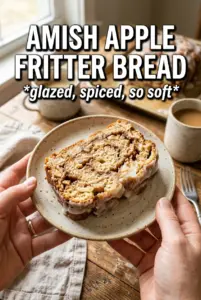
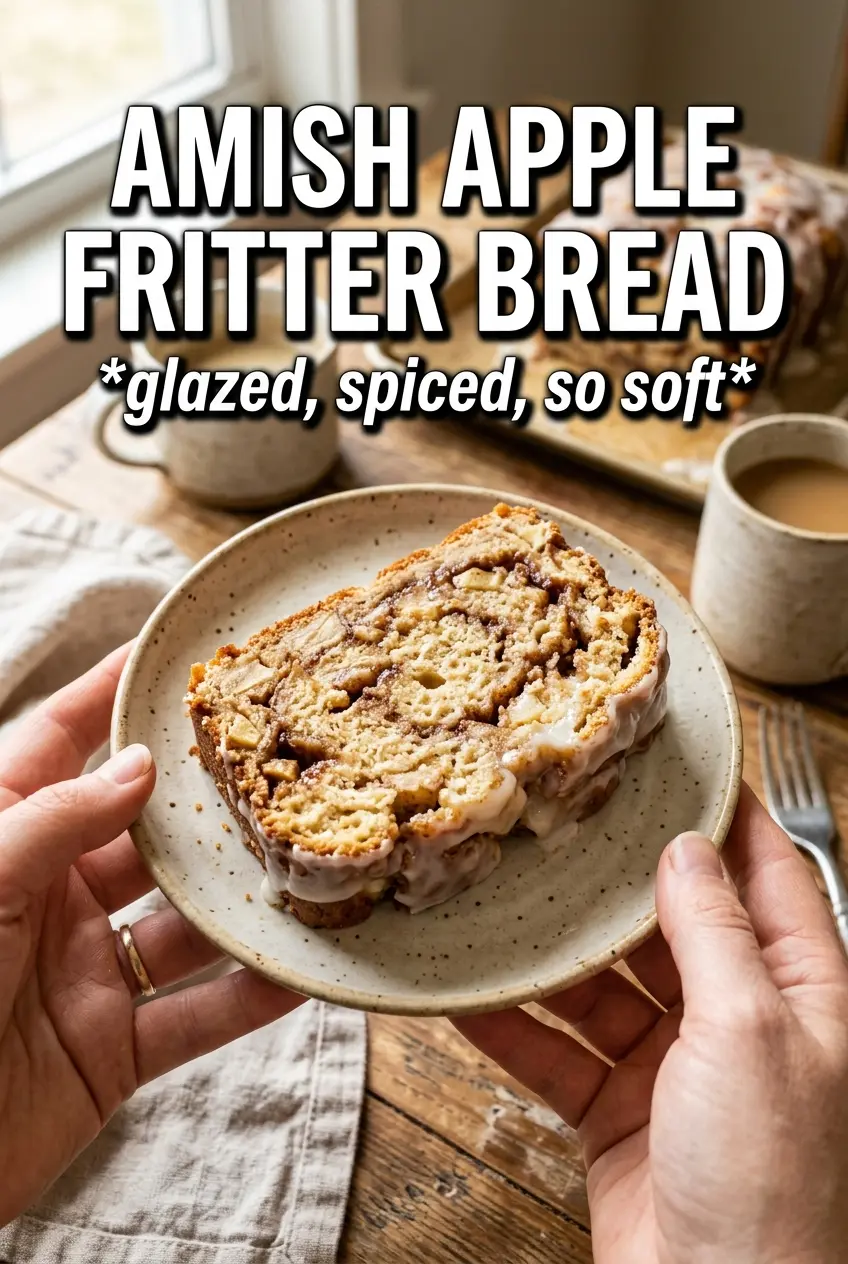
Amish apple fritter bread comes out with a dense, tender crumb, cinnamon-sugar apples tucked through the middle, and a thin glaze that sinks into the warm top just enough to make every slice taste like bakery breakfast bread. The best versions don’t bury the apples in a bland batter; they build a ribbon of spiced fruit and brown sugar that bakes into little caramel pockets. That’s what gives each slice the fritter feel without ever having to fry anything.
This loaf works because the butter and sugar are beaten until fluffy, which gives the bread lift before the batter ever hits the oven. The apples are divided and layered instead of stirred straight through, so you get visible swirls and a more even distribution of moisture. Use firm apples that hold their shape, and dice them small enough to soften in the oven without disappearing.
Below, I’m breaking down the apple choice, the layering order that keeps the loaf from turning muddy, and the small glaze trick that makes the top set with a faint crackle instead of sliding off.
The apples stayed tender without turning to mush, and that cinnamon sugar layer on top baked into this amazing crackly ribbon. I had a slice warm from the pan and the glaze set up just enough to stay on the bread instead of running everywhere.
Save this Amish apple fritter bread for a breakfast loaf with caramelized apple layers and that warm cinnamon-sugar swirl.
The Reason the Apple Layer Has to Stay in Strips, Not Mixed In
If you stir all the apples straight into the batter, the loaf turns heavy in the middle and the cinnamon sugar disappears into the crumb. Layering gives you distinct pockets of fruit and spice, which is what makes this bread taste like an apple fritter instead of standard quick bread. The batter itself is just sturdy enough to hold those layers without collapsing.
The other mistake is overloading the top with raw apple pieces. A little goes a long way here. You want enough apples to keep each slice moist and aromatic, but not so much that the loaf bakes up wet and gummy at the center.
What the Butter, Apples, and Cinnamon Sugar Are Each Doing Here
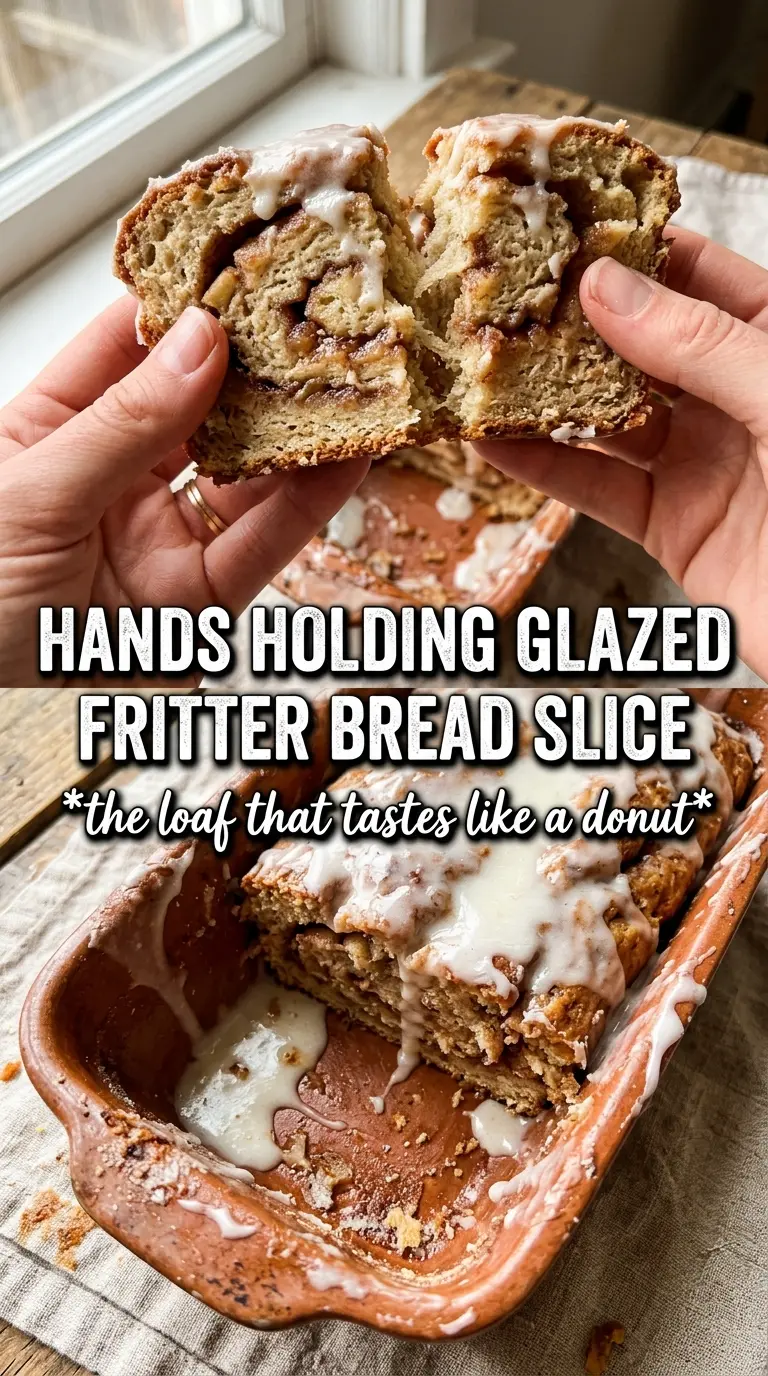
- Apples — Firm apples matter more than sweet apples here. Granny Smith, Honeycrisp, or a mix hold their shape and give the bread a bright bite. Very soft apples will melt into the loaf before the center finishes baking.
- Brown sugar and cinnamon — This is the fritter flavor. Brown sugar brings a little molasses depth and helps the apple layer turn glossy instead of dry. Tossing half of it with the apples keeps the fruit seasoned from the inside out.
- Butter — Softened butter beats into the sugar and traps air, which helps the loaf rise. Melted butter won’t give you the same structure, and the bread will bake up tighter and more cake-like.
- Whole milk — Milk loosens the batter without thinning it too far. Whole milk keeps the crumb richer; lower-fat milk works in a pinch, but the loaf won’t taste quite as plush.
- Powdered sugar glaze — This isn’t just decoration. It seals in a little moisture and gives the top that bakery-style finish. Add the milk slowly so it stays drizzleable instead of turning watery.
Building the Swirl So the Loaf Bakes Up Clean
Whipping the Base
Beat the butter and granulated sugar until the mixture looks pale and fluffy, not just blended. That step gives the bread structure and keeps the crumb from turning dense. Add the eggs one at a time and mix in the vanilla after that so the batter stays smooth and emulsified. If the mixture looks curdled for a moment, keep going; once the flour goes in, it comes together.
Layering the Batter and Apples
Spread half the batter into the pan and use a spoon or offset spatula to nudge it all the way to the corners. Add half the apple mixture, then the remaining plain cinnamon sugar, which melts into a sweet seam as it bakes. Finish with the rest of the batter and top it with the last apples. Don’t stir at this point. Distinct layers are what give each slice those streaks of apple and spice.
Baking Until the Center Sets
Bake until the top is deep golden and a toothpick inserted into the center comes out clean or with a few moist crumbs. If the top browns before the middle is done, tent it loosely with foil for the last stretch of baking. This loaf needs the full bake time to cook through the apple pockets, or the center will sink after cooling. Let it rest in the pan before turning it out so the layers set instead of tearing apart.
Glazing While It’s Warm
Whisk the powdered sugar and milk until you get a thick but pourable glaze, then drizzle it over the warm loaf. Warm bread absorbs a little of the glaze and leaves a sweet finish on the outside instead of a hard shell. If it’s too thin, it disappears; if it’s too thick, it sits in a clumpy line. Aim for something that ribbons off the spoon.
How to Adapt This Amish Apple Fritter Bread Without Losing the Good Part
Gluten-Free Version That Still Holds Together
Use a 1:1 gluten-free baking blend that includes xanthan gum. The loaf will be a little more delicate when warm, so let it cool fully before slicing. Skip blends that are just rice flour, or the crumb turns sandy and the center can collapse.
Dairy-Free Swap With a Softer Crumb
Use plant-based butter and an unsweetened milk alternative with a little body, like oat milk. The bread still bakes up tender, though the flavor loses a little richness. Keep the glaze slightly thicker so it sets well on the top of the loaf.
Making It a Little Less Sweet
Cut the glaze in half or leave it off entirely if you want the apple-cinnamon layer to do the talking. You can also reduce the granulated sugar by a couple of tablespoons without hurting the structure. Don’t reduce the brown sugar in the apple layer too much, or you lose the caramelized ribbon that makes the loaf taste like a fritter.
Using Pears Instead of Apples
Firm pears can work, but they soften faster and bring a gentler flavor. Dice them small and check the loaf a few minutes early, since pear-filled batter can go from tender to wet in the center more quickly than apple batter. The result is softer and more floral, not as crisp or tangy.
Storage and Reheating
- Refrigerator: Store covered for up to 4 days. The glaze will soften, and the crumb gets a little denser after the first day.
- Freezer: Freeze the loaf or individual slices tightly wrapped for up to 2 months. I’d freeze it without glaze if possible, then add fresh glaze after thawing.
- Reheating: Warm slices in the microwave for 15 to 20 seconds or in a low oven until just heated through. Don’t blast it on high heat, or the apples turn tough and the bread dries out before the center is warm.
Questions I Get Asked About This Recipe
Amish Apple Fritter Bread
Ingredients
Equipment
Method
- Preheat oven to 350F, then grease a 9x5 loaf pan.
- Mix brown sugar and 2 teaspoons cinnamon, then toss half with the diced apples.
- Beat unsalted butter and granulated sugar until fluffy.
- Add eggs and vanilla extract, and mix until smooth.
- Whisk all-purpose flour, baking powder, baking soda, and salt.
- Alternate adding the flour mixture and whole milk to the butter mixture, mixing just until combined.
- Pour half the batter into the loaf pan, then layer half the apple mixture on top and sprinkle with the remaining plain cinnamon-sugar.
- Add the remaining batter, then top with the remaining apples.
- Bake 55-60 minutes at 350F until a toothpick comes out clean.
- While warm, drizzle glaze over the loaf, letting it soak slightly into the crumb.