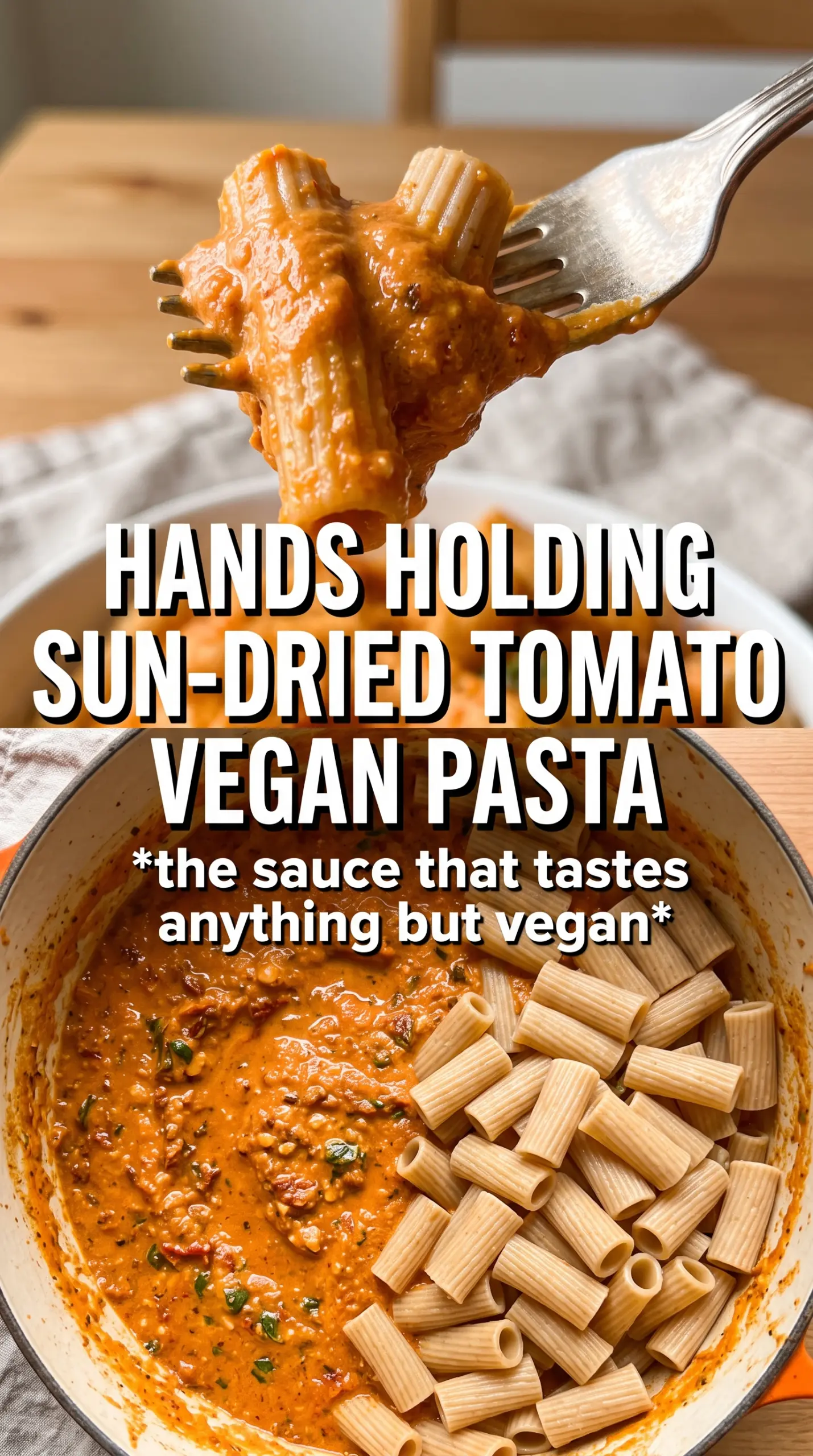
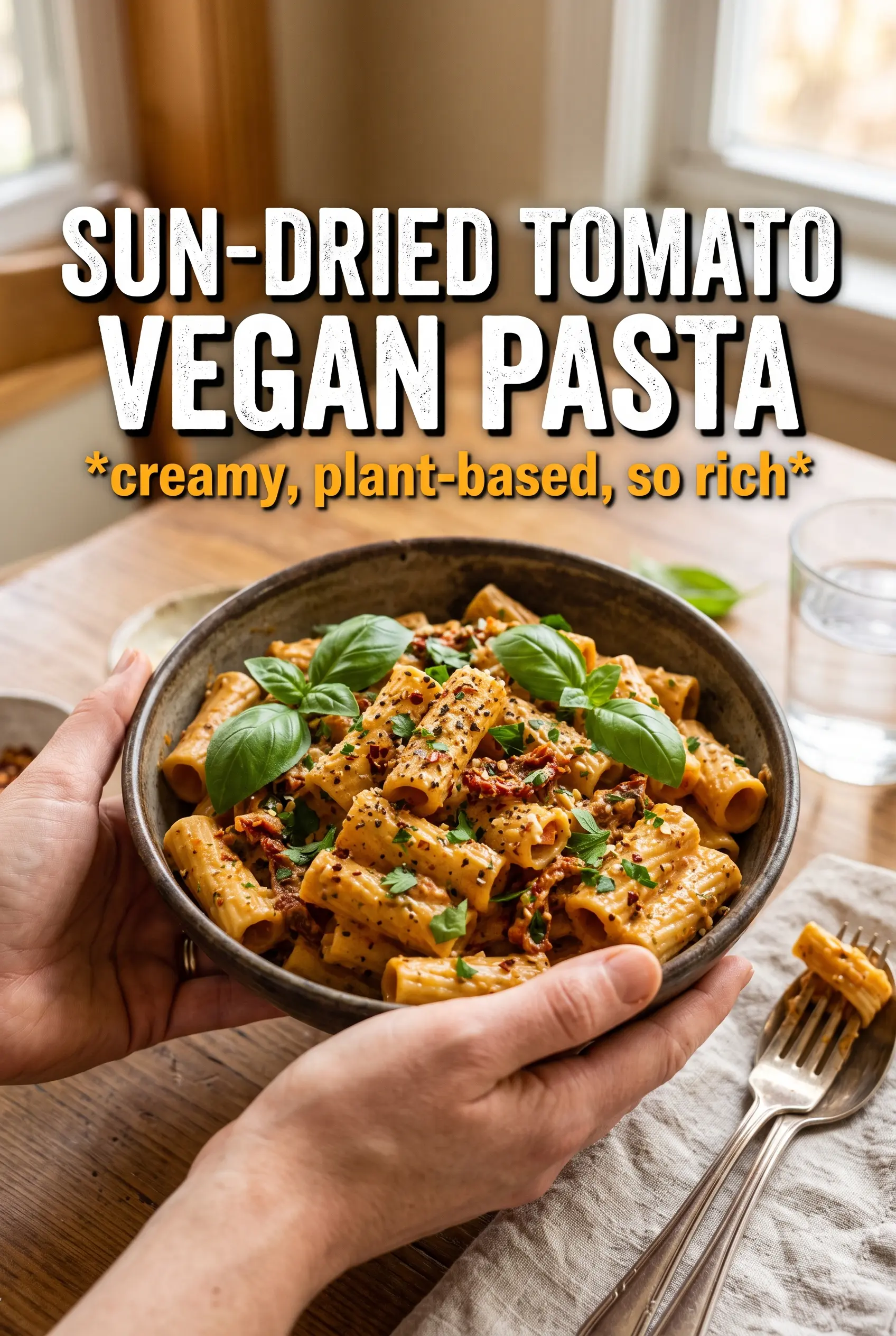
Sun-dried tomato vegan pasta hits that sweet spot between comfort food and weeknight practicality: glossy, clingy sauce, tender pasta, and enough garlic and basil to keep every bite lively. The coconut cream gives it body without dairy, while the sun-dried tomatoes bring a concentrated tang that tastes like the sauce spent hours simmering, even though it comes together fast.
What makes this version work is the balance. The tomato paste deepens the flavor and helps the sauce thicken, but it doesn’t overpower the sun-dried tomatoes. Nutritional yeast steps in with a savory, parm-like edge, and a little pasta water turns the sauce from thick to silky so it coats the rigatoni instead of sitting in a heavy layer underneath it.
Below you’ll find the small details that keep the sauce smooth, the best way to work the spinach in without overcooking it, and a few swaps if you need to make this pantry-friendly or gluten-free.
The sauce turned out silky and clung to every piece of penne, and the spinach wilted in just the right amount. My husband kept going back for “one more bowl” because the sun-dried tomato flavor was so rich.
Love a creamy dairy-free pasta? Save this Sun-Dried Tomato Vegan Pasta for the nights when you want a rich sauce that comes together in one pan.
The Trick to Keeping This Sauce Creamy Without Dairy
The sauce stays smooth because the heat is controlled. Coconut cream can separate if it gets hammered on a hard boil, and nutritional yeast can turn a little gritty if it cooks too aggressively. A gentle simmer is enough to melt everything together and let the tomato paste do its job without scorching.
The other mistake is adding too much pasta water too fast. Start with a small splash and toss until the sauce loosens and starts clinging in a glossy layer. You want the pasta to look coated, not soupy. If it starts to feel thin, keep tossing over low heat for another minute; the starch will help the sauce tighten back up.
- Sun-dried tomatoes in oil — These bring concentrated flavor and a little built-in fat, which helps the sauce taste fuller. Dry-packed sun-dried tomatoes work in a pinch, but you’ll lose some richness and should add an extra drizzle of olive oil.
- Full-fat coconut cream — This is what gives the sauce body. Light coconut milk won’t hold the same texture, and you’ll end up with something closer to broth than sauce.
- Nutritional yeast — It adds the savory, cheesy note that makes this feel finished. There’s no real substitute for the same flavor, but if you’re out, a spoonful of white miso can add depth, though the sauce will taste more savory than cheesy.
- Sun-dried tomato oil — Use it if it’s there. It layers more tomato flavor into the pan right from the start, and plain olive oil just doesn’t bring the same punch.
What Each Ingredient Is Actually Doing in This Recipe
- Primary ingredient (the star) — Quality matters most. Choose the best you can find.
- Cooking medium (oil, butter, or broth) — This carries flavors and prevents dryness.
- Seasonings (salt, pepper, spices, herbs) — Layer flavors so nothing overpowers. Build depth gradually.
- Aromatics (garlic, onion, herbs) — Cook with fat to bloom flavors. Become the foundation.
- Supporting ingredients — Complement the main ingredient without overpowering it.
- Sauce or liquid (if applicable) — Brings flavors together. Balance richness with acid.
- Acid (lemon, vinegar, wine, or other) — Brightens and prevents flat-tasting results.
- Final finish (garnish, glaze, or sauce) — Prevents one-dimensional taste and adds visual appeal.
Building the Sauce Before the Spinach Goes In
Waking Up the Garlic and Tomatoes
Heat the sun-dried tomato oil until it shimmers, then add the garlic and chopped tomatoes. You want the garlic fragrant and soft, not browned. If it starts to color too fast, the pan is too hot and the garlic will taste bitter by the time the sauce is finished. Two minutes is enough to pull the flavor into the oil.
Cooking the Tomato Paste Into the Pan
Stir in the tomato paste and let it cook for about a minute. This step deepens the color and takes away that raw, tinny edge tomato paste can have when it goes straight into a sauce. You should smell something sweet and concentrated, almost like roasted tomatoes. If the paste sticks too much, lower the heat and keep stirring; it should darken slightly, not burn.
Letting the Sauce Come Together Slowly
Add the coconut cream, Italian seasoning, red pepper flakes, and nutritional yeast, then simmer gently. Small bubbles around the edges are perfect. If the mixture is boiling hard, turn the heat down; that is when coconut cream can split and the sauce can look oily instead of smooth. Let it cook until it thickens enough to coat a spoon.
Finishing With Pasta Water and Spinach
Toss in the cooked pasta and add reserved pasta water a splash at a time until the sauce loosens and clings. The spinach should go in last so it wilts from the heat of the sauce and pasta without turning dark and muddy. Once it turns bright green and collapses into the noodles, pull the pan off the heat and season with salt and pepper. That last seasoning matters more than people think because the sun-dried tomatoes and nutritional yeast both bring their own saltiness.
Make It Gluten-Free With the Right Pasta
Use a sturdy gluten-free penne or rigatoni that holds its shape in sauce. Rice-based pasta can get soft fast, so stop cooking it a minute early and finish it in the pan with the sauce. That keeps it from falling apart once the coconut cream and pasta water hit it.
Swap the Coconut Cream for Cashew Cream
If you don’t want the faint coconut note, use cashew cream instead. It gives the sauce a milder, more neutral finish and a very similar richness. Blend soaked cashews with water until completely smooth, then add it the same way you would the coconut cream.
Add Protein Without Changing the Sauce
White beans or pan-seared tofu both work well here. Stir the beans in with the pasta so they warm through, or add crisped tofu on top at serving time so it keeps its texture. The sauce is sturdy enough to handle either without getting heavy.
Storage and Reheating
- Refrigerator: Store leftovers in an airtight container for up to 4 days. The sauce will thicken as it chills, which is normal.
- Freezer: It freezes, but the texture gets a little softer after thawing. Freeze in single portions for up to 2 months, then thaw overnight in the refrigerator.
- Reheating: Warm gently on the stovetop with a splash of water or unsweetened plant milk. The biggest mistake is blasting it in the microwave until the sauce breaks; low heat and a little liquid bring it back together.
Questions I Get Asked About This Recipe
Sun-Dried Tomato Vegan Pasta
Ingredients
Equipment
Method
- Bring a large pot of salted water to a boil and cook the rigatoni or penne until al dente. Reserve 1 cup of pasta water, then drain the pasta.
- Heat the sun-dried tomato oil in a large pan over medium heat until shimmering. Add the chopped sun-dried tomatoes and minced garlic and sauté for 2 minutes, until fragrant and lightly softened.
- Add the tomato paste and cook for 1 minute, stirring until it darkens slightly. Stir in the full-fat coconut cream, Italian seasoning, red pepper flakes, and nutritional yeast, then simmer for 5 minutes to thicken.
- Add the drained pasta to the pan and toss, adding reserved pasta water as needed to coat the pasta. Add the baby spinach and toss until wilted, about 1–2 minutes.
- Season with salt and black pepper to taste, then top with fresh basil. Serve with extra nutritional yeast for a parmesan-like finish.