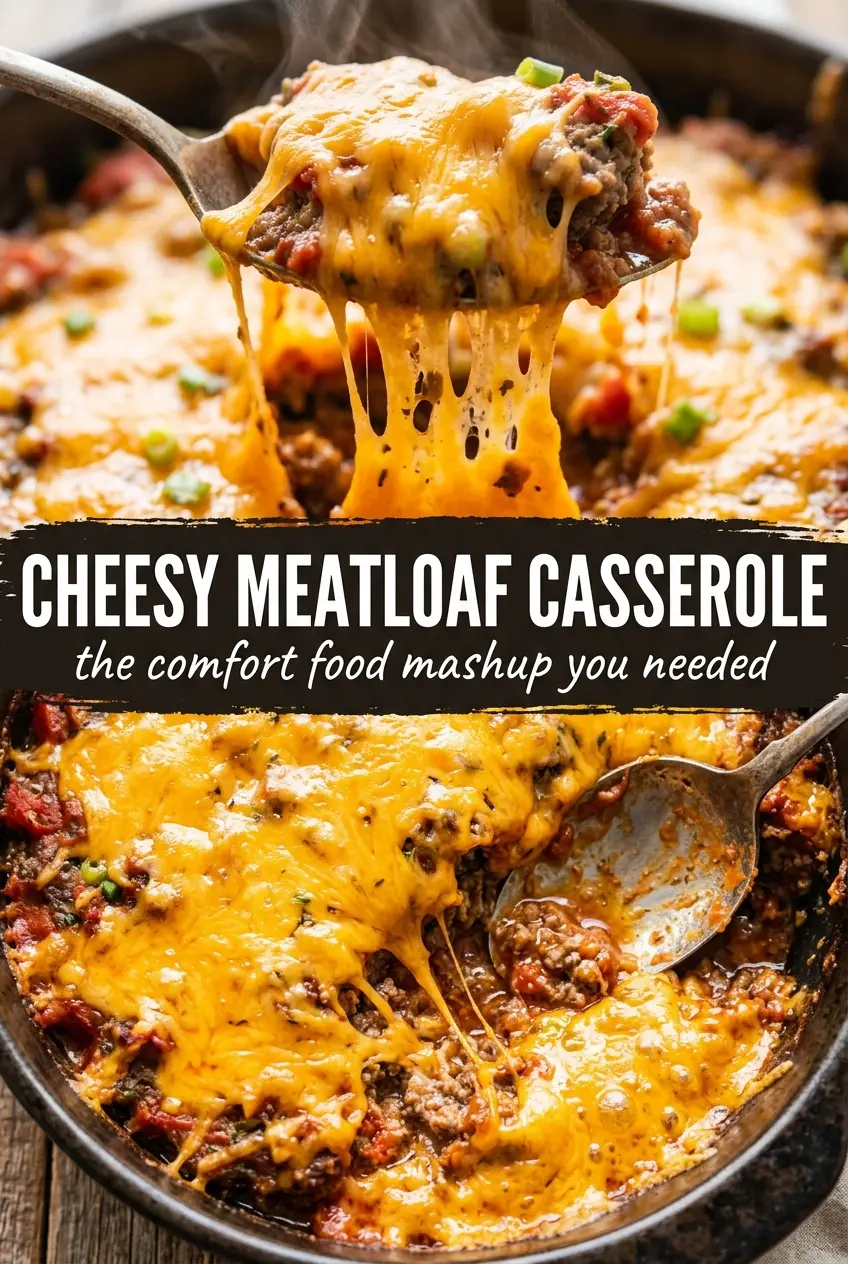
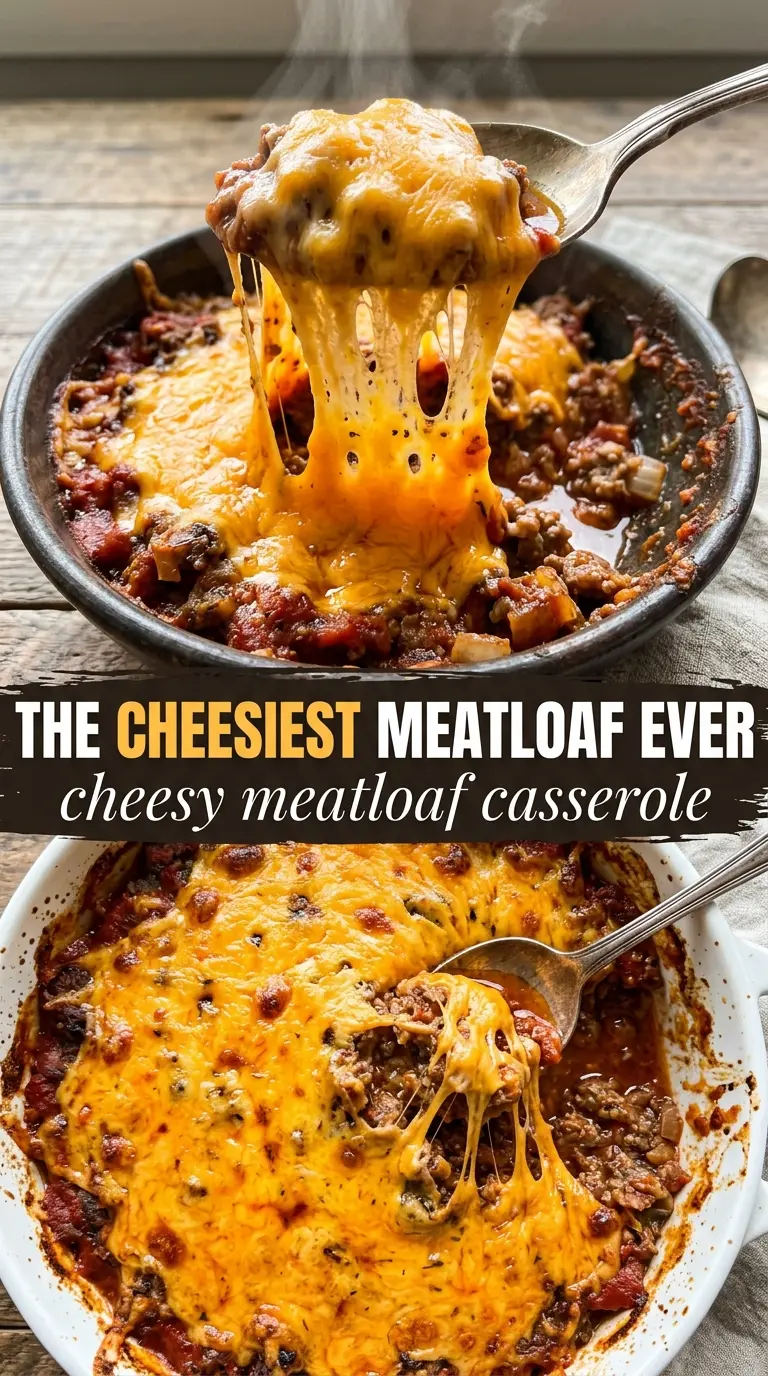
Cheesy meatloaf casserole gives you all the comfort of a classic meatloaf, but with a gooier center, a caramelized ketchup glaze, and melted cheddar that runs through every slice. Baking it in a casserole dish keeps the shape neat enough to serve, while still giving the edges enough contact with the pan to develop those browned bits everyone goes after first.
The key here is balance. The breadcrumbs and milk keep the beef tender, the eggs hold everything together, and the shredded cheese gets folded into the meat so it doesn’t just sit on top and slide off. A two-stage glaze builds flavor without burning: the first layer sets on the meat while it bakes, and the second layer finishes sticky and glossy near the end.
Below you’ll find the little details that keep this from turning dry or greasy, plus a few ways to adapt it when you need to use what you have on hand.
The glaze caramelized instead of sliding off, and the cheddar stayed tucked inside the loaf so every slice came out moist and cheesy.
Cheesy meatloaf casserole with a sticky ketchup glaze and melted cheddar layers is the kind of dinner worth pinning for busy nights.
The Part That Keeps the Loaf Tender Instead of Dense
Meatloaf gets heavy when the mixture is packed too tightly or when it’s short on moisture. The milk and breadcrumbs need time to soak into the beef, and the eggs should be mixed in just until everything looks evenly combined. If you work it like bread dough, you squeeze out the tenderness before it ever hits the oven.
The other place people go wrong is with the cheese. Folding in most of the cheddar instead of piling it all on top keeps the middle juicy and gives you those pockets of melted cheese that make each slice feel a little richer. The casserole dish matters here too, because it helps the loaf cook evenly without drying out the sides before the center is done.
What the Cheese, Glaze, and Beef Are Each Doing Here
- Ground beef — An 80/20 blend gives you enough fat for flavor and moisture without leaving the casserole greasy. Leaner beef can work, but the meatloaf will eat a little drier unless you’re careful not to overbake it.
- Breadcrumbs — These soften in the milk and act like the cushion that keeps the meat from tightening up. Fine dry breadcrumbs are ideal, but crushed saltines or plain panko work in a pinch; just know panko gives a slightly looser texture.
- Sharp cheddar — Sharp cheddar brings enough flavor to stand up to the beef and glaze. Pre-shredded cheese works, but freshly shredded melts more smoothly and gives you fewer waxy streaks in the finished casserole.
- Worcestershire sauce — This is the deep savory note that makes the meat taste seasoned all the way through. There isn’t a perfect substitute, but soy sauce plus a small splash of vinegar gets you close if that’s what you have.
- The glaze — Ketchup, brown sugar, and Worcestershire bake into a sticky top that balances the salt and richness underneath. Don’t skip the second glaze layer; it’s what gives the casserole that glossy finish instead of a flat tomato top.
Building the Loaf So It Bakes Evenly All the Way Through
Mix the Base Without Overworking It
Start by combining the beef, breadcrumbs, eggs, milk, onion, garlic, Worcestershire, garlic powder, salt, and pepper until the mixture just holds together. The meat should look evenly speckled, but not smashed into a paste. If you overmix, the loaf gets compact and bouncy instead of tender.
Fold in the Cheese and Shape the Loaf
Add most of the cheddar and fold it through gently with your hands or a spoon. Press the mixture into a greased 9×13 dish and shape it into one even loaf, leaving a little space around the sides so the heat can move. Uneven thickness is what causes dry ends and an underdone center, so level the top before it goes into the oven.
Glaze, Bake, and Finish with the Melted Top
Mix the glaze and spread half over the loaf before baking. That first layer sets into the meat, and the second layer goes on after 50 minutes when the surface has already started to firm up. Add the remaining cheddar on top for the final bake, and pull it when the center reaches 160°F; if you cut too early, the juices run out and the slices fall apart.
How to Adapt This When You Need a Different Version
Gluten-Free Meatloaf Casserole
Swap the breadcrumbs for certified gluten-free breadcrumbs or finely crushed gluten-free crackers. The texture stays close to the original, but the loaf may be a touch more delicate, so let it rest the full 10 minutes before slicing.
Dairy-Free Version
Use an unsweetened dairy-free milk and skip the cheddar, or replace it with a melty plant-based cheese that you know actually melts well. You’ll lose some of the rich pockets inside the loaf, but the glaze and Worcestershire still keep the flavor deep and savory.
Swap in Ground Turkey
Ground turkey works, but it’s leaner, so the loaf needs the milk and cheese to carry the moisture. Watch the temperature closely and pull it as soon as it hits 160°F, because turkey dries out faster than beef once it goes past target.
Make It Ahead for a Busy Night
Assemble the loaf and refrigerate it, covered, for up to 24 hours before baking. Hold back the glaze and cheese until you’re ready to cook so the top doesn’t get soggy, then bake from cold and add a few extra minutes if needed.
Storage and Reheating
- Refrigerator: Store slices in an airtight container for up to 4 days. The glaze will thicken and the cheese will set, which actually makes the leftovers slice neatly.
- Freezer: This freezes well. Wrap individual slices tightly and freeze for up to 2 months, then thaw overnight in the refrigerator before reheating.
- Reheating: Warm slices covered in a 325°F oven until heated through, or use the microwave at 50% power so the cheese doesn’t separate and the edges don’t dry out.