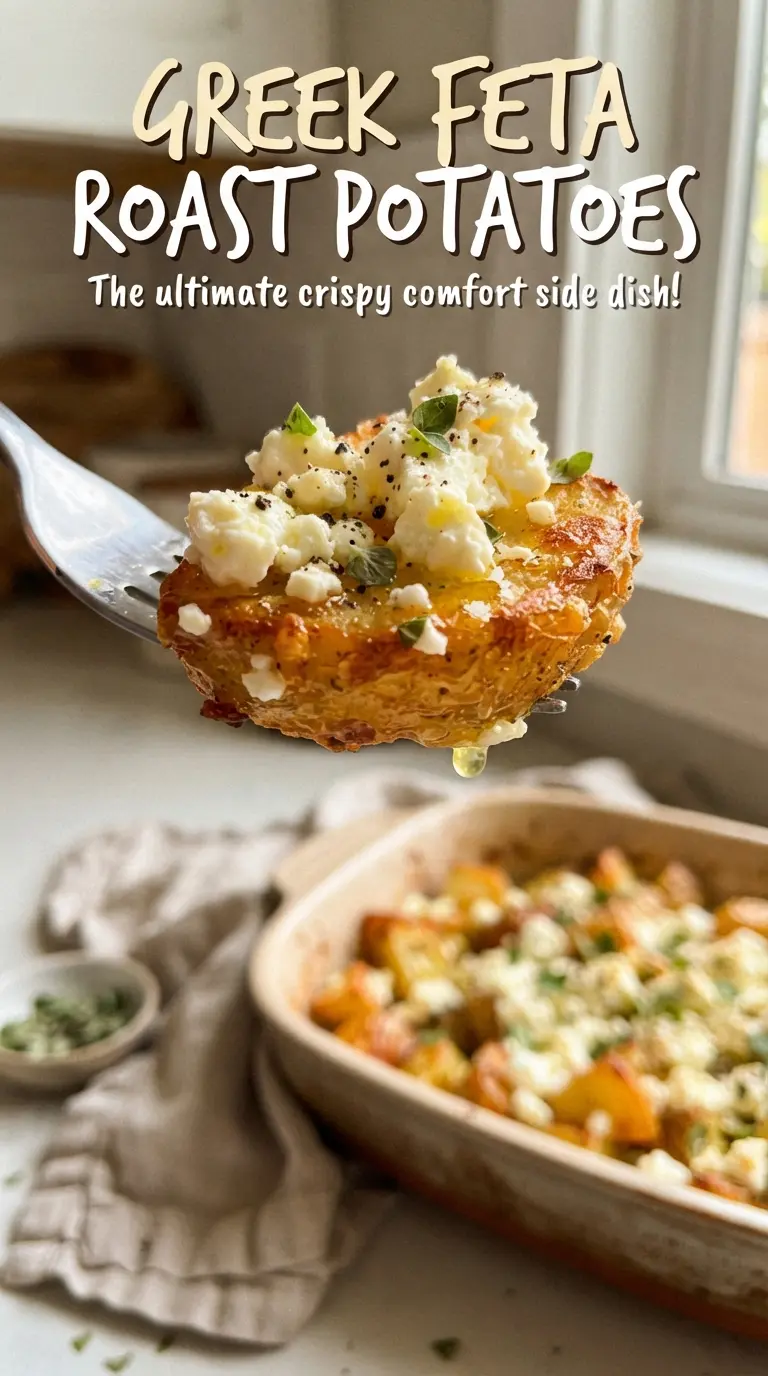
Crispy-edged potatoes with a soft, lemony center and salty feta on top are the kind of side dish that disappears before the main course gets much attention. These Greek feta roast potatoes hit that sweet spot between bright and savory, with enough garlic and oregano to taste like more than just roasted potatoes, but still simple enough to work beside grilled meat, fish, or a big salad.
The trick is roasting the potatoes in a shallow layer of lemon juice, broth, and olive oil instead of just tossing them in fat. The liquid mostly cooks off, leaving behind seasoned potatoes that brown properly instead of drying out, and the lemon keeps the flavor lively all the way through. Feta goes on at the end so it stays crumbly and salty instead of melting into the pan.
Below you’ll find the detail that matters most: how to get the potatoes browned without leaving them limp, plus the one swap I’d use if you only have dried herbs or a different potato on hand.
The potatoes soaked up all that lemony broth and still came out crisp on the edges. I flipped them once, sprinkled the feta on at the end, and the pan was basically empty by dinner.
Crispy Greek feta roast potatoes with lemon, oregano, and salty feta belong in your saved side-dish rotation.
The Liquid Needs to Disappear Before the Potatoes Can Crisp
This recipe fails for one main reason: people expect potatoes to brown while they’re still sitting in a puddle of liquid. They won’t. The broth and lemon juice are there to season the potatoes from the inside and soften the starch at first, but the real browning happens only after the liquid cooks off and the potatoes start roasting in their own oil.
Use a wide roasting pan, not a deep baking dish. The potatoes need room for steam to escape, or they’ll soften before the edges have a chance to turn golden. Flip them halfway through so the sides touching the pan get color instead of staying pale and soft. If the pan still looks wet at the end, keep roasting until the liquid is gone and the bottoms have caught up.
What the Feta, Lemon, and Oregano Are Actually Doing Here
- Yukon gold potatoes — These hold their shape well and turn creamy inside while the cut edges crisp. Russets will get fluffier and more fragile, which changes the texture, and red potatoes can stay a little too waxy for this style.
- Olive oil — This carries the oregano and garlic and helps the potatoes roast instead of dry out. Use a good-tasting olive oil here because you’ll taste it in the finished dish.
- Fresh lemon juice — This is what gives the potatoes that sharp Greek-style brightness. Bottled juice works in a pinch, but fresh lemon tastes cleaner and doesn’t leave the same flat finish.
- Chicken broth — The broth seasons the potatoes all the way through and gives you enough moisture to keep the wedges from scorching before they soften. Vegetable broth works if you want to keep the dish meatless.
- Feta — Add it at the end so it stays crumbly and salty. If you bake it the whole time, it softens into the pan and loses the contrast that makes this dish work.
- Fresh dill or parsley — This finishes the potatoes with something green and fresh right before serving. Dill gives a more classic Greek feel; parsley is milder and keeps the herbs from competing with the lemon.
Roasting the Potatoes Until the Edges Catch
Coating the Wedges Evenly
Put the potatoes straight into the roasting pan and toss them with the oil, lemon juice, broth, garlic, oregano, salt, and pepper until every wedge looks coated. If the seasoning pools in one corner, the potatoes in that spot will taste stronger and roast unevenly. A roasting pan or large sheet-style pan helps the liquid spread out so the wedges can start absorbing flavor right away.
Letting the Oven Do the First Turn
Roast at 425F until the liquid is mostly gone and the potatoes are starting to turn golden underneath, about halfway through the cook time. You should see bubbling at first, then less and less moisture in the pan. If the potatoes are still sitting in a lot of liquid after 25 minutes, your pan is probably too crowded and they need more surface area.
Flipping for Real Browning
Turn the wedges once when the bottoms are beginning to color. This matters because the side against the pan gets the most direct heat and turns crisp first, while the top side usually stays softer. After flipping, spread them back out so they’re not stacked on top of each other; stacked potatoes steam, and steamed potatoes go limp.
Finishing With Feta and Herbs
Once the potatoes are crisp and the liquid is absorbed, scatter the feta and herbs over the top while everything is still hot. The residual heat softens the feta just enough without turning it into sauce. Serve them right away if you want the edges at their best, because they lose some crunch as they sit.
How to Adapt These Potatoes Without Losing the Point
Dairy-Free Version
Skip the feta and finish with extra dill, parsley, and a pinch of flaky salt. You lose the salty creaminess, but the potatoes still have plenty of flavor from the lemon, garlic, and oregano. A spoonful of chopped olives at the end helps replace some of that briny punch.
Vegetable Broth Swap
Use vegetable broth instead of chicken broth if you want a vegetarian side dish. The potatoes will still roast and absorb flavor the same way, but the broth will taste a little lighter, so keep the salt level where it is and rely on the feta for the final seasoning.
Using Russet or Red Potatoes
Russets will crisp more aggressively but can break down at the edges, while red potatoes hold their shape and stay waxier. If you use russets, watch them closely so they don’t fall apart; if you use reds, roast a few extra minutes for better browning.
Storage and Reheating
- Refrigerator: Store leftovers for up to 4 days. The potatoes will soften a bit, but the flavor holds well.
- Freezer: They don’t freeze well once the feta and herbs are on. The texture turns mealy after thawing, so I’d avoid freezing this dish.
- Reheating: Reheat on a sheet pan in a 400F oven until hot and the edges start to crisp again. The microwave will make them soft, which is the fastest way to lose what makes them good.
Questions I Get Asked About This Recipe

Greek Feta Roast Potatoes
Ingredients
Equipment
Method
- Preheat the oven to 425F and set up a roasting pan/sheet pan for hot roasting. Visual cue: ensure the oven is fully preheated so the wedges start crisping quickly.
- Toss the Yukon gold potato wedges with olive oil, fresh lemon juice, chicken broth, minced garlic, dried oregano, salt, and black pepper in the roasting pan. Visual cue: the wedges should look evenly coated and lightly glossy.
- Spread the potatoes in a single layer without overcrowding. Visual cue: each wedge should have space so it can crisp at the edges.
- Roast for 45-50 minutes at 425F, flipping halfway through. Visual cue: they’re done when the liquid is absorbed and the edges are crispy and golden.
- Top the hot roasted potatoes with crumbled feta. Visual cue: the feta should sit on top and begin to soften from the heat.
- Sprinkle with fresh dill or parsley and serve hot. Visual cue: the herbs look bright green and fragrant against the golden wedges.