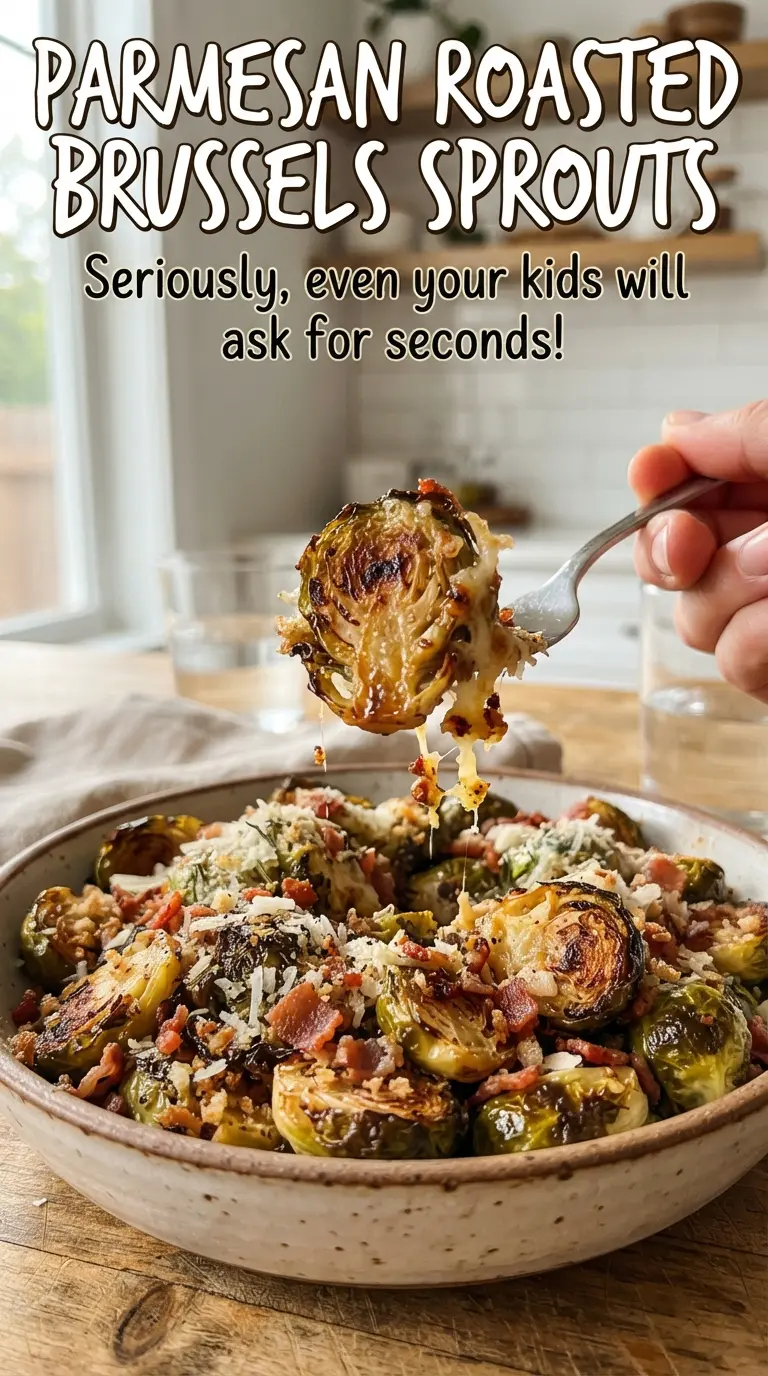
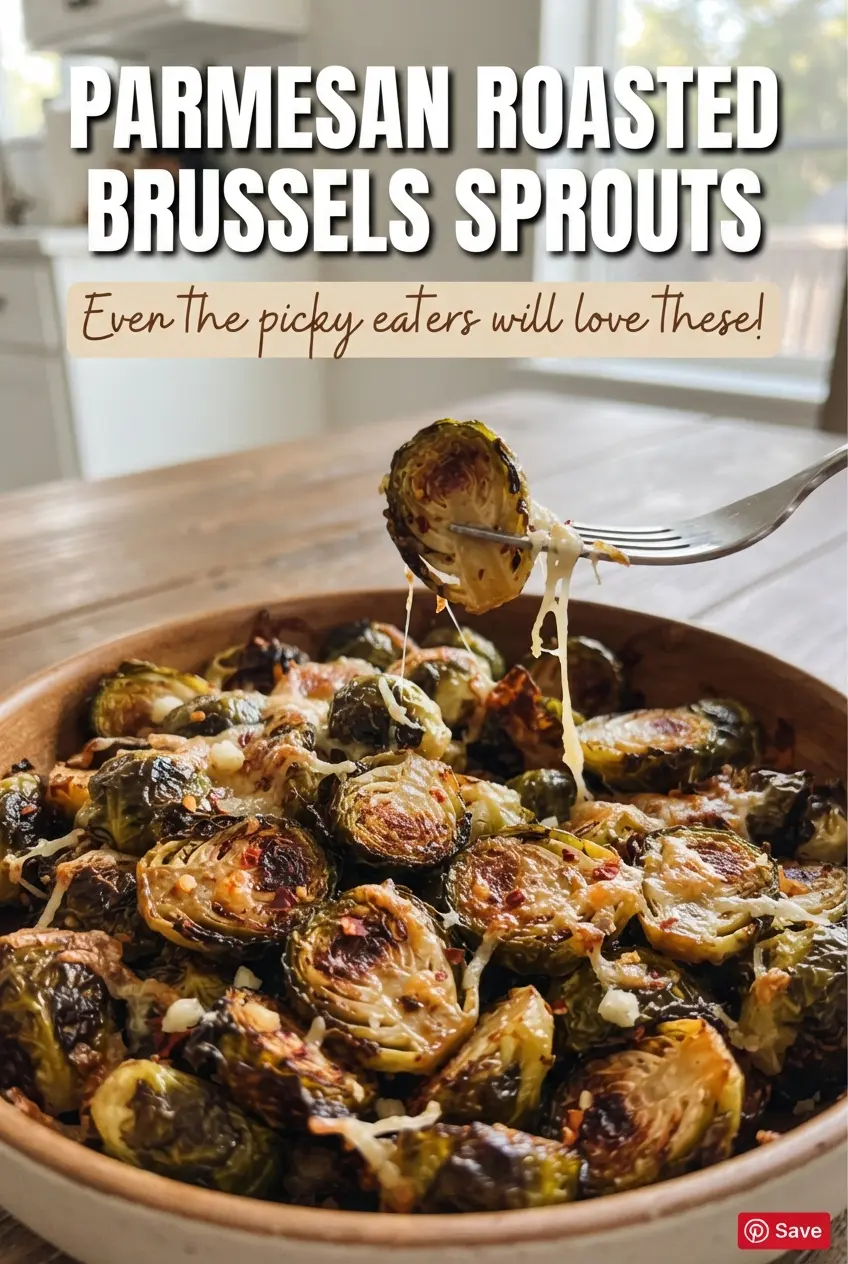
Parmesan roasted Brussels sprouts turn crisp at the edges, tender in the middle, and salty in the best possible way. The real payoff is the cheese that hits the hot pan and bakes into a lacy golden crust underneath the sprouts, so every bite gets a little crunch along with the caramelized vegetable. A squeeze of lemon at the end keeps the whole thing bright instead of heavy.
This version works because the sprouts go cut-side down onto the Parmesan, not mixed in after the fact. That direct contact is what gives you the crust instead of just melted cheese clinging to the pan. Garlic cooks in the oil first, so it perfumes the sprouts without burning in the high heat, and the parchment keeps the cheese from welding itself to the pan.
Below, I’ll show you the small details that keep the cheese crisp, how to get deeper browning without overcooking the sprouts, and a few easy ways to change the flavor while keeping the same good texture.
The Parmesan made the bottom of the sprouts crisp up like a frico, and the lemon at the end kept them from tasting too rich. I followed the cut-side-down tip and they roasted perfectly in 25 minutes.
Parmesan Roasted Brussels Sprouts with that crispy cheese crust deserve a spot in your saved dinner sides.
The Part That Makes the Parmesan Turn Crisp Instead of Gummy
The mistake with cheesy roasted Brussels sprouts is usually timing. If the sprouts sit directly on top of cheese that’s been piled on too thickly, the cheese steams before it can brown. The answer is a thin, even layer of Parmesan on the parchment, then the sprouts pressed cut-side down into it so the flat surface gets full contact with the pan.
That cut side is where you get both browning and texture. Brussels sprouts have enough moisture inside that they’ll soften and steam a little as they roast, so the hot pan has to do the work on the outside. High heat helps the edges caramelize fast before the centers go mushy, and the parchment gives the cheese a chance to crisp instead of sticking permanently to bare metal.
- High oven heat — 425F is hot enough to brown the sprouts and the cheese in the same window. A lower oven leaves you with tender sprouts but pale, floppy Parmesan.
- Cut-side-down placement — the flat surface sears against the cheese layer and keeps the sprouts from rolling around.
- Single layer — crowding traps steam. If the pan is packed, the sprouts soften before the crust sets.
What Each Ingredient Is Actually Doing in This Dish
- Brussels sprouts — Choose firm, tight sprouts with bright green leaves. Smaller sprouts usually roast a little more evenly, but halved larger sprouts work fine as long as the cut faces are flat and dry.
- Olive oil — This coats the sprouts so they roast instead of drying out. You don’t need an expensive bottle here; use one you like the taste of, since the heat will mute some of the finer notes anyway.
- Garlic — Minced garlic perfumes the oil and gives the sprouts a savory edge. Keep it mixed in with the oil so it doesn’t sit on top and scorch before the vegetables are tender.
- Parmesan — Freshly grated Parmesan melts and crisps much better than the shelf-stable stuff in a can. If you need to swap, use another hard grating cheese like Grana Padano or Pecorino, but expect a slightly different salt level and a sharper finish.
- Lemon juice — This is the reset button at the end. It cuts through the richness of the cheese and wakes up the roasted flavor, so don’t skip it if you want the dish to taste balanced.
Roasting the Sprouts So the Edges Crisp Before the Centers Overcook
Coating the Sprouts Evenly
Toss the halved sprouts with olive oil, garlic, salt, and pepper until every cut surface glistens. The goal is a thin coating, not a slick puddle in the bowl. If the oil is uneven, some sprouts will char before others color, and the whole tray will taste patchy.
Building the Cheese Base
Scatter the Parmesan directly onto the parchment-lined sheet pan in an even layer. Then set the sprouts cut-side down on top of the cheese, pressing them lightly so the flat sides make full contact. If you mound the cheese in clumps, you’ll get burned spots instead of that thin, crisp crust.
Watching for the Right Roast
Roast until the sprouts are tender when pierced and the cheese underneath is deep golden at the edges, usually 20 to 25 minutes. The leaves on top should look crisp and a little charred, not pale and damp. If the cheese is still blond, give it another few minutes; if the garlic looks too dark too fast, your oven is running hot and the tray may need to move one rack lower next time.
Finishing with Lemon
Squeeze the lemon over the hot tray right before serving so the juice stays bright. This is the moment that keeps the dish from tasting one-note and heavy. Serve it right away while the Parmesan crust is still crisp underneath the sprouts.
How to Change the Flavor Without Losing the Crispy Cheese Crust
Pecorino Swap for a Sharper Finish
Use Pecorino Romano in place of some or all of the Parmesan if you want a saltier, sharper crust. It browns similarly, but the flavor lands more aggressively, so back off the added salt a little or the dish can taste heavy.
Dairy-Free Version with a Different Kind of Crunch
Skip the Parmesan and roast the sprouts on parchment with a little extra oil, then finish with toasted breadcrumbs if you want crunch. You won’t get the same cheese crust, but you will still get browned edges and a savory bite.
Lemon Zest and Chili Flakes for More Lift
Add lemon zest with the oil and a pinch of red pepper flakes if you want the finished dish to taste brighter and a little hotter. The zest carries through more than juice alone, and the chili gives the Parmesan crust a subtle back-of-the-throat warmth.
Storage and Reheating
- Refrigerator: Store leftovers in an airtight container for up to 3 days. The crust softens in the fridge, so expect the sprouts to lose some crispness.
- Freezer: I don’t recommend freezing this one. The sprouts turn watery and the Parmesan crust loses its texture after thawing.
- Reheating: Rewarm on a sheet pan in a 400F oven until the edges crisp back up, about 8 to 10 minutes. The mistake is using the microwave, which makes the sprouts soggy and turns the cheese leathery instead of crisp.
Answers to the Questions Worth Asking
Parmesan Roasted Brussels Sprouts
Ingredients
Equipment
Method
- Preheat oven to 425F and line a sheet pan with parchment. Make sure the oven is fully heated before roasting for the best browning.
- Toss Brussels sprouts with olive oil, garlic, salt, and black pepper. Coat the cut surfaces so they brown evenly.
- Sprinkle Parmesan evenly over the pan, then place sprouts cut-side down on top of the cheese. Press lightly so the Parmesan adheres in a thin, lacy layer.
- Roast for 20-25 minutes until tender and the Parmesan forms a golden crust. Look for charred, crisp edges and bubbling, browned cheese.
- Squeeze lemon juice over the top and serve hot. Add the lemon right after roasting so the flavor stays bright.