Crispy bacon, sweet onion, and tender cabbage turn into one of those side dishes that disappears faster than the main course. The best versions have a little caramelization on the edges, a savory base from the bacon drippings, and just enough vinegar at the end to keep everything from tasting heavy.
This version works because the cabbage isn’t rushed. It starts in bacon fat, then softens slowly enough to pick up color instead of steaming in its own moisture. The small hit of sugar encourages browning, and the butter rounds out the sharper edges of the onion and garlic. The vinegar goes in at the end, after the cabbage is tender, so it wakes everything up instead of cooking off.
Below, I’ll walk through the point where cabbage usually goes limp or watery, the ingredient choices that matter most, and a few useful ways to adjust the dish without losing what makes it good.
The cabbage stayed tender but still had a little bite, and the vinegar at the end kept the bacon from making it feel greasy. My husband went back for seconds before I even sat down.
Save this Southern Fried Cabbage for a smoky, tangy side with crispy bacon and caramelized edges.
The Part That Keeps Fried Cabbage from Turning Watery
The biggest mistake with fried cabbage is crowding the pan and expecting it to brown anyway. Cabbage carries a lot of moisture, and if the skillet is overloaded it steams before it has a chance to caramelize. A large skillet matters here, and so does patience. Let the onion soften first, then cook the cabbage over medium heat with occasional stirring so it can sit against the hot pan long enough to pick up color.
The other key point is when to salt it. Salt pulls moisture out, which is useful once the cabbage is in the pan and cooking down, but if the heat is too low the moisture just pools. You want a lively sizzle, not a soggy pile. The vinegar also matters more than people think; it cuts through the bacon fat and wakes up the sweetness in the onion and cabbage.
What Each Ingredient Is Actually Doing in This Skillet
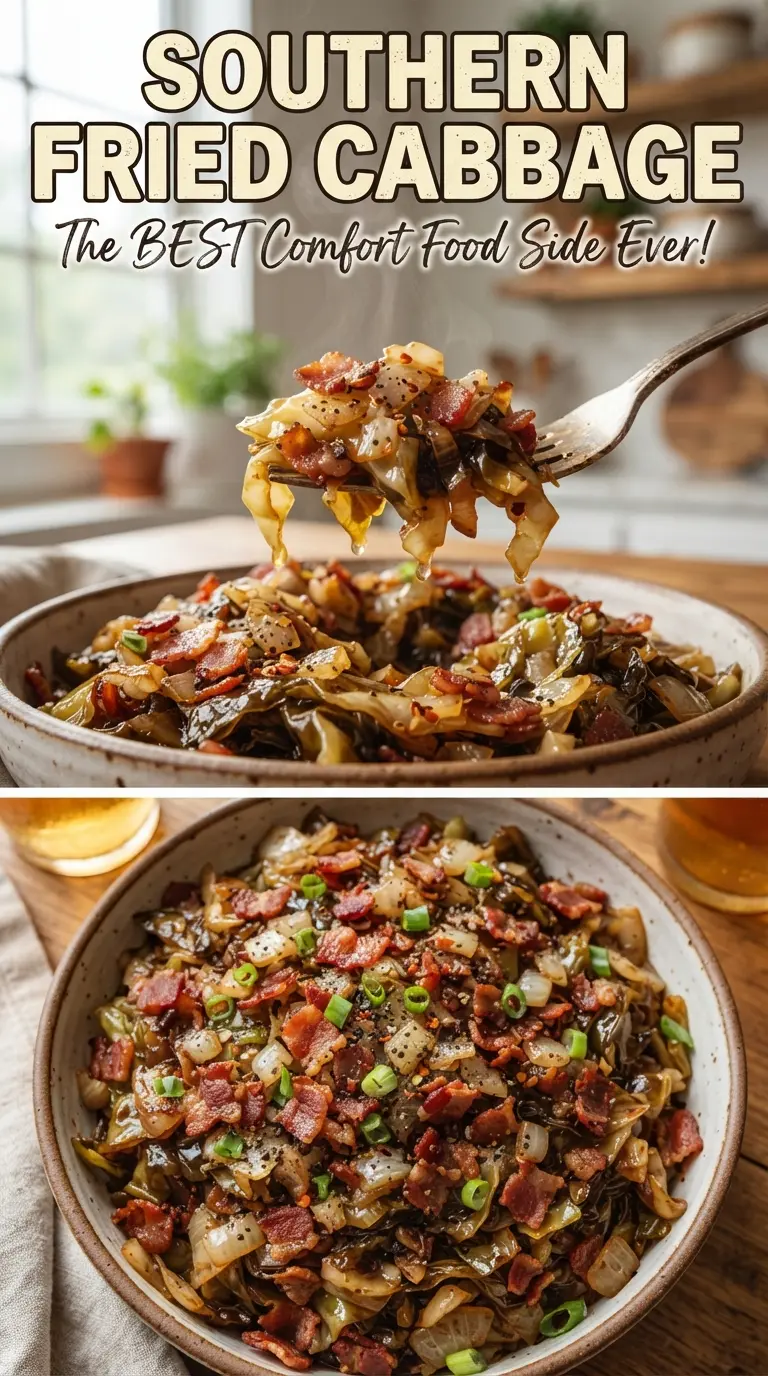
- Bacon — This is the backbone of the dish. The drippings season the cabbage from the start, and the crisp pieces stirred back in at the end keep the texture from turning soft all the way through. Thick-cut bacon works, but regular bacon renders faster and leaves more fat for the cabbage to cook in.
- Yellow onion — Onion brings sweetness once it softens and starts to turn translucent. Slice it thin enough that it melts into the cabbage, not in big chunks that stay separate.
- Green cabbage — Use a firm head with tight leaves. Pre-shredded cabbage will work in a pinch, but fresh chopped cabbage holds up better and gives you those tender edges instead of limp strands.
- Butter — Bacon fat carries the flavor, but butter smooths out the finish and helps the cabbage brown more evenly. If you need a dairy-free version, use a little extra bacon drippings or a neutral oil with good heat tolerance.
- Apple cider vinegar — Don’t swap this for a strong white vinegar unless that’s all you have. Apple cider vinegar adds brightness without flattening the savory flavor, and it should go in at the very end so it stays sharp.
- Sugar — Just a small amount, but it helps the edges caramelize and balances the vinegar. Leave it out if you want a less sweet finish, but the cabbage will taste a little flatter.
Building the Flavor Without Letting the Cabbage Collapse
Rendering the Bacon First
Start the bacon in a cold skillet and bring it up over medium heat so the fat renders before the edges scorch. You’re looking for crisp pieces and a good layer of drippings in the pan. If the bacon is browned on the outside but still chewy, it hasn’t had enough time to release its fat, and the cabbage won’t have the same depth of flavor.
Softening the Onion and Garlic
Add the onion to the hot drippings and cook until it turns soft and a little glossy. The garlic only needs about 30 seconds; once it smells fragrant, move on. If the garlic browns, it turns bitter fast, and that bitterness shows up in a simple dish like this one.
Cooking the Cabbage Down
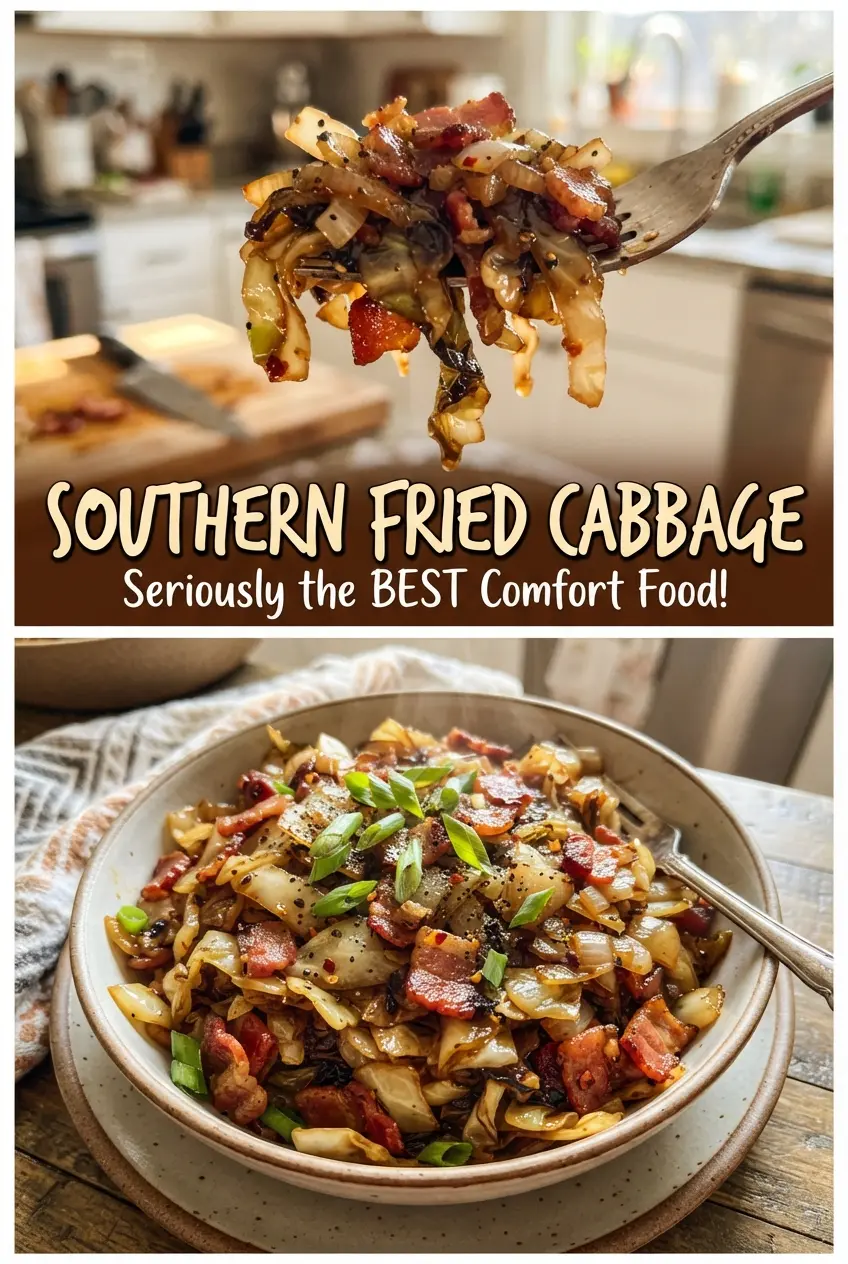
Add the cabbage, butter, salt, pepper, red pepper flakes, and sugar, then stir to coat every piece. Let it sit in the pan between stirs so the edges can touch the heat and darken a little. The cabbage is ready when it’s tender but not mushy, with golden spots on the leaves and no puddle of liquid at the bottom of the skillet.
Finishing with Vinegar and Bacon
Stir in the apple cider vinegar and the crisp bacon after the heat has done most of the work. The vinegar should smell bright the second it hits the pan. If you add it too early, it disappears into the cooking liquid and you lose that clean, tangy finish that keeps the whole dish lively.
How to Change This Dish Without Losing the Good Part
Make It Meatless but Still Deeply Savory
Skip the bacon and start with butter plus olive oil, then add a pinch of smoked paprika for that same warm, savory note. You’ll lose the crisp bacon texture, but the cabbage still browns well and holds onto a rich, Southern-style flavor.
Dial Back the Sweetness
Leave out the sugar if you want a sharper, more savory skillet. The cabbage will still caramelize from the onion and bacon fat, but the finish will taste a little less rounded and a little more brisk.
Make It Low-Carb Friendly
This dish already fits a low-carb approach as written if you skip or reduce the sugar. The cabbage cooks down into a filling side without needing starch, and the bacon fat gives it enough richness to stand on its own.
Storage and Reheating
- Refrigerator: Store leftovers in an airtight container for up to 4 days. The cabbage softens a little more as it sits, but the flavor gets even better.
- Freezer: It freezes, but the texture turns softer after thawing, so I wouldn’t freeze it unless that doesn’t bother you. Cool it completely first and pack it tightly.
- Reheating: Warm it in a skillet over medium-low heat until heated through. The mistake to avoid is microwaving it too long, which makes the cabbage watery and dulls the bacon texture.
Questions I Get Asked About This Recipe
Southern Fried Cabbage
Ingredients
Equipment
Method
- Cook the bacon in a large cast iron skillet over medium heat for 8 minutes until crisp, then remove it and leave the drippings in the skillet.
- Add the onion to the hot drippings and cook for 5 minutes, stirring occasionally, until softened.
- Stir in the garlic and cook for 30 seconds to lightly bloom its aroma.
- Add the cabbage, butter, salt, black pepper, red pepper flakes, and sugar to the skillet and toss to coat.
- Cook for 12-15 minutes, stirring occasionally, until the cabbage is tender and caramelized at the edges.
- Stir in the apple cider vinegar and let it simmer briefly, then fold in the crispy bacon until evenly combined.
- Serve the southern fried cabbage warm with a final look for golden, crisped edges.