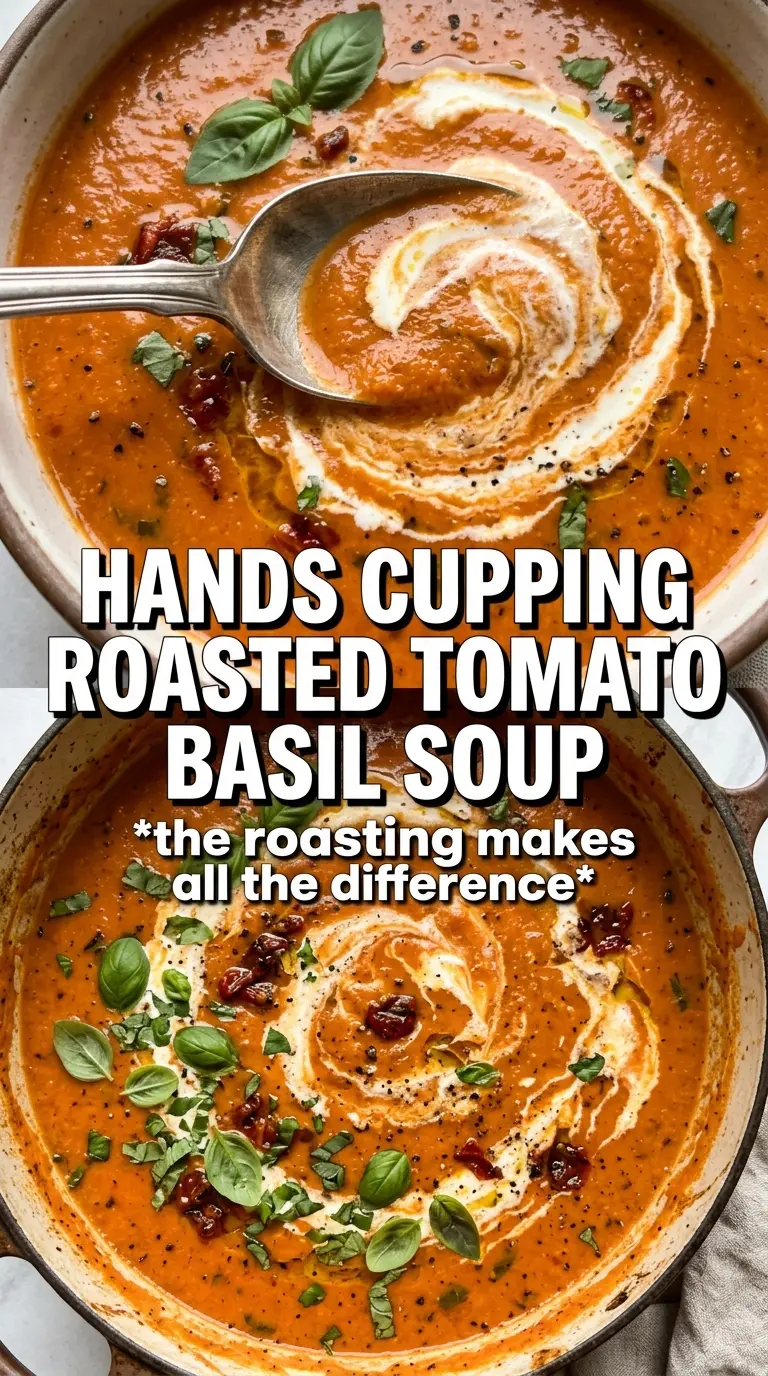
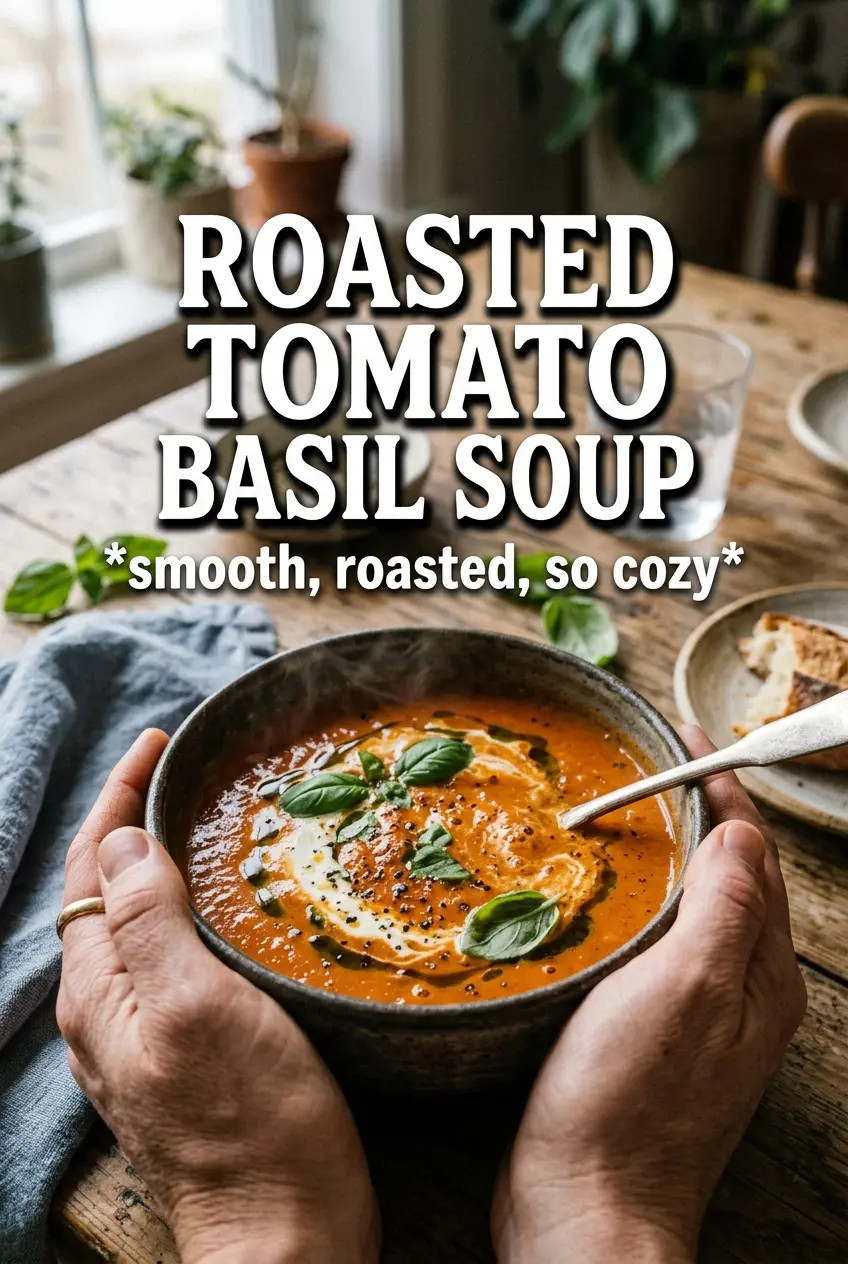
Roasted tomato basil soup turns deep, silky, and naturally sweet when the tomatoes, onion, and garlic spend time in a hot oven first. That extra roast is what separates a good tomato soup from one that tastes flat or metallic. The edges caramelize, the garlic softens into something mellow and spreadable, and the basil comes in at the end with enough freshness to lift the whole bowl.
I like using Roma or vine tomatoes because they hold onto their flavor well and don’t collapse into watery disappointment. A splash of balsamic vinegar sharpens the sweetness, while a little cream rounds everything out without making the soup taste heavy. If your tomatoes are a little underwhelming at the market, roasting them is the best fix I know.
Below you’ll find the small details that matter here, especially how to get real caramelization instead of steamed vegetables and how to finish the soup so it stays smooth and bright.
The roasted garlic made this taste rich without needing a ton of cream, and the basil stayed fresh instead of turning dull. I served it with grilled cheese croutons and my kids asked for the same bowl again the next night.
Save this roasted tomato basil soup for the nights when you want a smooth, deeply roasted bowl with grilled cheese croutons on top.
The Roast Is Doing More Than Heating the Tomatoes
Tomatoes that go straight into a pot can make soup taste thin unless they’re peak-season and very ripe. Roasting changes that. The heat drives off excess moisture, concentrates the flavor, and gives the edges enough browning to add the savory backbone this soup needs. That’s also why the onion and garlic belong on the same tray: they soften into the sweetness of the tomatoes instead of competing with them.
The common mistake here is crowding the pan. If the vegetables are stacked on top of each other, they steam and the soup loses that roasted depth. Spread them out in a single layer and use a rimmed sheet pan so the juices stay with the vegetables instead of burning on the oven floor.
- Roma or vine tomatoes — Roma tomatoes are meatier and less watery, which makes them especially good here. Vine tomatoes work too if they smell fragrant and feel heavy for their size.
- Olive oil — Use enough to coat everything lightly. It’s carrying the heat and helping the edges caramelize, not turning the tray greasy.
- Balsamic vinegar — This adds sharpness and a little dark sweetness after roasting. Red wine vinegar can work in a pinch, but balsamic gives the soup its rounded finish.
- Fresh basil — Add it after blending, not before. Cooked basil can go muddy; fresh basil keeps the soup bright and makes the tomato flavor taste cleaner.
What Each Ingredient Is Actually Doing in This Bowl
- Broth — Use chicken broth for a slightly fuller, richer base, or vegetable broth if you want the soup vegetarian. Either one should be low-sodium if possible so you control the final seasoning.
- Heavy cream — This is what makes the soup plush instead of sharp. Half-and-half will work, but the result will be lighter and a little less velvety.
- Dried oregano — A small amount gives the soup that Italian-American comfort-food note without pushing it into pizza-sauce territory. Don’t overdo it or it will crowd out the tomato.
- Sugar — This isn’t there to make the soup sweet. It balances acidity if your tomatoes are tart, which is common outside peak tomato season.
- Salt and pepper — Season in layers. Add some before roasting, then taste again after blending and simmering. Tomatoes need more salt than people expect.
Building the Soup So It Stays Smooth and Bright
Roasting Until the Edges Color
Heat the oven to 425°F and roast the tomatoes, garlic, and onion until the tomatoes collapse and the edges pick up some dark color. You’re looking for soft, jammy vegetables with a few charred spots, not dry shriveled skins. If the pan looks pale after 40 minutes, give it more time; pale roasted tomatoes taste cooked, not deep.
Blending Without Losing the Body
Transfer everything to a large pot, add the broth and balsamic, then blend until smooth with an immersion blender. Blend long enough to break down the onion completely, because leftover chunks make the soup feel rough. If you don’t have an immersion blender, use a regular blender in batches and vent the lid so the steam doesn’t build up.
Finishing With Cream and Basil
Stir in the cream and basil, then simmer gently for about 10 minutes. Keep the heat low once the cream is in; boiling can make the soup taste flat and may dull the fresh basil. Taste at the end and adjust with sugar, salt, and pepper only after the soup has had a chance to settle.
How to Adapt This for a Different Diet or a Bigger Batch
Make It Vegetarian
Use vegetable broth instead of chicken broth. The roasted vegetables carry enough flavor that you won’t lose anything important, and the soup still ends up rich once the cream goes in.
Make It Dairy-Free
Swap the heavy cream for full-fat coconut milk or an unsweetened cashew cream. Coconut milk will add a faint sweetness, while cashew cream keeps the flavor closer to the original and gives the soup a smooth finish.
Make It Thicker and More Filling
Roast an extra onion or add a peeled carrot to the tray. Both add body after blending, but the carrot will bring a little extra sweetness, so keep the sugar at the low end until you taste it.
Storage and Reheating
- Refrigerator: Store for up to 4 days. The flavor gets a little deeper by day two.
- Freezer: Freezes well without the cream. For the best texture, freeze the blended soup before adding cream, then stir the cream in after reheating.
- Reheating: Warm it gently over medium-low heat and don’t let it boil hard. If the soup was frozen, thaw it first and reblend if needed before adding the cream.
Questions I Get Asked About This Recipe
Roasted Tomato Basil Soup
Ingredients
Equipment
Method
- Preheat oven to 425°F. Arrange the tomatoes, garlic, and onion on a rimmed baking sheet.
- Drizzle with 1/4 cup olive oil. Season with salt, pepper, and dried oregano.
- Roast for 35-40 minutes until caramelized and slightly charred at edges. Keep an eye on the corners for the charred look.
- Squeeze the roasted garlic from skins. Transfer all roasted vegetables to a large pot.
- Add broth and balsamic vinegar to the pot. Blend smooth with an immersion blender.
- Stir in heavy cream and fresh basil leaves. Simmer for 10 minutes.
- Add sugar and season with salt and pepper. Taste and adjust so the tomato flavor pops without being sharp.
- Ladle into bowls and serve with grilled cheese croutons or crusty bread. Add extra basil leaves if desired.