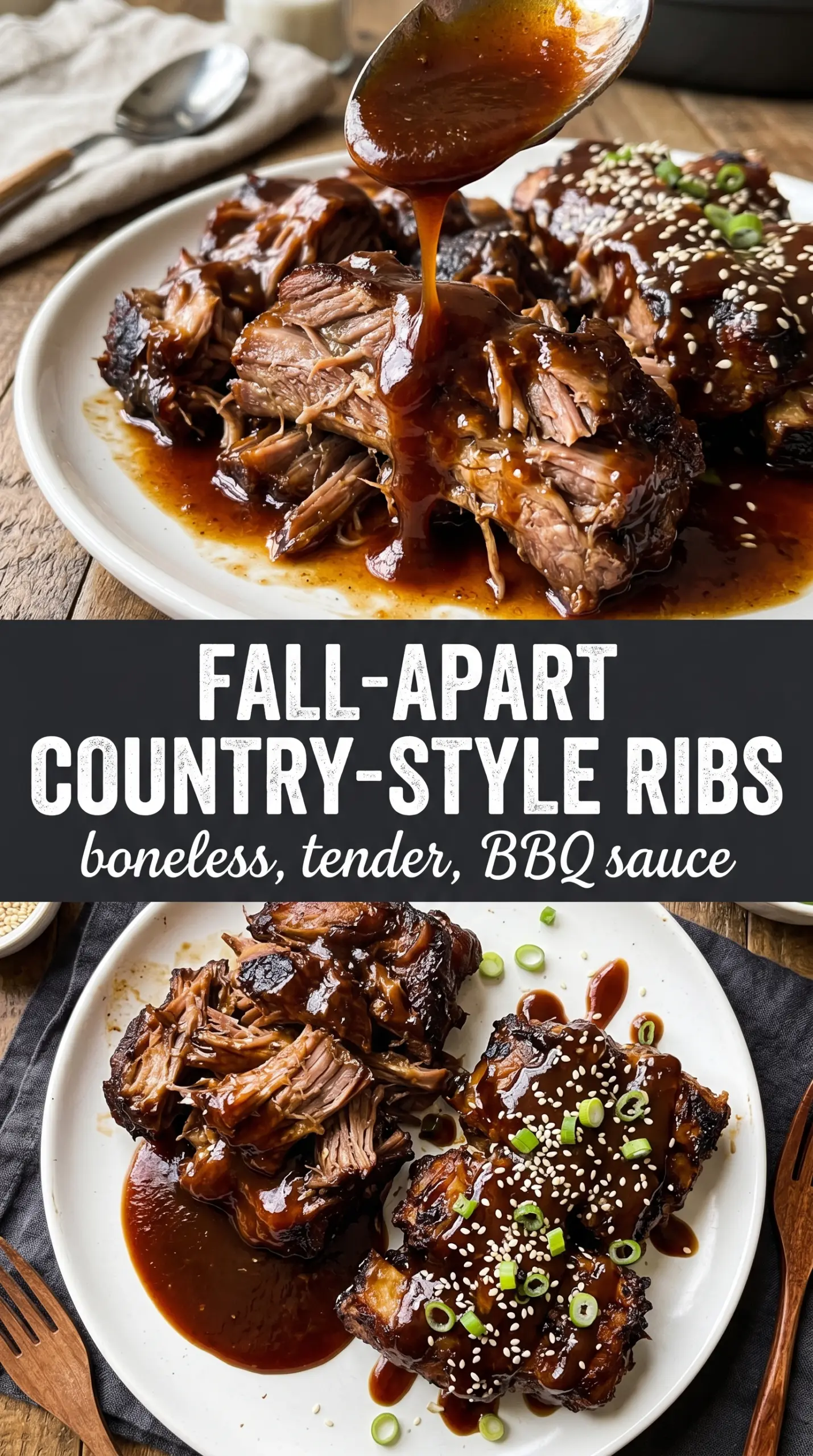
Sticky, caramelized boneless country-style ribs are one of those dinners that disappear fast because the meat turns fork-tender before the sauce ever gets a chance to dry out. The edges pick up a dark, glossy crust, the center stays juicy, and every bite tastes like it spent all day on the grill even though the oven did the work.
The trick here is low heat first, then a short blast at the end. Country-style ribs aren’t actual ribs in the classic sense; they’re meaty pork shoulder cuts that need time to relax and soften. The apple cider vinegar goes into the pan to create a little steam and keep the meat from tightening up, while the dry rub builds a savory-sweet base that the BBQ sauce can cling to later.
Below, I’ve broken down the one step that keeps these ribs tender, what each ingredient is doing, and how to adapt the method if you want a spicier glaze or a dairy-free side dish to go with it.
The ribs were fall-apart tender and the BBQ sauce got that sticky edge without burning. The vinegar in the pan kept everything moist, and my husband kept sneaking pieces off the tray before dinner.
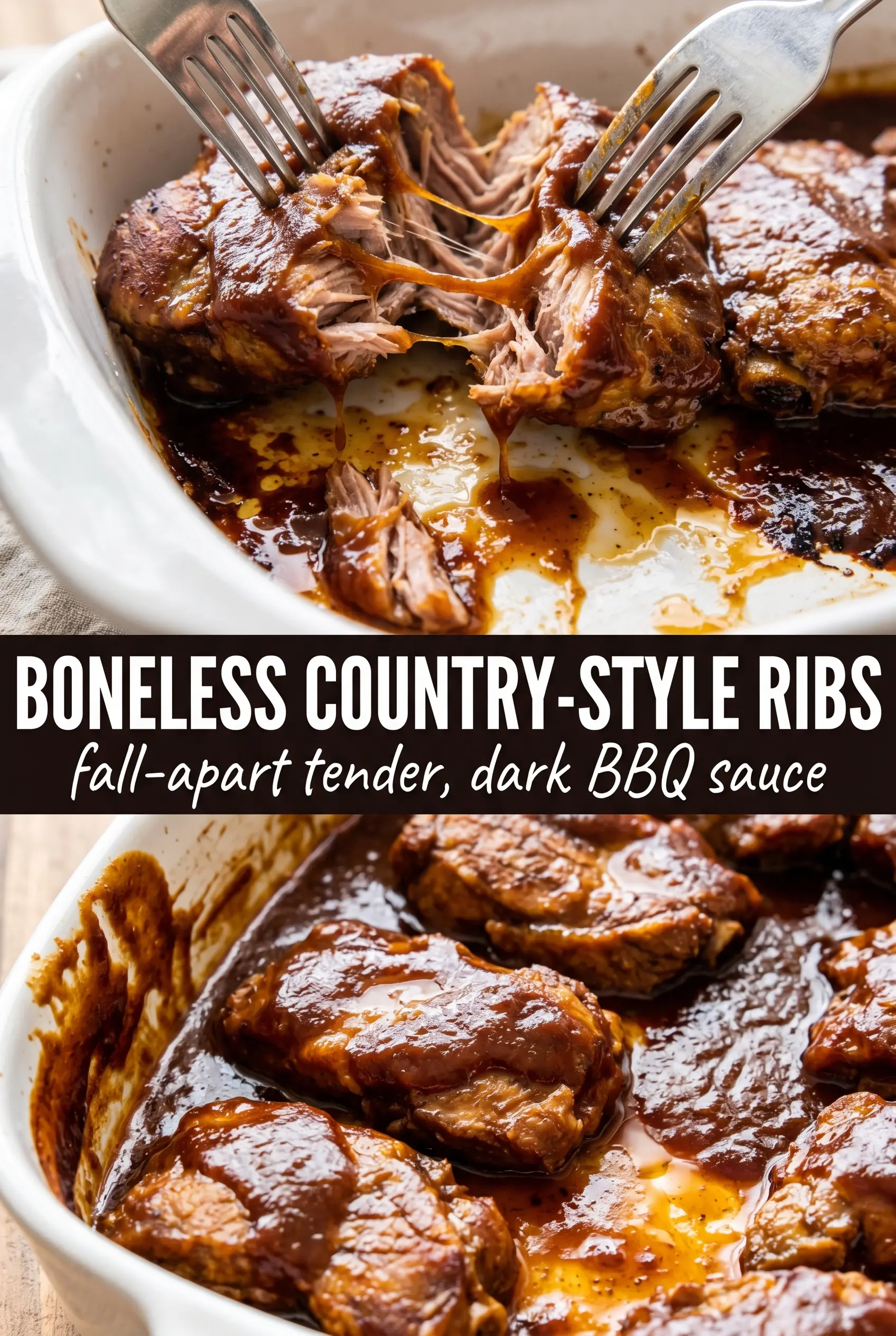
These boneless country-style ribs turn out with a sticky BBQ crust and tender centers that shred at the fork.
The Low Oven Heat That Keeps Country-Style Ribs Tender
Country-style ribs dry out when they’re rushed. They come from the shoulder, not the rib cage, which means they need time for the connective tissue to soften before the final glaze goes on. The 300°F bake is what turns them tender without squeezing out the juices, and the foil cover traps enough moisture to keep the surface from hardening too early.
The mistake most people make is uncovering too soon or cranking the heat the whole time. That gives you browned edges and tough centers instead of meat that pulls apart cleanly. The last high-heat bake is only for setting the sauce and concentrating it into that sticky coating.
What the Rub, Vinegar, and BBQ Sauce Are Each Doing
- Brown sugar — This gives the rub a little sweetness and helps the sauce caramelize later. Dark brown sugar adds a deeper molasses note, but light brown sugar works fine if that’s what you have.
- Smoked paprika — This is what gives the ribs that barbecue flavor without needing a smoker. Regular paprika won’t taste the same; it’s the smoke that makes the dish read like BBQ.
- Apple cider vinegar — Don’t skip this. It keeps the pan from drying out and adds just enough tang to balance the sweet sauce. White vinegar can work in a pinch, but cider vinegar gives a rounder flavor.
- BBQ sauce — Use one you actually like eating from the spoon, because the flavor concentrates as it bakes. A thicker sauce clings better in the final roast, while a thin sauce can turn watery before it caramelizes.
- Boneless country-style pork ribs — Look for pieces with some marbling. Lean cuts can still work, but they won’t shred as easily after the long bake.
Building the Tender Meat, Then the Sticky Finish
Seasoning and Arranging the Ribs
Mix the dry rub until the brown sugar breaks up and the spices look evenly distributed, then coat every side of the ribs. Press the seasoning onto the meat instead of just dusting it over the top so it actually stays put in the oven. Arrange the ribs in a single layer with a little space around each piece; if they’re piled up, they steam unevenly and the glaze won’t stick later.
The Covered Bake
Pour the apple cider vinegar into the bottom of the dish and cover it tightly with foil. The ribs should bake slowly until they feel soft when pierced with a fork and look slightly shrunken at the edges. If they still feel firm after 2 hours, give them another 15 to 20 minutes instead of forcing the finish early.
Glazing and Caramelizing
Uncover the dish, brush the ribs generously with BBQ sauce, and raise the oven to 400°F. This is where the glossy crust forms, so don’t walk away near the end; the sugars in the sauce can go from caramelized to bitter fast. You’re looking for a dark, tacky finish that bubbles at the edges and clings to the meat when you turn a piece with tongs.
How to Adapt These Ribs Without Losing the Tender Texture
Spicy BBQ Ribs
Add cayenne or chipotle powder to the rub and use a BBQ sauce with a little heat. The spice plays best against the sweet glaze after the high-heat finish, and it keeps the ribs from tasting flat.
Gluten-Free Version
This recipe is naturally close to gluten-free, but the BBQ sauce is the part to check. Use a certified gluten-free sauce and you’re set; the cooking method doesn’t need to change at all.
Dairy-Free Pairing Night
The ribs themselves are dairy-free, so this is an easy one to serve with dairy-free coleslaw, roasted potatoes, or corn on the cob. Nothing in the glaze needs milk or butter, which keeps the texture clean and the sauce bold.
Make-Ahead for a Crowd
Bake the ribs through the covered stage a day ahead, then chill them in the baking dish. Right before serving, warm them covered until hot, brush on the sauce, and finish uncovered at 400°F so the glaze caramelizes fresh instead of getting sticky and dull in the fridge.
Storage and Reheating
- Refrigerator: Store leftovers in an airtight container for up to 4 days. The sauce thickens as it chills, and the meat stays tender if it was cooked all the way through the first time.
- Freezer: These ribs freeze well. Cool completely, wrap tightly, and freeze for up to 2 months. Freeze with a little extra sauce if you can, since that helps protect the meat from drying out.
- Reheating: Reheat covered in a 300°F oven with a spoonful of sauce or a splash of water until hot. The common mistake is blasting them uncovered in the microwave or a hot oven, which dries out the edges before the center warms through.
Questions I Get Asked About This Recipe
Boneless Country-Style Ribs
Ingredients
Equipment
Method
- Preheat the oven to 300°F. Mix the dry rub ingredients and coat the ribs on all sides.
- Arrange the coated ribs in a single layer in a baking dish. Make sure the pieces aren’t stacked so they cook evenly and stay tender.
- Pour the apple cider vinegar into the bottom of the dish and cover tightly with foil. Bake for 2 hours until the ribs are very tender.
- Uncover the dish and brush the ribs generously with BBQ sauce. Increase the oven to 400°F and bake for 20–25 minutes until the sauce caramelizes.
- Serve immediately with extra BBQ sauce on the side. Letting it rest briefly helps the sticky glaze cling to the meat.