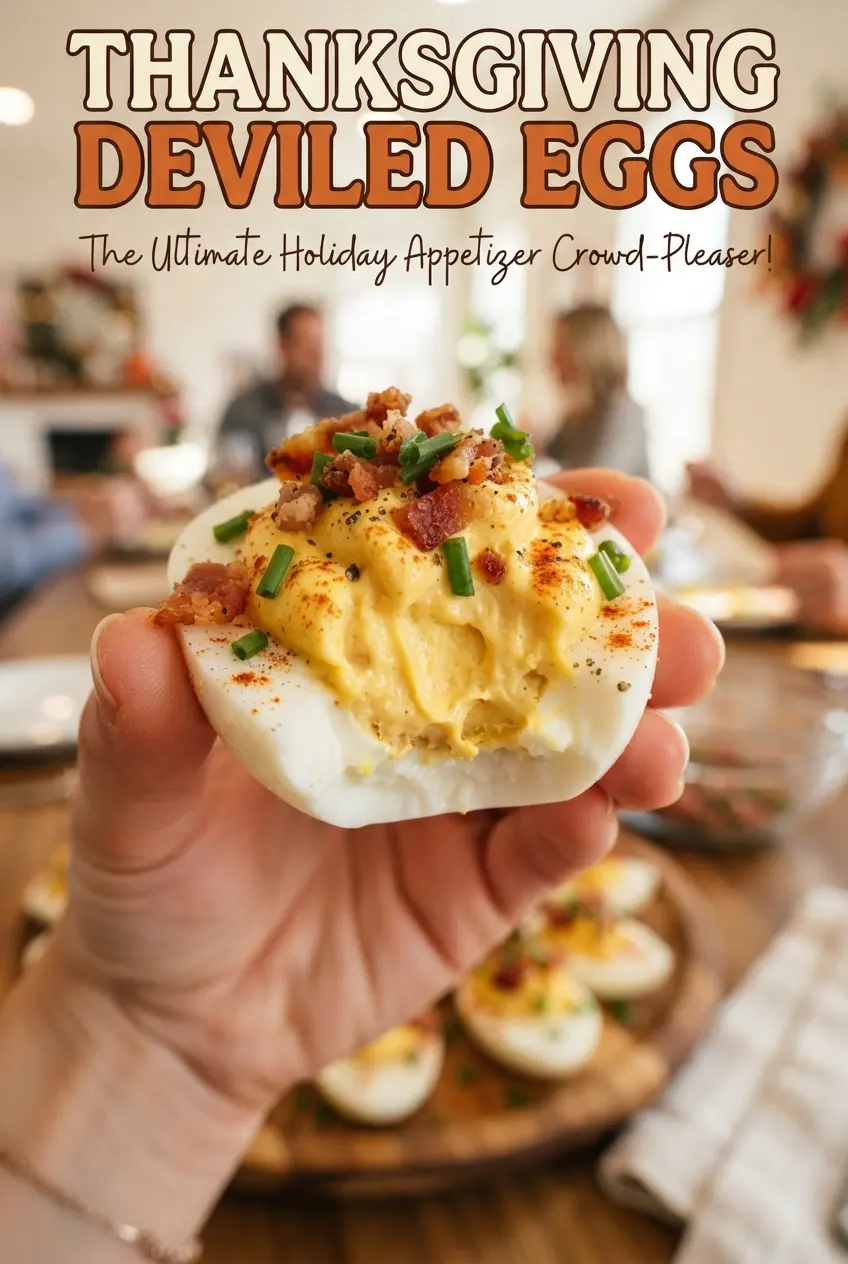
Thanksgiving deviled eggs disappear fast because they hit every note people want at the appetizer table: creamy, tangy, salty, sweet, and just a little fancy without being fussy. The filling stays silky, the cranberry adds a bright pop, and the candied pecans and bacon give each bite a little crunch and depth. They look special on a platter, but they still come together quickly enough to make on a busy holiday morning.
What makes this version work is the balance. Dijon and apple cider vinegar keep the yolk mixture from tasting flat, while a small amount of poultry seasoning gives the filling a subtle holiday-savory backbone without turning it into stuffing. The toppings matter just as much as the filling: cranberry sauce adds tart sweetness, fried sage brings a crisp herbal note, and the pecans and bacon keep the texture varied from bite to bite.
Below, you’ll find the small details that keep the yolks smooth, the whites clean, and the toppings in place until serving. If deviled eggs have ever felt too plain for a holiday spread, this version changes that without asking for much more effort.
The yolk filling was silky and the cranberry on top kept them from tasting heavy. I made them in the morning and the sage still stayed crisp by the time we ate.
Save these Thanksgiving deviled eggs for a holiday appetizer platter with cranberry, pecans, and crispy sage.
The Trick to Deviled Eggs That Taste Holiday-Special Instead of Flat
The mistake with flavored deviled eggs is piling on toppings before the filling tastes right. If the yolk mixture is bland, the garnish can’t rescue it. The filling needs enough salt, acid, and fat to stand on its own, then the toppings should add contrast, not confusion.
Boiling the eggs, then letting them sit covered off the heat, gives you cooked yolks without the chalky edge that happens when eggs boil too hard. The ice bath matters too. It stops the cooking fast and makes peeling easier, which is the difference between tidy halves and ragged whites that won’t plate nicely.
- Mayonnaise — This carries the yolk filling and gives it that soft, pipeable texture. Use a mayo you actually like the taste of, because it’s the base of the whole bite.
- Dijon mustard — Dijon gives sharper, cleaner heat than yellow mustard. It keeps the filling from tasting heavy.
- Apple cider vinegar — This brightens the yolks and helps the filling taste lifted instead of dense. Lemon juice works in a pinch, but cider vinegar fits the holiday toppings better.
- Poultry seasoning — This is the quiet nod to Thanksgiving. It adds a savory, herby note that makes the eggs taste intentional with the cranberry and sage.
- Cranberry sauce — Whole berry sauce gives you a little texture and tart-sweet pop on top. If yours is very thick, loosen it with a tiny splash of water so it dots cleanly.
- Candied pecans, bacon, and sage — These are the texture layers. The pecans bring crunch and sweetness, the bacon brings salt and smoke, and the fried sage gives a crisp herbal finish that reads instantly as holiday food.
What Each Ingredient Is Actually Doing in This Recipe

- Primary ingredient (the star) — Quality matters most. Choose the best you can find.
- Cooking medium (oil, butter, or broth) — This carries flavors and prevents dryness.
- Seasonings (salt, pepper, spices, herbs) — Layer flavors so nothing overpowers. Build depth gradually.
- Aromatics (garlic, onion, herbs) — Cook with fat to bloom flavors. Become the foundation.
- Supporting ingredients — Complement the main ingredient without overpowering it.
- Sauce or liquid (if applicable) — Brings flavors together. Balance richness with acid.
- Acid (lemon, vinegar, wine, or other) — Brightens and prevents flat-tasting results.
- Final finish (garnish, glaze, or sauce) — Prevents one-dimensional taste and adds visual appeal.
Building the Yolks, the Toppings, and the Texture in the Right Order
Cooking the Eggs Gently
Put the eggs in a pot and cover them with cold water before bringing the pot to a boil. Once the water boils, cover the pot, pull it off the heat, and let the eggs stand for 12 minutes. That covered rest is what cooks the yolks through without overcooking the edges, which is where the gray ring comes from.
Cooling and Peeling Cleanly
Move the eggs straight into an ice bath for about 10 minutes. The sudden chill helps the shells release more cleanly and keeps the yolks from drying out. If an egg white tears while peeling, don’t panic; just set aside the prettiest halves for the top of the platter and use the rougher ones toward the back.
Mixing the Filling Until It Turns Silky
Mash the yolks with mayonnaise, Dijon, vinegar, poultry seasoning, salt, and pepper until the mixture looks smooth and glossy. Stop as soon as it’s creamy. Overmixing won’t ruin it, but it can make the filling gummy instead of soft. If the mixture seems stiff, add a teaspoon of mayo at a time until it pipes easily.
Finishing with the Holiday Toppings
Pipe or spoon the filling into the egg whites, then add a small dot of cranberry sauce, a sprinkle of chopped candied pecans, and a little bacon. Finish each one with a crispy sage leaf. Keep the toppings small enough that the eggs still eat cleanly in one or two bites; if you overload them, the toppings slide right off the filling.
How to Adjust These Deviled Eggs for Your Table
Make them a little lighter
Swap half the mayonnaise for plain Greek yogurt if you want a sharper, lighter filling. The texture will be a touch tangier and less rich, but the mustard and vinegar keep it balanced. Don’t replace all of the mayo or the filling can turn loose and less pipeable.
Make them gluten-free
This recipe is naturally gluten-free as written, but check the label on your poultry seasoning and bacon if you’re serving someone sensitive. Some spice blends and cured meats hide fillers or additives. The flavor and texture stay the same when you use clean-label versions.
Skip the bacon
Leave the bacon off and add a few extra chopped pecans for crunch. You’ll lose the smoky, salty edge, so a tiny pinch of smoked paprika in the filling can help replace some of that depth. The eggs still hold onto the Thanksgiving feel because the cranberry and sage do most of the seasonal work.
Prep ahead for a crowd
Boil, peel, and halve the eggs a day ahead, then keep the whites and filling separate until closer to serving. The filling holds well in the fridge, but the sage and pecans should go on at the end so they stay crisp. That last-minute assembly keeps the platter looking fresh instead of damp.
Storage and Reheating
- Refrigerator: Store assembled deviled eggs in a single layer, covered, for up to 2 days. The sage will soften a bit, but the filling stays good.
- Freezer: Don’t freeze deviled eggs. The whites turn rubbery and the filling separates after thawing.
- Reheating: These are best served chilled or at cool room temperature. If they’ve been in the fridge, let them sit out for 15 to 20 minutes before serving so the filling tastes creamy instead of dense.
Questions I Get Asked About This Recipe
Thanksgiving Deviled Eggs
Ingredients
Equipment
Method
- Place large eggs in a pot, cover with cold water, and bring to a boil; cover, remove from heat, and let stand 12 minutes. Visual cue: the water should reach a full boil before you remove the pot from the burner.
- Chill the eggs in an ice bath for 10 minutes, then peel and halve lengthwise. Visual cue: the shells should release easily after chilling.
- Mash the egg yolks with mayonnaise, Dijon mustard, apple cider vinegar, poultry seasoning, salt, and black pepper until smooth. Visual cue: the mixture should look glossy and thick with no visible yolk lumps.
- Pipe the filling into the egg white halves. Visual cue: filled centers should mound neatly above the whites.
- Top each deviled egg with a small dot of whole berry cranberry sauce, candied pecans, and bacon. Visual cue: cranberry should be visible as a bright red dot on top of the filling.
- Add a crispy sage leaf to each and chill until serving. Visual cue: the sage should look thin, curled, and crisp at the edges.