Tender yellow squash, sweet onion, and sharp cheddar bake into a casserole that lands right between creamy and set, with a buttery Ritz cracker top that turns crisp instead of soggy. The best version has contrast in every bite: soft vegetables underneath, a rich custard in the middle, and a salty, golden crust that cracks when you spoon into it.
What makes this one work is the drainage. Squash holds a lot of water, and if it goes into the baking dish straight from the pan, the filling turns loose and the topping steams. Cooking the squash with the onion first softens everything and drives off some moisture before the eggs, sour cream, and mayonnaise go in. That gives the casserole a cleaner slice and a better texture once it comes out of the oven.
Below, I’ve included the little details that keep this dish from turning watery, plus a few practical swaps if you need to adjust the dairy or want to use a different cracker topping.
I thought my squash casserole always turned out watery, but draining it well first made all the difference. The top stayed crisp and the filling set up beautifully.
Save this Southern Squash Casserole for the buttery Ritz topping and that creamy, set filling.
The Secret to Keeping Squash Casserole from Turning Watery
The mistake most squash casseroles make is treating the squash like it behaves the way potatoes or broccoli do. It doesn’t. Yellow squash releases water as it cooks, and if that moisture stays in the pan, the eggs can’t set the filling cleanly. You end up with a loose center and a topping that goes soft before it has a chance to brown.
Cooking the squash with the onion first does two jobs at once: it softens the vegetables and lets steam escape. Draining it well is the part people rush, and it matters more than the exact brand of cracker on top. If the squash still looks glossy or there’s liquid pooling at the bottom of the colander, give it a few extra minutes. A drier vegetable base means the casserole bakes up creamy instead of soupy.
- Yellow squash — The squash is the bulk of the dish, so freshness matters here. Smaller squash tend to have fewer seeds and less water, which gives you a better texture after baking.
- Onion — Onion brings sweetness and depth that keeps the casserole from tasting flat. Dice it small so it melts into the filling instead of staying crunchy.
- Sharp cheddar — Sharp cheddar gives the casserole its savory backbone. Mild cheddar works, but it won’t stand up as well against the richness of the sour cream and mayo.
- Ritz crackers — These create the signature buttery top. If you need a substitute, use another buttery cracker rather than plain breadcrumbs, which bake up drier and less flavorful.
What the Eggs, Dairy, and Cracker Topping Are Each Doing
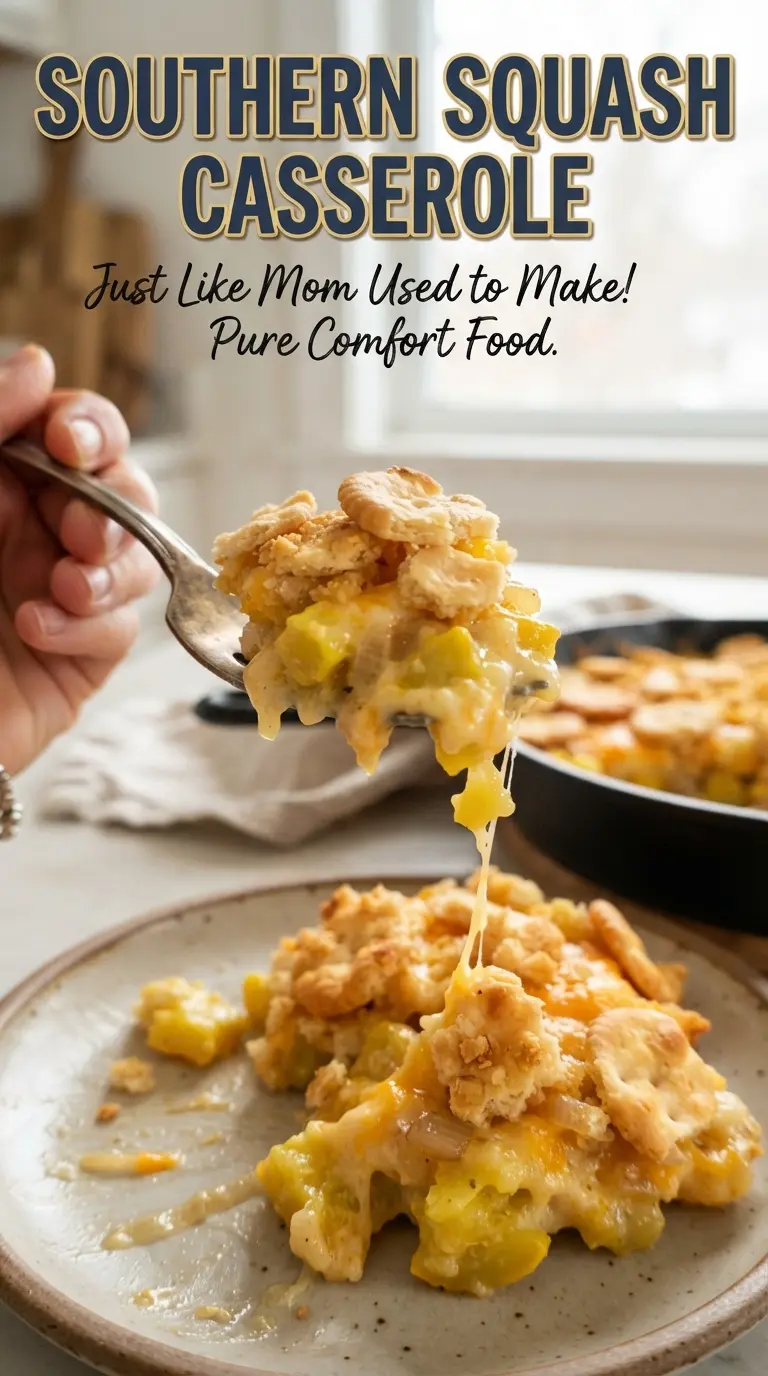
The egg mixture is what turns cooked squash into a sliceable casserole. Eggs set the filling as it bakes, while sour cream and mayonnaise add body and keep the texture rich without making it dense. If you swap in low-fat dairy, the casserole will still work, but it won’t have the same plush texture or the same kind of mellow tang.
The butter in the vegetable pan and in the topping matters in different ways. The butter with the squash helps carry flavor through the vegetables, while the melted butter on the crackers helps them brown and stay crisp. If you skip it, the top will taste dry and won’t give you that classic Southern finish.
- Sour cream — Adds tang and helps the filling stay creamy after baking. Plain Greek yogurt can work in a pinch, but it makes the casserole a little sharper and slightly less lush.
- Mayonnaise — Mayonnaise adds richness and helps the filling hold together. It disappears into the dish, so even people who don’t like mayo usually won’t notice it.
- Eggs — These are the binder. Beat them before adding them so they distribute evenly, or you can end up with patches that set more firmly than others.
- Butter — Use real butter here, not a spread. The flavor is cleaner, and it gives the topping the kind of browning that makes the casserole worth serving hot.
Building the Casserole So the Center Sets and the Top Stays Crisp
Softening the Squash and Onion
Cook the squash and onion in butter until the slices are tender and most of the moisture has cooked off. You want the squash softened but not collapsed into mush before it goes into the baking dish. If there’s still a lot of liquid in the pan, keep cooking; that moisture is what causes a loose casserole later.
Draining Without Losing the Texture
Tip the cooked vegetables into a colander and let them drain well. Pressing gently with a spoon helps, but don’t mash them into a paste or you’ll lose the texture that makes the casserole feel substantial. This is the step that decides whether the finished dish slices neatly or slumps on the plate.
Mixing the Filling Just Until Combined
Stir the cheddar, sour cream, mayonnaise, eggs, salt, and pepper together, then fold in the drained squash. Mix only until everything is evenly coated. Overmixing breaks the squash down too much and turns the filling from creamy to pasty.
Baking Until Set, Not Dry
Spread the mixture into the dish, add the buttered crackers, and bake until the top is deeply golden and the center no longer looks wet in the middle. It should jiggle only slightly when you shake the pan. If you bake it until the center is completely firm in the oven, it will dry out by the time it cools.
How to Adapt This for Different Toppings, Diets, and Make-Ahead Needs
Gluten-Free Topping
Swap the Ritz crackers for certified gluten-free buttery crackers or crushed gluten-free bread crumbs tossed with the same melted butter. The topping will still brown, but the flavor will be a little less rich unless you choose a cracker with some salt and fat in it.
Lighter Dairy Version
Use full-fat Greek yogurt in place of the sour cream and reduce the mayo slightly if you want a leaner casserole. The filling will still set, but the texture will be a touch tangier and less plush.
Extra-Cheesy Version
Add another 1/2 cup of cheddar if you want a stronger cheese pull and a more savory finish. Don’t add much more than that or the casserole can turn greasy instead of creamy.
Storage and Reheating
- Refrigerator: Store covered for up to 4 days. The topping softens, but the flavor stays good.
- Freezer: It freezes, but the squash softens after thawing. Freeze baked portions tightly wrapped, then thaw in the refrigerator before reheating.
- Reheating: Reheat uncovered in a 325F oven until warmed through so the topping can crisp back up. The microwave will heat it fast, but it makes the crust limp and can loosen the filling.
Answers to the Questions Worth Asking
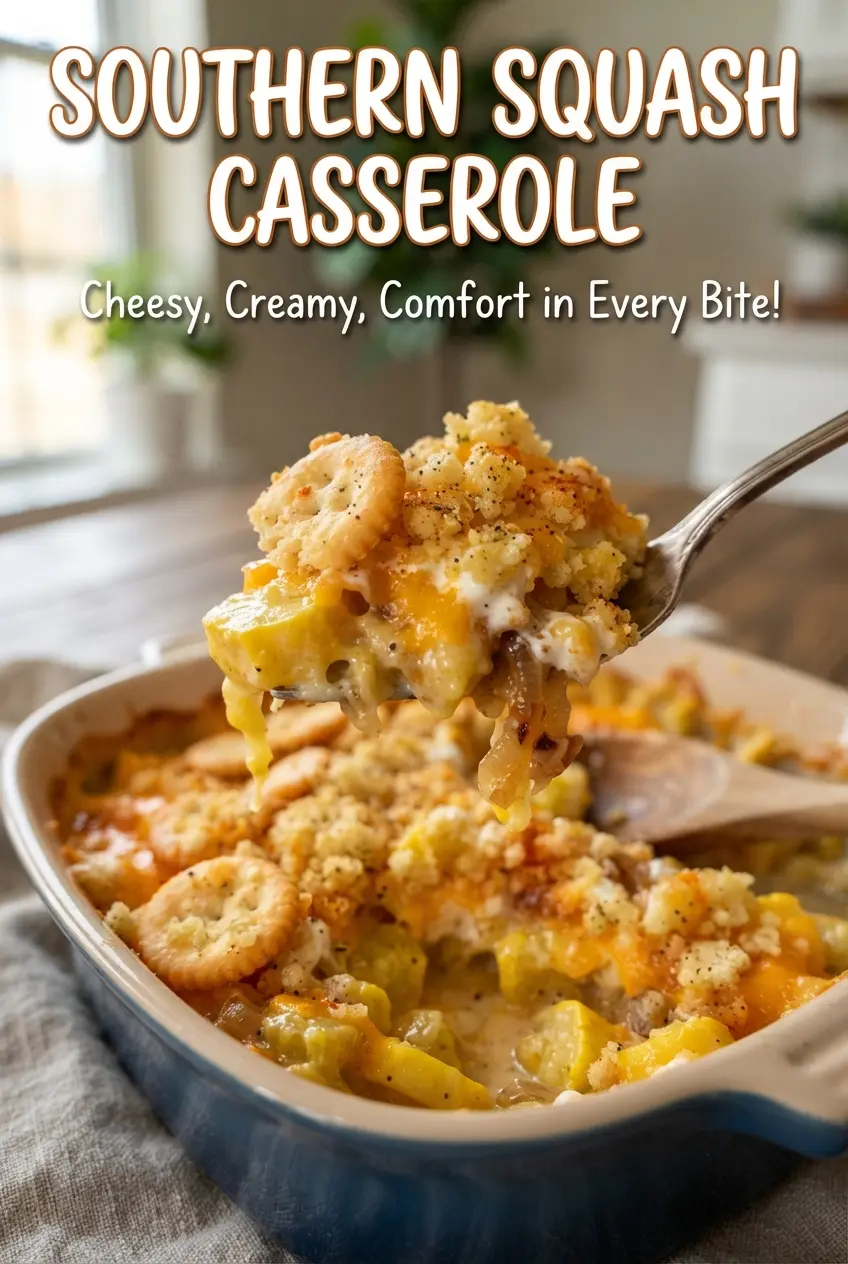
Southern Squash Casserole
Ingredients
Equipment
Method
- Preheat oven to 350°F and grease a 9x13-inch baking dish.
- Cook the sliced yellow squash and diced onion in 2 tbsp butter for 10-12 minutes until tender, then drain well in a colander.
- Mix shredded sharp cheddar, sour cream, mayonnaise, beaten eggs, salt, and black pepper, then fold in the drained squash mixture.
- Spread the mixture into the greased baking dish in an even layer.
- Toss crushed Ritz crackers with the melted butter, then sprinkle over the top as a complete, even crust.
- Bake at 350°F for 30-35 minutes until golden on top and set in the center, with bubbling around the edges.