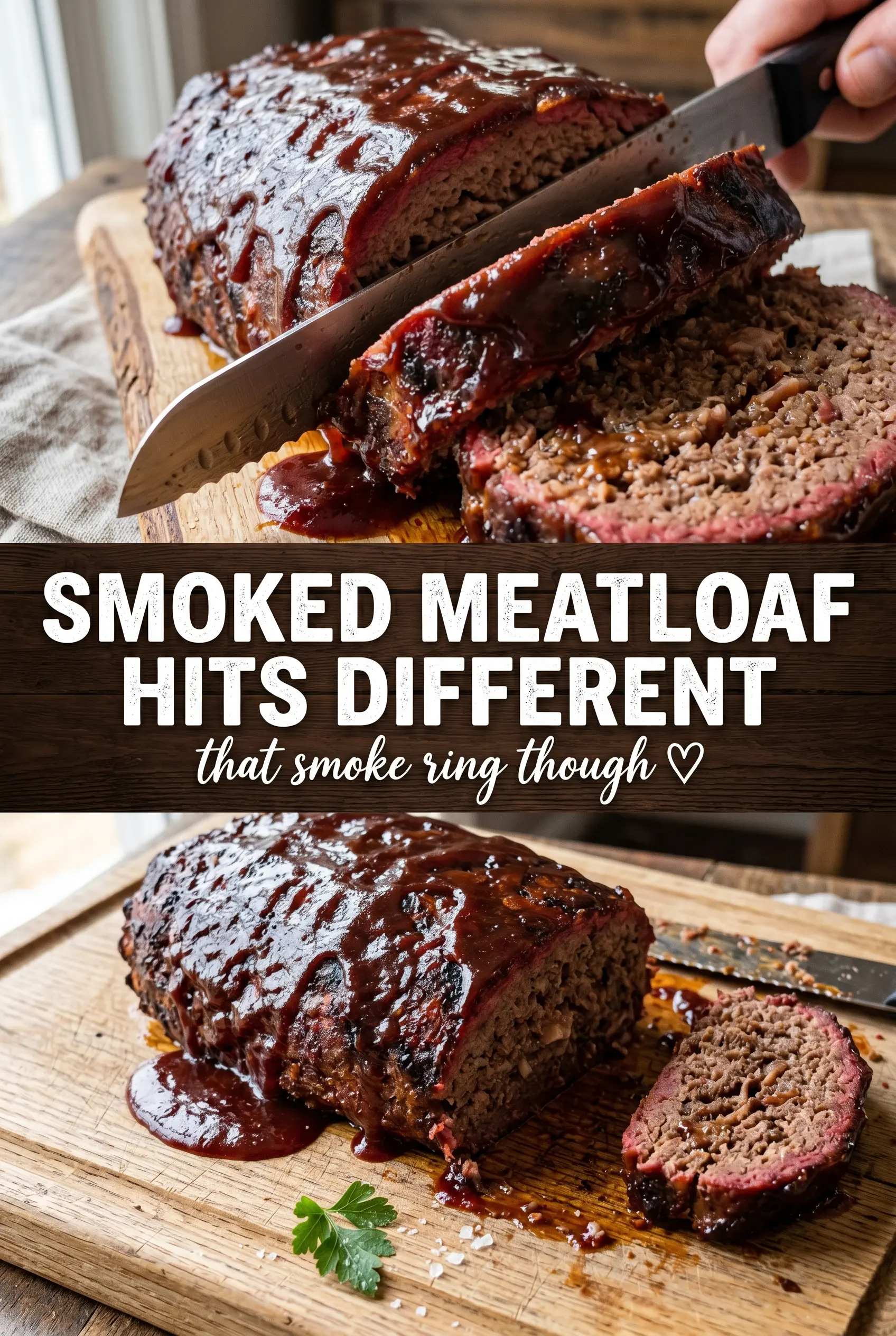
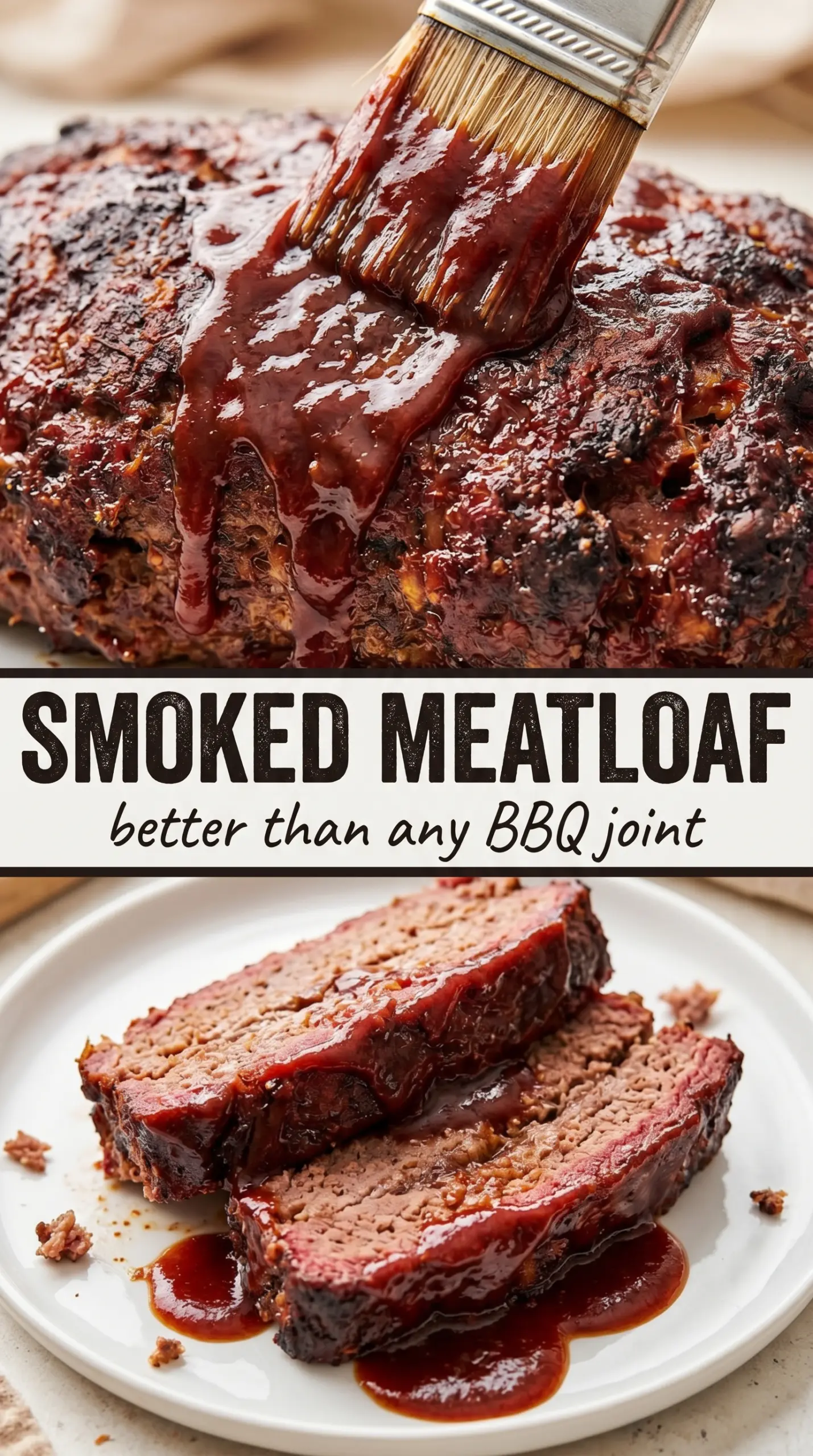
Smoked meatloaf comes off the smoker with a deep mahogany crust, a steady smoke ring, and slices that stay juicy instead of crumbling the moment the knife hits them. The glaze turns sticky and burnished on top, and the edges pick up just enough smoke to make every bite taste like it took all afternoon, because it did. This is the kind of meatloaf that earns its place outside the oven.
The trick is treating the loaf gently at the start and patient at the end. Overmixing packs the meat tight and gives you a dense, bouncy texture, while a loose free-form shape lets smoke reach more surface area and helps the crust set. Hickory gives a stronger, classic barbecue edge; cherry brings a softer sweetness and a darker finish. Both work, but the smoker temperature and the final internal temperature matter more than anything else here.
Below, I’ll walk through the parts that actually change the outcome — how to keep the loaf tender, when to glaze it, and what to do if you want a different wood, a leaner mix, or leftovers that still taste good the next day.
The loaf held together beautifully, and the glaze set up with that tacky finish instead of sliding off. We sliced it after the rest and the smoke ring was obvious all the way through the center.
Smoked meatloaf with sticky BBQ glaze and a real smoke ring is worth saving for the next time you want barbecue flavor without firing up ribs.
The Mistake That Makes Smoked Meatloaf Dense Instead of Sliceable
The biggest failure in smoked meatloaf is treating it like a packed brick. Meatloaf needs enough binding to hold its shape, but if you work the mixture hard, the proteins tighten and the finished slices turn heavy and tight instead of tender. Mix only until the ingredients are evenly distributed, then stop. The loaf should look cohesive, not paste-like.
The other place people go wrong is smoking it too hot or too long before the glaze goes on. At 225–250°F, the outside has time to pick up smoke and build structure without drying out the center. Pulling it at 145°F for the glaze stage gives you room to finish at 160°F without overcooking. That’s the difference between a moist slice and one that sheds dry crumbs on the cutting board.
What Each Ingredient Is Actually Doing in This Smoked Loaf
- 80/20 ground beef — This is the backbone of the loaf. The fat keeps the texture juicy through a long smoke, and leaner beef dries out faster than most people expect. If you use something leaner, the loaf will still work, but it will eat more like a firm roast than true meatloaf.
- Ground pork — Pork softens the beef and adds sweetness that plays well with smoke and BBQ glaze. You can swap in all beef if that’s what you have, but the texture gets a little firmer and the flavor loses some roundness.
- Breadcrumbs, eggs, and milk — This trio gives the loaf structure without making it rubbery. The milk hydrates the crumbs so they don’t steal moisture from the meat, and the eggs help everything set cleanly on the smoker.
- Grated onion — Grating, not chopping, matters here. It melts into the mixture and keeps the loaf moist; diced onion can leave sharp pockets that don’t soften enough in time.
- Worcestershire, mustard, and smoked paprika — These are the flavor builders. Worcestershire adds depth, mustard sharpens the savory notes, and smoked paprika reinforces the wood smoke so the meat tastes seasoned all the way through, not just on the surface.
- BBQ sauce, honey, and apple cider vinegar — The glaze needs sweetness, tang, and enough body to cling. Honey helps it caramelize, while vinegar keeps it from turning cloying. A thin, watery sauce won’t lacquer the top the same way.
- Hickory or cherry wood — Hickory gives the boldest barbecue character. Cherry is gentler and adds color. Either one works with this recipe, but a harsh, resinous wood will fight the glaze instead of supporting it.
Building the Loaf, Smoking It, and Glazing at the Right Moment
Mixing Without Tightening the Meat
Combine the beef, pork, breadcrumbs, eggs, milk, onion, garlic, Worcestershire, mustard, paprika, salt, and pepper in a large bowl and mix just until the ingredients disappear into one another. The mixture should hold together when you squeeze it, but it shouldn’t look whipped. If you can see a few streaks of seasoning, that’s fine. Overmixing is what makes the final texture springy and dense.
Shaping for Smoke, Not for a Pan
Form the mixture into a free-form loaf on a wire rack or a grill-safe pan, leaving space around the sides so the smoke can circulate. A free-form loaf browns better than one pressed into a deep pan, and it helps the bark-like crust develop on more than just the top. Keep the shape even from end to end so the thinner edges don’t dry out before the center catches up.
Smoking Until the Center Is Nearly There
Set the smoker to 225–250°F with hickory or cherry wood and smoke the loaf until it reaches 145°F in the center, usually 2 to 2.5 hours. The surface should look darker and slightly dry to the touch, with the fat starting to render and bead on top. If the heat is swinging hard, the outside can overcook before the inside is ready, so steady temperature matters more than speed here.
Glazing and Finishing the Bark
Stir the BBQ sauce, honey, and apple cider vinegar together, then brush it generously over the meatloaf once it reaches 145°F. Return it to the smoker for 30 to 45 minutes, until the glaze turns sticky and the center reaches 160°F. If you add the glaze too early, the sugars can scorch before the loaf is cooked through; too late, and you miss that caramelized top that makes the finished slices look and taste finished.
Resting Before the First Slice
Let the meatloaf rest for 15 minutes before cutting. That pause keeps the juices inside the loaf instead of running across the board, and it gives the slice a cleaner edge. If you cut it right away, the center can look loose and wet even when it’s fully cooked.
How to Adapt This for Different Smokers, Different Diets, and Leftovers
For a pellet grill
A pellet grill gives you steadier heat and a milder smoke profile, which works well here. Use hickory pellets if you want a stronger barbecue edge or cherry if you want a softer finish. Because pellet grills run so even, watch the internal temperature closely and don’t let the loaf sit on the smoker long after it hits 160°F.
For a dairy-free version
Swap the milk for unsweetened almond milk or beef broth. You still need that moisture to hydrate the breadcrumbs, but the loaf won’t taste noticeably different once it’s smoked and glazed. Broth gives a slightly richer result; almond milk is the cleaner neutral swap.
For a gluten-free meatloaf
Use gluten-free breadcrumbs or crushed gluten-free crackers in the same amount. The texture stays close to the original, but the loaf can be a touch more delicate when sliced, so that resting time matters even more. Check your Worcestershire sauce too, since some brands contain gluten.
Storage and Reheating
- Refrigerator: Store leftovers in an airtight container for up to 4 days. The smoke flavor deepens a bit overnight, and the glaze stays sticky.
- Freezer: It freezes well. Slice it first, wrap the slices tightly, and freeze for up to 2 months so you can reheat only what you need.
- Reheating: Reheat covered in a 300°F oven with a splash of broth or extra BBQ sauce until warmed through. The common mistake is blasting it in the microwave until the edges turn tough before the center is hot.