Pull-apart slow cooker pork roast earns its place in the dinner rotation because it gives you the kind of fork-tender meat that tastes like it took all day to babysit, even though the slow cooker did the heavy lifting. The pork turns rich and savory as it sits in its own juices with onion, garlic, and herbs, and the end result is juicy enough to pile over mashed potatoes or spoon onto rice without needing much else.
The difference here is in the sear and the layering. Browning the pork first gives the juices more depth, and placing the onions underneath keeps the meat lifted just enough so it braises instead of simmering flat in the liquid. A small amount of Worcestershire and soy sauce adds backbone without making the roast taste like either one — just deeper, meatier, and more balanced.
Below, I’ve included the small decisions that matter most, from how to season a pork shoulder properly to what to do if you want a thicker serving sauce at the end. There’s also a storage note for leftovers, because this roast is the kind of thing that gets even better the next day.
The pork shredded without a fight and the juices were perfect over mashed potatoes. I loved that the onion and garlic melted into the sauce instead of just sitting there, and it was still juicy after reheating the next day.
Save this slow cooker pork roast for the nights when you want fall-apart pork with rich pan juices and almost no hands-on time.
The Seared Outside and Slow-Cooked Inside Need Each Other
A pork shoulder can absolutely turn tender in the slow cooker without searing, but it won’t taste as deep or as balanced. That browning step creates the savory base the slow cooker can’t build on its own, and the browned bits on the skillet become part of the sauce once the broth goes in. Skip it and you’ll still get soft pork, but the juices will taste flatter.
The other common mistake is drowning the roast. You don’t need to submerge the meat for this kind of dish. The pork gives off a fair amount of liquid as it cooks, and the goal is a braise-like environment where the roast sits partly in the liquid and partly above it, soaking up steam and flavor instead of boiling itself dull.
- Pork shoulder or butt — This cut has enough fat and connective tissue to turn shreddable after hours in gentle heat. A lean pork loin won’t give you the same texture and can dry out before it becomes tender.
- Onion — Sliced onion goes under the pork and slowly melts into the juices. It also keeps the roast from sitting directly on the crock, which helps it cook more evenly.
- Worcestershire and soy sauce — These add salt, depth, and a little backbone. If you only use broth, the roast can taste underseasoned even when it’s technically cooked right.
- Fresh rosemary and thyme — Fresh herbs hold up better over a long cook than dried ones do here. If you use dried herbs, cut the amount down and stir them into the liquid instead of scattering them on top.
What Each Ingredient Is Actually Doing in This Pork Dish
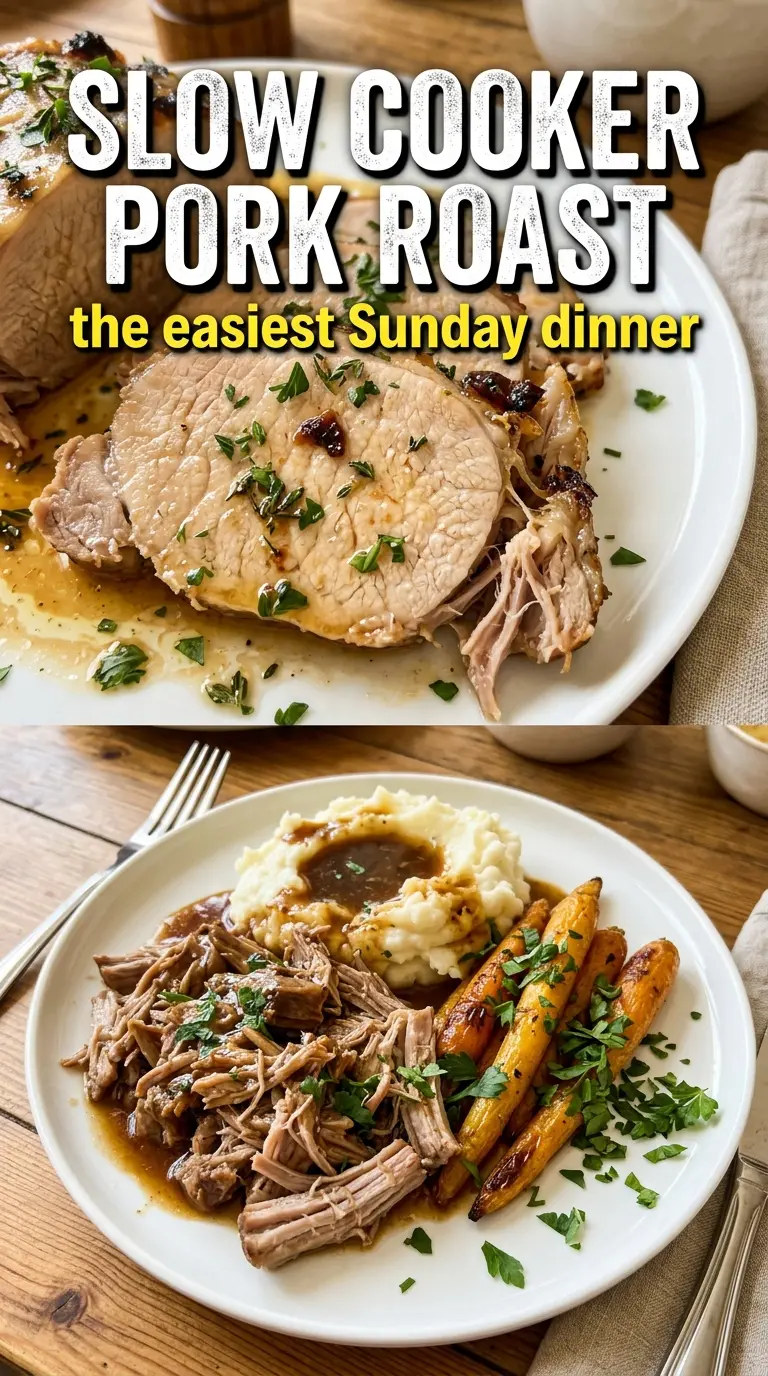
- Pork (cut properly for the method) — Pat dry so it browns instead of steams. Even thickness ensures uniform cooking.
- Oil or butter (the browning medium) — High-heat oil essential for proper searing. Creates pan flavor.
- Seasonings (salt, pepper, spices) — Build flavor boldly. Pork carries the entire profile.
- Aromatics (garlic, onion, herbs) — Cook with fat to bloom flavors. Become the foundation.
- Sauce or liquid (broth, cream, or glaze) — This keeps lean pork from drying. Balance richness with acid.
- Vegetables (if using) — Layer by cooking time so everything finishes together.
- Acid (vinegar, wine, or citrus) — This brightens sauce and prevents heavy flavor.
- Proper doneness (145°F with slight pink center) — Pork is safe here and stays juicy. Higher temps dry it out.
How to Build a Roast That Shreds Instead of Drying Out
Seasoning and Searing the Pork
Season the pork generously on every side before it ever hits the pan. You want the surface to look well coated, not lightly dusted. Sear it in hot oil until each side is deeply browned, about 2 to 3 minutes per side, and don’t move it around before it releases naturally. If the pork sticks, it needs another minute; if it tears when you flip it, the pan wasn’t hot enough.
Setting Up the Slow Cooker
Scatter the onion and garlic in the bottom of the slow cooker first, then set the pork on top. That little layer matters because it keeps the roast from sitting directly in the liquid and gives the bottom of the meat some lift. Pour the broth mixture around the pork, not over the top, so the seasoning on the crust stays put and the herbs can perfume the roast as it cooks.
Waiting for the Meat to Give
Cook on Low for 8 to 10 hours or High for 4 to 5 hours, but trust tenderness more than the clock. The pork is done when it pulls apart with almost no resistance and a fork slips into the thickest part easily. If it slices instead of shreds, it needs more time. This cut gets softer as the connective tissue breaks down, so stopping early is the fastest way to end up with chewy pork.
Shredding and Finishing in the Juices
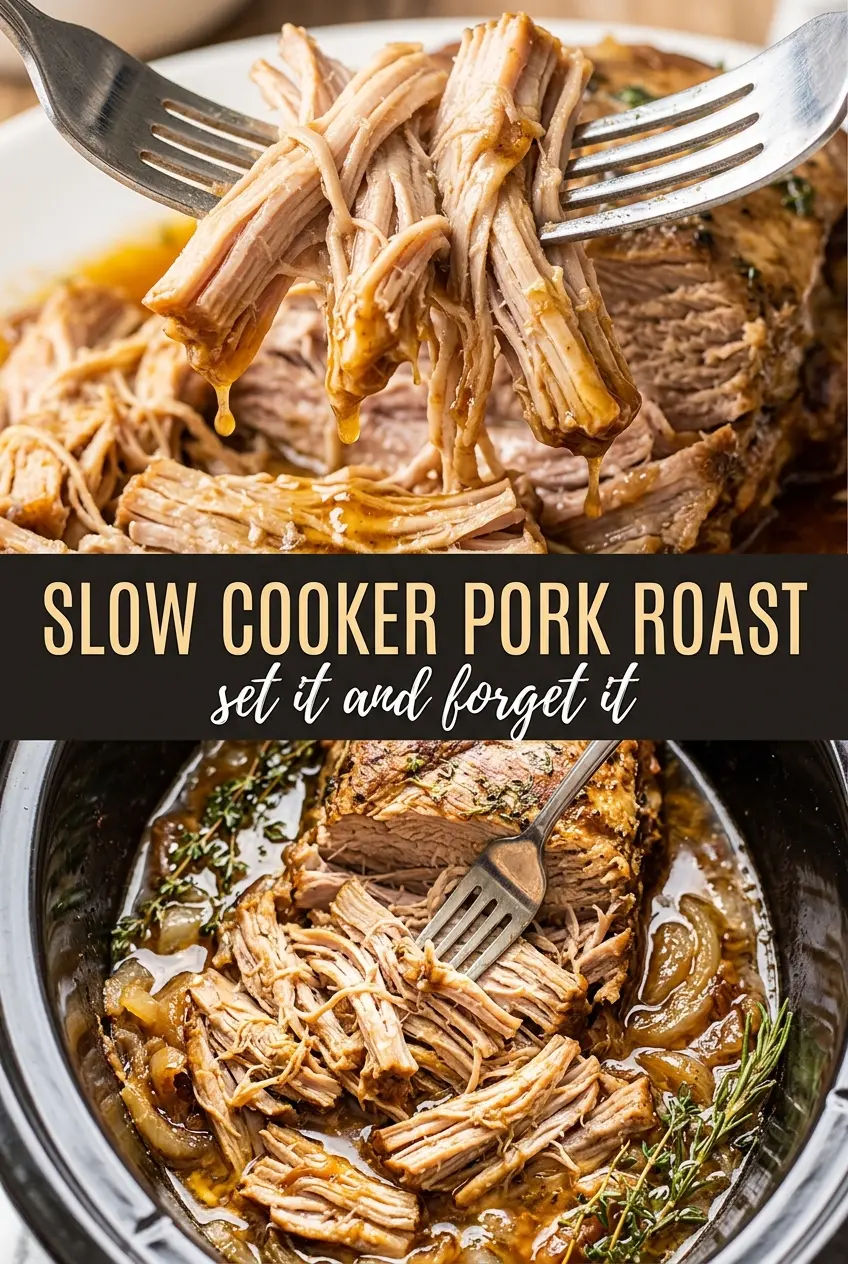
Move the pork to a board or bowl and shred it with two forks, then toss it back into the slow cooker with the juices. That last step is where the flavor settles in, and it keeps the meat from tasting dry once it hits the plate. If the liquid looks greasy, skim off a little fat first, then spoon the rest over the meat just before serving.
What to Swap When You Want a Different Finish
Make It Gluten-Free Without Losing the Savory Base
Use a certified gluten-free Worcestershire sauce and tamari instead of regular soy sauce. The flavor stays deep and salty, and the roast still gets that rounded umami finish without changing the cooking method.
Skip the Sear When You Need to Save Time
You can put the seasoned pork straight into the slow cooker if you’re in a rush. The roast will still turn tender, but the juices won’t have the same browned depth, so expect a milder sauce and add a touch more salt at the end.
Use Dried Herbs When Fresh Aren’t Handy
Swap in about one-third the amount of dried rosemary and thyme. Dried herbs are stronger and can get a little woodsy over a long cook, so keep the amount modest and mix them into the broth instead of piling them on the meat.
Turn It Into a Leaner Meal
A pork loin will work if that’s what you have, but shorten the cook and watch it closely. It won’t shred as luxuriously as shoulder, and if it goes too long, it dries out before the connective tissue has time to do its job.
Storage and Reheating
- Refrigerator: Store the pork with some of its juices for up to 4 days. The flavor gets even better, and the meat stays much juicier this way.
- Freezer: It freezes well for up to 3 months. Pack it in airtight containers or freezer bags with a little juice so it doesn’t dry out after thawing.
- Reheating: Reheat gently on the stovetop or in the microwave with a spoonful of the cooking liquid. High heat will tighten the meat and make it feel dry, even if it looked moist before warming.
Questions I Get Asked About This Recipe
Slow Cooker Pork Roast
Ingredients
Equipment
Method
- Season pork shoulder or butt generously on all sides with salt, pepper, garlic powder, and smoked paprika.
- Heat olive oil in a skillet over medium-high heat and sear pork on all sides until browned, about 2–3 minutes per side.
- Place sliced onion and minced garlic in the bottom of the slow cooker, then set the seared pork on top.
- Combine chicken broth, Worcestershire sauce, and soy sauce, then pour around the pork.
- Add rosemary and thyme to the slow cooker so the pork braises in the aromatics.
- Cook on Low 8–10 hours or High 4–5 hours until pork shreds easily, keeping the lid closed during cooking.
- Shred the pork with two forks, then toss it with the juices in the slow cooker until evenly coated.
- Serve the shredded pork over mashed potatoes or rice.