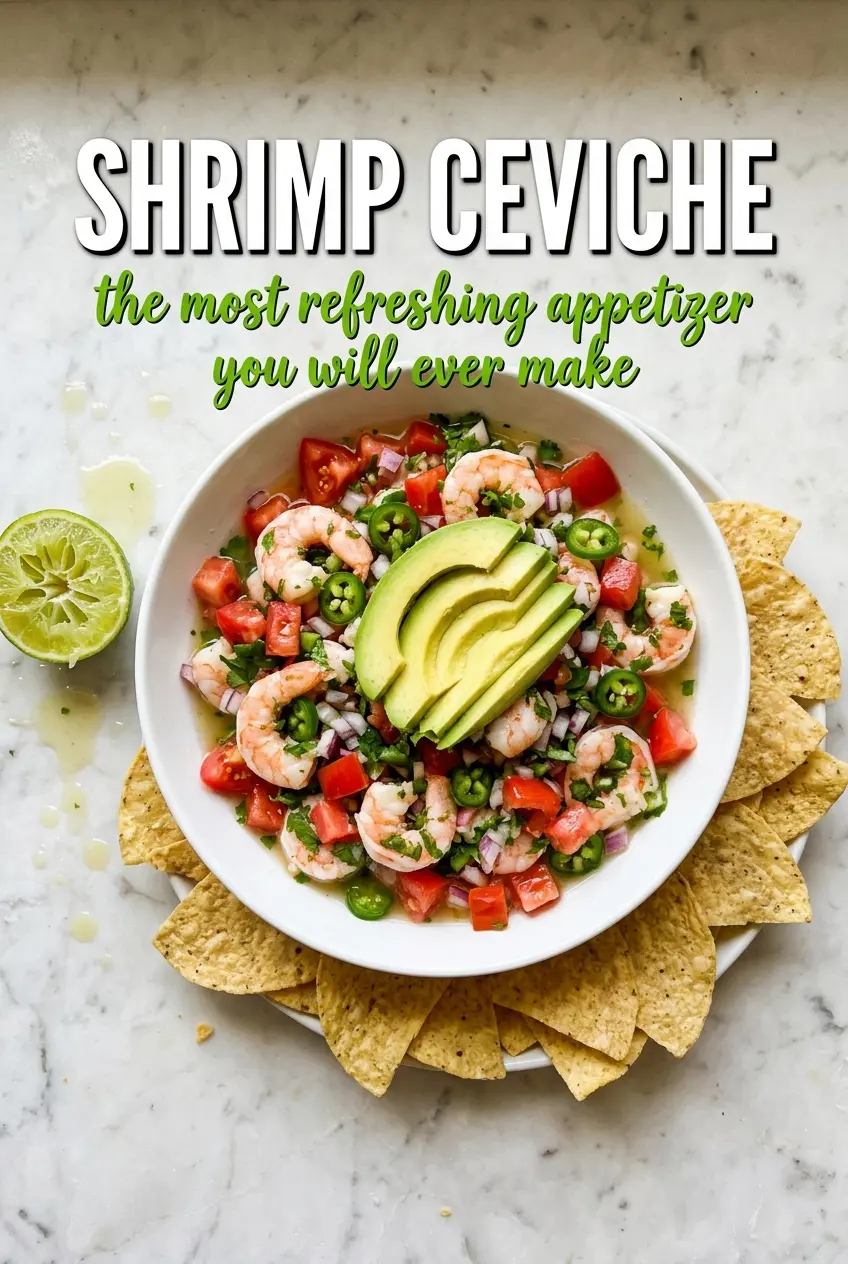
Bright citrus, tender shrimp, and crisp vegetables make shrimp ceviche one of those appetizers that disappears fast. The shrimp stay juicy, the lime and lemon wake everything up, and the final bowl has that clean, chilled bite that makes you want one more chipful before you sit down. It feels light without being plain, and it lands on the table looking as fresh as it tastes.
The key is cooking the shrimp just until pink before they ever hit the citrus. That keeps the texture firm and sweet instead of turning rubbery after the rest time. I also like slicing the shrimp in half lengthwise once they’re cooled, because it gives the citrus more surface area to work on and makes every bite easier to scoop up with chips.
Below, I’ve included the small details that matter most: how long the shrimp should sit in the citrus, when to add the avocado so it stays intact, and what to do if you want a sharper, spicier version.
The shrimp stayed tender and the citrus cure gave it that clean, bright bite without making it tough. I loved how the cucumber and avocado held their texture, and the whole bowl was gone with the tortilla chips in minutes.
Save this shrimp ceviche for the next time you want a chilled appetizer with lime, cilantro, and crisp vegetables.
The Trick to Shrimp That Stays Tender in Citrus
Ceviche falls apart when the shrimp starts cooking in the acid instead of being cooked first. Citrus will cure shrimp, but it won’t fix undercooked seafood, and it won’t politely stop once the texture is right. Cooking the shrimp first gives you control, and the ice bath stops that carryover heat before the flesh tightens.
The other thing people miss is the cut. Halving the shrimp lengthwise after cooling isn’t just for looks. It helps the lime and lemon reach more surface area, so the flavor gets into the shrimp quickly during the short rest without pushing the texture past tender.
What Each Ingredient Is Actually Doing in This Bowl
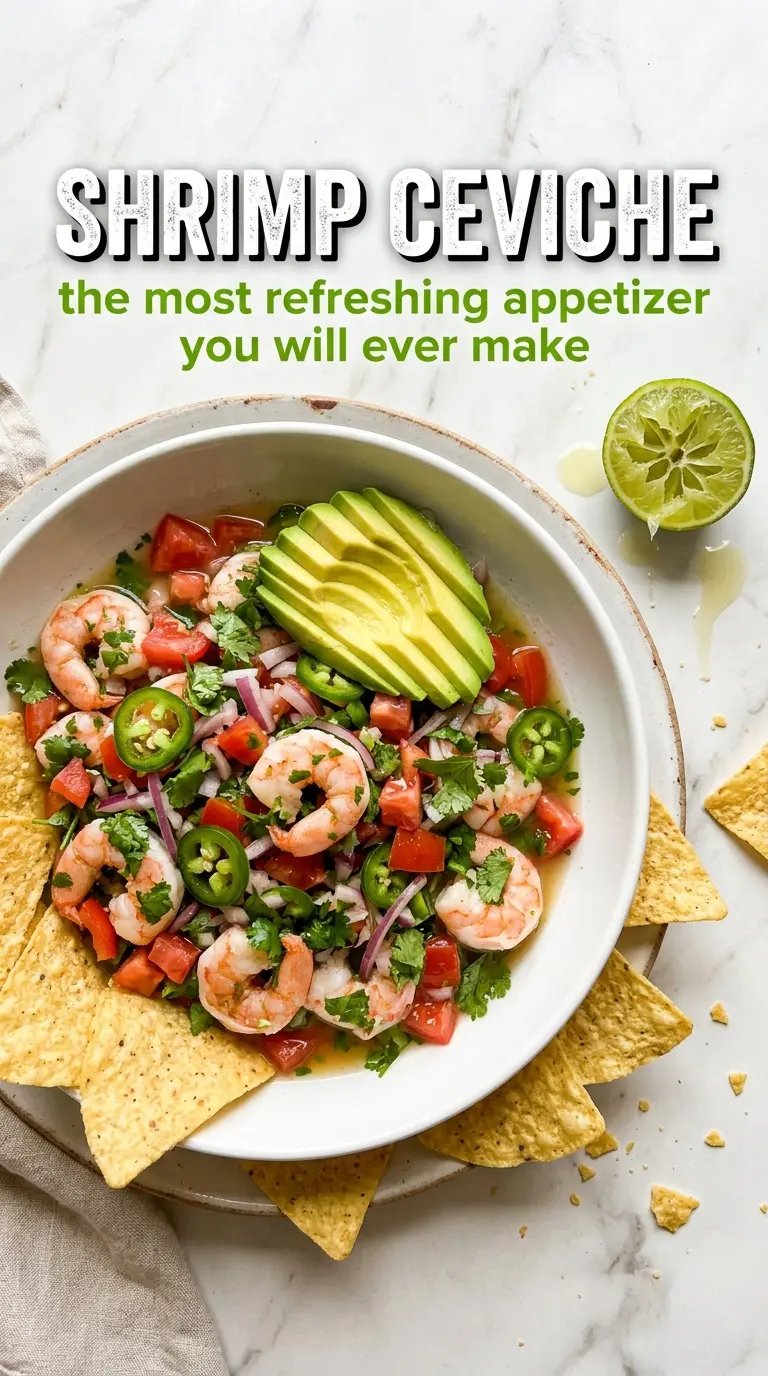
- Large shrimp — Big shrimp hold their texture better after cooking and cutting. Smaller shrimp can work, but they get lost in the bowl and can turn soft faster if they sit too long in the citrus.
- Fresh lime juice — This is the main cure and the main flavor. Bottled juice tastes flat here, and you notice it immediately because there’s nowhere for it to hide.
- Fresh lemon juice — Lemon rounds out the sharpness of the lime and keeps the ceviche from tasting one-note. If you only have lime, the ceviche still works, but the finish will be a little more aggressive.
- Red onion, jalapeño, cilantro, tomato, cucumber — These build the crunch, heat, and fresh contrast that ceviche needs. Slice the onion thin so it softens slightly in the citrus, and seed the jalapeños if you want heat without burying the shrimp.
- Avocado — Add it at the end so it stays in chunks instead of turning mushy. A ripe avocado should be just tender; if it’s overripe, it will disappear into the juice.
Building the Bowl in the Right Order
Cooking and Cooling the Shrimp
Bring the shrimp just until they turn pink and opaque, then get them out of the hot water right away. The ice bath is not optional here; it stops the cooking fast and protects the clean, snappy texture you want in ceviche. If the shrimp curl into tight little rings, they’re already overcooking a bit, so cool them immediately and move on.
The Citrus Rest
Place the cooled shrimp in a non-reactive bowl and cover them with the lime and lemon juice. The shrimp need full contact with the citrus, but they only need about 20 minutes once they’re already cooked. Letting them sit much longer changes the bite from bright and tender to chalky and stiff.
Finishing the Vegetables
Add the onion, jalapeños, cilantro, tomato, avocado, and cucumber after the shrimp have had time in the citrus. That keeps the vegetables crisp and the avocado intact. Toss gently with salt and pepper so you don’t crush the avocado or beat the shrimp apart; the best ceviche looks loosely combined, not mashed into a salsa.
How to Adjust the Heat, Crunch, and Citrus
Make it milder for a crowd
Use one jalapeño instead of three, and remove every seed and white rib before mincing. You’ll still get fresh pepper flavor, but the heat won’t take over the citrus and seafood.
Make it dairy-free and gluten-free without changing a thing
This recipe already fits both, as long as the chips or tostadas you serve with it are gluten-free. The ceviche itself stays clean, bright, and naturally dairy-free.
Swap the cucumber for extra tomato or mango
If you want a softer, sweeter ceviche, trade some of the cucumber for diced mango. You lose a little crunch, but you gain a rounder finish that works especially well when the jalapeño is on the hotter side.
Storage and Reheating
- Refrigerator: Best eaten the day it’s made. It can hold for up to 24 hours, but the avocado softens and the vegetables lose some crunch.
- Freezer: Don’t freeze ceviche. The shrimp and vegetables turn watery and the texture breaks apart when thawed.
- Reheating: Reheating isn’t appropriate here. Serve it chilled straight from the fridge, and if it has sat out, discard any leftovers that have been at room temperature too long.