Caramelized sausage and tender cabbage make a skillet dinner that lands somewhere between cozy and sharp, with enough bite from the mustard-vinegar glaze to keep every forkful interesting. The sausage stays browned and savory, the cabbage softens at the edges without turning limp, and the whole pan finishes with the kind of glossy sauce that clings instead of pooling at the bottom.
What makes this version work is the way each part gets its own moment in the pan. Browning the sausage first leaves behind flavorful drippings, then the butter carries the onions and cabbage without making them greasy. Dijon, apple cider vinegar, and a little brown sugar give the dish a fast glaze that tastes layered, not heavy, and the caraway is there if you want that classic cabbage-dinner note.
Below you’ll find the small things that matter here: when to pull the sausage, how to keep the cabbage from steaming, and what to change if you want the dish a little sweeter, a little tangier, or gluten-free without losing the point of it.
The cabbage cooked down perfectly without getting mushy, and that Dijon vinegar sauce tied everything together in the pan. I added the caraway and it tasted like something I’d happily make again for a quick weeknight dinner.
Like this sausage and cabbage stir fry? Save it to Pinterest for the nights when you want a fast skillet dinner with a tangy mustard glaze.
The Part Most People Get Wrong: Letting the Cabbage Steam Instead of Brown
The biggest mistake in a sausage and cabbage skillet is crowding the pan and walking away. Cabbage throws off moisture as it cooks, and if the skillet is too full or the heat is too low, it softens before it ever gets those browned edges that give the dish its best flavor.
Brown the sausage first and pull it out. That step does two things: it builds flavor in the pan, and it keeps the sausage from overcooking while the cabbage finishes. When the cabbage goes in, stir it just enough to keep it moving, but give it a chance to sit against the hot surface between stirs. That’s what turns it from plain and boiled-tasting into something with a little sweetness and depth.
What Each Ingredient Is Actually Doing in the Pan
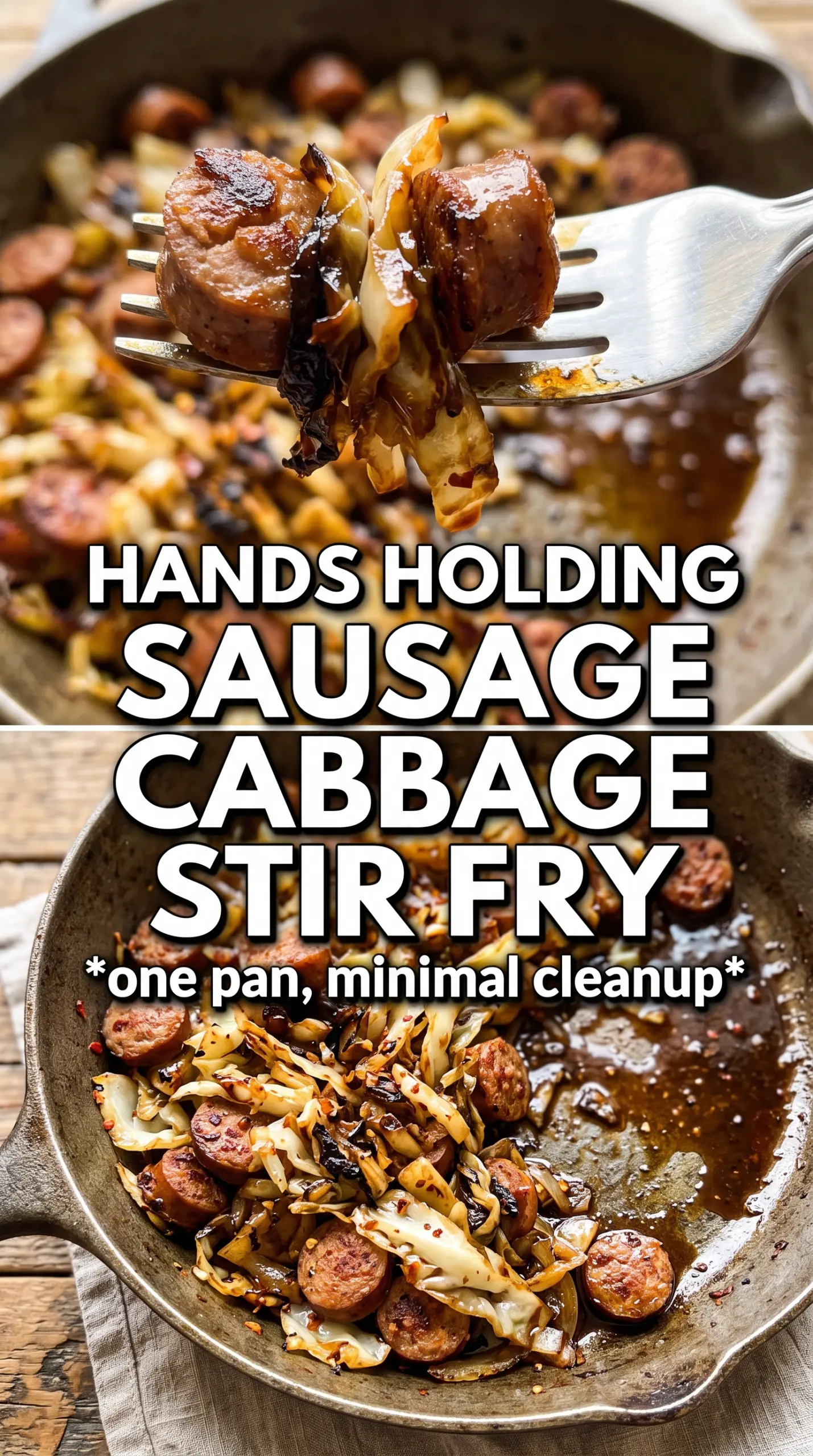
- Smoked kielbasa or andouille — This is the backbone of the dish. You want a sausage that’s already cooked and seasoned because it browns quickly and gives you flavor in minutes. Kielbasa is milder and a little sweeter; andouille brings more spice and smoke.
- Green cabbage — Green cabbage holds its shape better than softer varieties and turns silky without disappearing. Cut it into rough pieces, not shreds, so it can caramelize at the edges instead of melting down before the sausage is ready.
- Butter — Butter carries the onions and helps the cabbage pick up color. If you need to keep the dish dairy-free, use olive oil, but know that you’ll lose some of the rounded richness the butter gives the sauce.
- Dijon mustard, apple cider vinegar, and brown sugar — This trio is the glaze. Dijon thickens the pan juices, vinegar sharpens the sausage and cabbage, and brown sugar smooths the edges so the sauce tastes balanced instead of harsh. If you swap the brown sugar, use honey sparingly because it browns fast.
- Caraway seeds — Optional, but worth it if you like that old-school cabbage flavor. Crush them lightly between your fingers before adding them so they release more aroma into the butter.
Building the Glaze After the Cabbage Softens
Brown the Sausage First
Slice the sausage into rounds and let it sit in the hot skillet until the cut sides turn deep brown and a little crisp. Don’t rush this part or stir constantly; the browning is what gives the whole dish its savory base. Once the sausage is caramelized, take it out and leave the bits stuck to the pan. That fond is where the sauce starts.
Soften the Onions Before the Cabbage Goes In
After the butter melts, cook the onion until it turns translucent and picks up some gold at the edges. If the onion stays pale, the skillet isn’t hot enough yet and the cabbage will take longer to develop flavor. Add the garlic and caraway for just a minute so they smell fragrant, not sharp or burnt.
Let the Cabbage Brown in Patches
Tip in the cabbage and give it time to settle against the pan. Stir occasionally, but not nonstop, so some pieces can brown before they wilt completely. If the pan looks dry, the cabbage hasn’t released enough moisture yet; if it looks watery, keep cooking until that liquid cooks off and the edges start to color.
Finish with the Tangy Glaze
Whisk the Dijon, apple cider vinegar, and brown sugar together before adding them so the sauce goes in smoothly. Once it hits the pan, toss fast enough to coat everything, then return the sausage and let it warm through for a minute or two. Season at the end so you can judge the salt after the sausage and mustard have done their part.
Make It Spicier with Andouille
Andouille gives the skillet a smoky kick and a little heat that plays nicely with the mustard glaze. If you use it, keep the Dijon and vinegar the same and skip extra chili until you taste the finished pan. The sausage will do most of the work for you.
Dairy-Free Version
Swap the butter for olive oil or avocado oil and use the same amount. The dish will still brown well, but the sauce will taste a little leaner and less round. A small extra pat of dairy-free butter at the end can help if you want that richer finish.
Lower-Sugar Skillet
Cut the brown sugar to 1 teaspoon if you want the glaze sharper and less sweet. The dish will still work because the cabbage has its own natural sweetness once it caramelizes. Don’t remove the sugar completely unless your sausage is on the sweet side already, or the vinegar can taste too aggressive.
Storage and Reheating
- Refrigerator: Store in an airtight container for up to 4 days. The cabbage softens a bit more as it sits, but the flavor holds up well.
- Freezer: It freezes, but the cabbage will be softer after thawing. Freeze in portions for up to 2 months if you don’t mind a looser texture.
- Reheating: Warm it in a skillet over medium-low heat with a small splash of water if needed. Microwaving works in a pinch, but it can make the cabbage rubbery if you blast it too long.
Answers to the Questions Worth Asking
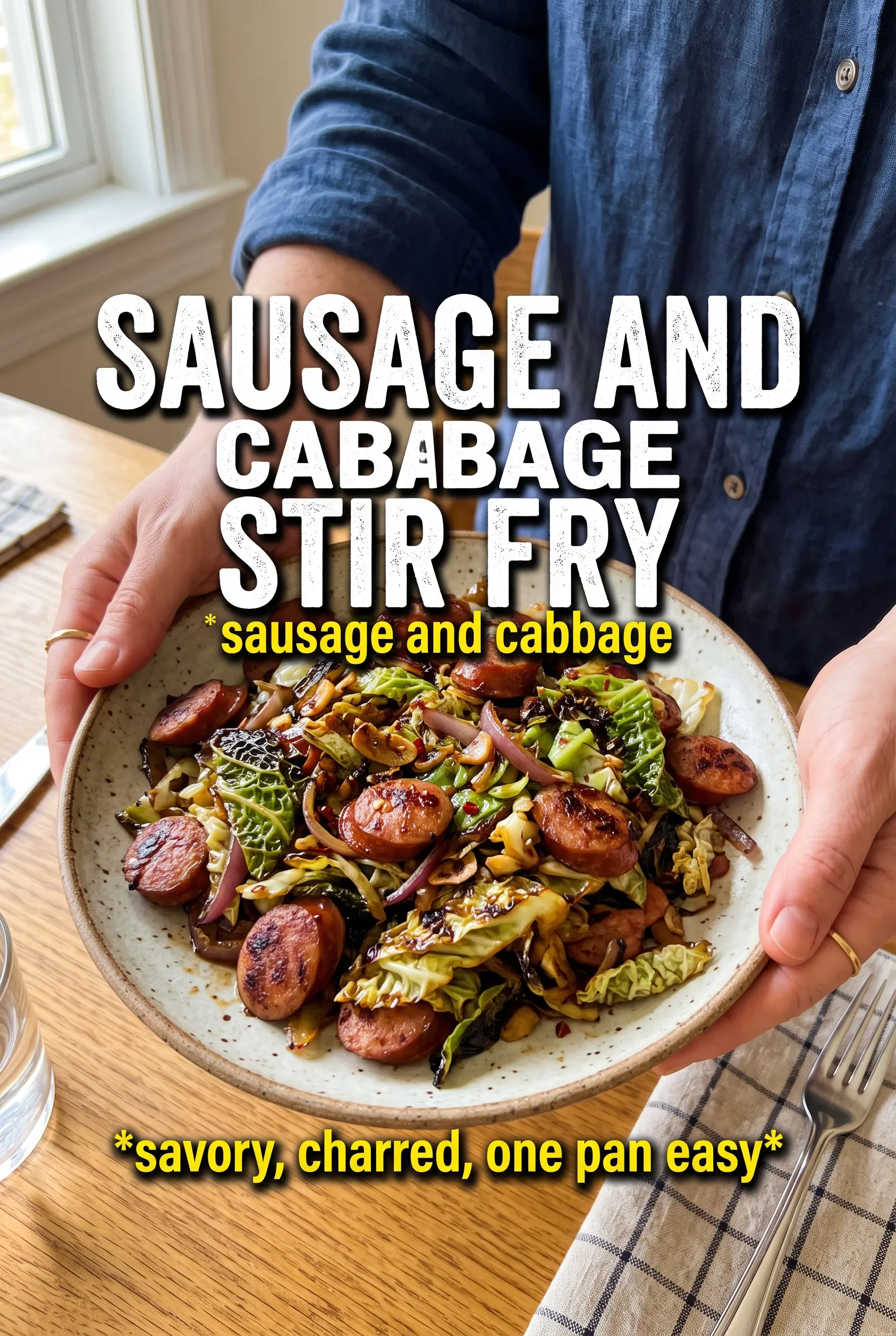
Sausage And Cabbage Stir Fry
Ingredients
Equipment
Method
- Heat a large skillet over medium-high heat and add the sliced smoked kielbasa rounds. Brown until caramelized, then remove and set aside.
- Melt the unsalted butter in the same pan. Sauté the sliced onion for 5 minutes, stirring occasionally, until softened and golden.
- Add the minced garlic and caraway seeds (if using) to the pan and cook for 1 minute. Stir constantly to prevent browning.
- Add the chopped green cabbage to the skillet and cook for 8-10 minutes, stirring occasionally, until wilted and slightly caramelized at the edges. Keep heat at medium-high for best browning.
- Whisk the Dijon mustard, apple cider vinegar, and brown sugar in a bowl. Pour the mixture over the cabbage and let it coat for 30-60 seconds, bubbling lightly.
- Return the caramelized sausage to the skillet. Toss everything together until evenly coated and heated through, about 1-2 minutes.
- Season with salt and pepper to taste and top with fresh parsley before serving. Serve hot straight from the skillet.