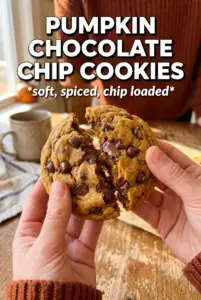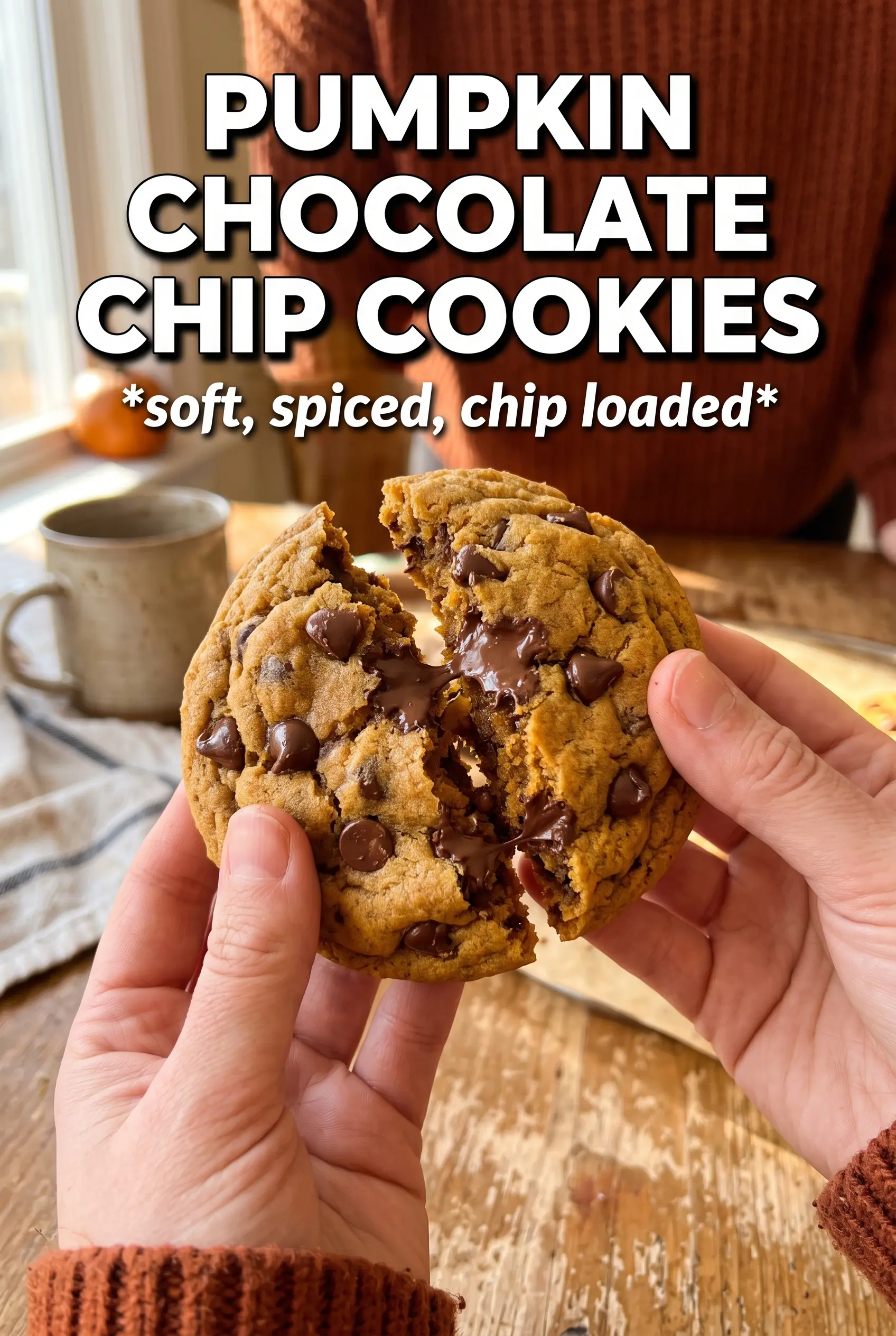
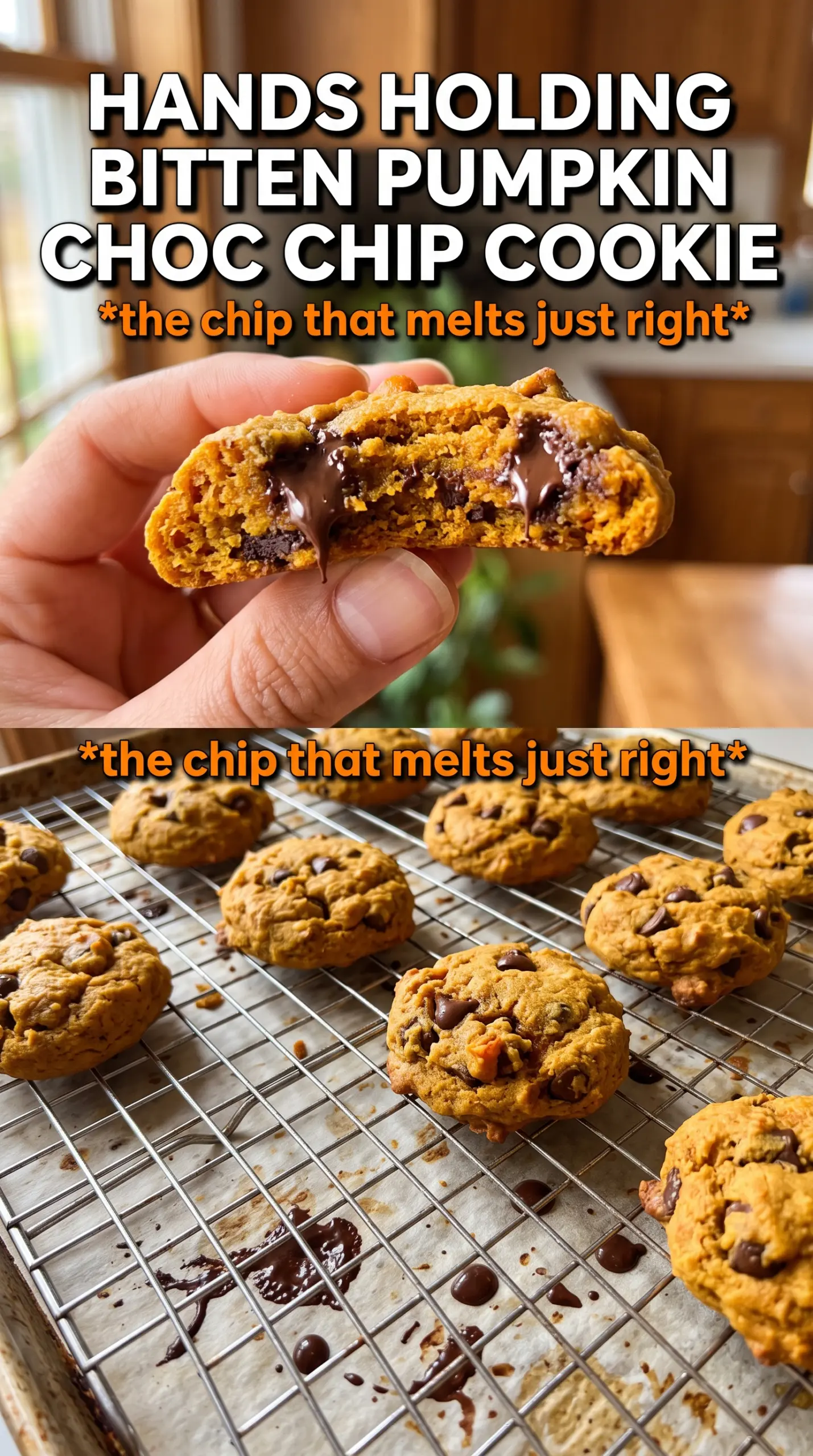
Soft pumpkin chocolate chip cookies can turn gummy fast, but when the dough is handled the right way, you get crisp edges, a tender center, and little pockets of melted chocolate in every bite. The pumpkin stays in the background instead of making the cookies cakey, and the cinnamon and pumpkin pie spice give just enough warmth without taking over.
The difference here is moisture control. Pumpkin puree holds a lot of water, so blotting it dry before it ever hits the bowl keeps the cookies from puffing up like little muffins. Using just the egg yolk adds richness and structure without the extra moisture from a whole egg, and that’s what helps the cookies spread into those thick, chewy rounds instead of baking up soft and bready.
Below you’ll find the one step that matters most for texture, plus the small finish that makes the chocolate and spice taste even better together.
The cookies spread into perfect little rounds, and the centers stayed soft without tasting cakey. Blotting the pumpkin made a bigger difference than I expected, and the flaky salt on top made the chocolate pop.
Pumpkin Chocolate Chip Cookies bake up thick, chewy, and chocolate-studded — pin this one for when you want soft centers and caramelized edges.
The Pumpkin Purée Has to Be Dry Before It Hits the Dough
The most common reason pumpkin cookies bake up cakey instead of chewy is simple: too much water. Pumpkin purée looks thick in the can, but it still carries enough moisture to change the whole structure of the dough. Blotting it between paper towels until it feels almost paste-like keeps the cookies from turning into puffy little cake rounds.
The other piece that matters is the egg yolk. A whole egg brings extra liquid, which works against the texture you want here. The yolk gives the dough richness and helps bind it without loosening the batter, and that small change is what lets the edges bake up set while the centers stay soft.
- Blotted pumpkin purée — This is the ingredient that decides whether the cookies spread or steam. Press it dry more than you think you need to; when the towel barely picks up moisture, you’re there.
- Brown sugar — It adds a little chew and a deeper caramel note that plays well with chocolate. Granulated sugar alone makes the cookies taste flatter and crispier.
- Egg yolk — Use just the yolk, not the whole egg. The white adds water and pushes the texture toward cakey.
- Flaky sea salt — This isn’t just decoration. It sharpens the chocolate and keeps the spice from tasting muddy.
What Each Ingredient Is Actually Doing in This Recipe
- Primary ingredient (the star) — Quality matters most. Choose the best you can find.
- Cooking medium (oil, butter, or broth) — This carries flavors and prevents dryness.
- Seasonings (salt, pepper, spices, herbs) — Layer flavors so nothing overpowers. Build depth gradually.
- Aromatics (garlic, onion, herbs) — Cook with fat to bloom flavors. Become the foundation.
- Supporting ingredients — Complement the main ingredient without overpowering it.
- Sauce or liquid (if applicable) — Brings flavors together. Balance richness with acid.
- Acid (lemon, vinegar, wine, or other) — Brightens and prevents flat-tasting results.
- Final finish (garnish, glaze, or sauce) — Prevents one-dimensional taste and adds visual appeal.
Building the Dough So It Spreads Instead of Puffing Up
Whisk the dry ingredients first
Mix the flour, baking soda, baking powder, spices, and salt before the wet ingredients go in. That keeps the leavening and spices evenly distributed, which matters here because pumpkin can hide uneven pockets of flavor. If the baking soda isn’t mixed well, you’ll get random spots that brown too much or taste metallic.
Beat the butter and sugars until light
Start with softened butter and beat it with both sugars until the mixture looks fluffy and a little paler. That step traps air, which gives the cookies lift without making them dry. If the butter is melted or greasy, the dough will spread too fast and the cookies can bake thin around the edges.
Fold in the pumpkin without overworking the dough
Once the pumpkin, yolk, and vanilla go in, mix only until combined. The dough will look a little softer than a standard chocolate chip cookie dough, and that’s fine. Add the flour mixture next and stop as soon as no dry streaks remain, because overmixing builds toughness and knocks out the tender texture you’re after.
Bake until the edges set
Scoop the dough into 2-tablespoon rounds and bake until the edges are golden and the centers still look slightly soft. They finish setting on the pan, so pulling them when they look just barely underdone keeps the middle chewy instead of dry. Sprinkle the flaky salt right away while the tops are still warm so it clings.
Make Them Extra Chocolatey
Use a mix of dark and semi-sweet chips if you want a more layered chocolate flavor. Dark chips keep the cookies from tasting overly sweet, while semi-sweet chips melt into softer puddles. Chopped chocolate works too, but expect a messier, more bakery-style look.
Gluten-Free Version
A good 1:1 gluten-free flour blend can work here, but only if it includes xanthan gum or a similar binder. The cookies may spread a little less and finish with a softer bite, so give them the full cooling time on the pan before moving them.
Dairy-Free Swap
Use a plant-based butter that’s meant for baking and holds its shape when softened. The texture will still be close, though the flavor loses a little of the buttery depth, so don’t skip the vanilla and salt.
Storage and Reheating
- Refrigerator: Store in an airtight container for 4 days. The cookies stay soft, but the chocolate will firm up after chilling.
- Freezer: Freeze baked cookies for up to 2 months, or freeze scooped dough balls on a tray and bag them once solid. Frozen dough can go straight to the oven with an extra minute or two added.
- Reheating: Warm a cookie in the microwave for 8 to 10 seconds, just until the chocolate softens. Longer heating dries out the center and steals the chewy texture.