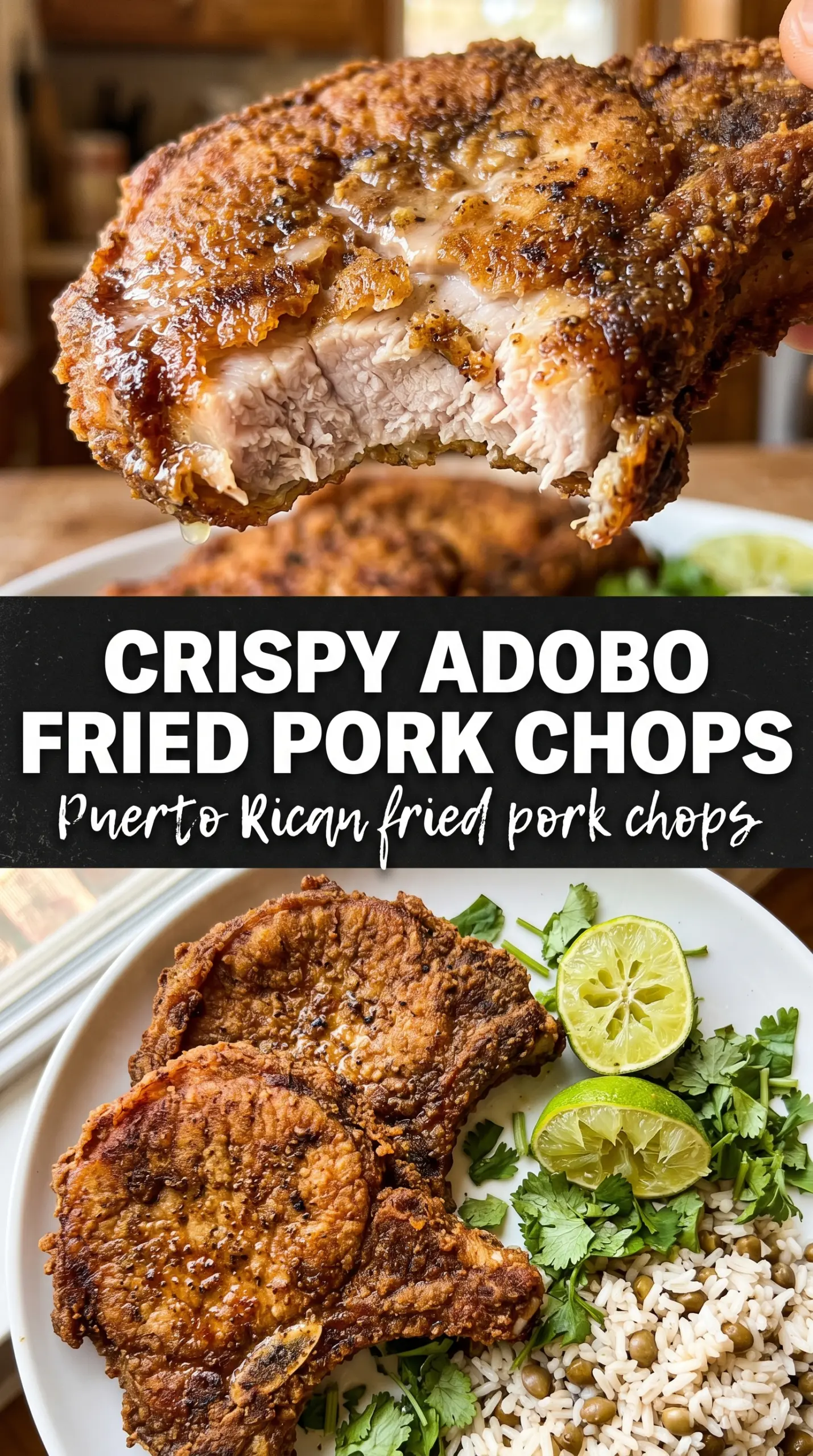
Golden Puerto Rican fried pork chops hit the plate with a crust that crackles at the edge and a center that stays juicy under all that seasoning. The best part is how quickly they come together. A short marinade gives the pork enough salt, spice, and tang to taste like it cooked all day, even though it goes from bowl to skillet in under an hour.
The balance matters here. Adobo brings salt and garlic, sazon adds that unmistakable warm color and savory depth, and a little vinegar loosens the surface of the pork so the seasoning clings instead of sitting on top in a dusty layer. Thin chops work best because they cook fast and stay tender; thick chops can still work, but they need a lower heat and a little more time so the crust doesn’t burn before the center is done.
Below you’ll find the exact method I use to keep the chops crisp, plus the small swaps that still give you that classic chuletas fritas result when you don’t have every ingredient on hand.
The chops came out crisp on the outside and stayed juicy inside, and the vinegar in the marinade made the seasoning taste like it belonged in the meat, not just on top.
Save these Puerto Rican fried pork chops for the night you want crispy chuletas fritas with adobo, sazon, and rice on the side.
The Trick to Crispy Chuletas Without Drying Out the Pork
The biggest mistake with fried pork chops is treating them like they need a long fry the way chicken might. Thin chops cook fast, and once the surface turns deeply golden, the center is usually done or very close. Push them too far and you lose the juicy bite that makes this dish worth making in the first place.
The other place people get into trouble is heat. If the oil is too cool, the chops soak it up and go greasy. If it is too hot, the seasoning darkens before the meat cooks through. Medium-high heat with a shallow layer of oil gives you that crisp shell and enough control to keep the seasoning from turning bitter.
- Thin pork chops — Thin chops fry evenly and stay tender. Bone-in chops give you a little more flavor and help protect the meat from drying out, but boneless works if that’s what you have. Just keep an eye on the cook time.
- Adobo seasoning — This is the backbone of the marinade. It brings salt, garlic, and a savory base in one step, which is why this dish tastes full of flavor even with a short marinate.
- Sazon seasoning — Sazon adds the warm color and that unmistakable Puerto Rican-style seasoning note. There isn’t a true one-to-one substitute, but a mix of garlic powder, paprika, cumin, and a pinch of turmeric gets you in the same neighborhood if you need it.
- Vinegar and olive oil — The vinegar lightly tenderizes and helps the seasoning cling, while the oil spreads everything across the surface of the pork. Don’t skip the oil; dry seasoning alone won’t coat as evenly.
What Each Ingredient Is Actually Doing in This Recipe
- Primary ingredient (the star) — Quality matters most. Choose the best you can find.
- Cooking medium (oil, butter, or broth) — This carries flavors and prevents dryness.
- Seasonings (salt, pepper, spices, herbs) — Layer flavors so nothing overpowers. Build depth gradually.
- Aromatics (garlic, onion, herbs) — Cook with fat to bloom flavors. Become the foundation.
- Supporting ingredients — Complement the main ingredient without overpowering it.
- Sauce or liquid (if applicable) — Brings flavors together. Balance richness with acid.
- Acid (lemon, vinegar, wine, or other) — Brightens and prevents flat-tasting results.
- Final finish (garnish, glaze, or sauce) — Prevents one-dimensional taste and adds visual appeal.
How to Season and Fry the Pork So the Crust Stays Intact
Building the Marinade
Stir the adobo, sazon, garlic powder, oregano, vinegar, and olive oil into a thick paste, then rub it over every surface of the pork chops. The meat should look stained and fully coated, not patchy. If the seasoning seems to slide off, the chops are too wet, so pat them dry first before adding the marinade.
Letting the Pork Rest Long Enough
Thirty minutes is enough to give the seasoning time to settle into the meat, and two hours is even better if you have it. Don’t leave it much longer with this amount of vinegar or the texture can turn a little soft on the outside. Put the chops in a shallow dish or zip-top bag so the marinade stays in contact with the meat.
Frying to a Deep Golden Color
Heat about a quarter inch of oil in a heavy skillet until it shimmers and a drop of marinade sizzles right away. Lay in the chops without crowding the pan, then leave them alone until the underside is deep golden and releases easily. If the crust is browning too fast, lower the heat a touch; if the pan looks quiet instead of lively, raise it slightly so the coating fries instead of steams.
Finishing and Serving Hot
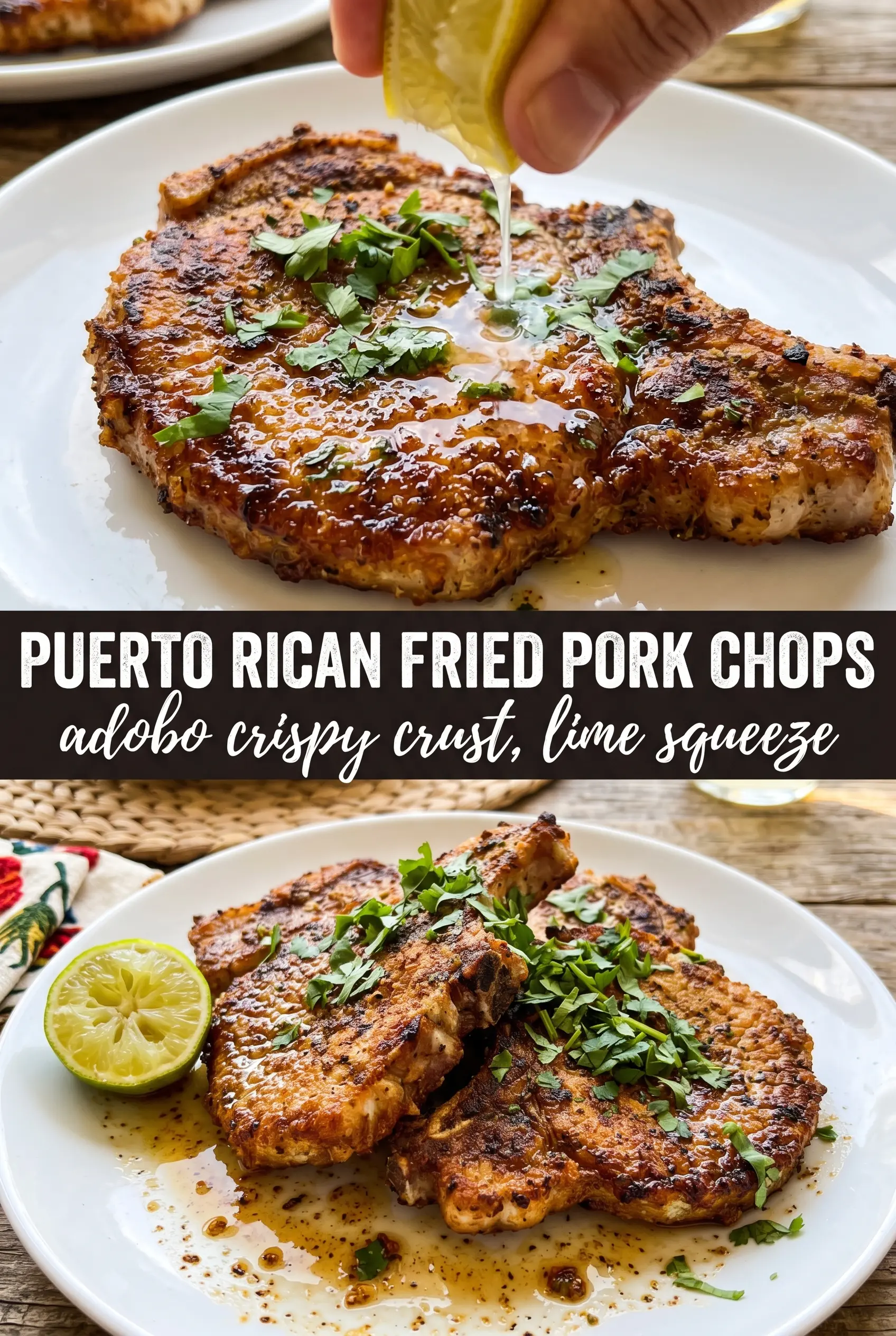
Drain the chops briefly on paper towels, then serve them right away with white rice, pink beans, and lime wedges. That short drain keeps the crust crisp without pulling all the fat away from the surface. A squeeze of lime at the table brightens the seasoned pork and cuts through the richness.
How to Make These Chuletas Work With What’s in Your Kitchen
Make It Gluten-Free Without Losing the Crunch
This recipe is already gluten-free as written, as long as your adobo and sazon blends are certified gluten-free. That matters because some seasoning blends use anti-caking agents or flavorings you wouldn’t expect. The frying method stays the same, and the chops still get that crisp edge without any flour.
If You Only Have Boneless Pork Chops
Boneless chops work fine, but they cook a little faster and dry out sooner. Keep them on the thinner side and start checking for doneness a minute or two early. You’ll still get a good crust, just a slightly less rich pork flavor than bone-in chops.
Swap the Vinegar if You Need a Milder Tang
Lime juice can stand in for the vinegar if that’s what you have, though it tastes a little brighter and less sharp. Use the same amount, but don’t let the chops marinate too long because citrus can start to toughen the outer layer if it sits for hours. The result is still lively and well seasoned.
Storage and Reheating
- Refrigerator: Store leftover pork chops in an airtight container for up to 3 days. The crust softens in the fridge, but the flavor holds up well.
- Freezer: Freeze cooked chops for up to 2 months, wrapped tightly and tucked into a freezer bag. They thaw best overnight in the fridge.
- Reheating: Warm them in a 375°F oven or air fryer until heated through and the exterior perks back up. The common mistake is microwaving them, which turns the crust leathery and pushes the pork past juicy.
Questions I Get Asked About This Recipe
Puerto Rican Fried Pork Chops (Chuletas Fritas)
Ingredients
Equipment
Method
- In a bowl, mix adobo seasoning, sazon seasoning, garlic powder, dried oregano, white vinegar, and olive oil until combined and evenly coated over the pork chops; add salt and pepper to taste as you coat. Marinate for 30 minutes to 2 hours for maximum flavor penetration.
- Heat 1/4 inch of oil in a heavy skillet over medium-high heat until shimmering. Keep the oil at a steady shimmer before adding the chops.
- Place the pork chops in the hot oil and fry 4–5 minutes per side until deep golden brown and cooked through. Flip once and avoid overcrowding so the crust stays crisp.
- Transfer the fried pork chops to paper towels and drain briefly. Let the surface stay crisp while excess oil drains off.
- Serve the chuletas fritas hot with white rice, pink beans, and lime wedges. Squeeze lime over the chops just before eating.