Protein packed Thai pasta salad hits that sweet spot between lunch-prep practical and genuinely worth looking forward to. The pasta stays chewy, the vegetables keep their crunch, and the peanut-ginger dressing coats everything with a creamy, salty-sweet finish that tastes even better after it has had time to chill. It eats like a full meal, not a side dish pretending to be one.
The trick is starting with protein pasta that’s cooked just past al dente, then rinsing it cold so it doesn’t keep softening while it sits in the dressing. The peanut sauce also needs a little water to loosen it before it hits the bowl; if you pour on a thick paste, it won’t spread evenly and the salad turns patchy instead of glossy. Chicken gives it staying power, but the cabbage, carrots, and bell pepper keep the whole thing bright and crisp.
Below, I’ll walk through the small details that matter here: how to keep the dressing smooth, what to do if your peanut butter is thick or stiff, and how to adapt the salad for a vegetarian lunch without losing the high-protein feel.
The peanut dressing coated everything evenly after chilling, and the cabbage stayed crunchy even the next day. I added extra lime at the table and it tasted like something I’d order for lunch out.
Save this protein packed Thai pasta salad for meal prep days when you want a creamy peanut-ginger lunch that holds up in the fridge.
The Secret to Keeping Protein Pasta from Going Soft
Protein pasta behaves differently from regular wheat pasta. Chickpea and edamame versions keep absorbing moisture after they’re drained, which is great for a hot sauced dish and annoying in a chilled salad if you don’t plan for it. Cooking it to the earliest end of the package range, then rinsing it under cold water, stops the carryover cooking and keeps the noodles from turning gummy in the fridge.
The other thing that matters here is balance. Peanut dressing tastes best when it’s thick enough to cling, but not so thick that it sits in clumps on the pasta. A chilled salad also needs enough acid to wake up the peanut butter, which is why the rice vinegar and lime at the end aren’t just garnish-level details. They keep the salad from tasting heavy.
- Protein pasta — Edamame or chickpea pasta gives the salad its high-protein backbone. Regular pasta works, but it won’t absorb the dressing the same way or give you the same hearty bite.
- Peanut butter — Use a creamy style for the smoothest dressing. Natural peanut butter works too, but if it’s separated or stiff, stir it well first so the sauce doesn’t turn grainy.
- Rice vinegar — This sharpens the dressing without making it taste sour. If you swap in lime juice, start with less and taste as you go because lime reads brighter and more aggressive.
- Fresh ginger and garlic — These are not background flavors. They cut through the richness of the peanut butter and make the salad taste fresh even after a day in the fridge.
Building the Dressing Before It Touches the Bowl
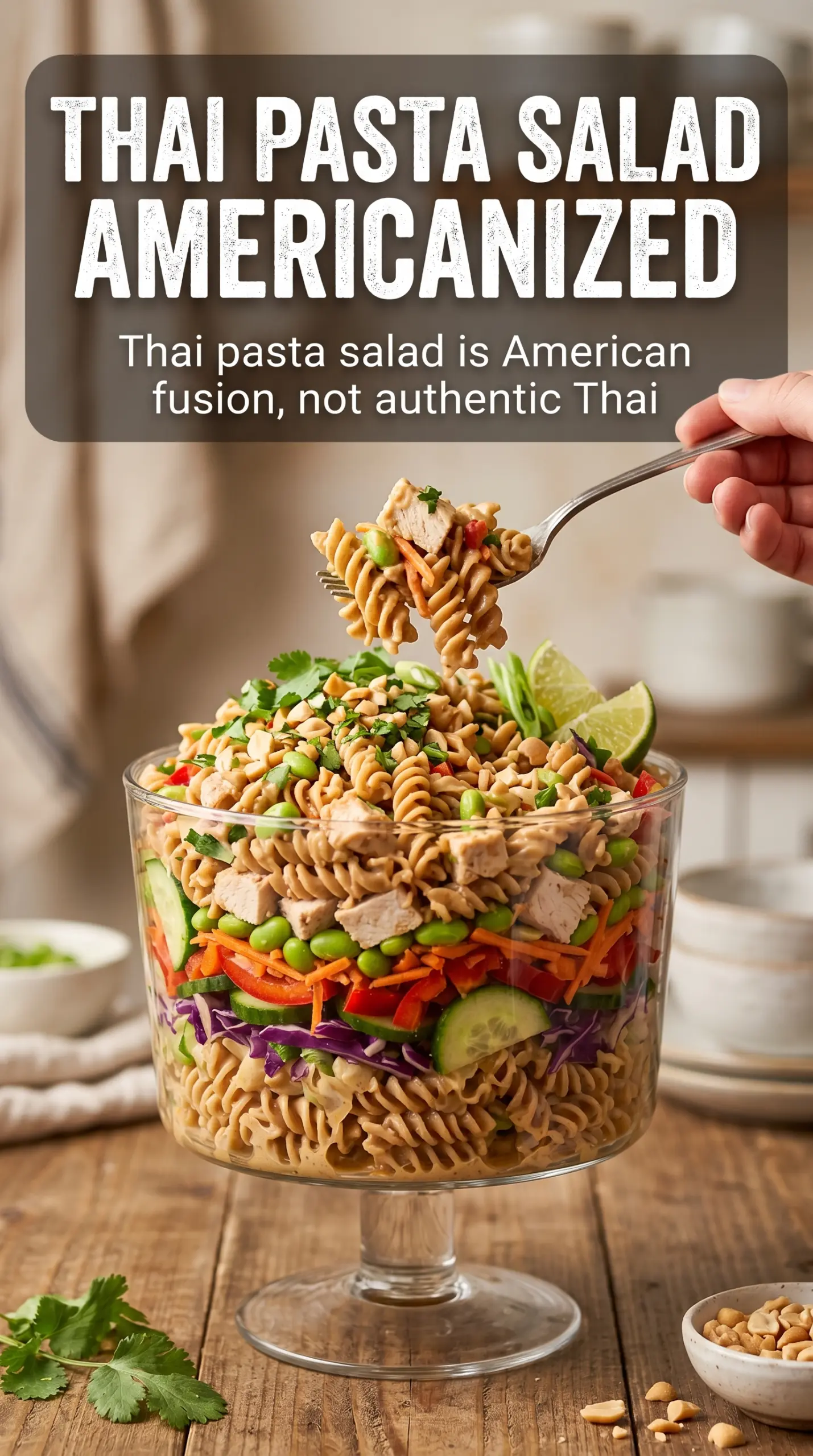
Whisk the peanut butter, soy sauce, rice vinegar, honey, ginger, and garlic together before adding the pasta. If you dump the dressing ingredients over the salad one by one, the peanut butter can seize up into little stubborn pockets and never fully blend. A bowl and whisk are enough, but if your peanut butter is very thick, add the water a tablespoon at a time until the dressing flows off the whisk in a thick ribbon.
The chicken should be cooled before it goes in. Warm chicken softens the cabbage and makes the whole bowl feel limp before it has even had time to chill. Shred it into bite-size pieces so it catches the dressing instead of falling into dry chunks at the bottom.
Whisking the Peanut Sauce Smooth
Start with the peanut butter and soy sauce, then work in the vinegar, honey, ginger, and garlic. The mixture will look too thick at first; that’s normal. Add water slowly until it becomes glossy and pourable, like a thick salad dressing. If the sauce turns sandy or separated, keep whisking for another 30 seconds before adding more water.
Tossing for Even Coating
Add the pasta, chicken, cabbage, carrots, and bell pepper to the bowl, then pour the dressing over the top. Toss from the bottom of the bowl so the dressing works its way through everything instead of only coating the top layer. If the salad looks dry after tossing, wait a minute before adding more dressing; protein pasta drinks up sauce as it sits.
Chilling for the Right Texture
Refrigerate the salad for at least an hour. That resting time lets the dressing settle into the pasta and gives the vegetables time to mingle without losing all their crunch. Right before serving, toss again and finish with peanuts, cilantro, and lime wedges so the top tastes as fresh as the first bite.
How to Adapt This Salad Without Losing Its Bite
Make It Vegetarian
Swap the chicken for baked tofu, shelled edamame, or extra chickpeas. Tofu gives you the most neutral, soak-up-the-sauce texture, while edamame keeps the protein count high and adds a clean, green bite.
Make It Gluten-Free
Use a gluten-free protein pasta and swap in a gluten-free soy sauce or tamari. The texture stays just as satisfying, but the noodles can soften faster, so keep the chill time to an hour and don’t let it sit all day before serving.
Turn Up the Heat
Stir a little chili crisp, sriracha, or crushed red pepper into the dressing. That adds sharpness and warmth without changing the creamy base, and it works especially well if you’re serving this with extra lime on the side.
Storage and Reheating
- Refrigerator: Keeps for 3 to 4 days. The vegetables soften a little, but the salad still tastes great cold.
- Freezer: I don’t recommend freezing it. The pasta gets mealy and the vegetables lose their crunch.
- Reheating: This salad is best served cold or just barely cool. If it has thickened in the fridge, loosen it with a splash of water and a squeeze of lime instead of warming it up.
Answers to the Questions Worth Asking
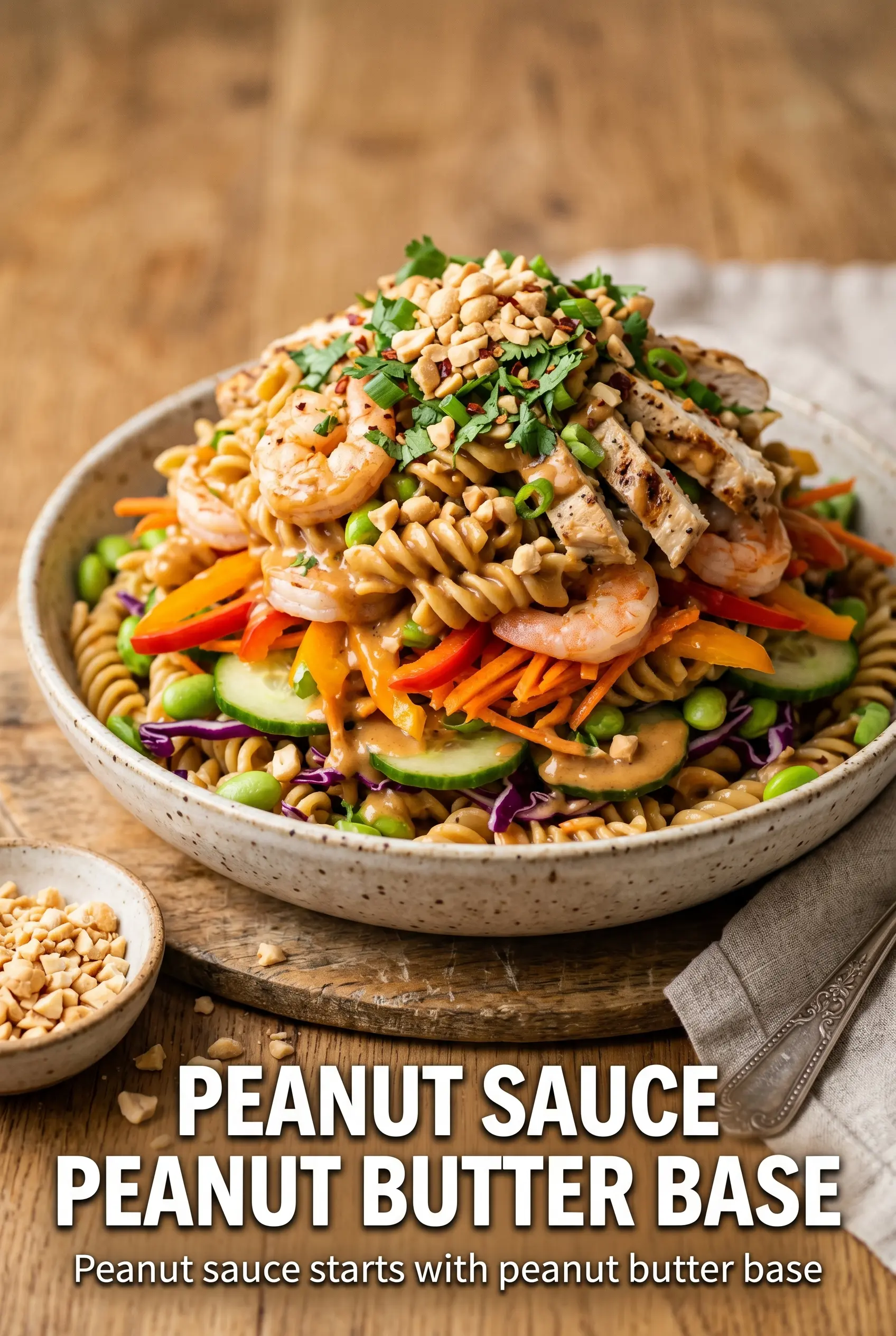
Protein Packed Thai Pasta Salad
Ingredients
Equipment
Method
- Cook the protein pasta according to package directions, then drain and rinse with cold water until the noodles feel cool. Visual cue: the pasta should stop steaming and look separated, not clumped.
- Whisk peanut butter, soy sauce, rice vinegar, honey, ginger, and garlic together in a bowl until smooth. Visual cue: the mixture looks glossy and evenly combined.
- Add water gradually to thin the dressing to your desired consistency, whisking after each addition. Visual cue: the dressing should pour and lightly coat a spoon rather than stay thick.
- Combine the pasta, shredded chicken breast, red cabbage, carrots, and thinly sliced red bell pepper in a large bowl. Visual cue: colorful vegetables are evenly distributed throughout.
- Pour the peanut dressing over the salad and toss until every ingredient looks coated. Visual cue: the pasta and vegetables appear lightly glossy with a creamy layer.
- Refrigerate the salad for at least 1 hour to let the flavors meld. Visual cue: the salad firms up slightly and looks more evenly dressed.
- Top with crushed peanuts and chopped cilantro right before serving, and serve with lime wedges. Visual cue: peanuts stay visible on top for crunch.