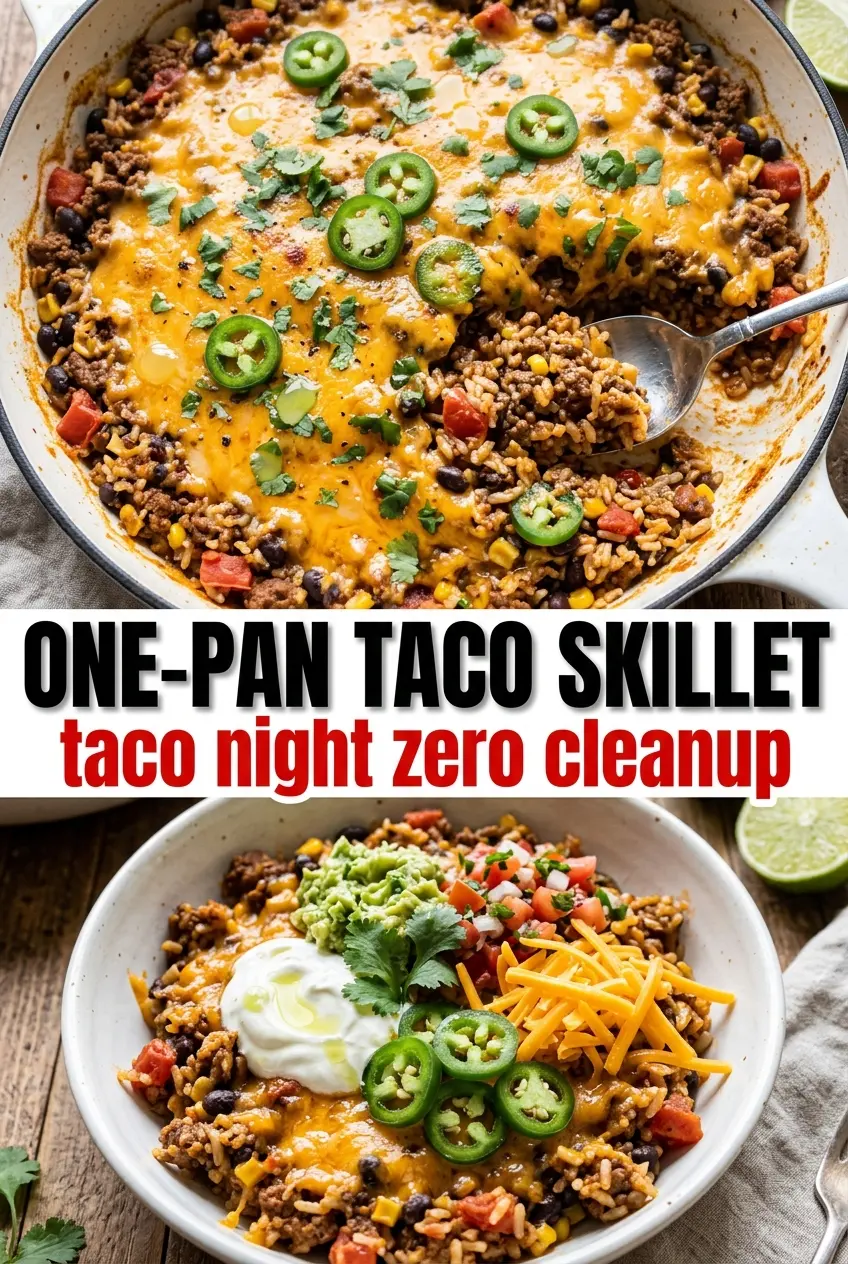
One-pan taco skillet is the kind of dinner that disappears fast because it hits all the right notes: savory beef, tender beans, sweet corn, and that taco-spiced tomato sauce that clings to every bite. The cheese melts into the top just enough to make the whole pan feel complete without turning it heavy, and the toppings bring the freshness that keeps it from tasting flat.
The trick here is giving the skillet a minute to simmer after the seasoning goes in. That short simmer pulls the taco flavor into the beef instead of leaving it sitting on the surface, and the broth loosens everything just enough for the beans, corn, and tomatoes to mingle without turning soupy. If you’ve ever had a taco skillet that tasted like browned meat with stuff dumped on top, this version fixes that.
Below, I’ll show you how to keep the sauce thick, when to add the cheese, and a few smart swaps that still give you a bold, weeknight-friendly dinner.
The sauce thickened up just right and the Rotel gave it a little kick without making it too spicy. I topped mine with guacamole and lime, and it tasted like a taco night shortcut in the best way.
Like this one-pan taco skillet? Save it to Pinterest for the nights when you need a fast, cheesy skillet dinner with minimal cleanup.
The Trick to Keeping a Taco Skillet Thick Instead of Soupy
The biggest mistake with skillet taco dinners is adding too much liquid and then walking away. Rotel already brings moisture, the beef releases some juices, and the broth is only there to help the seasoning bloom and pull everything together. If the pan looks loose after the simmer, keep it over medium heat and let it reduce until the liquid coats the back of a spoon instead of pooling around the edges.
Another thing that matters here is browning the beef before the rest of the ingredients go in. That step builds the savory base, and the onion softens in the fat so it disappears into the filling instead of standing out in little crunchy bits. Drain excess fat before the seasoning goes in, especially if your beef is on the fattier side, or the finished skillet can taste greasy instead of rich.
What the Beans, Corn, and Rotel Are Each Doing Here
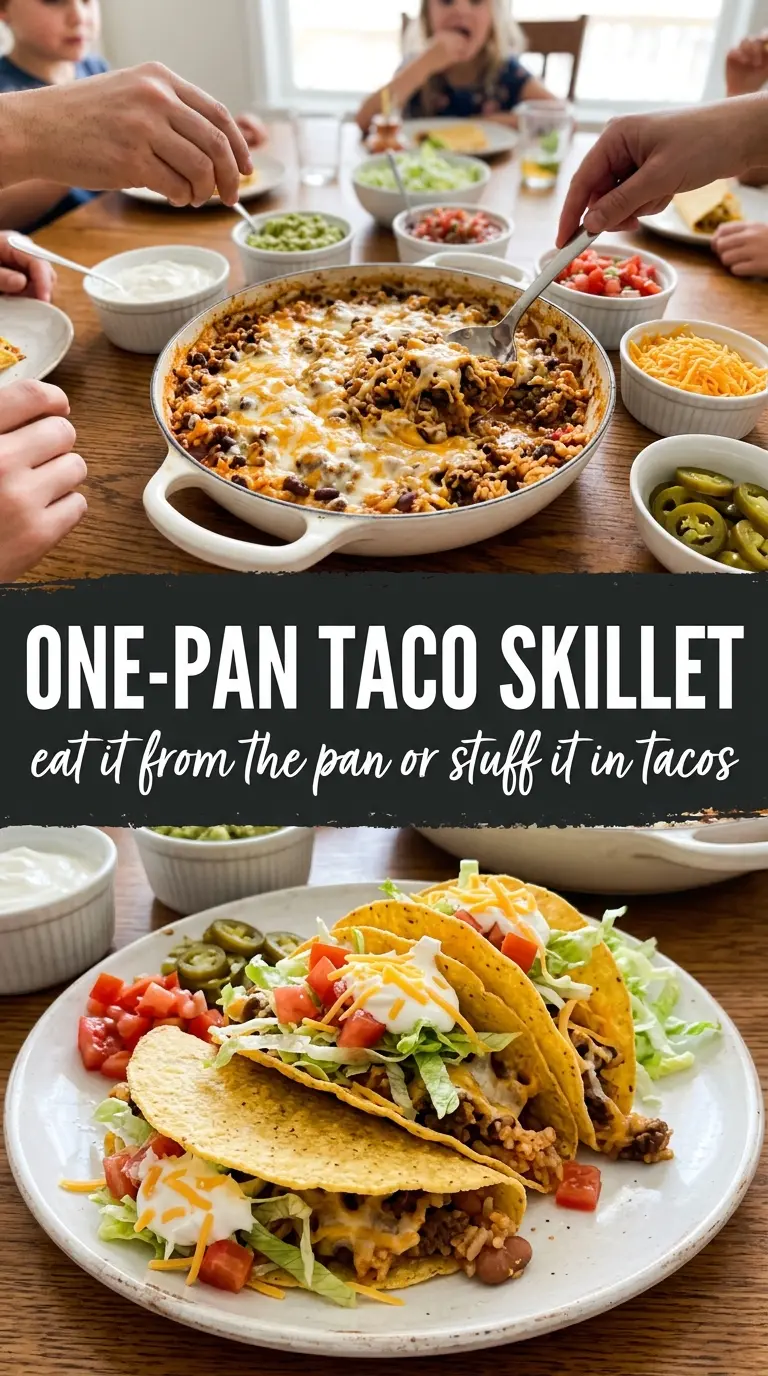
- Ground beef — This is the backbone of the skillet, and you want enough browning to build flavor before anything else goes in. Leaner beef works best if you don’t want to drain much fat, but anything from 85/15 to 90/10 will work.
- Black beans — They add body and make the skillet feel like a full meal, not just seasoned meat. Canned beans are fine here; rinse and drain them well so the sauce doesn’t turn cloudy or thin.
- Frozen corn — Frozen corn brings sweetness and a little pop without any extra prep. Don’t thaw it first; it heats through quickly in the simmer and keeps its texture better that way.
- Rotel diced tomatoes — This gives the skillet its tomato base plus a little pepper heat. If you use plain diced tomatoes instead, add a pinch of extra chili powder or a spoonful of diced green chiles so the filling doesn’t taste flat.
- Beef broth — Just a half cup is enough to help the sauce come together and keep the seasoning from tasting dusty. Stock works too, but broth tends to give a cleaner, more rounded flavor in this kind of dish.
- Mexican cheese blend — This melts smoothly over the top and gives you that classic taco-night finish. Pre-shredded is fine for convenience, though freshly shredded cheese melts a little silkier if you have the extra minute.
Building the Skillet So Everything Tastes Like Taco Night
Brown the Beef and Soften the Onion
Cook the ground beef and onion together over medium-high heat until the meat is no longer pink and you can see browned bits on the bottom of the pan. Those browned bits matter; they’re the flavor base for the whole skillet. If there’s a lot of fat in the pan, drain it before moving on so the finished dish stays hearty instead of oily.
Bloom the Seasoning in the Pan
Add the taco seasoning and water directly to the hot beef, then stir and let it simmer for about 2 minutes. The spice mix should look glossy and absorbed into the meat, not dry or powdery. If the pan looks dry before the seasoning is fully coated, add a tablespoon of water at a time rather than flooding it.
Let the Beans, Corn, and Tomatoes Reduce
Stir in the black beans, corn, Rotel, and broth, then bring everything to a gentle simmer. You want the mixture active enough to bubble around the edges, not boil hard, because a hard boil can make the liquid separate instead of thickening neatly. After 5 to 7 minutes, the sauce should look slightly reduced and cling to the beef when you stir it.
Melt the Cheese Without Overcooking the Filling
Sprinkle the cheese over the top, cover the skillet, and take it off the heat or keep it on the lowest burner setting just until the cheese melts. If you leave it uncovered too long, the beef mixture keeps reducing and can turn dry before the cheese softens. Serve right away with sour cream, guacamole, jalapeños, cilantro, and lime so each bite gets something cool, bright, and creamy.
How to Adapt This Skillet When Dinner Needs a Small Change
Make it gluten-free
Use a certified gluten-free taco seasoning and check the broth label, since those two ingredients are the usual hidden source of gluten. The texture and flavor stay the same, which makes this an easy swap without changing the skillet at all.
Make it dairy-free
Skip the cheese or use a dairy-free shredded melt if you like that creamy top layer. The skillet still tastes complete because the beef, beans, and Rotel carry the main flavor, and the toppings like guacamole and cilantro add enough richness to balance it.
Swap in ground turkey or chicken
Use the same method, but add a drizzle of oil if the pan looks dry because lean poultry won’t give you as much fat for the onion to cook in. The final skillet will taste a little lighter, so lean on the toppings and don’t skip the simmer time.
Stretch it for extra servings
Add another can of beans or an extra cup of corn if you need to feed more people without doubling the meat. The skillet becomes a little more scoopable and less dense, which works well if you’re serving it with tortillas, rice, or chips.
Storage and Reheating
- Refrigerator: Store leftovers for up to 4 days. The sauce tightens as it chills, which actually helps the flavors settle in.
- Freezer: It freezes well for up to 2 months if you cool it completely first. Freeze without the fresh toppings, then thaw overnight in the fridge before reheating.
- Reheating: Warm it in a skillet over medium-low heat with a splash of broth or water to loosen the sauce. The common mistake is blasting it in the microwave until the cheese and beef dry out; slow reheating keeps the texture much better.
Questions I Get Asked About This Recipe
One-Pan Taco Skillet
Ingredients
Equipment
Method
- Brown the ground beef with the diced onion in a large skillet over medium-high heat, then drain excess fat.
- Add the taco seasoning and water, stir to coat, and simmer for 2 minutes, until the mixture looks evenly seasoned.
- Stir in the black beans, corn, Rotel diced tomatoes, and beef broth, then bring everything to a simmer.
- Cook for 5–7 minutes, stirring occasionally, until the sauce thickens slightly and coats the beef.
- Top with the shredded Mexican cheese blend, cover the skillet, and heat for 2 minutes until the cheese is fully melted.
- Serve immediately with sour cream, guacamole, jalapeños, cilantro, and lime wedges for bright, fresh topping bursts.