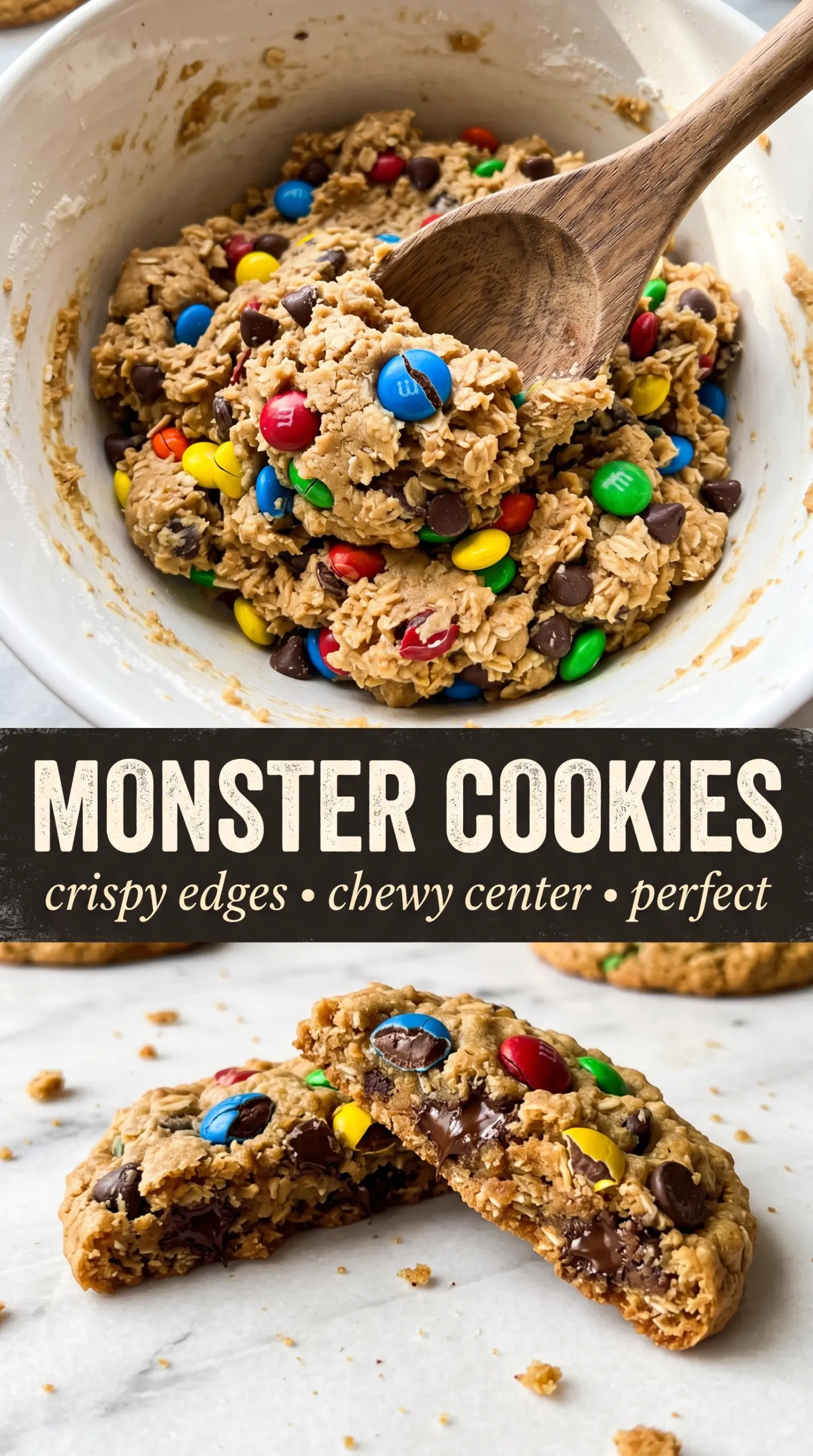
Monster cookies hit that sweet spot between chewy, sturdy, and packed with enough texture that every bite feels a little different. The oats keep them from turning into plain peanut butter cookies, while the mix of M&Ms and chocolate chips gives you those pockets of melty chocolate and candy crunch that make people reach for a second one before they’ve finished the first.
The part that matters most here is balance. There’s no flour in the dough, so the oats have to do some of the heavy lifting, and quick-cooking oats work best because they soften just enough in the oven without making the cookies heavy or coarse. The peanut butter also needs to be the creamy, no-stir style if you want that thick, cohesive dough that scoops cleanly and bakes up with soft centers.
Below, I’m walking through the little details that keep monster cookies thick instead of dry, plus a few swaps if you want to work with what’s already in your pantry. The method is straightforward, but one or two small choices make a big difference in the final texture.
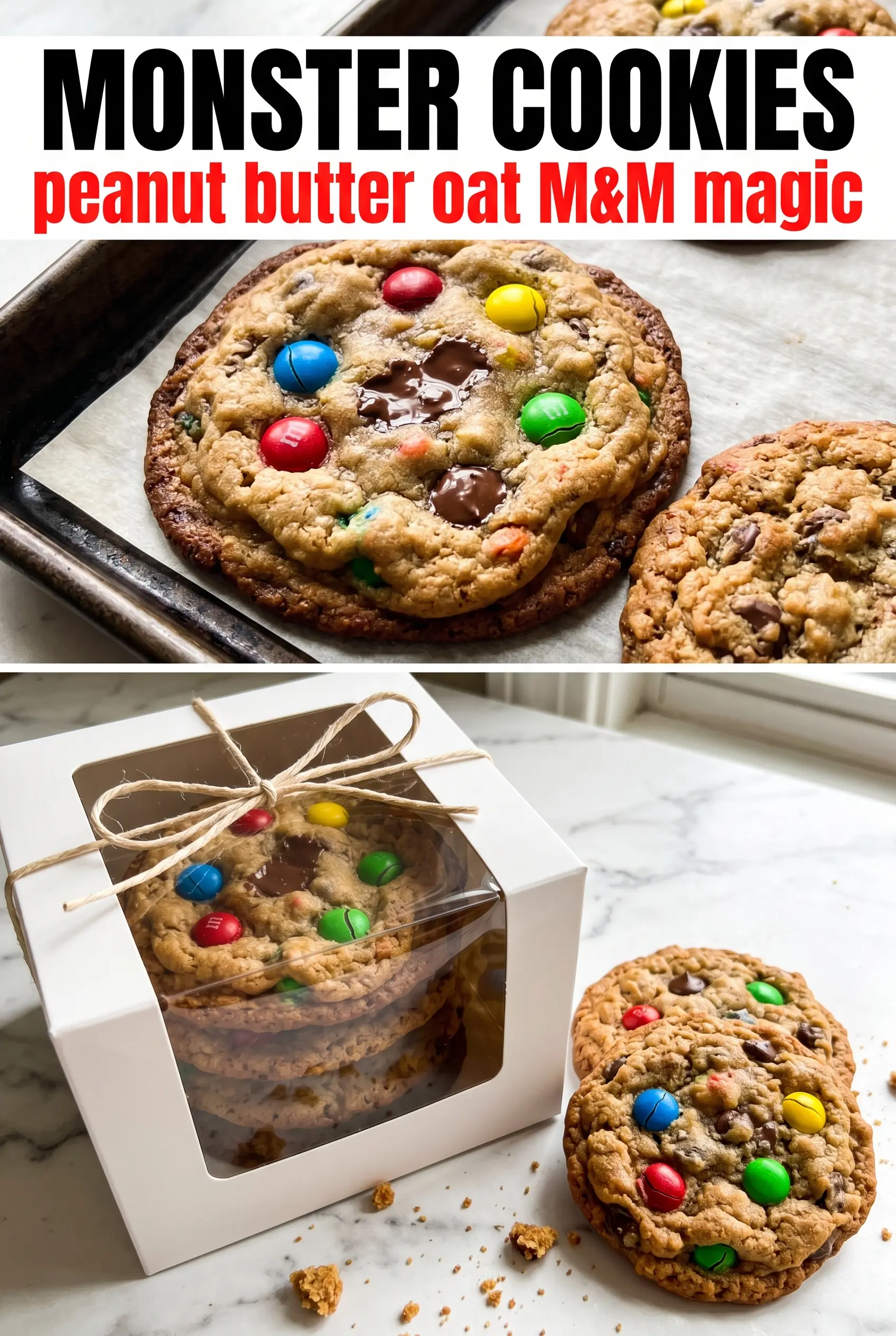
I was worried they’d be too dense without flour, but they baked up thick and chewy with crisp edges. The centers stayed soft after cooling, and the M&Ms didn’t melt into a mess.
Love these thick, chewy Monster Cookies with M&Ms and oats? Save them to Pinterest for the days when you want a no-flour cookie that stays soft in the center.
The Trick to Keeping Monster Cookies Thick Instead of Dry
Monster cookies can go wrong in one of two ways: they spread too much, or they bake up dry and crumbly. The fix is in the ratio. Peanut butter gives structure, eggs bind everything, and the oats need enough moisture from the dough to soften in the oven without soaking up so much that the cookies turn heavy.
These cookies bake best when the dough is mixed just until the oats disappear into the batter. If you keep stirring after that, the dough can start to feel stiff, and the cookies won’t spread evenly. Pull them from the oven when the edges are set and the centers still look a little soft; that’s what keeps them chewy after cooling.
- Creamy peanut butter — Use the standard no-stir kind here. Natural peanut butter can separate and make the dough greasy or uneven unless it’s stirred extremely well.
- Quick-cooking oats — These soften fast and blend into the dough without making the cookies bulky. Old-fashioned oats work in a pinch, but the texture will be rougher and a little less cohesive.
- Brown sugar — This brings moisture and that soft, caramel-like chew. White sugar alone makes the cookies drier and more brittle.
- M&Ms and chocolate chips — The candy and chips give you pockets of sweetness and color. Use regular chocolate chips, mini chips, or both; the minis distribute more evenly, while the regular chips create bigger bites of chocolate.
What Each Ingredient Is Actually Doing in This Recipe
- Primary ingredient (the star) — Quality matters most. Choose the best you can find.
- Cooking medium (oil, butter, or broth) — This carries flavors and prevents dryness.
- Seasonings (salt, pepper, spices, herbs) — Layer flavors so nothing overpowers. Build depth gradually.
- Aromatics (garlic, onion, herbs) — Cook with fat to bloom flavors. Become the foundation.
- Supporting ingredients — Complement the main ingredient without overpowering it.
- Sauce or liquid (if applicable) — Brings flavors together. Balance richness with acid.
- Acid (lemon, vinegar, wine, or other) — Brightens and prevents flat-tasting results.
- Final finish (garnish, glaze, or sauce) — Prevents one-dimensional taste and adds visual appeal.
Building the Dough So the Mix-Ins Stay Evenly Distributed
Starting With the Peanut Butter Base
Beat the peanut butter with both sugars until the mixture looks smooth and pasty, not fluffy. You’re not trying to whip air into it; you’re dissolving the sugars into the peanut butter so the dough bakes up dense and chewy instead of sandy. Once the eggs go in, the mixture should turn glossy and looser before the oats tighten it back up.
Adding the Oats Without Overworking the Dough
Stir in the oats until they’re fully coated and no dry streaks remain. The dough will feel thick, almost like a soft drop-cookie dough, and that’s exactly what you want. If it looks loose enough to pour, it needs a little more mixing time with the oats, not more oats added by the handful.
Folding in the Candy and Chips
Add the M&Ms and chocolate chips at the end and fold just until they’re spread throughout the dough. If you stir too aggressively, the candy coating can crack and the mix-ins sink toward the bottom of the bowl. A cookie scoop gives you the most even result, but a spoon works if you keep the dough portioned at the same size.
Baking Until the Centers Still Look Soft
Flatten each ball slightly before baking, since these cookies don’t spread a lot on their own. Pull the trays when the edges look set and lightly golden but the centers still appear underbaked. They finish firming up on the sheet pan, and that resting time is what keeps the middle soft instead of turning dry in the oven.
Three Ways to Change These Without Losing the Cookie
Gluten-Free Monster Cookies
These are naturally gluten-free as written, as long as your oats are certified gluten-free. That matters more here than in a flour-based cookie because the oats carry the full texture of the dough.
No M&Ms, Just Chocolate
Swap the M&Ms for an extra cup of chocolate chips if that’s what you’ve got. You’ll lose the candy crunch and the color, but the cookies will still bake thick and chewy with a deeper chocolate bite.
Crunchier Edges, Softer Centers
For a little more texture contrast, use half quick oats and half old-fashioned oats. The cookies bake up with a slightly rougher bite and a more rustic look, but the centers stay tender if you don’t overbake them.
Storage and Reheating
- Refrigerator: Store in an airtight container for up to 1 week. They stay chewy, though the centers firm up a little more as they sit.
- Freezer: These freeze well baked or unbaked. Freeze baked cookies in a single layer, then move them to a freezer bag, or freeze dough balls and bake from frozen with an extra minute or two.
- Reheating: Warm a baked cookie in the microwave for 8 to 10 seconds if you want the chocolate soft again. Don’t overheat it or the peanut butter base turns stiff instead of gooey.
Questions I Get Asked About These Monster Cookies
Monster Cookies
Ingredients
Equipment
Method
- Preheat oven to 350°F and line two baking sheets with parchment paper for easy release and clean edges.
- Beat creamy peanut butter, brown sugar, packed, and granulated sugar together in a large bowl until combined, with no dry streaks.
- Add large eggs, vanilla extract, and baking soda, then mix until smooth and glossy.
- Stir quick-cooking oats until fully incorporated so oats are visible throughout the dough.
- Fold in M&Ms (red, white, and blue for patriotic version), chocolate chips, and mini chocolate chips until evenly distributed.
- Scoop dough into 2-tablespoon balls and place them 2 inches apart on the prepared baking sheets, then flatten slightly with your palm.
- Bake for 10–12 minutes at 350°F until edges are set but centers still look slightly underdone for a soft finish.
- Let cool on the baking sheet for 5 minutes, then transfer to a wire rack so the cookies firm up as they cool.