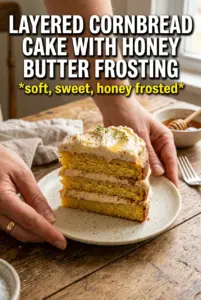
Golden cornbread cake layers stacked high with honey butter frosting land somewhere between a celebration cake and a skillet cornbread you can’t stop picking at. The crumb is tender but sturdy enough to stack, with that familiar cornmeal texture showing up in every bite instead of turning sandy or dry. The honey butter frosting ties it all together with a sweet, creamy finish that plays beautifully against the faint graininess of the cornmeal and the little hit of flaky salt on top.
What makes this version work is the balance. The cake batter uses both milk and buttermilk for tenderness and a little tang, while melted butter and honey keep the layers moist without making them heavy. The frosting leans into soft butter and powdered sugar, then gets rounded out with honey and a pinch of salt so it tastes like a natural extension of the cake instead of plain vanilla frosting spread between cornbread layers.
Below, I’ve laid out the part that matters most: how to keep the layers from baking up dense, how to get the frosting fluffy enough to spread cleanly, and what to change if you need to make it ahead for a party.
The layers baked up tall and even, and the honey butter frosting was fluffy enough to spread without tearing the cake. I topped it with flaky salt like you suggested, and it made the whole dessert taste balanced instead of overly sweet.
Save this layered cornbread cake for the days when you want a tender, honey-sweet dessert with that salty-sweet frosting finish.
The Trick to Keeping Cornmeal Cake Tender, Not Gritty
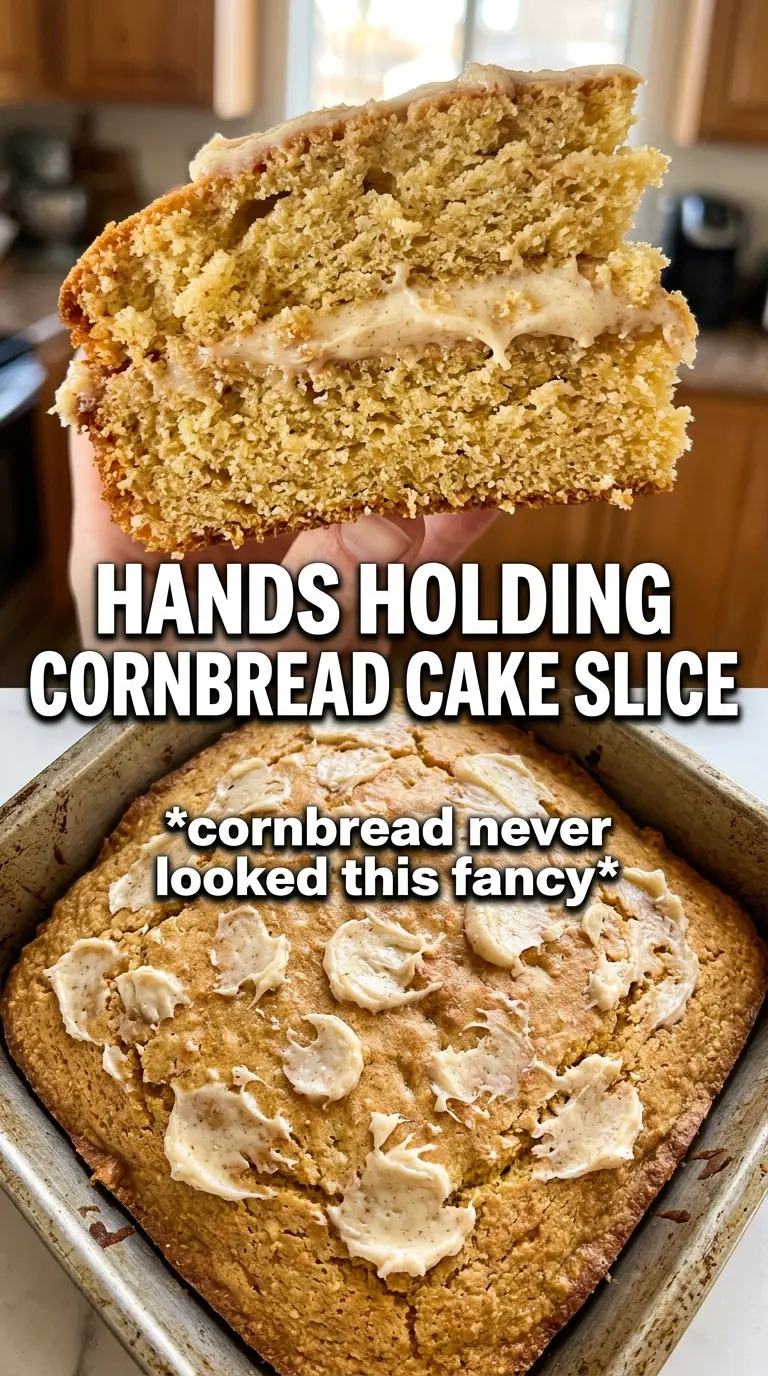
Cornmeal cakes can go dry or sandy fast if the batter is overmixed or the bake runs long. The goal here is a soft, cohesive crumb with enough structure to hold a stack of layers. That starts with a batter that’s mixed only until the flour disappears and ends when the centers are just set, not waiting for the cakes to darken much farther in the oven.
The other thing that matters is the pan size. Three 8-inch rounds bake more evenly than two thicker layers, which means you get a cleaner cut and less risk of a gummy middle. If the tops spring back lightly and a tester comes out clean or with a few moist crumbs, pull them. Cornmeal keeps cooking as it cools, and carryover heat is where a lot of cake layers cross the line from tender to dry.
What Each Ingredient Is Doing in This Cake
- Yellow cornmeal — This is where the cornbread character comes from, so use a medium grind if you can. Fine cornmeal gives a softer crumb; coarser meal adds more texture. Don’t swap in masa harina here, because it changes both the flavor and the way the cake bakes.
- Buttermilk — The acidity helps tenderize the batter and works with the baking soda for lift. If you’re out, use milk mixed with a tablespoon of lemon juice or vinegar, but let it sit a few minutes before using. That swap gets you close on tang and structure, though real buttermilk still gives the best flavor.
- Honey — Honey belongs in both the cake and the frosting because it reinforces the cornbread flavor instead of fighting it. In the cake, it keeps the crumb moist; in the frosting, it gives sweetness with a softer finish than plain sugar alone. Use a mild honey if you want the cornmeal to stay in the spotlight.
- Unsalted butter — Melted butter in the cake gives richness without making the batter feel heavy, and softened butter in the frosting whips up airy and spreadable. Salted butter works in a pinch, but reduce the added salt a little so the finish doesn’t turn sharp.
- Heavy cream — Just enough cream loosens the frosting so it spreads smoothly between layers and around the outside. Add it slowly, because too much turns the frosting soft before it has enough structure to cling to the cake.
Building the Layers Before the Frosting Goes On
Mix the Dry and Wet Separately
Whisk the flour, cornmeal, sugar, baking powder, baking soda, and salt together first so the leavening is evenly distributed. In a separate bowl, whisk the eggs, milk, buttermilk, melted butter, honey, and vanilla until the mixture looks smooth and glossy. When the wet and dry come together, stir just until you stop seeing streaks of flour. If you keep going after that, the cake turns tight instead of tender.
Divide the Batter Evenly
Split the batter between the three prepared pans by eye or use a scale if you want perfectly even layers. Uneven pans bake at different speeds, and one thick layer will dome or sink while the others finish cleanly. Smooth the tops lightly with a spatula, but don’t press the batter down. You want it settled, not packed.
Bake Until Just Set
At 350°F, the layers should bake for about 22 to 25 minutes. Look for lightly golden edges, a springy center, and a tester that comes out clean or with a few crumbs attached. If the tops are getting dark before the centers are done, your oven may run hot; tent them loosely with foil for the last few minutes. Let the cakes cool completely before frosting, because even slightly warm layers will melt the honey butter frosting.
How to Adapt It for Different Tables and Different Pans
Make It Dairy-Free
Use a plant-based butter with a neutral flavor in both the cake and frosting, then replace the milk and buttermilk with unsweetened oat milk plus a tablespoon of vinegar or lemon juice. The cake will still rise and slice cleanly, though the frosting may be a touch softer than the original.
Use Cupcake Pans Instead
This batter bakes nicely as cupcakes if you want easier serving. Fill the cups about two-thirds full and start checking a few minutes early, since the smaller portions will bake faster and dry out if you wait for the same timing as the cake layers.
Dial Back the Sweetness
If you want the cornbread side to come forward, reduce the sugar in the cake by a few tablespoons and skip the honey drizzle on top. The frosting will still carry the dessert, but the finish will taste more like classic cornbread dressed up for dessert instead of a fully sweet layer cake.
Storage and Reheating
- Refrigerator: Store covered for up to 4 days. The frosting firms up in the fridge, but the cake stays moist.
- Freezer: Freeze unfrosted layers tightly wrapped for up to 2 months. Thaw them wrapped at room temperature so condensation doesn’t make the surface sticky. I don’t recommend freezing the fully frosted cake if you want the honey butter frosting to stay fluffy.
- Reheating: Serve slices at room temperature for the best texture. If a cold slice feels too firm, let it sit out for 20 to 30 minutes instead of microwaving it, which can melt the frosting and make the cornmeal crumb turn dense.
Questions I Get Asked About This Recipe
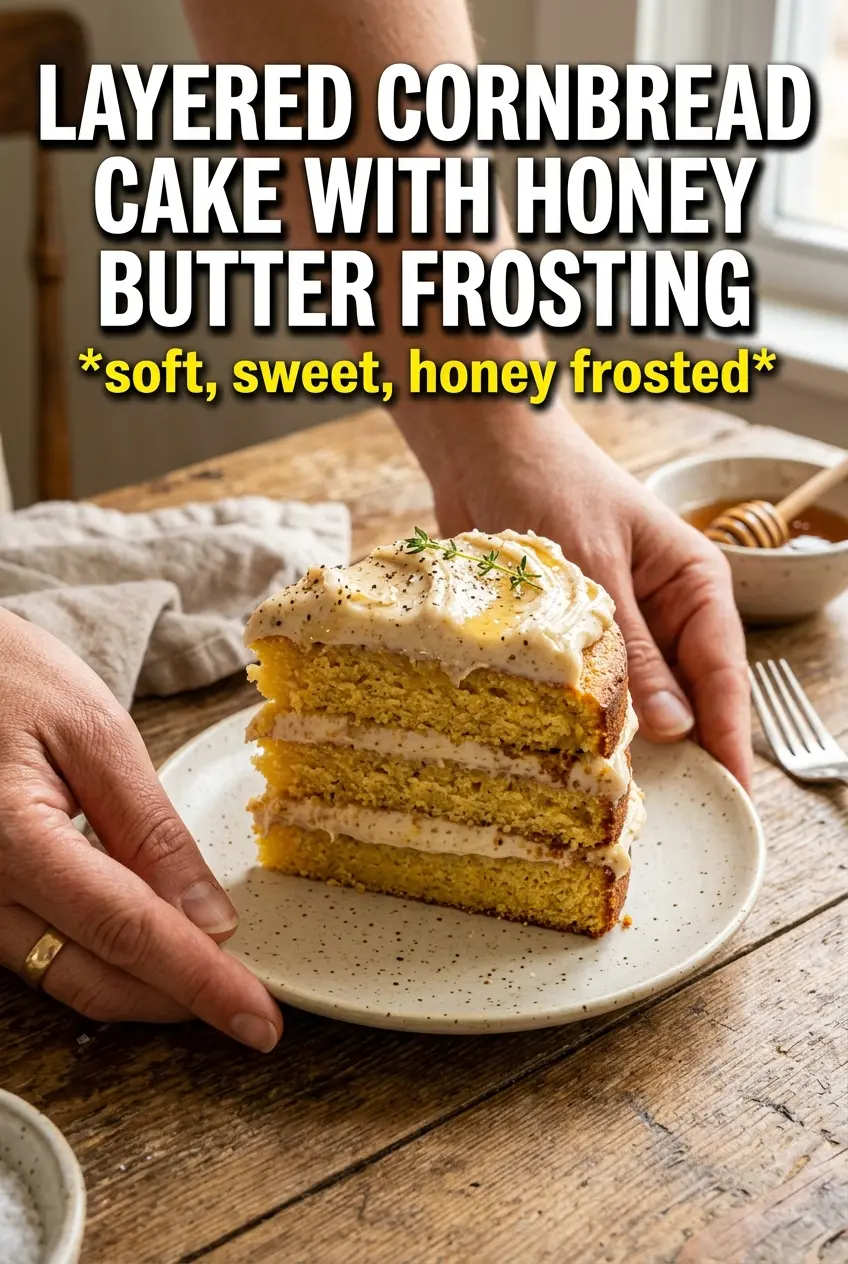
Layered Cornbread Cake With Honey Butter Frosting
Ingredients
Equipment
Method
- Preheat the oven to 350F, then grease three 8-inch round pans. The pans should be fully coated so the layers release cleanly.
- Whisk the dry ingredients together (all-purpose flour, yellow cornmeal, granulated sugar, baking powder, baking soda, and salt). Whisk until the color is even and no lumps remain.
- Whisk the wet ingredients together separately (eggs, whole milk, buttermilk, melted unsalted butter, honey, and vanilla). Whisk until smooth and glossy.
- Fold the wet mixture into the dry mixture until just combined, then divide the batter between the three pans. Stop mixing as soon as no dry streaks remain.
- Bake for 22–25 minutes at 350F, until a toothpick comes out clean. You should see lightly golden edges pulling slightly away from the pan.
- Cool the layers completely before frosting. Cooling to room temperature prevents the frosting from melting and sliding.
- Beat the honey butter frosting ingredients (softened unsalted butter, honey, powdered sugar, heavy cream, vanilla, and salt) until very light and fluffy. Scrape the bowl as needed so the texture stays airy.
- Frost generously between all layers and over the outside once the cake layers are fully cool. Spread evenly to create a smooth, thick coating.
- Drizzle with honey and sprinkle flaky sea salt over the top. Finish while the frosting is fresh so the toppings cling.