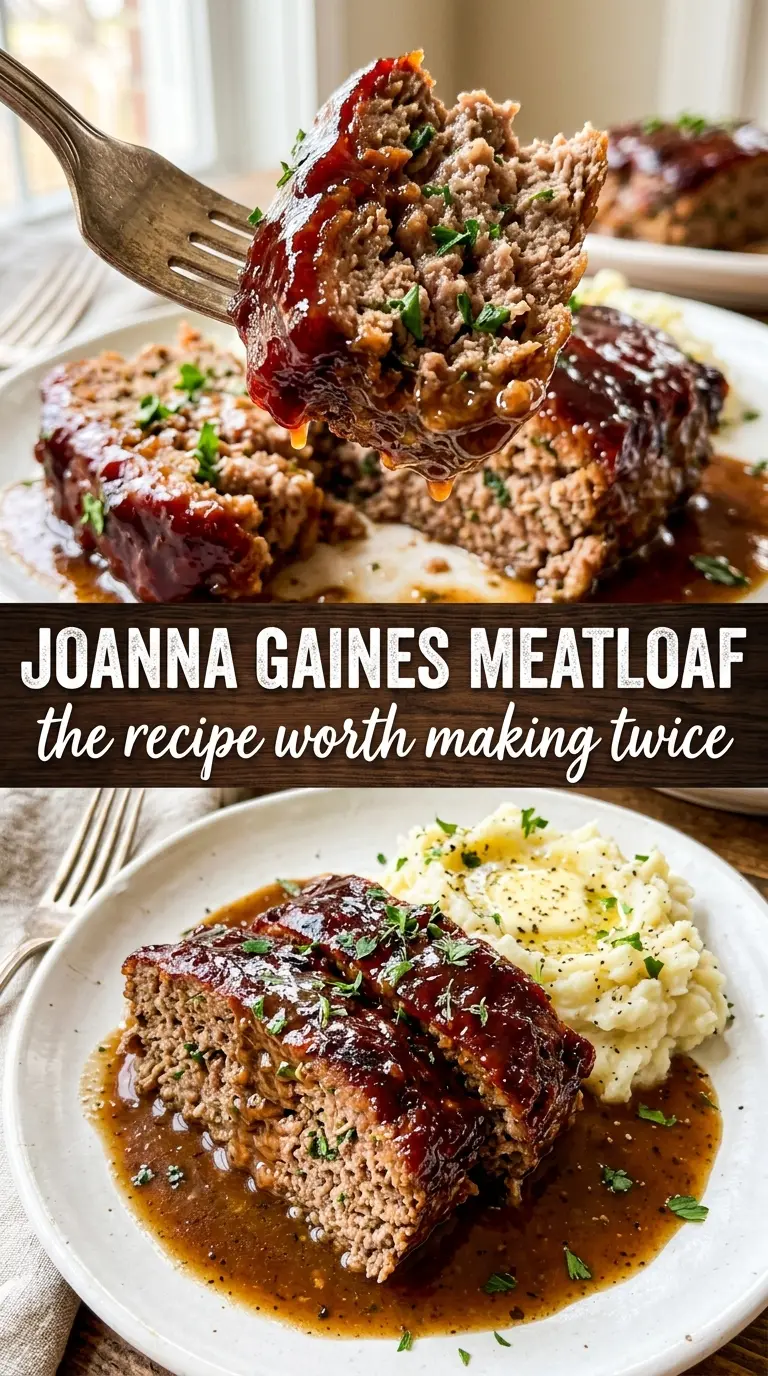
Joanna Gaines’ meatloaf lands exactly where a good meatloaf should: tender in the middle, sliceable at the edges, and capped with a glossy glaze that turns sticky and caramelized in the oven. It’s the kind of loaf that holds together on the plate without tasting dense, and that balance is what keeps people coming back for seconds.
The texture comes from a simple mix of ground beef, breadcrumbs, milk, and eggs, but the real difference is in how gently everything gets combined. Overworking meatloaf is the fastest way to make it compact, and this version stays light because the mixture is handled just enough to bring it together. The glaze also matters more than it looks on paper: brown sugar gives it that burnished finish, while Dijon and Worcestershire keep it from tasting flat or sugary.
Below, you’ll find the small details that keep the loaf moist, the glaze shiny instead of burnt, and the slices neat when it’s time to serve. If meatloaf has ever turned out dry or crumbly for you, the fixes are straightforward here.
The glaze set up with that sticky, caramelized top I always want, and the center stayed juicy even after resting. My husband went back for a second slice before I’d even sat down.
Save this Joanna Gaines’ meatloaf recipe for the nights when you want a caramelized glaze and a tender, classic slice that doesn’t fall apart.
The Trick to Keeping Meatloaf Tender Instead of Dense
Meatloaf usually turns heavy when the mixture gets packed too tightly or cooked in a way that squeezes out the fat before the loaf has set. The goal here is a mixture that looks evenly combined but still feels loose when it goes into the pan. That little bit of slack is what keeps the finished slices moist instead of compacted like a meat brick.
The loaf pan helps the shape, but it also means the juices stay close to the meat while it bakes. That’s a good thing for tenderness, as long as you don’t skip the rest at the end. Slice it too soon and the juices run out onto the board instead of staying in the meat where they belong.
- Ground beef — Use 80/20 if you can. Leaner beef can work, but the loaf eats drier and needs every bit of help it can get from the milk and glaze.
- Breadcrumbs and milk — These act like a soft binder and keep the loaf from tightening up. Seasoned breadcrumbs add a little built-in flavor, while plain breadcrumbs need more salt and seasoning.
- Onion and garlic — Dice the onion finely so it softens fully in the oven. If the pieces are too large, they stay crunchy and the loaf can break apart around them.
- Worcestershire sauce — This deepens the beefy flavor without making the loaf taste saucy. There isn’t a perfect substitute, but soy sauce can stand in for the savory note if that’s what you have.
What Each Ingredient Is Actually Doing in This Meatloaf or Meatballs
- Ground meat (the protein foundation) — Use 80/20 so it stays moist. Handle gently to keep texture tender instead of dense.
- Breadcrumbs or fillers (the binder) — These hold the meat together without making it dense. Soak in milk first so they add moisture.
- Egg (the structural binding agent) — This holds everything together during cooking. One egg per pound of meat is the right ratio.
- Onion and aromatics (the base flavor) — Mince finely so they distribute evenly. Raw onion softens as it cooks and becomes part of the texture.
- Seasonings (salt, pepper, Worcestershire, spices) — Build flavor boldly. The meat mixture carries the entire flavor profile.
- Milk or liquid (the moisture keeper) — This keeps the meatloaf tender instead of dense and dry. Don’t skip this step.
- Glaze or sauce (ketchup-based or other) — This adds sweetness, moisture, and flavor to the exterior. Apply strategically so it caramelizes.
- Resting time (the final step) — Let the meatloaf rest 10 minutes so it sets and slices cleanly. Cutting too soon makes it fall apart.
Building the Loaf and Glaze in the Right Order
Mixing the Meat Without Packing It Down
Combine the beef, breadcrumbs, eggs, milk, onion, garlic, Worcestershire, seasonings, salt, and pepper in a large bowl and stop as soon as the mixture looks even. The cleanest way to do this is with your hands, but keep the motion light and brief. If you knead it like bread, the loaf turns firm and bouncy instead of tender.
Shaping It for Even Baking
Transfer the mixture to a greased 9×5 loaf pan and press it in gently, then smooth the top so it bakes in an even layer. Don’t mound it in the center or it will cook unevenly, with dry edges and an underdone middle. A flat, even top also gives the glaze a better surface to cling to.
Letting the Glaze Caramelize in Two Layers
Stir the ketchup, brown sugar, Dijon, and Worcestershire together until smooth, then spread half over the raw loaf before it goes into the oven. That first layer starts building flavor right away, while the second layer added near the end turns dark, shiny, and sticky without burning. If the glaze looks too thick to spread, a teaspoon of water loosens it just enough.
Knowing When It’s Done
Bake until the internal temperature reaches 160°F and the top looks lacquered and deeply caramelized at the edges. If the glaze is browning too quickly before the center is done, tent the loaf loosely with foil for the last stretch. Let it rest for 10 minutes after baking so the juices settle and the slices hold together cleanly.
How to Adapt This Meatloaf for Different Tables
Gluten-Free Version
Swap the seasoned breadcrumbs for a gluten-free breadcrumb blend in the same amount. If your mix is very dry or coarse, add an extra tablespoon of milk so the loaf still feels soft and cohesive rather than crumbly.
Dairy-Free Adjustment
Use an unsweetened plain non-dairy milk in place of whole milk. Oat milk gives the closest body, while almond milk is thinner and works best if you don’t mind a slightly lighter texture.
Turkey Meatloaf
Ground turkey works, but it needs the added moisture more than beef does. Use 93% lean turkey and don’t skip the milk, then watch the bake time closely since turkey dries out faster and should still hit 165°F at the center.
Make-Ahead for a Busy Night
Shape the loaf and mix the glaze up to a day ahead, then refrigerate them separately. Bake the meatloaf cold from the fridge by adding a few extra minutes to the first bake, and wait to put on the second glaze layer until the center is close to done.
Storage and Reheating
- Refrigerator: Store sliced meatloaf in an airtight container for up to 4 days. The glaze stays best if you layer parchment between slices.
- Freezer: It freezes well. Wrap individual slices tightly and freeze for up to 3 months so you can thaw only what you need.
- Reheating: Warm slices covered in a 300°F oven with a spoonful of water or a little extra glaze over the top. The biggest mistake is blasting it in the microwave until the edges turn tough and the center dries out.
Answers to the Questions Worth Asking
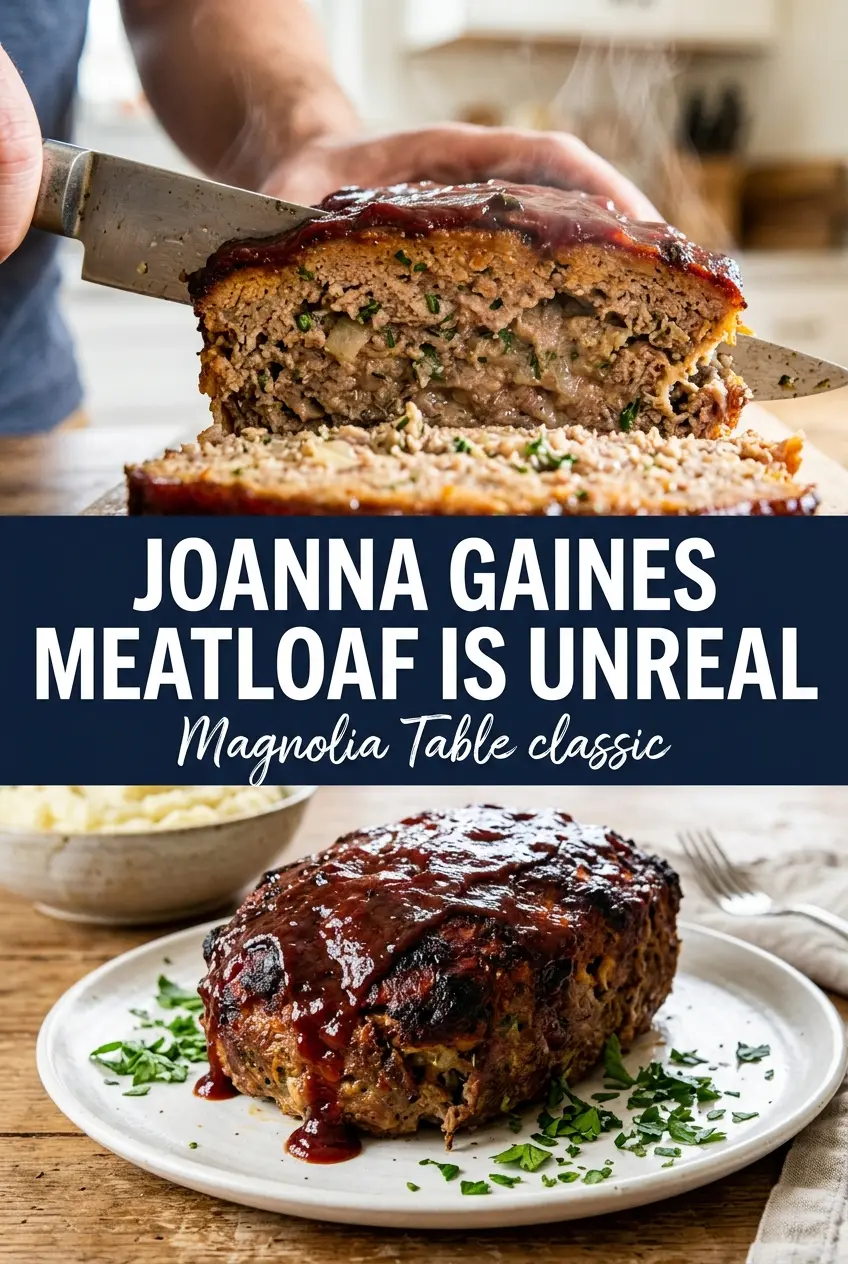
Joanna Gaines' Meatloaf
Ingredients
Equipment
Method
- Preheat oven to 350°F and grease a 9x5 loaf pan until lightly coated, leaving no dry spots along the edges.
- In a large mixing bowl, combine ground beef, seasoned breadcrumbs, eggs, whole milk, onion, garlic, Worcestershire sauce, dried Italian seasoning, garlic powder, salt, and pepper until just mixed, stopping as soon as everything looks evenly combined.
- Transfer the mixture to the loaf pan and smooth the top into an even layer so the glaze can bake uniformly.
- Mix the glaze ingredients, then spread half over the meatloaf so the top is fully covered with an even layer.
- Bake 55 minutes at 350°F; after 55 minutes, the meatloaf should be set and the glaze starting to look thicker and darker.
- Spread the remaining glaze over the meatloaf, then bake 15 more minutes at 350°F until the internal temperature reaches 160°F and the glaze is deeply caramelized and shiny.
- Rest 10 minutes before slicing to let juices redistribute, so each slice holds together and the top glaze sets.