Smoky jerk shrimp tucked into warm corn tortillas and finished with pineapple salsa hit that perfect balance of fast, bold, and fresh. The shrimp stay juicy when they’re coated in a thin paste instead of a loose marinade, and the quick sear gives you those caramelized edges that make every bite feel bigger than the short cook time suggests.
The pineapple salsa does more than add color. Its sweetness cools the heat from the jerk seasoning, while red onion and jalapeño keep it sharp enough to stand up to the shrimp. A squeeze of lime at the end pulls everything together and keeps the tacos from tasting heavy.
Below you’ll find the little details that matter: how to keep shrimp from overcooking, why the salsa tastes better after a few minutes of sitting, and what to change if you need a dairy-free dinner that still feels special.
The shrimp cooked in just a few minutes and the jerk seasoning got that little crust on the outside without drying them out. The pineapple salsa was the perfect bright finish with the lime.
Jerk Shrimp Tacos with Pineapple Salsa bring smoky heat and bright tropical crunch to a fast weeknight dinner.
The Shrimp Need a Dry, Hot Pan — Not a Long Soak
Jerk shrimp go wrong when they sit too long in a wet marinade or cook in a pan that never gets hot enough to brown the outside. Shrimp cook fast, and the seasoning needs direct heat to bloom into something smoky instead of muddy. That thin paste of jerk seasoning, lime juice, and oil clings to the shrimp and helps it sear instead of steam.
If the skillet is only lukewarm, the shrimp will start leaking liquid before they color. You want a strong sizzle the moment they hit the pan and just enough time to turn opaque with a little char at the edges. Pull them as soon as they curl into a loose C; if they form tight little O’s, they’re overcooked.
What the Shrimp, Pineapple, and Tortillas Each Bring to the Plate
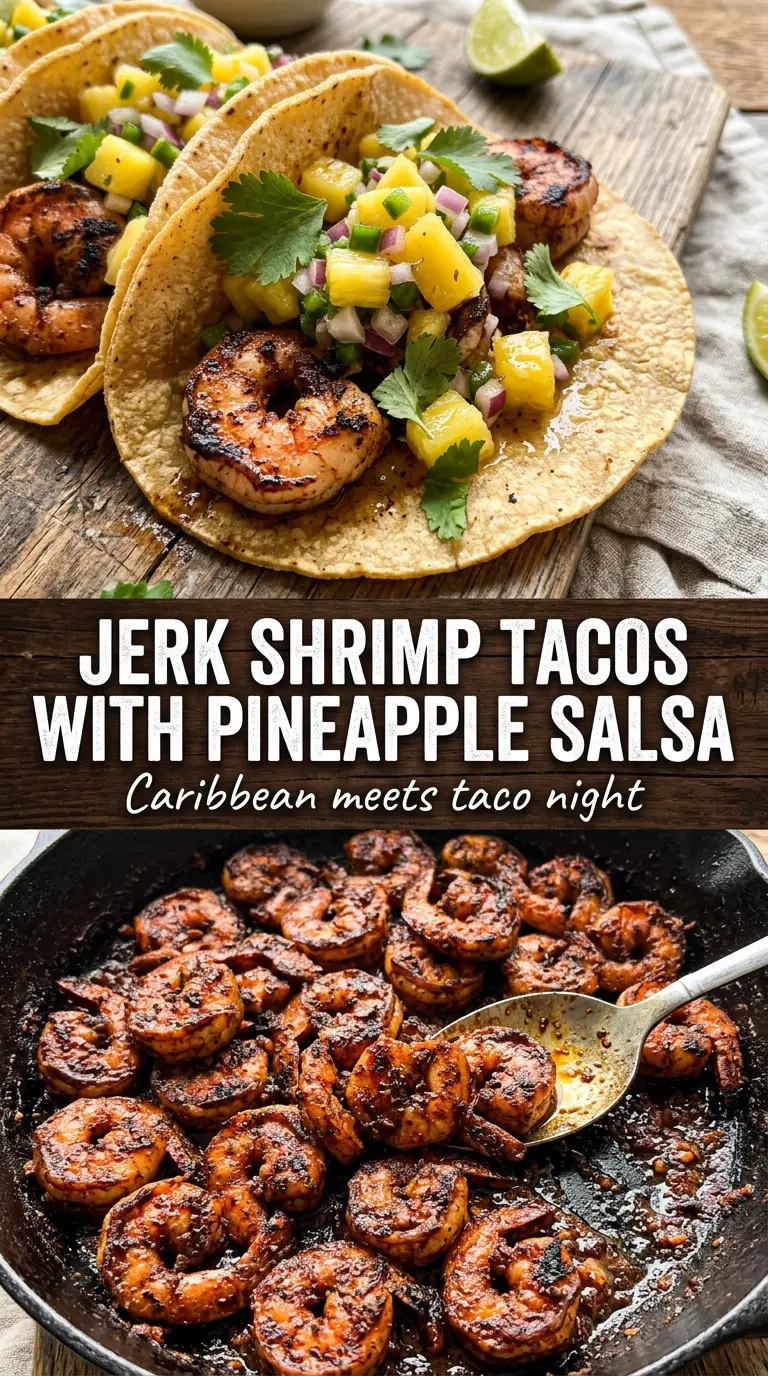
- Large shrimp — Bigger shrimp stay juicier on a hot skillet and are easier to flip without overcooking. Medium shrimp work in a pinch, but they finish faster and are easier to miss by 30 seconds, which is enough to turn them rubbery.
- Jerk seasoning — This is the backbone of the dish, so use one you actually like on its own. Some blends lean sweeter, some hotter, and some saltier, so taste the seasoning if you can and keep the lime juice and pineapple in mind when you choose it.
- Lime juice and olive oil — The lime wakes up the spices, while the oil helps the seasoning coat the shrimp evenly and brown in the pan. Skip the oil and the spices can clump; skip the lime and the shrimp taste flat.
- Fresh pineapple — Fresh pineapple gives the salsa a clean snap and enough juice to make the tacos feel bright. Canned pineapple works only if it’s well drained and packed in juice, not syrup, or the salsa turns soft and candy-sweet.
- Corn tortillas — Corn tortillas belong here because their flavor holds up to the jerk spice and sweet salsa. Warm them until soft and flexible; if they’re cold or dry, they crack the second you fold them.
Getting the Heat, Salsa, and Tortillas in the Right Order
Mix the Jerk Paste First
Stir the jerk seasoning, lime juice, and olive oil together until you get a thick paste, not a runny dressing. That paste should cling to the shrimp in a thin coating. If it looks watery, add a pinch more seasoning; if it looks pasty and dry, add a few drops of oil. The goal is full coverage without excess liquid pooling in the pan.
Cook the Shrimp Fast and Leave Them Alone
Lay the shrimp in a single layer over medium-high heat and let them sit long enough to pick up color before you flip them. They should sizzle hard and go from translucent gray to pink with lightly charred spots in about 2 to 3 minutes per side. If the pan is crowded, the shrimp will steam instead of sear, so cook in batches if needed. The second side usually needs less time than the first.
Build the Salsa While the Shrimp Cook
Combine the pineapple, red onion, jalapeño, and cilantro in a bowl and stir just enough to distribute everything evenly. Let it sit for a few minutes while you finish the shrimp; the salt from the seasoning on the shrimp and the acid from the lime in the pan will make the whole meal taste more finished when served together. If you chop the pineapple too large, it falls off the taco, so keep the pieces fine and even.
Warm the Tortillas Right Before Serving
Set the tortillas on a dry griddle or skillet for just a few seconds per side until they soften and get a few toasted spots. Don’t stack them straight from the package or they stay stiff; don’t leave them in the pan too long or they dry out and crack. Keep them wrapped in a clean towel so they stay warm and flexible while you fill them.
How to Tweak These Tacos Without Losing the Point
Make Them Gluten-Free Without Changing the Flavor
These tacos are naturally gluten-free if your jerk seasoning is gluten-free, so the only thing to check is the spice blend label. Corn tortillas keep the texture right and don’t compete with the shrimp the way flour tortillas can.
Turn the Heat Down for Sensitive Eaters
Use a milder jerk blend or start with a little less seasoning and add more at the table. You’ll still get the smoky, allspice-heavy character that makes jerk taste like jerk, but the jalapeño and spice won’t dominate every bite.
Swap the Shrimp for Chicken or Tofu
Thin-sliced chicken breast needs a little longer in the pan and benefits from resting after cooking so the juices stay put. Extra-firm tofu works too, but press it first and sear it until the edges are crisp; otherwise the jerk seasoning tastes like it’s sitting on the surface instead of part of the dish.
Use Canned Pineapple When Fresh Isn’t Available
Drain canned pineapple very well and chop it fine so the salsa doesn’t turn watery. Fresh pineapple gives the sharpest texture and the brightest flavor, but drained canned pineapple still brings the sweet-spicy contrast that makes these tacos work.
Storage and Reheating
- Refrigerator: Store the shrimp and pineapple salsa separately for up to 2 days. The salsa softens a little, but it still tastes good if it hasn’t been salted heavily ahead of time.
- Freezer: The cooked shrimp can be frozen for up to 1 month, though the texture is best fresh. Don’t freeze the salsa; the pineapple turns mushy after thawing.
- Reheating: Reheat the shrimp gently in a skillet over low heat just until warmed through, or they’ll go tough and squeaky. Warm the tortillas separately and add the salsa after the shrimp are hot.
Questions I Get Asked About This Recipe
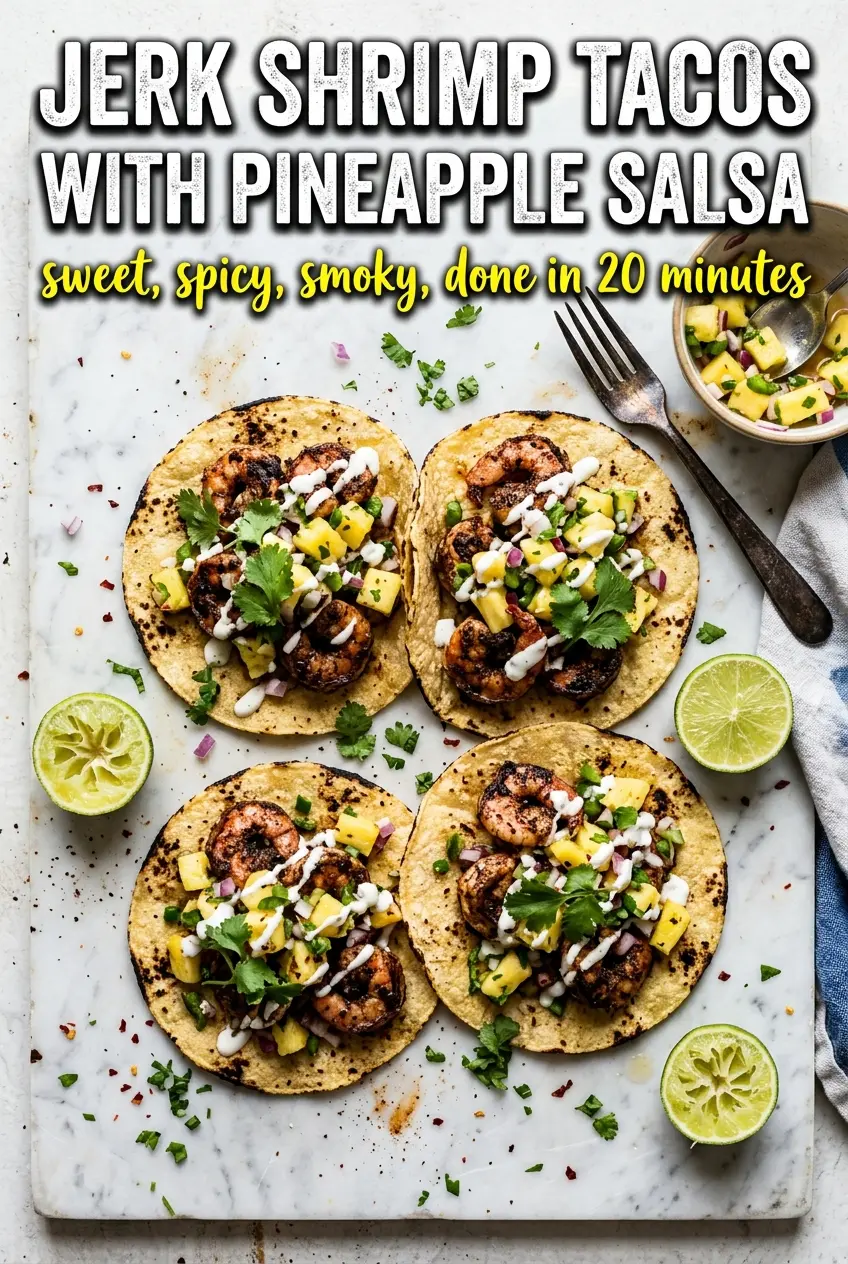
Jerk Shrimp Tacos with Pineapple Salsa
Ingredients
Equipment
Method
- Combine jerk seasoning, lime juice, and olive oil in a small bowl until you have a thick paste.
- Toss the shrimp in the jerk mixture until every shrimp is well coated, with no dry seasoning left behind.
- Heat a large skillet over medium-high heat until hot, then add the jerk-seasoned shrimp in a single layer.
- Cook the shrimp for 2-3 minutes per side, until pink and cooked through, then transfer to a plate.
- In a separate bowl, combine the diced pineapple, minced red onion, minced jalapeño, and chopped cilantro, stirring until evenly mixed.
- Warm the corn tortillas on a griddle until pliable, about 20-30 seconds per side.
- Fill each tortilla with cooked jerk shrimp, then top generously with pineapple salsa.
- Finish with extra cilantro and a squeeze of lime (add lime wedges for serving) right before eating.