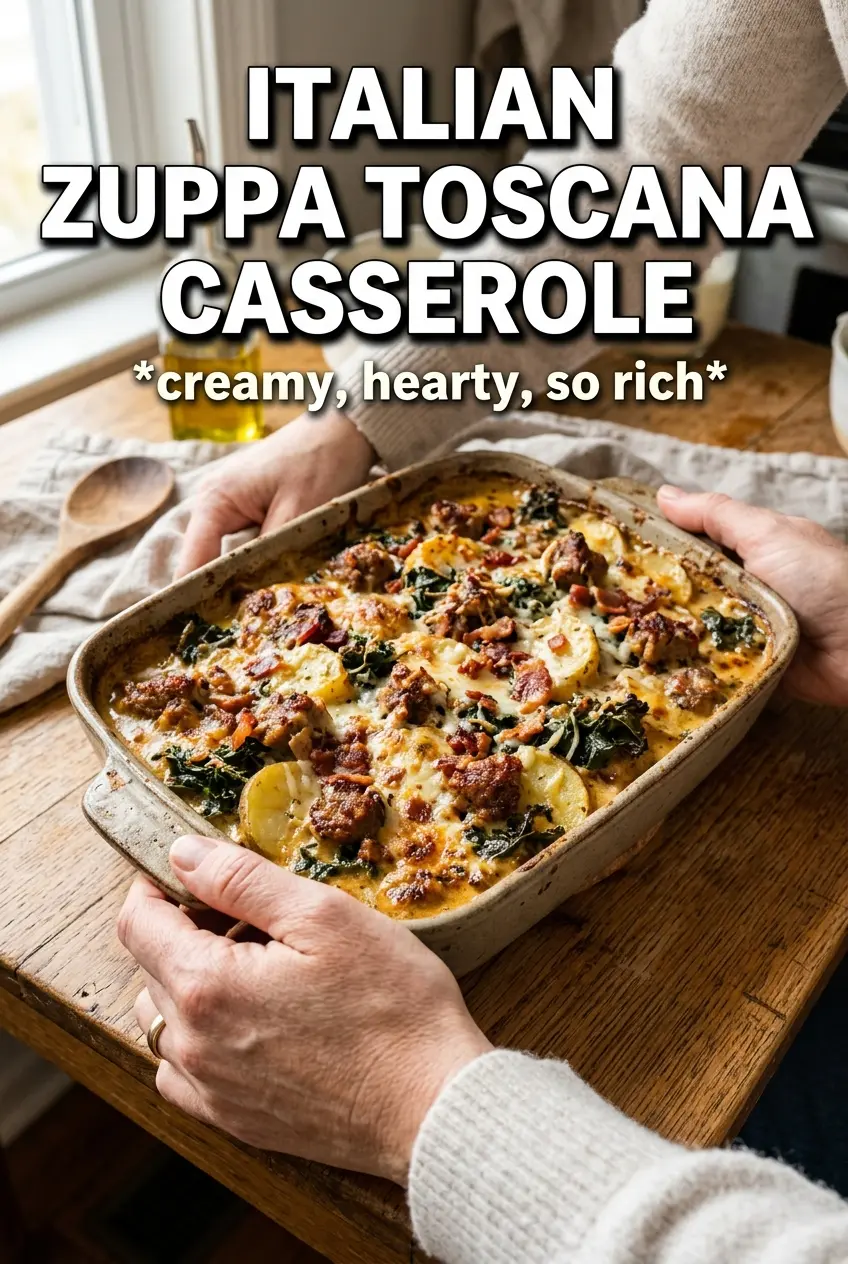
Layers of thinly sliced potatoes, savory sausage, and tender kale bake together under a bubbling blanket of mozzarella and parmesan, turning the familiar soup flavors of Zuppa Toscana into a hearty casserole that slices cleanly and eats like comfort food with a little more structure. The potatoes soften in the cream mixture until they’re just tender, not falling apart, and the cheese browns on top while the bacon stays crisp enough to keep each bite interesting.
What makes this version work is the way the stovetop base does most of the heavy lifting before it ever hits the oven. The sausage and bacon season the dish from the start, and the potatoes simmer right in the broth, cream, and milk so they absorb flavor instead of tasting like plain starch tucked under sauce. That’s the difference between a casserole that feels flat and one that tastes built from the inside out.
Below, I’ll walk you through the one point where people usually lose the texture, plus a few smart swaps for making this fit what’s in your kitchen.
The potatoes came out creamy all the way through and the top browned beautifully without drying out. I used pancetta, and my husband kept going back for “just one more scoop.”
Save this Italian Zuppa Toscana Casserole for the nights when you want creamy potatoes, sausage, kale, and a golden cheese crust in one pan.
The Trick to Keeping the Potatoes Creamy Instead of Mushy
The potatoes need a head start on the stovetop, but only until they’re just barely tender. If you let them go too long in the simmering cream, they’ll collapse in the oven and turn the whole casserole dense instead of layered. Thin slicing matters here because it gives you tenderness without needing a long bake that would dry out the sausage and overcook the kale.
The other key is heat control. Once the cream and milk go in, keep the simmer gentle. A hard boil can split the dairy and break the sauce before it ever gets to the oven, and then the top browns while the base looks thin and greasy. You want a loose, cohesive mixture that still feels like it could finish setting in the oven.
What Each Ingredient Is Doing in This Casserole
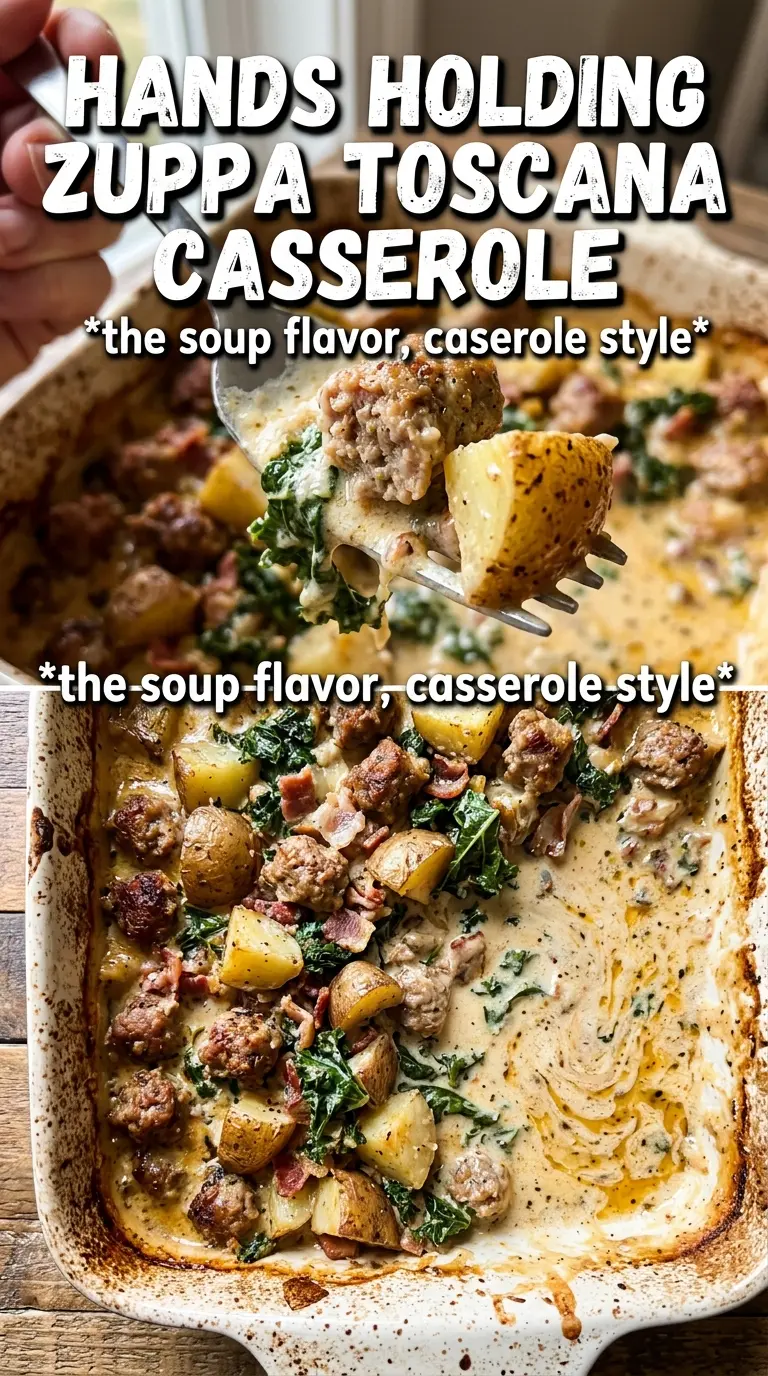
- Italian sausage — This is the backbone of the dish. Mild sausage keeps it family-friendly, while hot sausage gives the casserole more edge. If yours is very lean, leave a little more fat in the pan so the onions have something to cook in.
- Bacon or pancetta — This adds smoky salt and a crisp finish on top. Pancetta tastes a little cleaner and more savory; bacon gives you more obvious smokiness. Cook it separately so it stays crisp instead of softening into the casserole.
- Yukon gold potatoes — These hold their shape better than russets and turn creamy instead of mealy. Slice them thin and evenly so they finish at the same time. A mandoline helps, but a sharp knife works if you keep the slices consistent.
- Kale — Kale brings the greens and keeps its texture better than spinach in a baked dish. Chop it small enough that it folds into the sauce without forming tangled clumps. Remove the thick center rib if the leaves are especially tough.
- Heavy cream and whole milk — The cream gives body, and the milk loosens the sauce enough to coat the potatoes without turning it into mashed potato filling. Don’t swap both for low-fat dairy unless you want a thinner, less stable base. If you need a lighter version, replace just the whole milk with half-and-half and keep the cream.
- Mozzarella and parmesan — Mozzarella melts into that stretchy top, while parmesan sharpens the flavor and helps the crust brown. Freshly grated parmesan melts better than the shelf-stable stuff. Pre-shredded mozzarella works in a pinch, but it won’t brown as evenly.
Building the Base Before It Goes Into the Oven
Brown the sausage and save the drippings
Cook the sausage until it’s fully browned and broken into crumbles, then lift it out and set it aside. Those browned bits in the pan matter because they season the onion and garlic later. If the sausage releases a lot of fat, drain off only the excess; you still need enough left behind to carry the flavor.
Cook the bacon until it stays crisp
Bacon or pancetta should be cooked until deeply browned and crisp, then removed from the pan before it goes limp. You’re using it as a finishing texture, not as part of the sauce. If you leave it in the oven the whole time, it softens and disappears into the cheese.
Simmer the potatoes in the dairy mixture
After the onion and garlic soften, add the broth, cream, milk, and red pepper flakes, then slide in the potatoes. Let them simmer gently until a knife slips in with just a little resistance. If they’re fully soft on the stove, they’ll turn too fragile in the oven and lose their shape when you stir in the kale and sausage.
Finish with kale, cheese, and the last bake
Fold the kale and sausage into the hot potato mixture, then transfer it to a baking dish if your skillet isn’t large enough. Scatter the mozzarella and parmesan over the top and bake until the edges are bubbling and the cheese turns golden in spots. Add the bacon after baking so it stays sharp and crisp instead of getting buried under the crust.
How to Change This Dish Without Losing What Makes It Good
Make it dairy-free with a better-tasting swap
Use unsweetened full-fat oat milk or cashew cream in place of the milk and cream, then add a little extra parmesan-style dairy-free cheese only if it melts well. The casserole won’t be quite as rich, but you’ll keep the creamy texture if you avoid thin plant milks. Simmer gently so the substitute doesn’t separate.
Make it gluten-free without changing the method
This recipe is naturally gluten-free as long as your sausage and broth are certified gluten-free. The texture and baking method stay the same, so this is the easiest version to serve to a mixed crowd. Just check the sausage label, since that’s where gluten usually sneaks in.
Use spinach when you want a softer green
Spinach works, but it wilts down much more than kale and gives you a softer, less chewy casserole. Add it at the very end, just long enough to wilt, or it will disappear completely into the sauce. Use about half the volume by eye because spinach shrinks fast.
Swap in half-and-half for a lighter finish
You can replace some of the heavy cream with half-and-half if you want a less rich casserole, but don’t replace all of it or the sauce gets too thin. Keep the simmer gentle and give the potatoes enough time to absorb the liquid. The final bake will still thicken it slightly.
Storage and Reheating
- Refrigerator: Store leftovers in an airtight container for up to 4 days. The potatoes will firm up as they chill, but the flavor deepens overnight.
- Freezer: This casserole freezes, but the dairy sauce can separate a little after thawing. Freeze in portions for up to 2 months, then thaw in the refrigerator before reheating.
- Reheating: Reheat covered in a 325F oven until hot in the center, then uncover for a few minutes to bring back the top. If you microwave it, use lower power and short bursts so the cream sauce doesn’t break and the potatoes don’t turn rubbery.