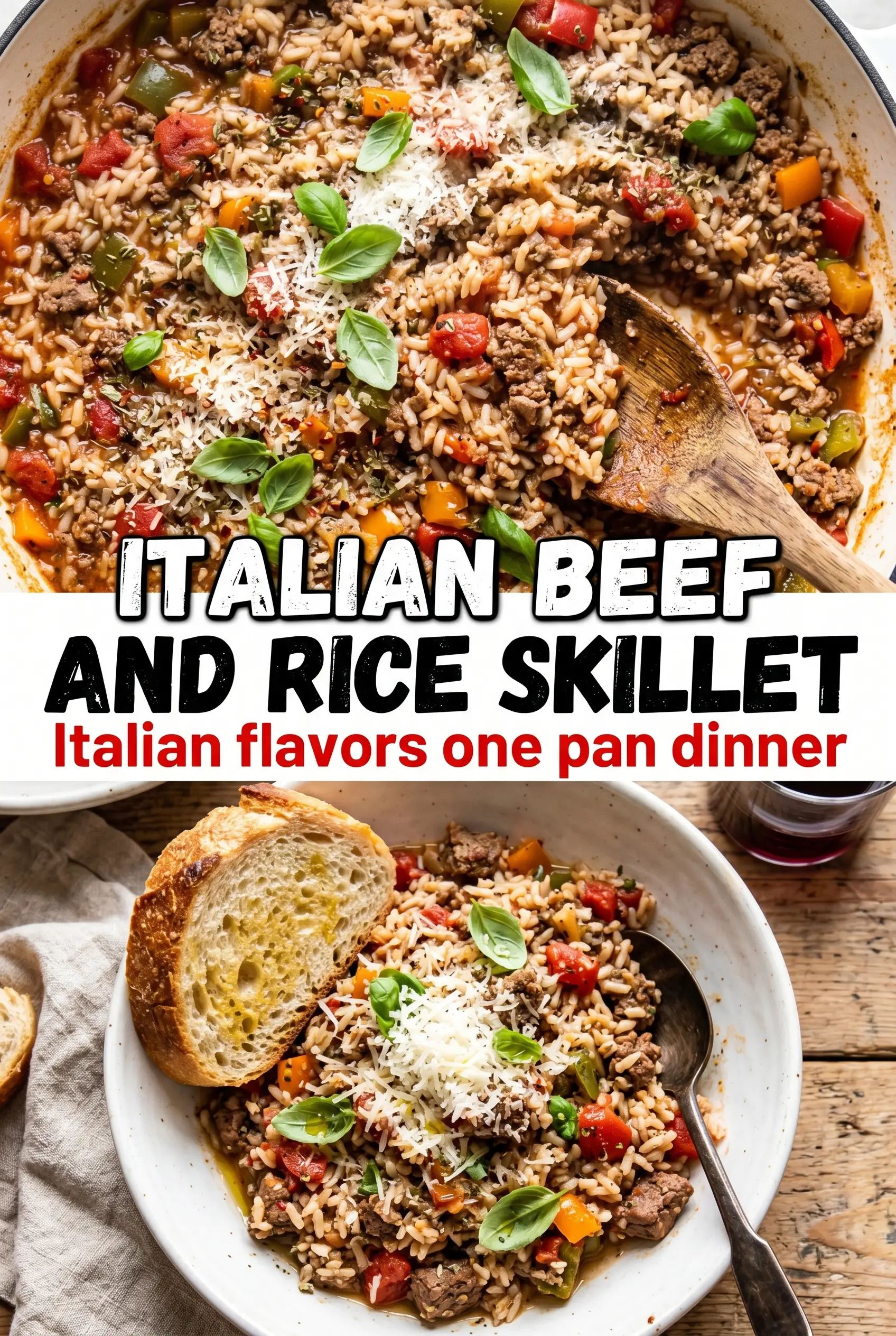
Savory Italian-seasoned beef, tender rice, and a blanket of melted mozzarella turn this skillet into the kind of dinner that disappears fast. It lands somewhere between a cozy rice bowl and a quick pasta-night stand-in, but without the extra pot of boiling water or a separate sauce to babysit. The best part is the texture: fluffy rice soaked with tomato broth at the bottom, browned beef throughout, and that stretchy cheese finish on top.
This version works because the rice cooks right in the seasoned tomato broth instead of being added fully cooked at the end. That means every grain picks up flavor as it softens, and the starch helps thicken the skillet into something spoonable instead of soupy. Browning the beef with the onion and bell pepper first also builds a deeper base, so the dish tastes like it simmered longer than it actually did.
Below you’ll find the small details that keep the rice tender, the skillet from drying out, and the mozzarella from turning greasy. I also included a few useful swaps for nights when you need to work with what’s in the fridge.
The rice came out fluffy instead of mushy, and the tomatoes gave the whole skillet this rich sauce that soaked into every bite. I loved that the mozzarella melted over the top without making the dish heavy.
Save this Italian Beef and Rice Skillet for a fast one-pan dinner with fluffy rice, melted mozzarella, and barely any cleanup.
The Trick That Keeps the Rice Tender Instead of Gummy
Most skillet rice goes wrong because the heat stays too high after the liquid goes in. The broth needs to come to a real boil first, but once the pan is covered, the burner should drop to low so the rice can absorb steam gently. If it boils hard under the lid, the liquid evaporates unevenly and the bottom catches before the center is done.
The other detail that matters is the ratio of liquid to rice. With long-grain white rice, the 2.5 cups of broth plus the tomatoes give enough moisture for tender grains without turning the skillet into soup. If your lid doesn’t fit tightly, add an extra splash of broth and keep the heat low so the rice has a chance to finish evenly.
What Each Ingredient Is Doing in the Skillet
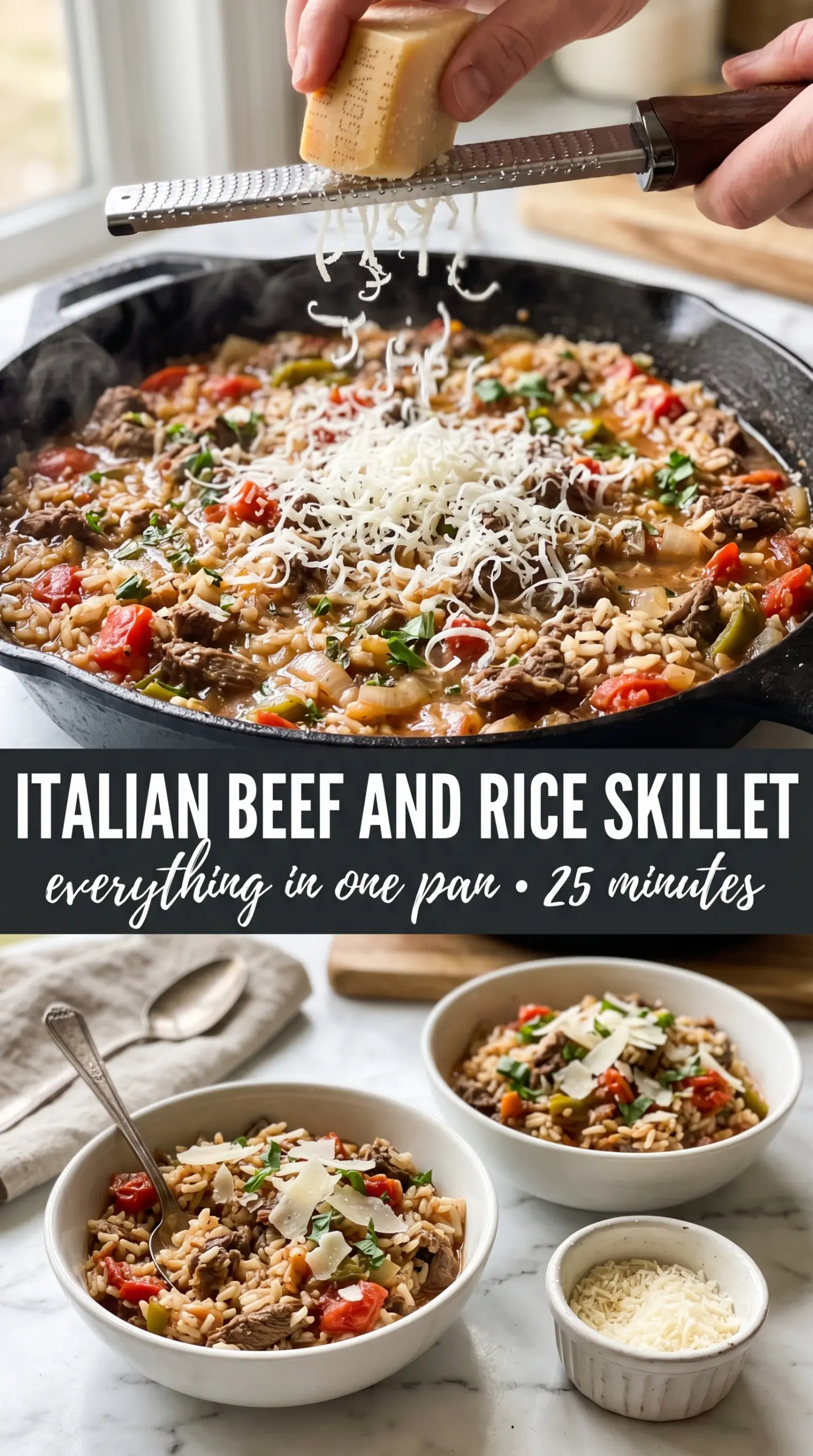
- Ground beef — This gives the dish its hearty base and carries the seasoning through the whole skillet. Use regular ground beef for the best flavor, then drain the excess fat after browning so the rice doesn’t end up greasy.
- Onion and green bell pepper — These build the savory backbone before the rice goes in. The onion softens into the beef drippings, and the pepper keeps enough bite to give the skillet some texture even after simmering.
- Garlic and Italian seasoning — Add them after the beef browns so they bloom in the hot pan instead of tasting flat. If your Italian seasoning is older and dull, add a pinch more than you think you need; dried herbs lose punch over time.
- Long-grain white rice — This is the rice that stays fluffy enough for a skillet dish. Short-grain rice turns too soft here, and brown rice needs a longer cook time and more liquid than this recipe is built for.
- Diced tomatoes and beef broth — These create the cooking liquid and the sauce at the same time. Use broth with real beef flavor if you can, because that’s where a lot of the depth comes from.
- Mozzarella — Shredded mozzarella melts into a soft cap that ties the whole dish together. Freshly shredded cheese melts cleaner than the bagged kind, which can clump from anti-caking starches.
Building the Skillet in the Right Order
Browning the Beef and Softening the Vegetables
Cook the ground beef with the onion and bell pepper until the beef is no longer pink and the vegetables have started to soften at the edges. You want a little browning on the meat, not a gray simmer, because that color is where the savory depth comes from. If the pan looks crowded or watery, keep cooking until the moisture evaporates before adding the garlic. Garlic that goes in too early can scorch and turn bitter.
Adding the Rice and Liquid
Stir in the uncooked rice, diced tomatoes, broth, seasoning, and pepper flakes, then bring the whole pan to a boil. Scrape the bottom as you stir so nothing sticks where the meat browned. Once it boils, reduce the heat right away and cover the skillet. The rice should cook from steam and gentle simmering, not a hard bubble.
Finishing Without Overcooking
After about 20 minutes, check the rice near the center of the pan. It should be tender with just a little bite left, and most of the liquid should be absorbed. If there’s still a small amount of broth left but the rice is done, uncover the pan and let it sit over low heat for a minute or two. Then fluff it before adding the cheese so the mozzarella melts over a light, not compacted, surface.
Three Smart Ways to Change It Without Losing the Plot
Make It Sausage-Forward
Swap half or all of the ground beef for Italian sausage if you want a spicier, more seasoned skillet. You’ll get a richer finish and a little more oil in the pan, so drain off extra fat after browning. The result tastes closer to an Italian-American casserole and less like a straight beef-and-rice dinner.
Dairy-Free But Still Comforting
Skip the mozzarella and finish with a handful of chopped basil and a drizzle of good olive oil. The skillet loses the stretchy top layer, but the tomato-beef base still carries plenty of flavor. If you want a little richness back, add a spoonful of dairy-free cream cheese at the very end off the heat.
Swap in Brown Rice the Right Way
Brown rice needs more liquid and more time than this recipe gives it, so don’t use the same method without changing both. Increase the broth, keep the tomatoes, and plan on a much longer covered simmer until the grains are tender. The payoff is a nuttier texture, but it won’t be a quick 30-minute skillet anymore.
Add More Vegetables Without Watering It Down
Mushrooms, chopped zucchini, or a handful of spinach all fit here, but cook watery vegetables first so they lose some moisture before the rice goes in. If you dump in a pile of raw zucchini, the skillet can turn loose and bland. Spinach is the easiest add because it wilts at the very end without changing the liquid balance.
Storage and Reheating
- Refrigerator: Store leftovers in an airtight container for up to 4 days. The rice will absorb more liquid as it sits, so it gets a little firmer by day two.
- Freezer: It freezes well for up to 2 months, though the rice softens a bit after thawing. Cool it completely before freezing, then portion it into flat containers for faster reheating.
- Reheating: Warm it covered on the stove over low heat with a splash of broth or water. The mistake to avoid is blasting it in a dry pan, which toughens the rice and makes the bottom stick before the center loosens up.