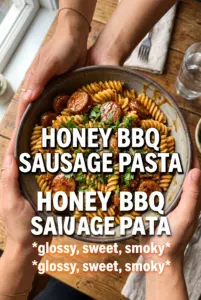
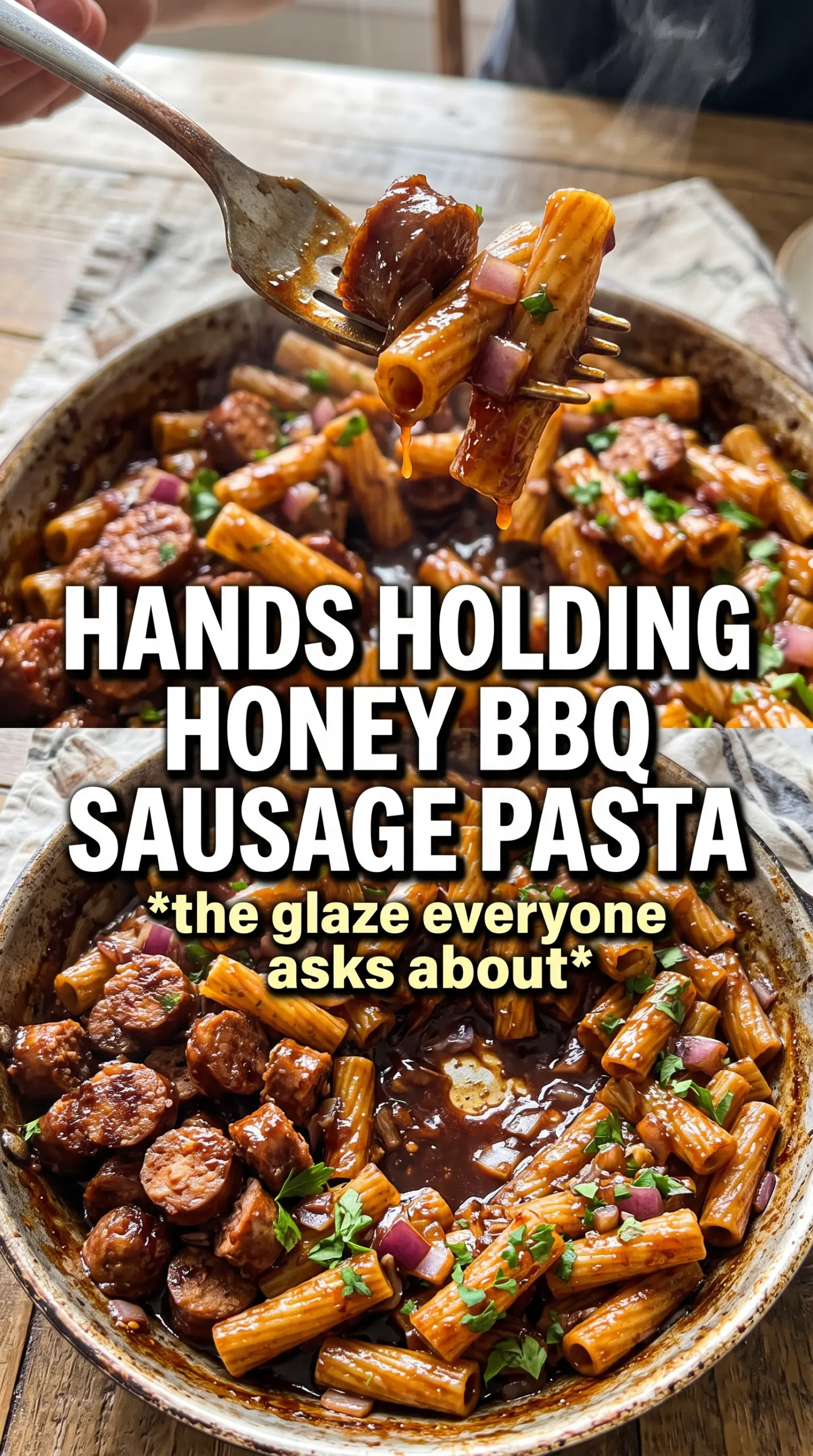
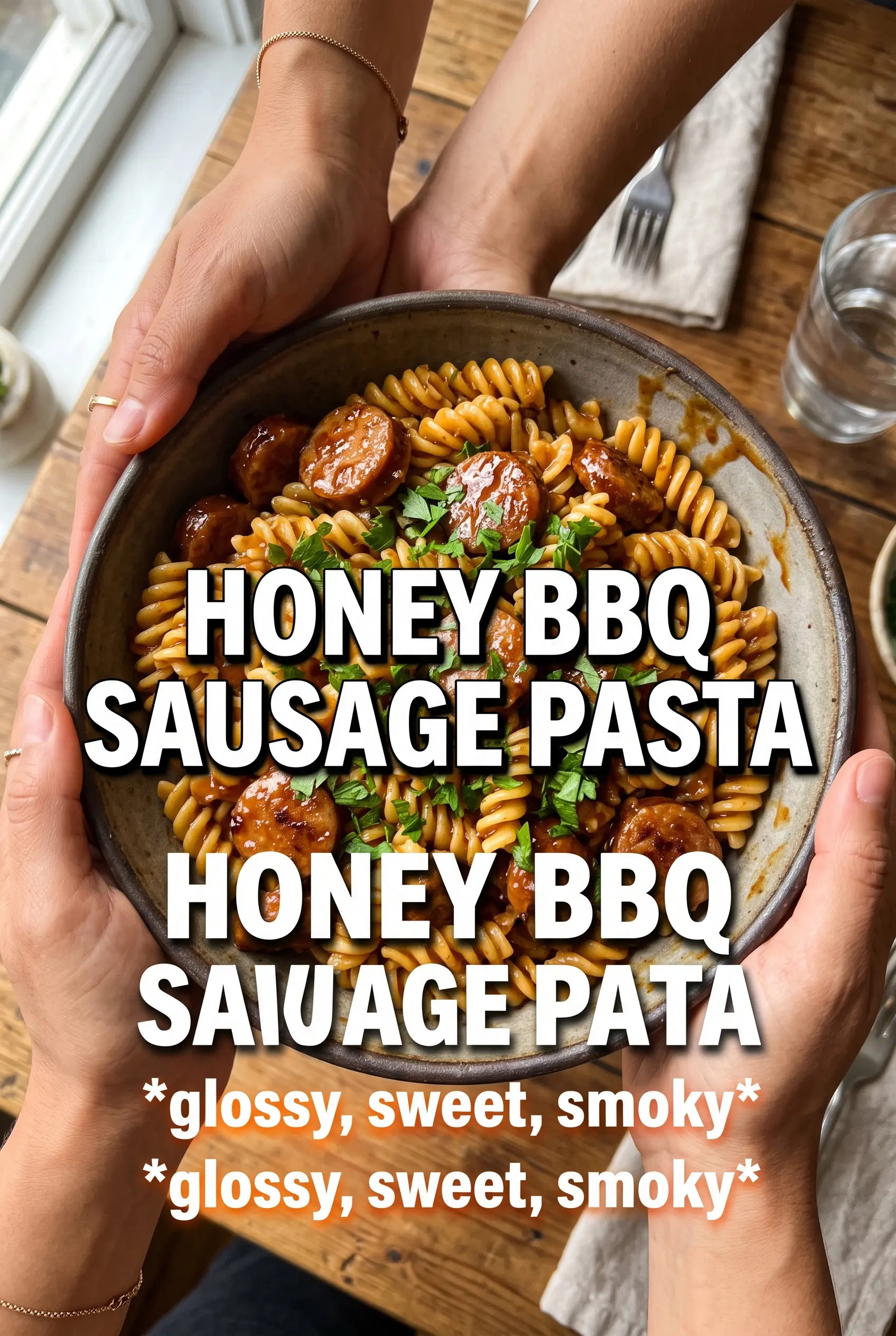
Honey BBQ sausage pasta lands in that sweet spot between weeknight easy and skillet meal with enough personality to keep everyone at the table interested. The sausage gets caramelized first, so you start with browned edges and smoky depth instead of a pale, boiled-together pasta situation. Then the sauce clings to the rigatoni in a glossy coat that tastes a little sweet, a little tangy, and just rich enough once the cheddar melts in.
What makes this version work is the layering. The onions and bell pepper soften into the same pan drippings from the sausage, which gives the sauce a built-in savory base before the BBQ sauce and honey go in. Dijon sharpens the sweetness instead of letting it turn flat, and the pasta water loosens everything just enough to help the sauce hug every ridge.
Below, I’ll walk you through the exact point where the sauce should look thick enough to hold onto the pasta, plus a few swaps that still keep the dish balanced if you need to work with what’s in the kitchen.
The sausage got those caramelized edges I was hoping for, and the sauce clung to the rigatoni instead of pooling at the bottom. My kids kept asking for “the sticky pasta” again the next night.
Love the sticky honey BBQ sauce and caramelized sausage? Save this pasta for the nights when you want one skillet, bold flavor, and barely any cleanup.
The Step That Stops the Sauce From Turning Thin and Sweet
Most skillet pasta recipes rush the sauce and end up with something that tastes fine but slides off the noodles. This one depends on two things: caramelizing the sausage first and simmering the BBQ mixture long enough for it to tighten before the pasta goes in. If you add the pasta too early, the sauce stays loose and the cheddar turns the whole pan heavy instead of glossy.
The other detail that matters is the pasta water. That starchy liquid helps the sauce bind to the rigatoni and keeps the skillet from seizing up once the cheese melts. If your pasta water is bland or you forget to salt it, the finished dish tastes flatter than it should. Salt the water like you mean it, and reserve the half cup before draining.
- Caramelized sausage — This gives you browned flavor from the start. Skip that step and the dish loses the smoky, sticky edge that makes it taste cooked, not assembled.
- Dijon mustard — It cuts through the honey and BBQ sauce so the final sauce tastes balanced instead of candy-sweet. Yellow mustard won’t give the same depth.
- Smoked paprika — It reinforces the sausage and BBQ notes without adding heat. Regular paprika works in a pinch, but the smoky version makes the whole pan taste more layered.
- Sharp cheddar — Use freshly shredded if you can. Pre-shredded cheese contains anti-caking agents that can keep the sauce from melting as smoothly.
What Each Ingredient Is Actually Doing in This Recipe
- Primary ingredient (the star) — Quality matters most. Choose the best you can find.
- Cooking medium (oil, butter, or broth) — This carries flavors and prevents dryness.
- Seasonings (salt, pepper, spices, herbs) — Layer flavors so nothing overpowers. Build depth gradually.
- Aromatics (garlic, onion, herbs) — Cook with fat to bloom flavors. Become the foundation.
- Supporting ingredients — Complement the main ingredient without overpowering it.
- Sauce or liquid (if applicable) — Brings flavors together. Balance richness with acid.
- Acid (lemon, vinegar, wine, or other) — Brightens and prevents flat-tasting results.
- Final finish (garnish, glaze, or sauce) — Prevents one-dimensional taste and adds visual appeal.
What Each Pan Stage Is Doing for the Final Texture
Brown the Sausage First
Heat a large skillet until the sausage slices start to sizzle the second they hit the pan. Let them sit long enough to get deep golden edges before flipping. If you move them too often, they steam and stay soft, and you lose the browned bits that flavor the sauce later. Pull them out once both sides are caramelized; they’ll finish in the sauce at the end.
Build the Vegetables Into the Drippings
Add the onion and bell pepper to the same skillet and cook until softened and lightly translucent. The vegetables should pick up color from the browned sausage bits in the pan, not sit in a greasy puddle. Add the garlic and smoked paprika at the end of this stage so the garlic stays fragrant instead of burning and turning bitter.
Let the Sauce Tighten Before the Pasta Goes In
Whisk the BBQ sauce, honey, broth, and Dijon together, then simmer until the sauce looks slightly reduced and glossy. You want it a little thicker than you think, because the pasta and cheese will loosen it once they go in. If it still looks watery, keep it bubbling for another minute or two. The sauce should coat the back of a spoon instead of running straight off.
Finish With Pasta Water and Cheese
Toss in the cooked rigatoni with a splash of the reserved pasta water, then add the sausage back to the skillet. Stir in the cheddar off the heat or over very low heat so it melts smoothly. If the pan is too hot, the cheese can go grainy or stringy instead of turning silky. Finish with salt, pepper, green onions, and parsley while the sauce is still glossy.
How to Change This Dish Without Losing the Balance
Make It Dairy-Free
Leave out the cheddar and finish with an extra splash of pasta water for body. The dish will taste a little less rich and less creamy, but the BBQ sauce, sausage, and vegetables still carry the meal. If you want a little more roundness, add a small drizzle of olive oil at the end.
Swap the Pasta Shape
Rigatoni is ideal because the ridges trap the sauce, but penne or ziti work too. Skip long pasta here unless you like chasing sauce around the bowl; the chunky sausage and thick glaze cling much better to short shapes with ridges or tubes.
Use Turkey or Chicken Sausage
Lean sausage works if you want a lighter dish, but it browns faster and won’t leave quite as much drippings in the pan. Add a teaspoon of oil before sautéing the vegetables so the base doesn’t feel dry. The flavor stays good, just a little less smoky and rich.
Storage and Reheating
- Refrigerator: Store leftovers in an airtight container for up to 4 days. The sauce will thicken as it chills.
- Freezer: It freezes, but the cheese sauce can turn a little grainy after thawing. Freeze in portions for up to 2 months if needed.
- Reheating: Warm gently on the stove or in the microwave with a splash of broth or water. High heat dries out the pasta and can make the cheese separate, so reheat slowly and stir often.
Answers to the Questions Worth Asking
Honey BBQ Sausage Pasta
Ingredients
Equipment
Method
- Bring a large pot of salted water to a boil and cook rigatoni until tender, then reserve 1/2 cup pasta water before draining and setting the pasta aside.
- Keep the reserved pasta water nearby so you can loosen the sauce during the tossing step.
- Heat a large skillet over medium-high heat and brown the smoked sausage slices until caramelized on both sides, then remove to a plate.
- Leave any browned bits in the skillet for flavor before adding the vegetables.
- Add diced onion and red bell pepper to the same skillet and sauté for 4 minutes.
- Add minced garlic and smoked paprika and cook for 1 minute, stirring until fragrant.
- In a bowl, whisk BBQ sauce, honey, chicken broth, and Dijon mustard until smooth, then pour into the skillet.
- Simmer the sauce for 5 minutes until it thickens slightly and looks glossy.
- Add the cooked pasta and reserved 1/2 cup pasta water to the skillet and toss to coat, then return the sausage.
- Stir in shredded cheddar until melted and season with salt and pepper to taste.
- Garnish with green onions and parsley right before serving.