Honey baked ham comes out with the kind of crackly, glossy crust that makes people hover near the carving board before dinner even starts. The outside turns deeply caramelized and fragrant with cinnamon, clove, and ginger, while the ham underneath stays juicy and sliceable all the way through. It’s the kind of centerpiece that looks like a holiday project and eats like something you’d happily make again without waiting for a special occasion.
The trick is treating the ham like it already has a head start, because it does. A fully cooked spiral ham only needs gentle heat to warm through, so the real job is building a sticky honey-butter glaze and then layering the spiced sugar so it bakes into a crust instead of sliding off. The high-heat finish is what gives you those burnished edges and that snap on top without drying out the meat below.
Below, I’m walking through the part that matters most: how to keep the ham covered long enough to heat through, when to uncover it, and how to get that glossy sugar shell without ending up with a wet, grainy glaze. There’s also a storage note for leftovers, and those leftovers are excellent.
The crust set up beautifully and stayed crisp even after resting, and the honey-butter glaze seeped into the slices instead of running right off the pan.
Save this honey baked ham for a caramelized, spiral-sliced centerpiece with a crackly spice crust.
The Part That Keeps the Glaze From Sliding Off
Honey baked ham fails when the glaze gets rushed. If you brush on the sugar mixture too early, it melts before it has a chance to cling, and you end up with a shiny pan instead of a crust. The ham should be heated through first, still covered, so the interior warms gently while the surface stays ready to grab the glaze.
The second piece is the high-heat finish. That 400°F blast isn’t about cooking the ham through; it’s about setting each layer of honey butter and spiced sugar into a crackly shell. A spiral-sliced ham gives the glaze more edges and crevices to catch in, which is why it works so well here. Cut-side down in the pan also helps the slices stay moist while the top gets all the color.
What the Honey, Butter, and Spices Are Doing Here
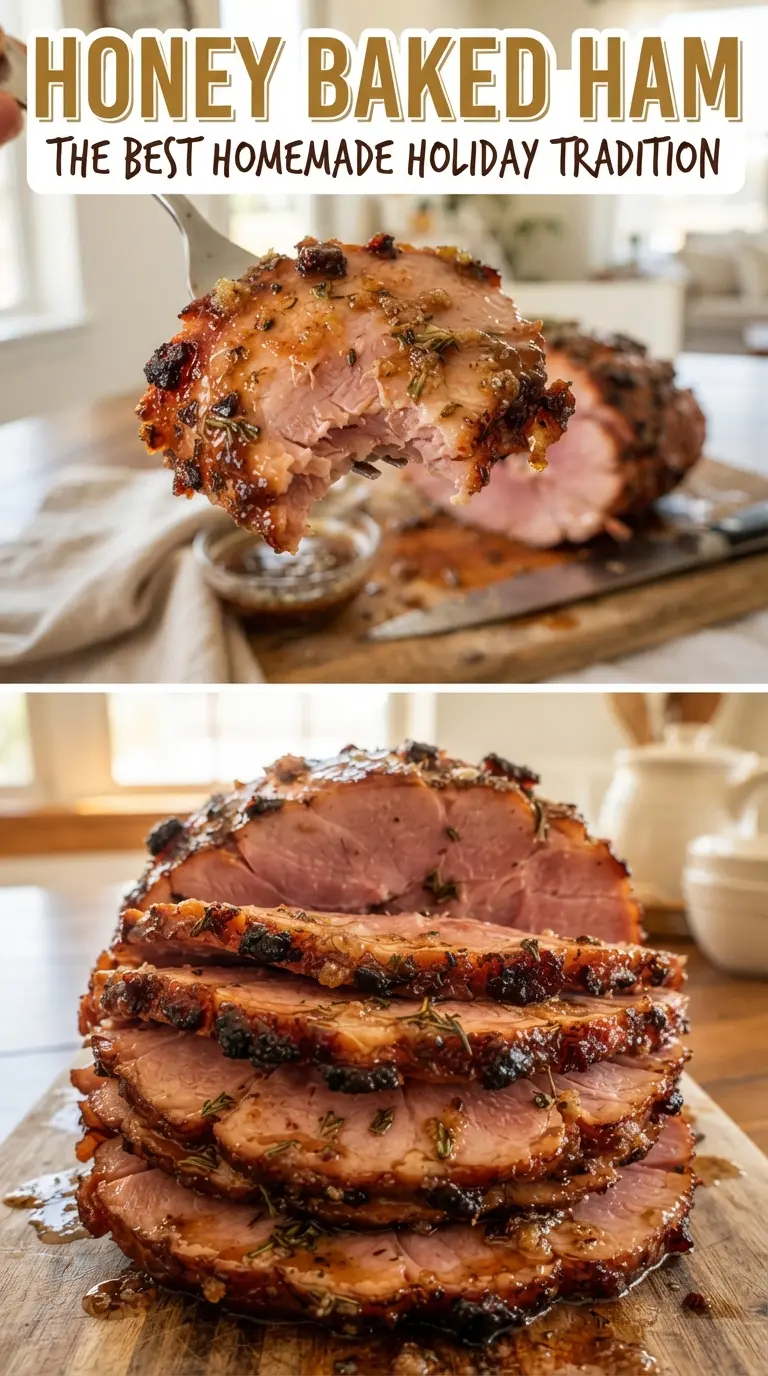
- Spiral-sliced bone-in ham — The bone adds flavor and helps the ham stay juicy, while the spiral slicing lets the glaze run between the layers. A boneless ham works, but you lose some of that built-in moisture and the presentation isn’t as dramatic.
- Honey — This gives the glaze its sticky shine and that rounded sweetness that plain sugar can’t quite match. Warm it with the butter so it spreads easily and brushes on in an even coat.
- Butter — Butter carries the honey and helps the sugars brown instead of burning immediately. If you swap in oil, you’ll lose that rich finish and the glaze won’t cling as well.
- Brown sugar and granulated sugar — The brown sugar brings depth and a little molasses note, while the white sugar helps build the crisp crust. You need both here; brown sugar alone tends to go softer, and all white sugar can taste flat.
- Cinnamon, cloves, ginger, nutmeg, allspice, and paprika — This mix gives the crust warmth, color, and enough spice to cut through the sweetness. Paprika doesn’t make it hot; it deepens the color and gives the crust a slightly savory edge.
How to Build the Crust in Layers Without Burning It
Warming the Ham Gently
Set the ham in the roasting pan cut-side down and cover it tightly with foil before it goes into the oven. That first stretch at 325°F is about heating the meat evenly, not browning anything. Pull it only after it reaches about 120°F inside, which leaves room for the final glaze-bake to bring it to serving temperature without drying it out.
Mixing the Glaze and Sugar
Melt the honey and butter together until they’re smooth and pourable, then stir the sugars and spices in a separate bowl. Keeping the dry mix separate matters because you want a loose, sandy coating that can be pressed onto the ham in layers. If the mixture clumps too hard, warm it for a few seconds and break it up with your fingers.
Setting the Crust in Three Passes
Brush on the honey butter, pat on the spiced sugar, then raise the oven to 400°F for a short blast. Repeat that brushing-and-sugaring two more times, letting each layer darken and tighten before the next goes on. If the surface starts to look wet instead of sandy, it needs more heat time between layers; otherwise the sugar dissolves instead of caramelizing.
Knowing When It’s Done
The crust should look deep golden and crackly, not pale or just sticky. The internal temperature should reach 140°F, and the ham should rest for 15 minutes before you carve it so the juices settle back into the slices. If you cut too soon, the glaze stays on the board instead of on the ham.
How to Adapt This for a Smaller Crowd or a Different Pantry
Using a smaller ham
The glaze scales down cleanly, but the baking time changes with weight, not with the number of slices. Keep the same temperature pattern and start checking early, since a smaller ham can go from warmed through to dry faster than you’d expect.
Gluten-free by default
This recipe is naturally gluten-free as written, as long as your ham and spices are certified or processed in a gluten-free facility if cross-contact matters to you. The crust stays crisp because it’s built from sugar and spice, not flour.
Swapping the spice mix
If you’re missing one of the warm spices, lean harder on cinnamon and clove rather than trying to replace everything evenly. The glaze will still work, but the crust will taste a little simpler and less layered.
Storage and Reheating
- Refrigerator: Store leftovers covered for up to 4 days. The crust softens in the fridge, but the flavor gets even better after a night or two.
- Freezer: Slice the ham, wrap portions tightly, and freeze for up to 2 months. The glaze won’t stay crackly, but the meat freezes well for sandwiches or casseroles.
- Reheating: Warm slices covered at 300°F with a spoonful of pan juices or a splash of water. High heat dries out spiral ham fast, so go low and slow until just heated through.
Answers to the Questions Worth Asking
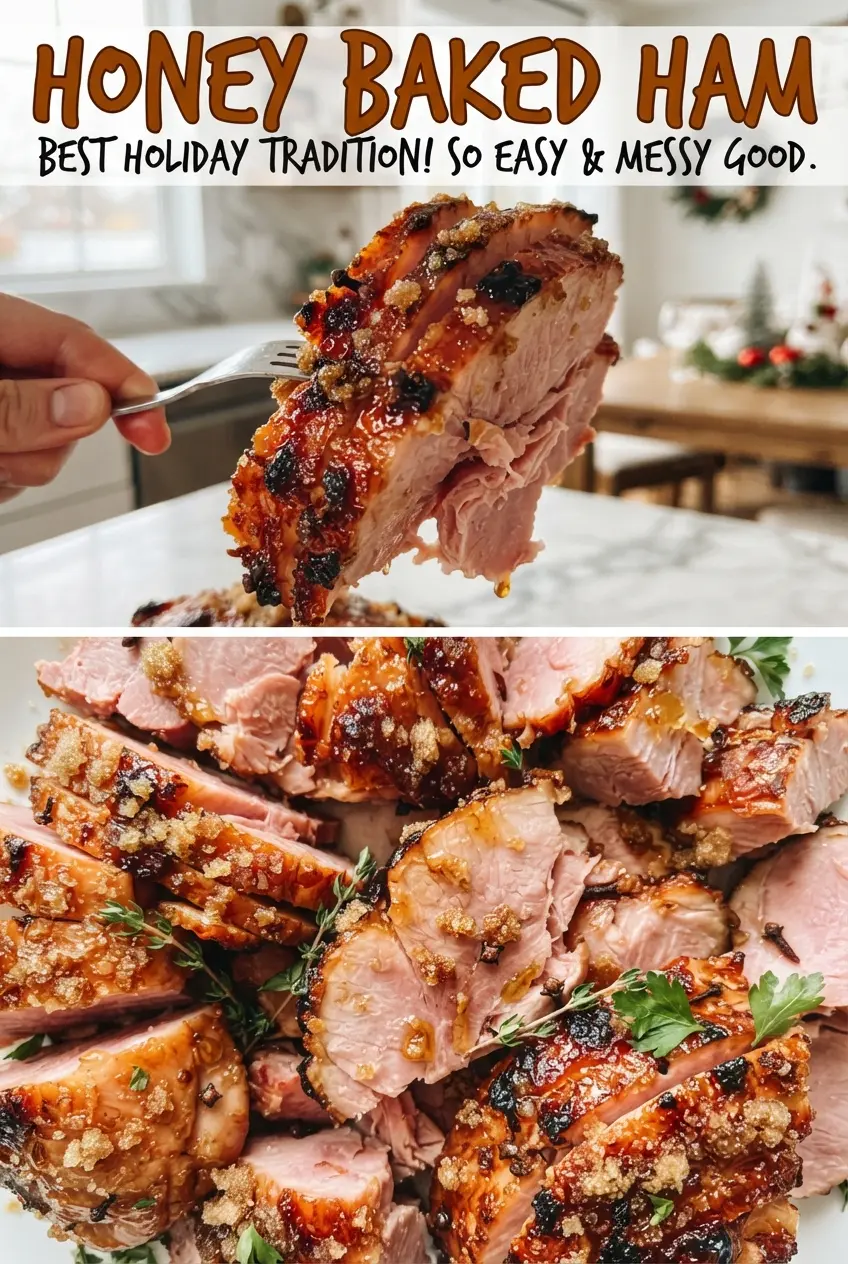
Honey Baked Ham
Ingredients
Equipment
Method
- Preheat the oven to 325F. Place the ham cut-side down in a roasting pan, cover tightly with foil, and bake for 12-14 minutes per pound until it reaches 120F inside.
- Melt the honey and butter together. In a separate bowl, mix the granulated sugar, brown sugar, cinnamon, cloves, ginger, nutmeg, allspice, and paprika.
- Remove the foil and brush the ham generously with honey butter. Pat on a layer of the spiced sugar.
- Raise the oven temperature to 400F and bake for 5 minutes. Look for the sugar to set as a coating.
- Brush with more honey butter and pat on another layer of spiced sugar. Bake again at 400F and keep going until the coating starts turning deep golden.
- Repeat brushing with honey butter and sugaring one more time. Bake until the crust is deep golden and crackly and the ham reaches 140F.
- Rest the ham for 15 minutes before serving. Slice and serve while the crust is still crisp.