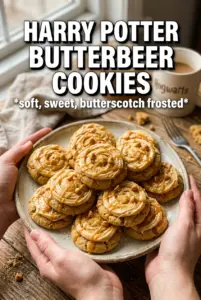
Golden butterbeer cookies bake up soft in the center with just enough chew at the edges, and the butterscotch frosting on top pushes them straight into treat-yourself territory. The cookie itself leans warm and cozy, with brown sugar, vanilla, and a little cream soda for that unmistakable butterbeer note. Once they cool and get their frosting swirl, they taste like the dessert version of a mug of the real thing.
What makes these work is the balance between the cookie base and the frosting. Melted butterscotch chips give the dough a deeper flavor than extract alone, and the cream soda adds a subtle lift without making the cookies cakey. The frosting stays fluffy because the butter and powdered sugar are beaten first, then loosened just enough with cream soda to pipe cleanly.
Below, I’ve included the small details that keep the cookies soft instead of dry, plus the one frosting adjustment that helps if yours turns out too loose. If you want cookies that look magical without being fussy, this batch delivers.
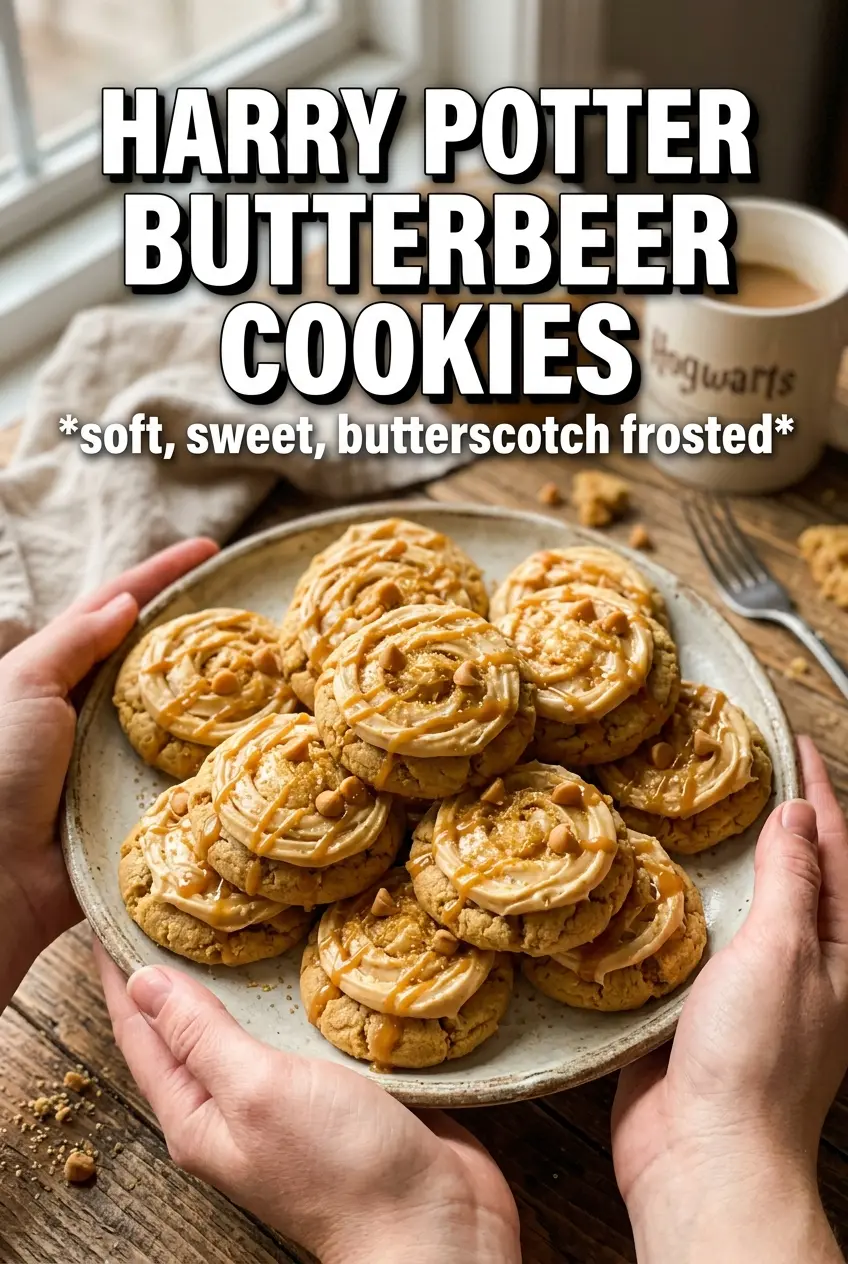
The cookies came out soft and chewy, and the frosting held its shape after piping. I loved that the cream soda flavor came through without tasting fake, and the gold sugar made them look finished right away.
Save these Harry Potter Butterbeer Cookies for the days you want soft butterscotch cookies with fluffy cream soda frosting and a little gold sparkle.
The Trick to Keeping Butterbeer Cookies Soft Instead of Dry
These cookies can go dry fast if the dough is overbaked or overmixed. The base has enough butter and brown sugar to stay tender, but the flour settles in quickly once it hits the bowl. Stir just until the flour disappears, then stop. That keeps the crumb soft and avoids the dense, muffin-like texture you get when the gluten gets worked too hard.
The other thing that matters here is bake time. Pull them when the centers still look slightly underdone and the edges are just set. They finish on the pan as they cool, which is what gives you that soft center without raw dough in the middle. If you wait for the tops to look fully baked in the oven, you’ll miss the sweet spot.
What Each Butterbeer Ingredient Is Actually Doing
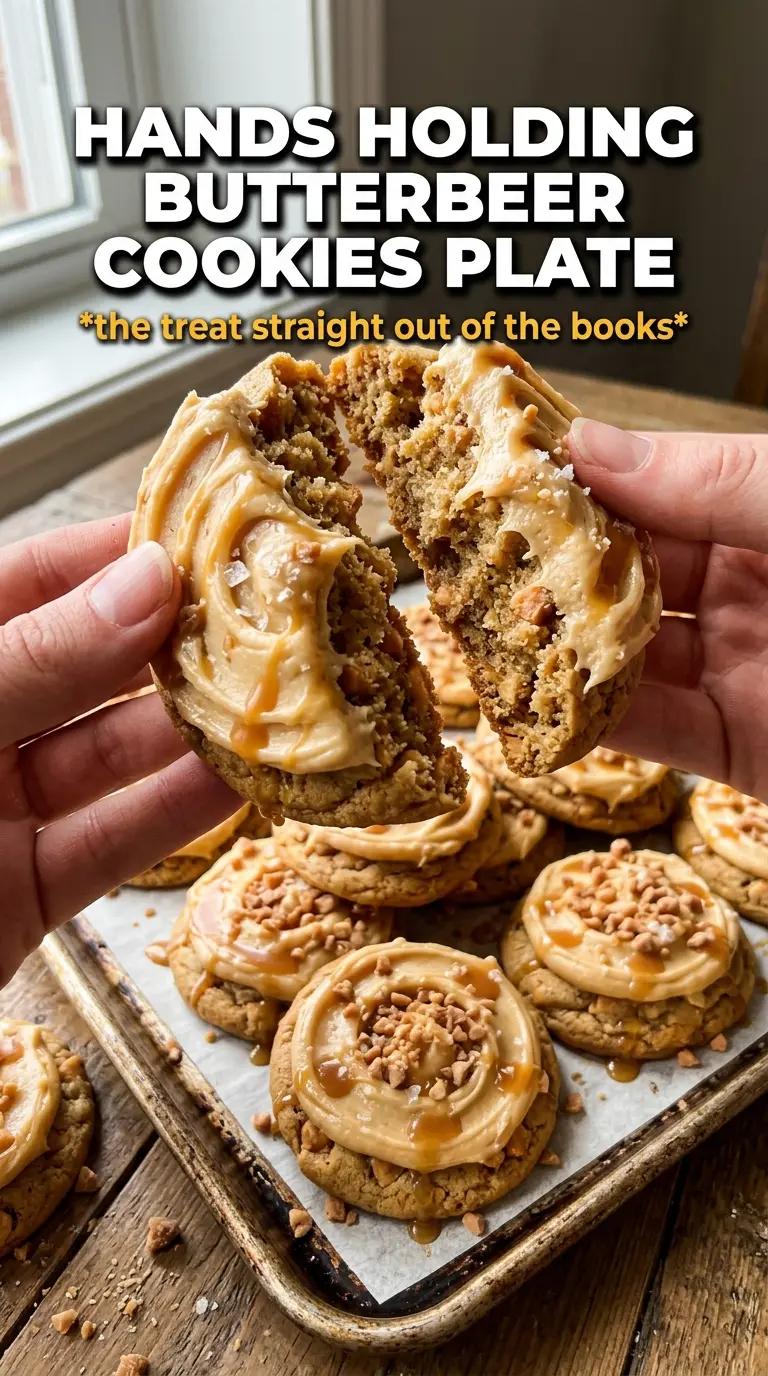
- Brown sugar — This is the main source of chew and caramel depth. Light brown sugar works fine, but dark brown sugar gives the cookies a deeper butterscotch edge.
- Melted butterscotch chips — These carry the butterbeer flavor into the dough in a way extract alone can’t. Stir them in after the butter and sugar are creamed so they blend smoothly instead of clumping.
- Cream soda — Use it in both the dough and frosting for that signature butterbeer note. You don’t need much; too much adds extra liquid and makes the cookies spread or the frosting loosen up.
- Butter — Softened butter gives the cookies structure and keeps the frosting pipeable. If your frosting looks greasy, the butter was too warm, so chill it briefly before adding more sugar.
- Gold sugar sprinkles — They’re not just decoration. They give the frosted cookies a little crunch and make the tops look finished without extra work.
Building the Dough and Frosting Without Losing the Texture
Cream the base until it looks fluffy, not greasy
Beat the butter and brown sugar until the mixture turns paler and looks a little fluffy around the edges. That takes a couple of minutes and gives the cookies their lift. If the mixture looks wet and shiny, the butter is too soft and the cookies can spread too much. Add the melted butterscotch chips, egg, vanilla, and cream soda next, and mix just until combined.
Fold in the dry ingredients with a light hand
Add the flour mixture and mix only until no dry streaks remain. The dough will be soft and scoopable, not stiff. That’s what you want. If it seems sticky, chill it for 15 minutes instead of adding more flour, which would make the cookies bready.
Bake until the centers are just set
Scoop 2-tablespoon portions and leave enough space for the cookies to spread. Bake at 375°F for 10 to 12 minutes until the edges are set and the centers still look a little soft. They should look slightly underdone when they come out. Let them cool completely before frosting or the buttercream will slide right off.
Whip the frosting until it pipes cleanly
Beat the butter, butterscotch sauce, powdered sugar, cream soda, and vanilla until smooth and fluffy. Add the cream soda slowly so the frosting doesn’t turn runny. If it gets too loose, add a little more powdered sugar. If it feels too stiff to pipe, another teaspoon of cream soda will loosen it without ruining the texture.
Make Them Extra Butterscotch-Forward
Add another tablespoon or two of melted butterscotch chips to the dough and a little extra butterscotch sauce to the frosting. The cookies get richer and more candy-like, but the texture stays the same as long as you don’t add extra liquid.
Dairy-Free Version
Use plant-based butter in both the cookies and frosting, then swap in a dairy-free butterscotch sauce if you can find one. The flavor stays close, though the frosting may need a touch less cream soda because some non-dairy butters soften faster at room temperature.
Gluten-Free Swap
A good 1:1 gluten-free baking flour can work here, but the dough usually benefits from a short chill so the cookies don’t spread too quickly. Expect a slightly more delicate crumb, especially when they’re warm.
Storage and Reheating
- Refrigerator: Store frosted cookies in an airtight container for 4 days. The frosting stays soft, but the sprinkles may lose a little shine.
- Freezer: Freeze the baked unfrosted cookies for up to 2 months. Thaw at room temperature, then frost after they’re fully defrosted for the best texture.
- Reheating: These are best served at room temperature. If you want to refresh an unfrosted cookie, warm it for 5 to 8 seconds in the microwave. Don’t heat frosted cookies or the buttercream will melt.
Questions I Get Asked About This Recipe
Harry Potter Butterbeer Cookies
Ingredients
Equipment
Method
- Beat the butter (softened) and brown sugar together until smooth and creamy, with no dry sugar pockets visible.
- Add the melted butterscotch chips, egg, vanilla, and cream soda, then beat just until the mixture looks glossy and fully combined.
- Whisk together the flour, baking soda, baking powder, cinnamon, and salt, then fold into the wet ingredients until no streaks remain.
- Scoop the dough into 2-tablespoon rounds and place them on a sheet pan in even spacing.
- Bake at 375F for 10-12 minutes, watching for edges to look set while centers remain slightly soft.
- Cool completely on the sheet pan until cookies are firm enough to frost without smearing.
- Beat the unsalted butter (softened) with the butterscotch sauce until smooth and lightly thickened.
- Add the powdered sugar and beat until fluffy, stopping to scrape the bowl as needed.
- Mix in 2-3 tablespoons cream soda and the vanilla until the frosting reaches a pipeable or spreadable texture.
- Pipe or spread the frosting onto each cooled cookie, aiming for a neat swirl or domed layer.
- Top with gold sugar sprinkles so they adhere and create a visible sparkle layer.