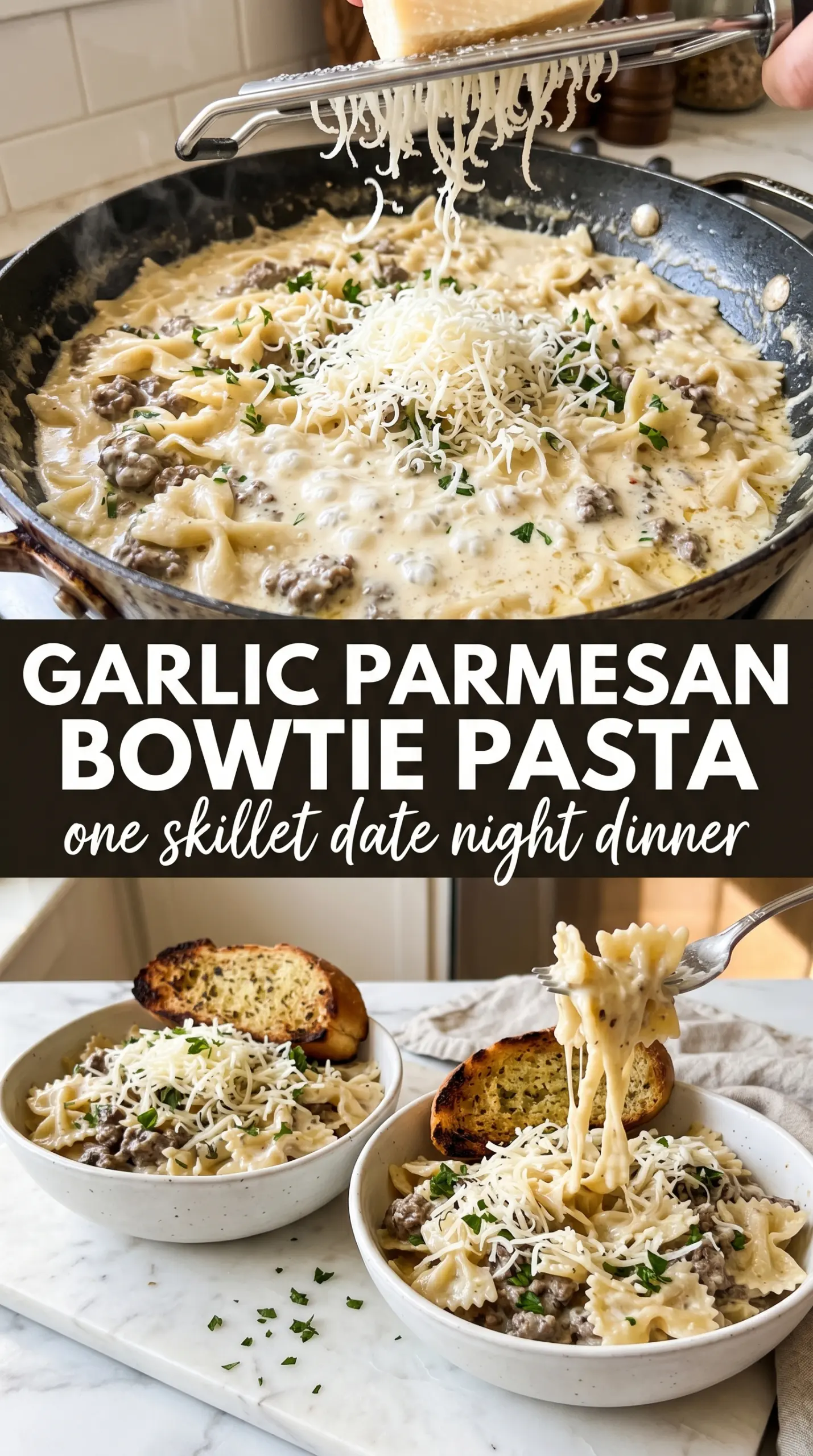
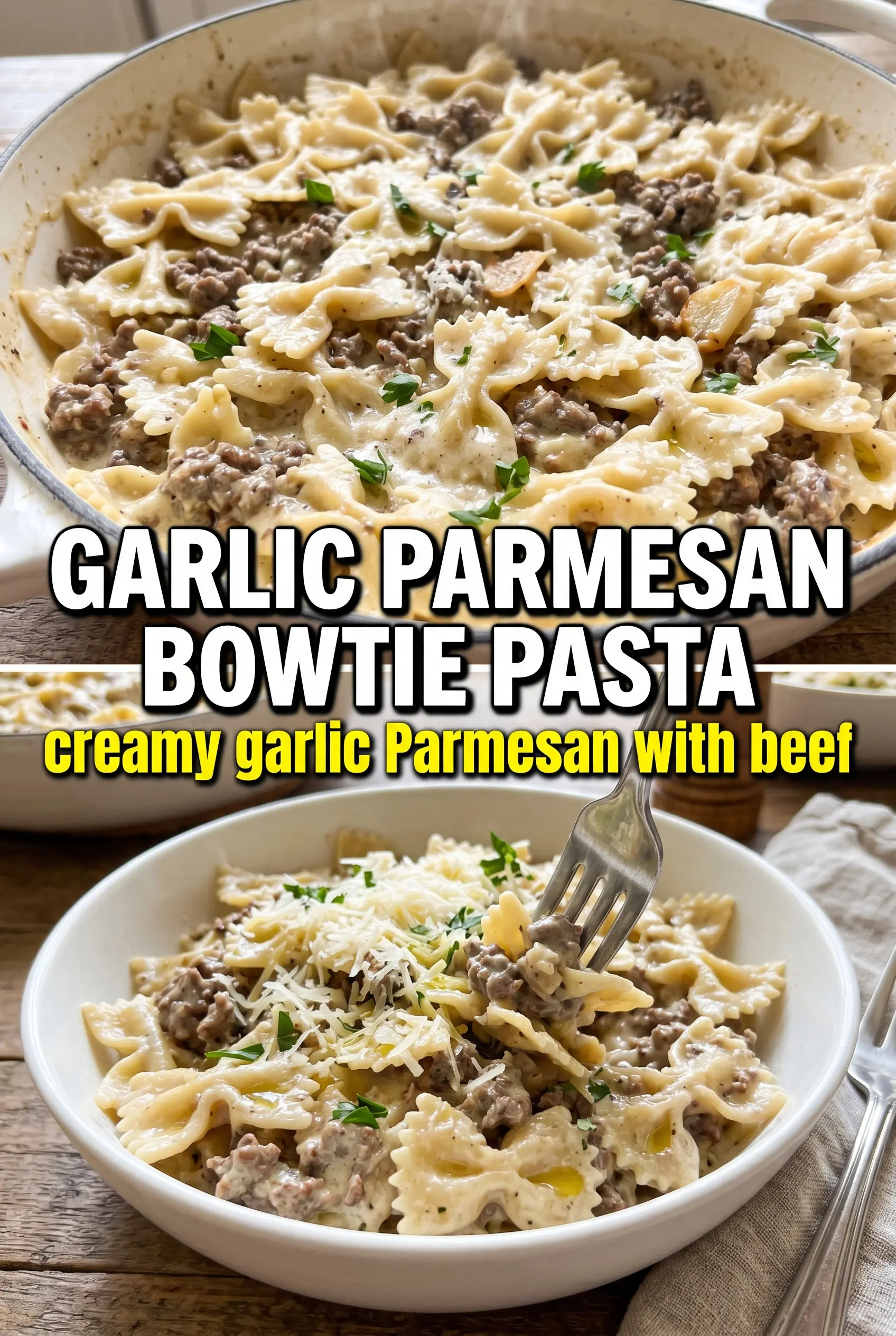
Garlic parmesan bowtie pasta with ground beef lands on the table with the kind of creamy, savory sauce that clings to every curve of the pasta instead of pooling at the bottom of the pan. The beef gives it enough backbone to work as a full meal, and the parmesan pulls the whole dish into something rich without feeling heavy or fussy.
What makes this version work is the timing. The pasta cooks right in the broth and cream, which means it absorbs flavor as it softens, and the starch in the pot helps thicken the sauce naturally. Butter and parmesan go in at the end, off the hottest part of the heat, so the sauce stays smooth instead of turning grainy.
Below, I’ve included the small details that matter here: when to drain the beef, how to keep the sauce from tightening too much, and what to change if you want a lighter or higher-protein version.
The pasta stayed perfectly saucy and the parmesan melted in without getting clumpy. I loved that the bowties held onto the beef in every bite, and it was on the table in just about 30 minutes.
Save this garlic parmesan bowtie pasta for the nights when you want creamy pasta, tender beef, and one pan doing most of the work.
The Reason the Sauce Stays Creamy Instead of Turning Heavy
The biggest mistake in a dish like this is treating the cream and cheese like they need aggressive heat to come together. They don’t. The pasta releases starch as it cooks, and that starch does part of the thickening work before the parmesan ever hits the pan. If the sauce gets hot enough to boil hard after the cheese goes in, it can turn greasy or grainy fast.
This version leans on a covered simmer instead of a fast boil. That keeps the bowties tender while giving the liquid enough time to reduce around them. Stirring occasionally matters here because the pasta likes to settle, and if it sticks before it’s tender, the whole texture goes off.
- Ground beef — Use something around 85/15 if you can. It has enough fat for flavor, but not so much that you end up with a slick sauce. If your beef is fattier, drain it well after browning.
- Beef broth — This is doing more than adding liquid. It gives the pasta its savory base, and it’s one reason the dish tastes rounded instead of just creamy. A low-sodium broth gives you more control at the end.
- Heavy cream — This brings the silkiness. Half-and-half will work in a pinch, but the sauce will be thinner and a little more likely to separate if it gets too hot.
- Parmesan — Grate it fresh if possible. Pre-grated cheese often contains anti-caking agents that can keep it from melting smoothly, especially in a quick one-pan sauce.
What Each Ingredient Is Actually Doing in This Recipe
- Primary ingredient (the star) — Quality matters most. Choose the best you can find.
- Cooking medium (oil, butter, or broth) — This carries flavors and prevents dryness.
- Seasonings (salt, pepper, spices, herbs) — Layer flavors so nothing overpowers. Build depth gradually.
- Aromatics (garlic, onion, herbs) — Cook with fat to bloom flavors. Become the foundation.
- Supporting ingredients — Complement the main ingredient without overpowering it.
- Sauce or liquid (if applicable) — Brings flavors together. Balance richness with acid.
- Acid (lemon, vinegar, wine, or other) — Brightens and prevents flat-tasting results.
- Final finish (garnish, glaze, or sauce) — Prevents one-dimensional taste and adds visual appeal.
Getting the Pasta Tender Without Leaving the Sauce Thin
Brown the Beef First
Cook the ground beef over medium-high heat until it loses its pink color and starts picking up a little browning around the edges. That browned fond is part of the flavor, so don’t rush to remove it too early. Drain off the excess fat before the garlic goes in, or the finished sauce can feel greasy instead of creamy.
Cook the Garlic Briefly
Add the minced garlic and stir for about a minute, just until it smells fragrant. If it starts to take on color, the heat is too high and the garlic will taste bitter in the final dish. You want the garlic to perfume the pan, not toast in it.
Simmer the Pasta in the Sauce
Stir in the uncooked bowties, beef broth, cream, and Italian seasoning, then bring the pan to a boil before lowering to a steady medium heat and covering it. Stir every few minutes so the pasta doesn’t cling to the bottom. If the liquid disappears before the pasta is tender, add a splash of broth or water; the pan should stay saucy until the bowties are cooked through.
Finish With Butter and Parmesan Off the Heat
When the pasta is tender, remove the pan from the strongest heat before stirring in the butter and parmesan. That pause keeps the cheese smooth and helps the sauce turn glossy instead of clumpy. The finished sauce should coat the pasta in a creamy layer, not sit as a loose pool underneath it.
How to Adapt This for a Lighter Bowl or a Different Pantry
Swap in ground turkey or chicken
Use the same method, but add a little extra salt and a touch more parmesan at the end because leaner meat has less built-in richness than beef. You’ll lose some of the deep savoriness, but the dish stays creamy and satisfying.
Make it gluten-free with sturdy pasta
Use a gluten-free farfalle that holds up well in simmering liquid, and watch the cook time closely because some brands soften faster than wheat pasta. Stir a little more often, since gluten-free pasta can stick before it’s fully tender.
Go dairy-free with a controlled swap
Use an unsweetened dairy-free cream alternative and a parmesan-style vegan cheese that melts well, then add it slowly at the end. The sauce won’t have the same sharp, nutty finish as real parmesan, but the texture can still land in the creamy zone if you keep the heat low.
Add vegetables without watering it down
Stir in sautéed mushrooms, spinach, or peas near the end so they warm through without flooding the sauce with extra liquid. Raw vegetables tossed in too early can change the broth balance and leave you with a thinner finish.
Storage and Reheating
- Refrigerator: Store leftovers in an airtight container for up to 4 days. The pasta will absorb some of the sauce, so it thickens as it sits.
- Freezer: It freezes, but the cream sauce can separate a little on thawing. If you plan to freeze it, undercook the pasta slightly and rewarm it gently.
- Reheating: Warm it slowly on the stove or in the microwave with a splash of broth or milk. High heat is the mistake here; it tightens the sauce and can make the cheese turn oily.
Questions I Get Asked About This Recipe
Garlic Parmesan Bowtie Pasta with Ground Beef
Ingredients
Equipment
Method
- Heat a large skillet over medium-high heat and brown the ground beef, breaking it apart until no longer pink. Drain excess fat.
- Add the minced garlic to the skillet and cook for 1 minute, stirring, until fragrant. Keep heat at medium-high so the garlic doesn’t scorch.
- Stir in bowtie pasta, beef broth, heavy cream, and Italian seasoning, then bring to a boil. Use medium heat and cover, cooking 12–14 minutes, stirring occasionally, until the pasta is tender.
- Stir in the butter and grated parmesan until the sauce turns silky and coats the bowtie pasta. If needed, simmer 1–2 minutes to thicken slightly.
- Season with salt and black pepper to taste, then garnish with fresh parsley and extra parmesan. Serve hot with cracked black pepper if desired.