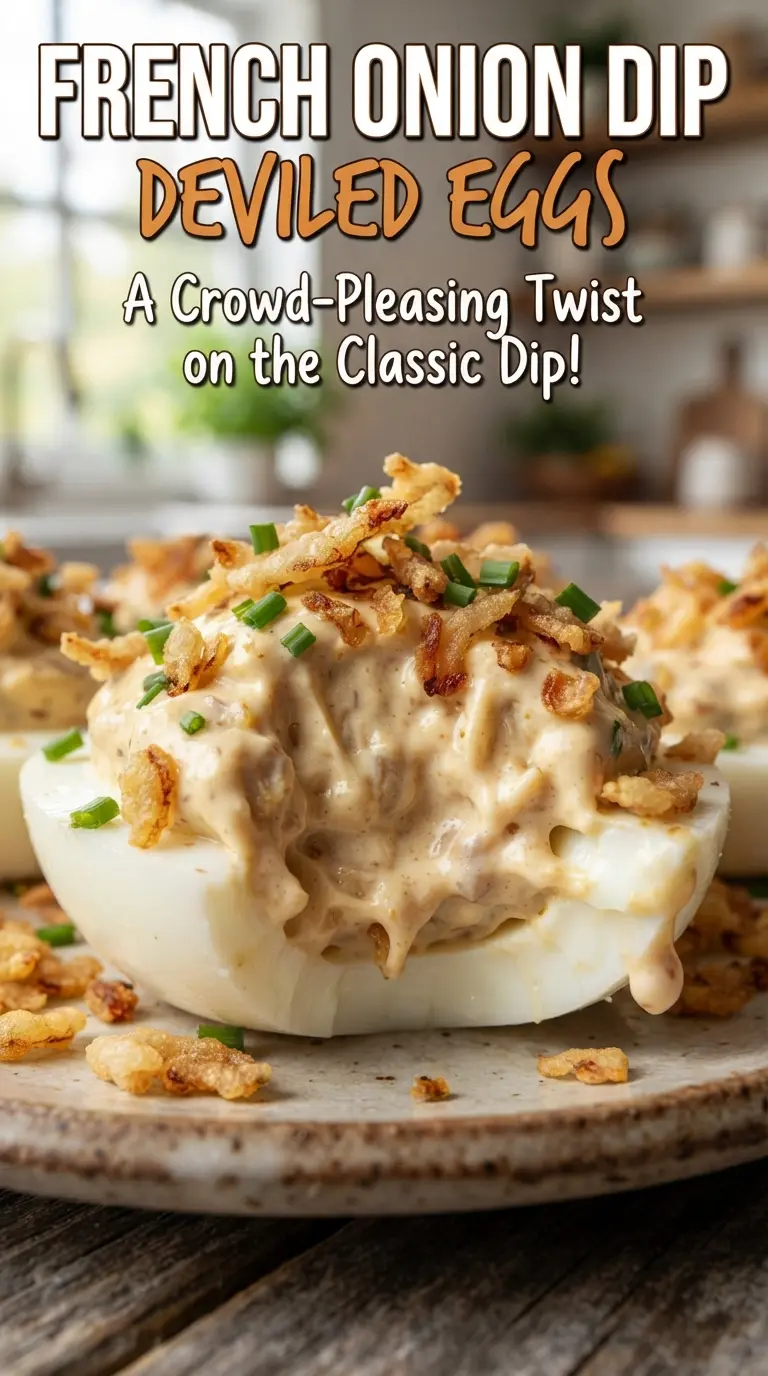
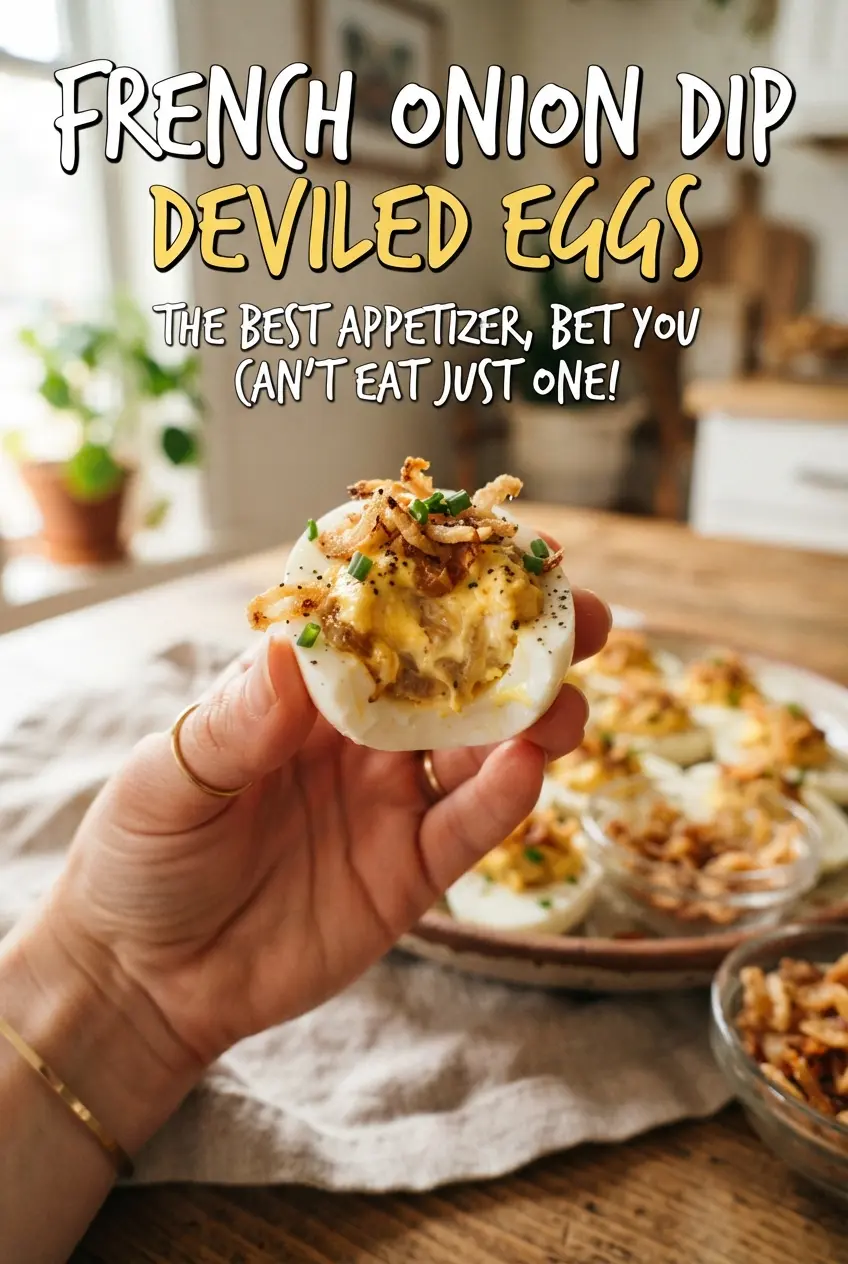
French onion dip deviled eggs hit that perfect middle ground between familiar and unexpected: creamy yolk filling, sweet caramelized onions, a little tang from sour cream, and that salty crunch on top that keeps every bite interesting. They disappear fast because they taste like the best parts of a chip-and-dip platter tucked into one neat, two-bite appetizer.
The caramelized onions are the part worth doing right. Cook them low and slow until they turn deep golden and jammy, because rushed onions taste sharp and thin instead of rich. The filling stays balanced with mayonnaise, sour cream, and a small splash of Worcestershire, which gives the eggs that classic French onion dip note without making them heavy.
Below, I’ll walk through the onion stage so it doesn’t catch, plus a few easy ways to adjust the texture if you want a smoother filling or a chunkier one. The crispy onion topping matters too — it adds the snacky crunch that makes these feel special on a party tray.
The onions got jammy and sweet, and the crispy topping kept the filling from feeling too rich. I made them in the morning and they still tasted great after chilling until party time.
Save these French onion dip deviled eggs for your next appetizer spread — creamy filling, jammy onions, and crispy topping in one bite.
The Onion Layer Is What Keeps These from Tasting Flat
Most deviled eggs lean on mustard, paprika, and mayo alone. That works, but it doesn’t give you the sweet-savory depth that makes French onion dip so hard to stop eating. The caramelized onions are what change the whole personality of the filling, and they need enough time to lose their raw edge and concentrate into something soft, brown, and almost spreadable.
If the onions are pale, the eggs will taste one-note. If they’re burnt, the whole batch goes bitter. The goal is deep golden onions that still taste sweet, with the pan deglazed by butter and onion moisture rather than scorched. That’s the flavor backbone here.
- Yellow onion — This is the ingredient that gives the recipe its French onion dip character. A white onion can work, but it tends to taste sharper; yellow onions mellow and sweeten as they cook.
- Butter — It helps the onions soften and brown evenly. If you need a dairy-free version, use olive oil, but the flavor won’t be quite as rich.
- Sour cream — This adds tang and loosens the yolks enough for a smooth, pipeable filling. Full-fat sour cream gives the best body.
- Mayonnaise — Mayo brings the creamy texture that sour cream alone can’t quite match. Use a good one here, since it’s a major part of the filling.
- Crispy fried onions — These aren’t just garnish. They give the eggs the crunchy, salty finish that makes the whole dish read like French onion dip in appetizer form.
What Each Ingredient Is Actually Doing in This Recipe
- Primary ingredient (the star) — Quality matters most. Choose the best you can find.
- Cooking medium (oil, butter, or broth) — This carries flavors and prevents dryness.
- Seasonings (salt, pepper, spices, herbs) — Layer flavors so nothing overpowers. Build depth gradually.
- Aromatics (garlic, onion, herbs) — Cook with fat to bloom flavors. Become the foundation.
- Supporting ingredients — Complement the main ingredient without overpowering it.
- Sauce or liquid (if applicable) — Brings flavors together. Balance richness with acid.
- Acid (lemon, vinegar, wine, or other) — Brightens and prevents flat-tasting results.
- Final finish (garnish, glaze, or sauce) — Prevents one-dimensional taste and adds visual appeal.
Building the Filling Without Losing the Onion Texture
Cooking the onions until they turn sweet
Cook the diced onion in butter over medium-low heat and give it time. Stir often enough to keep the edges from browning too fast, but don’t keep the heat so low that the onions steam forever and stay watery. You’re looking for deep golden color and a soft, jammy texture; if there’s liquid still pooling in the pan, keep going. Let them cool before mixing them into the yolks, or the filling will loosen too much and start tasting dull.
Making the yolk mixture smooth and sturdy
Mash the yolks with sour cream, mayonnaise, Worcestershire, onion powder, garlic powder, and salt until the mixture turns creamy and thick. The Worcestershire adds a savory depth that keeps the filling from tasting like straight-up egg salad, so don’t skip it. If the mixture looks dry or crumbly, add a touch more sour cream; if it looks loose, it just needs a few more mashes with the fork. The filling should hold soft ridges when you drag a spoon through it.
Folding in the onions and finishing the tops
Stir in half the caramelized onions, leaving some pieces intact for texture. Pipe or spoon the filling into the egg whites, then finish with the remaining onions, crispy fried onions, and chives. Add the toppings right before serving if you want them to stay crunchy. If the eggs sit too long after topping, the fried onions soften fast from the moisture in the filling.
How to Adapt These for Different Crowds and Diets
Dairy-Free Version
Use olive oil instead of butter for the onions, then replace the sour cream with a dairy-free sour cream and keep the mayonnaise if it fits your needs. The filling will still be creamy, but it may taste a little less rich, so an extra pinch of salt helps bring the flavor back into focus.
Extra-Smooth Filling
Press the yolks through a fine mesh sieve before mixing in the dairy. That gives you a silkier texture and makes piping easier, especially if you want neat swirls on a platter. You lose a little rustic texture, but the filling looks cleaner and more polished.
Make-Ahead Party Prep
Cook the onions and boil the eggs a day ahead, then store them separately until assembly time. The filling can be mixed several hours ahead, but don’t add the crispy onions until right before serving or they’ll soften. This is the best approach if you’re building a snack tray and want the eggs to look fresh when they hit the table.
Storage and Reheating
- Refrigerator: Store the filled eggs in an airtight container for up to 2 days. The crispy onions will soften a little, so add a fresh pinch on top if you want the crunch back.
- Freezer: Don’t freeze deviled eggs. The whites turn rubbery and the filling separates after thawing.
- Reheating: These are meant to be served cold. If they’ve been chilled hard, let them sit at room temperature for 10 to 15 minutes before serving so the filling tastes softer and the onion flavor comes through.
Questions I Get Asked About This Recipe
French Onion Dip Deviled Eggs
Ingredients
Equipment
Method
- Melt the butter in a cast iron skillet over medium-low heat and add the finely diced onion. Cook for 20-25 minutes, stirring occasionally, until deep golden and jammy-looking, then cool to room temperature.
- Place the large eggs in a pot and cover with cold water. Bring to a boil, cover, remove from heat, and let stand 12 minutes.
- Chill the eggs, then peel and halve them lengthwise. Keep the yolks for filling and arrange the whites on a platter.
- Mash the yolks with sour cream, mayonnaise, Worcestershire sauce, onion powder, garlic powder, and salt until smooth. Stop to scrape the mixture as needed so no dry bits remain.
- Fold in half the caramelized onions until evenly distributed with a glossy texture. Set the remaining caramelized onions aside for topping.
- Pipe the filling into the egg white halves for clean, ridged peaks. If you prefer, spoon it in but keep the filling level.
- Top each deviled egg with the remaining caramelized onions and a sprinkle of crispy fried onions. Finish with fresh chives for garnish and serve at once.