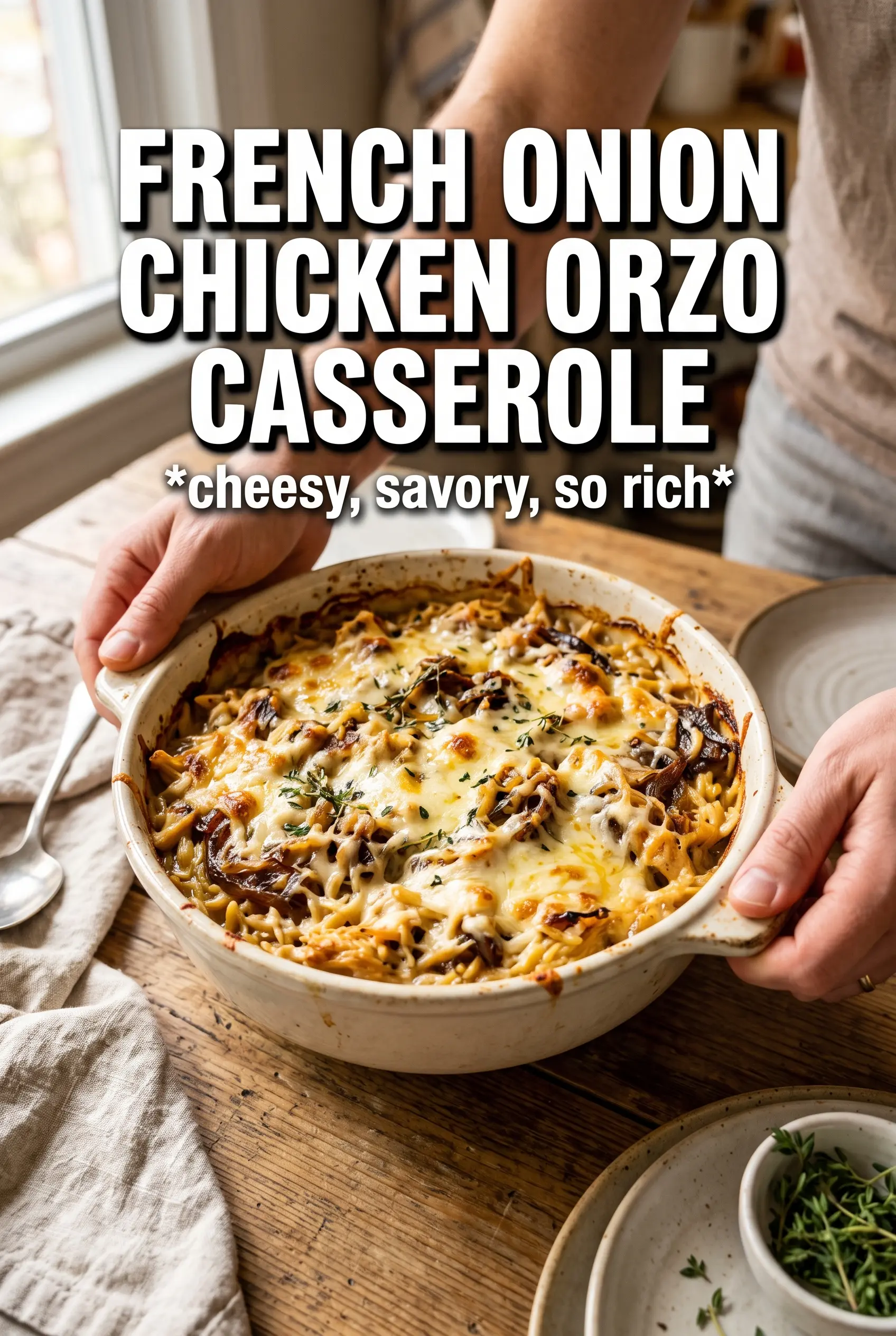
Deeply caramelized onions and a bubbling Gruyere crust give this French onion chicken orzo casserole the kind of comfort that feels a little more special than an ordinary baked pasta. The orzo turns creamy as it bakes, the chicken stays tucked into the sauce, and every spoonful picks up that savory onion flavor that makes French onion soup so good in the first place.
What makes this version work is patience at the stove before the casserole ever goes into the oven. The onions need real time to turn sweet and brown, and that fond at the bottom of the pan becomes the base of the sauce once the wine and broth go in. Orzo helps here too because it cooks directly in the liquid, which gives the whole dish a silky, almost risotto-like texture without the constant stirring.
Below, I’ll walk through the point where most casseroles go flat, the ingredient swaps that still keep the dish balanced, and the best way to bring leftovers back without drying out the chicken.
The onions took a little time, but that was the whole secret. The sauce turned creamy, the orzo cooked perfectly in the oven, and the Gruyere browned into the best crust.
Save this French Onion Chicken Orzo Casserole for a creamy baked dinner with caramelized onions and a golden Gruyere top.
The Onion Stage That Gives This Casserole Its Real French Onion Flavor
The onions are the backbone here, and they need to be taken past soft and pale into deeply caramelized territory. That means patience and medium heat, not speed. If you rush them, the casserole still tastes fine, but it loses the sweet-savory depth that makes the whole dish taste layered instead of just creamy.
There’s one more thing worth knowing: the browned bits left in the pan after the onions are ready are not a problem to scrub away. They dissolve into the wine and broth and turn into part of the sauce. That’s the part that carries the dish from “baked chicken and pasta” to something with actual French onion character.
- Onions — Yellow onions are the right choice because they soften and sweeten as they cook. White onions can work, but they stay sharper.
- Gruyere — This cheese melts smoothly and browns with that nutty, almost toasted flavor you want on top. Swiss is the closest substitute if that’s what you have.
- Beef broth — Chicken broth will make the dish lighter, but beef broth gives it the deeper French onion backbone. Use a good low-sodium broth if you can, since the cheese and Worcestershire already bring salt.
- Orzo — This pasta cooks right in the sauce and helps thicken everything as it bakes. I wouldn’t swap in a larger pasta shape here unless you also change the liquid and baking time.
- Cream cheese — It melts into the broth and gives the casserole body without making it heavy. Cube it first so it disappears evenly into the sauce.
What Each Ingredient Is Actually Doing in This Recipe

- Primary ingredient (the star) — Quality matters most. Choose the best you can find.
- Cooking medium (oil, butter, or broth) — This carries flavors and prevents dryness.
- Seasonings (salt, pepper, spices, herbs) — Layer flavors so nothing overpowers. Build depth gradually.
- Aromatics (garlic, onion, herbs) — Cook with fat to bloom flavors. Become the foundation.
- Supporting ingredients — Complement the main ingredient without overpowering it.
- Sauce or liquid (if applicable) — Brings flavors together. Balance richness with acid.
- Acid (lemon, vinegar, wine, or other) — Brightens and prevents flat-tasting results.
- Final finish (garnish, glaze, or sauce) — Prevents one-dimensional taste and adds visual appeal.
Building the Sauce So the Orzo Stays Creamy, Not Mushy
Caramelizing the onions fully
Melt the butter in a large oven-safe skillet and add the sliced onions with a pinch of salt. Cook them slowly over medium heat, stirring often, until they turn deep golden brown and smell sweet, not sharp. This takes 30 to 35 minutes, and the biggest mistake is turning the heat up because the onions look slow at first. If they scorch before they soften, the sauce will taste bitter instead of rich.
Using the wine to lift the pan
When the onions are ready, add the garlic and thyme for just a minute or two, then pour in the wine. The wine should sizzle and loosen every browned bit from the pan bottom. Let it cook for a couple of minutes so the raw edge cooks off; if you skip that step, the finished casserole can taste thin and a little boozy.
Baking the orzo until tender
Stir in the broth, Worcestershire, uncooked orzo, and diced chicken, then bring everything to a simmer before the skillet goes into the oven. The liquid needs to look active around the edges and the orzo should be fully submerged. Bake until the pasta is tender, the chicken is cooked through, and the sauce has thickened around the pan edges. If it looks dry before the orzo is done, the heat may be running hot, and a splash of broth can bring it back.
Finishing with cheese that browns instead of sinks
Stir in the cream cheese off the heat until the sauce looks smooth, then season and scatter the Gruyere over the top. The oven does the final work here: the cheese should melt into a bubbly, golden crust while the casserole underneath stays creamy. Pull it once the top is browned and the edges are bubbling hard. If you leave it too long, the orzo tightens up and the chicken can dry out.
How to Adapt This Casserole Without Losing the Balance
Make it gluten-free
Use a gluten-free orzo or a small gluten-free pasta shape that can hold up in the oven. Check the Worcestershire sauce label too, since some brands include gluten. The texture will still be creamy, but gluten-free pasta tends to soften faster, so start checking a few minutes early.
Make it dairy-free
Swap the butter for olive oil and use a dairy-free cream cheese that melts well. Skip the Gruyere topping or use a plant-based meltable cheese if you trust the brand. The casserole will still be savory and rich, but it won’t have quite the same browned, nutty finish.
Use rotisserie chicken
Stir in shredded rotisserie chicken near the end instead of cooking raw chicken in the sauce. That keeps the meat from overcooking while the orzo bakes. It’s the best shortcut when you want dinner on the table faster, though the flavor will be a little less cohesive than starting with raw chicken in the skillet.
Storage and Reheating
- Refrigerator: Store covered for up to 4 days. The orzo thickens as it sits, so the casserole becomes firmer after chilling.
- Freezer: It freezes reasonably well, though the texture of the pasta softens a bit after thawing. Cool completely, portion into airtight containers, and freeze for up to 2 months.
- Reheating: Reheat in the oven covered at 350F with a splash of broth to loosen the sauce. The common mistake is blasting it uncovered in the microwave, which dries out the chicken and makes the pasta turn gummy at the edges.