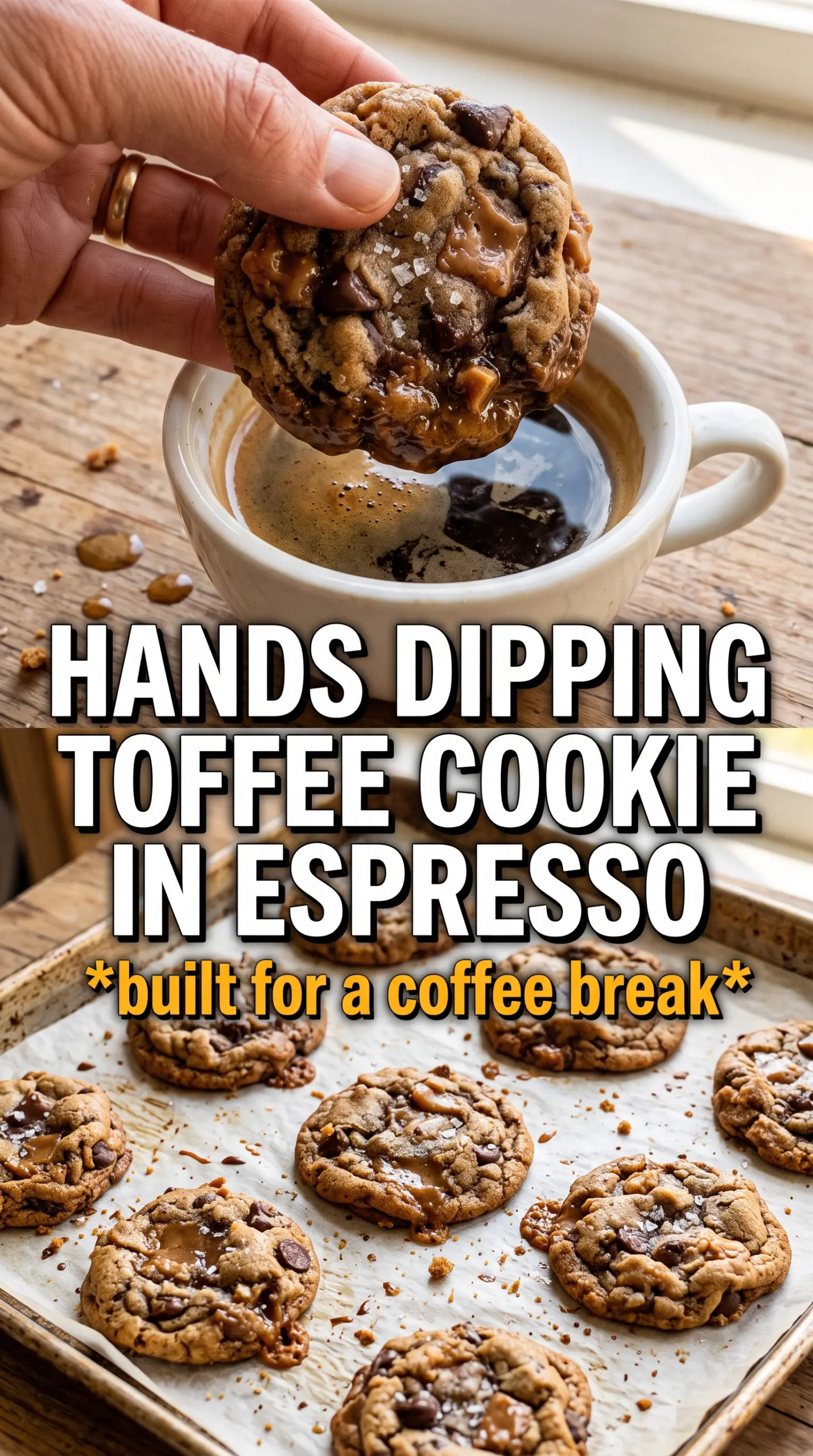
These espresso brown butter toffee cookies bake up with crisp edges, chewy centers, and little pockets of melted toffee that turn almost candy-like in the oven. The espresso doesn’t make them taste like coffee first and foremost; it deepens the butter and chocolate and keeps every bite tasting more grown-up and more intense than a standard chocolate chip cookie.
The part that makes this recipe stand out is the brown butter. Once it’s cooked until nutty and then cooled back to a solid-but-scoopable texture, it creams with the sugars just like regular butter, but the flavor is richer and rounder. A small hit of espresso powder does the same job for the chocolate, and flaky salt on top keeps the sweetness from flattening out.
Below you’ll find the trick for getting brown butter back into the right texture, plus a few swaps if you want to lean more chocolatey, skip the espresso, or make the dough ahead. The details matter with cookies like these, and they’re the difference between good and the kind people keep reaching for off the cooling rack.
The brown butter gave these such a deep caramel flavor, and the centers stayed soft while the edges turned perfectly crisp. I chilled the dough just a bit and the cookies held their shape beautifully.
Love the crackly edges and melty toffee in these espresso brown butter cookies? Save this batch for the next time you want a cookie that tastes like a coffeehouse upgrade.
The Part That Makes Brown Butter Cookies Spread the Right Way
Brown butter changes the structure of the dough, not just the flavor. Once the water cooks off and the milk solids toast, you’re left with butter that tastes richer but behaves differently, so the cooling step matters more than people expect. If you cream it while it’s still warm and liquid, the cookies spread too fast and lose that chewy middle.
Cooling it until solid but still scoopable puts it back in the range where it can trap air with the sugars. That gives you cookies that rise a little at the edges, stay soft in the center, and still carry the nutty brown-butter flavor all the way through. The espresso powder also needs to be evenly whisked through the flour so it doesn’t hit one bite harder than the next.
- Brown butter — This is the flavor anchor. If you skip it, the cookies still work, but they lose the toasted, almost caramel edge that makes them memorable.
- Espresso powder — Use instant espresso powder, not brewed coffee. Brewed coffee adds liquid; powder adds intensity without changing the dough.
- Toffee bits — Heath-style bits hold their shape well enough to give you little crunchy-sweet pockets. If you chop a candy bar instead, you’ll get messier puddles and less even distribution.
- Flaky sea salt — This goes on after baking, while the cookies are still hot, so it sticks without dissolving into the dough.
Building the Dough So the Centers Stay Chewy
- All-purpose flour — This gives the cookies enough structure to hold the toffee and chocolate. Spoon and level it so you don’t pack in extra flour and end up with puffy cookies.
- Brown sugar and granulated sugar — Brown sugar keeps the centers moist and chewy, while granulated sugar helps the edges bake crisp. The mix gives you the best texture balance.
- Eggs — Add them one at a time and beat until the mixture looks smooth before the flour goes in. Cold eggs can make the butter seize, so let them sit out a bit first.
- Dark chocolate chips — These add a bitter note that keeps the cookies from leaning too sweet. Milk chocolate works, but the result will taste softer and sweeter.
The Mixing and Baking Stages That Matter Most
Bringing the Brown Butter Back to Life
Brown the butter over medium heat until it smells nutty and the milk solids at the bottom turn amber, then pour it into a bowl right away so it doesn’t keep cooking. Refrigerate it until it’s solid but still scoopable, about an hour, and don’t rush this part with the freezer unless you’re checking it often. If it gets too hard, let it sit at room temperature for a few minutes before creaming.
Whipping the Butter and Sugars
Beat the solidified brown butter with both sugars until it looks lighter and slightly fluffy. That step gives the cookies lift, so don’t stop as soon as everything comes together. Add the eggs one at a time and the vanilla after that; if the mixture looks curdled at first, it usually smooths out once the flour goes in.
Stopping at Just-Combined
Fold in the dry ingredients until you still see a few streaks of flour, then add the toffee bits and chocolate chips. Overmixing at this stage makes the cookies dense and tight instead of tender. The dough should be soft enough to scoop but not greasy or wet; if it seems slack, let it sit for 10 minutes before portioning.
Baking for Set Edges and Soft Centers
Scoop into 2-tablespoon rounds and bake until the edges are golden and the centers still look a little underdone. That underbaked middle is what turns into a chewy center as the cookies cool on the pan for 5 minutes. Hit them with flaky salt the second they come out, while the tops are still hot enough to catch it.
Make Them More Chocolate-Forward
Increase the chocolate chips to 1 cup and cut the toffee bits back slightly if you want a richer, less candy-like cookie. The texture stays the same, but the espresso becomes more of a background note instead of a clear accent.
Skip the Espresso Without Losing Depth
Leave out the espresso powder and add an extra 1/2 teaspoon vanilla if you want a more classic brown butter cookie. You’ll lose that coffeehouse edge, but the toasted butter and toffee still carry plenty of flavor.
Make Them Gluten-Free
Use a 1:1 gluten-free baking flour that includes xanthan gum. The cookies will be a touch more delicate, but the brown butter and toffee still give you the same chewy-crisp contrast.
Storage and Reheating
- Refrigerator: Store baked cookies in an airtight container for up to 5 days. They’ll soften a bit as the toffee settles, but the centers stay pleasantly chewy.
- Freezer: Freeze scooped dough balls on a tray, then move them to a freezer bag for up to 2 months. Bake from frozen and add 1 to 2 minutes.
- Reheating: Warm baked cookies in a 300F oven for 3 to 4 minutes. Don’t microwave them for too long or the toffee can turn sticky and the edges lose their snap.
Questions I Get Asked About This Recipe
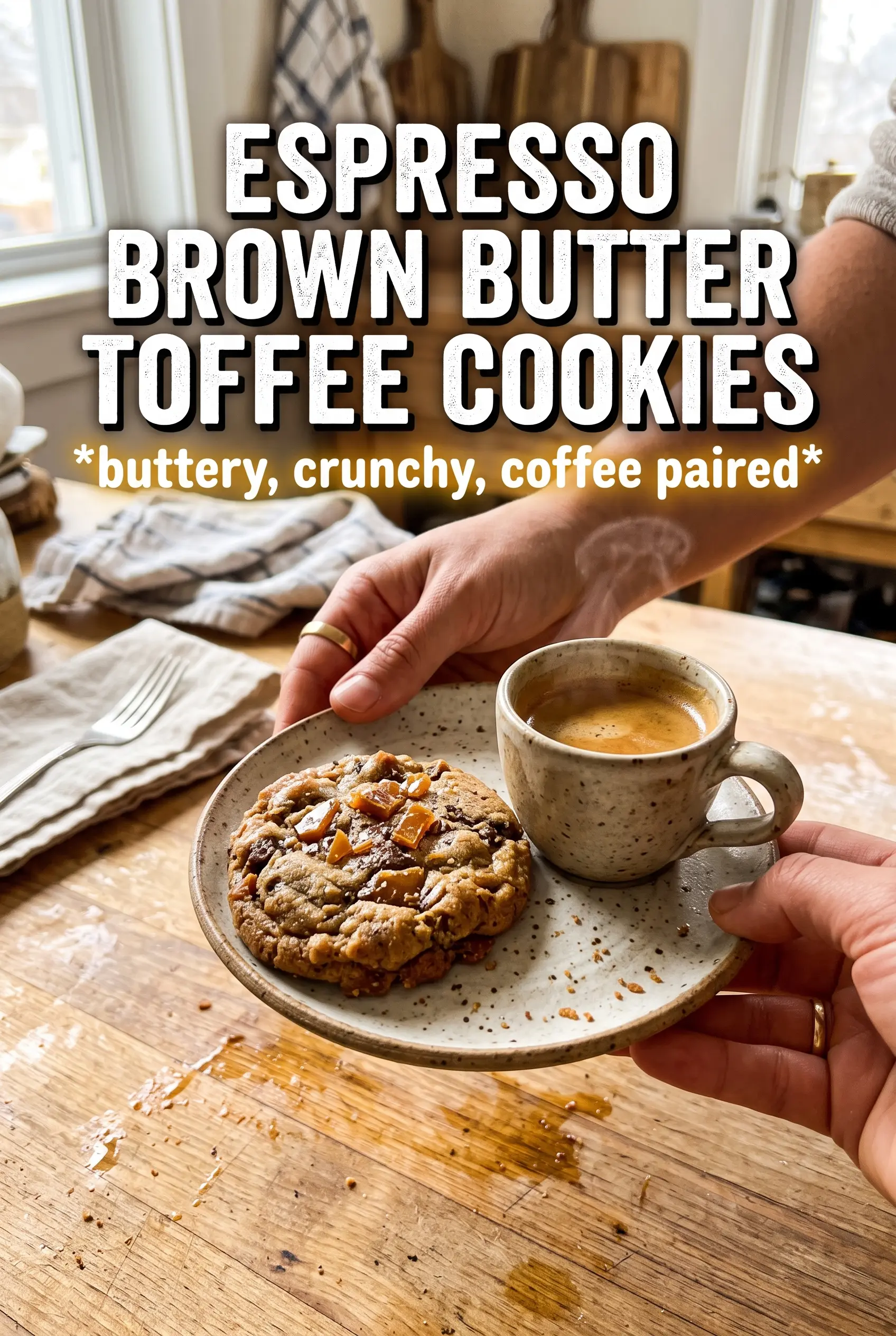
Espresso Brown Butter Toffee Cookies
Ingredients
Equipment
Method
- Brown the butter in a saucepan over medium heat until it turns golden with a nutty aroma, then pour into a bowl. Refrigerate until solid but scoopable, about 30 minutes, then continue only once the texture looks firm yet not brittle.
- Preheat the oven to 375F and line baking sheets with parchment. Prepare a baking station so the dough can be portioned right away.
- Whisk the all-purpose flour, baking soda, espresso powder, and salt until evenly combined. The mixture should look uniform in color with no espresso clumps.
- Beat the solidified brown butter with both sugars until creamy. The mixture should appear lighter and smooth before adding eggs.
- Add the eggs one at a time and beat after each addition, then mix in the vanilla extract. Stop mixing once the batter looks cohesive and glossy.
- Fold in the flour mixture until just combined. Fold gently so the dough remains thick and you don’t see dry flour streaks.
- Fold in the toffee bits and dark chocolate chips. Distribute them evenly so each scoop has visible pieces.
- Scoop the dough into 2-tablespoon rounds and space them on the lined baking sheets. Aim for consistent size so the bake time stays even.
- Bake at 375F for 10-12 minutes until the edges are golden but the centers look slightly underdone. Look for a set rim with a softer middle when you gently observe the surface.
- Sprinkle the cookies immediately with flaky sea salt right after baking. Cool on the pan for 5 minutes so the cookies firm up without overbaking.