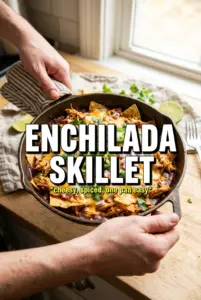
Enchilada skillet comes out with all the comfort of rolled enchiladas and none of the fussy assembly. The tortillas soften right in the sauce, the beef turns rich and savory, and the cheese melts into a bubbling top that scoops up neatly with a spoon. It’s the kind of dinner that disappears fast because every bite gets a little bit of everything.
What makes this version work is the order. The onions and spices get a quick turn in the pan first, which wakes up the cumin and chili powder before the sauce goes in. Then the tortilla strips simmer directly in the enchilada sauce instead of getting layered dry, so they absorb flavor instead of just sitting in the pan like filler. The end result is saucy, cohesive, and sturdy enough to serve without falling apart.
Below you’ll find the small choices that keep the skillet from turning watery or bland, plus a few smart swaps if you want to adjust it for what’s already in your pantry.
The tortilla strips softened just enough to feel like enchiladas, and the sauce thickened up perfectly instead of getting soupy. My husband went back for seconds before I’d even sat down.
Save this enchilada skillet for the nights when you want bold Tex-Mex flavor, melted cheese, and one pan to wash.
The Tortillas Need the Sauce, Not a Separate Layer
The biggest mistake with a skillet enchilada dish is treating the tortillas like pasta and expecting them to hold their shape on their own. They won’t. Corn tortillas need moisture and heat to soften properly, which is why they get folded into the sauce and pressed down instead of layered on top at the end. That simmer time turns them tender and gives the whole pan that classic enchilada texture without the rolling and filling.
Keep the heat at a steady simmer once the sauce goes in. If it boils hard, the tortillas can break down too fast and the pan turns pasty. If it barely warms through, the strips stay chewy in the center. You want the sauce thick enough to coat the back of a spoon and the tortillas soft enough that they blend into the beef and beans without disappearing completely.
What Each Ingredient Is Actually Doing in This Pan
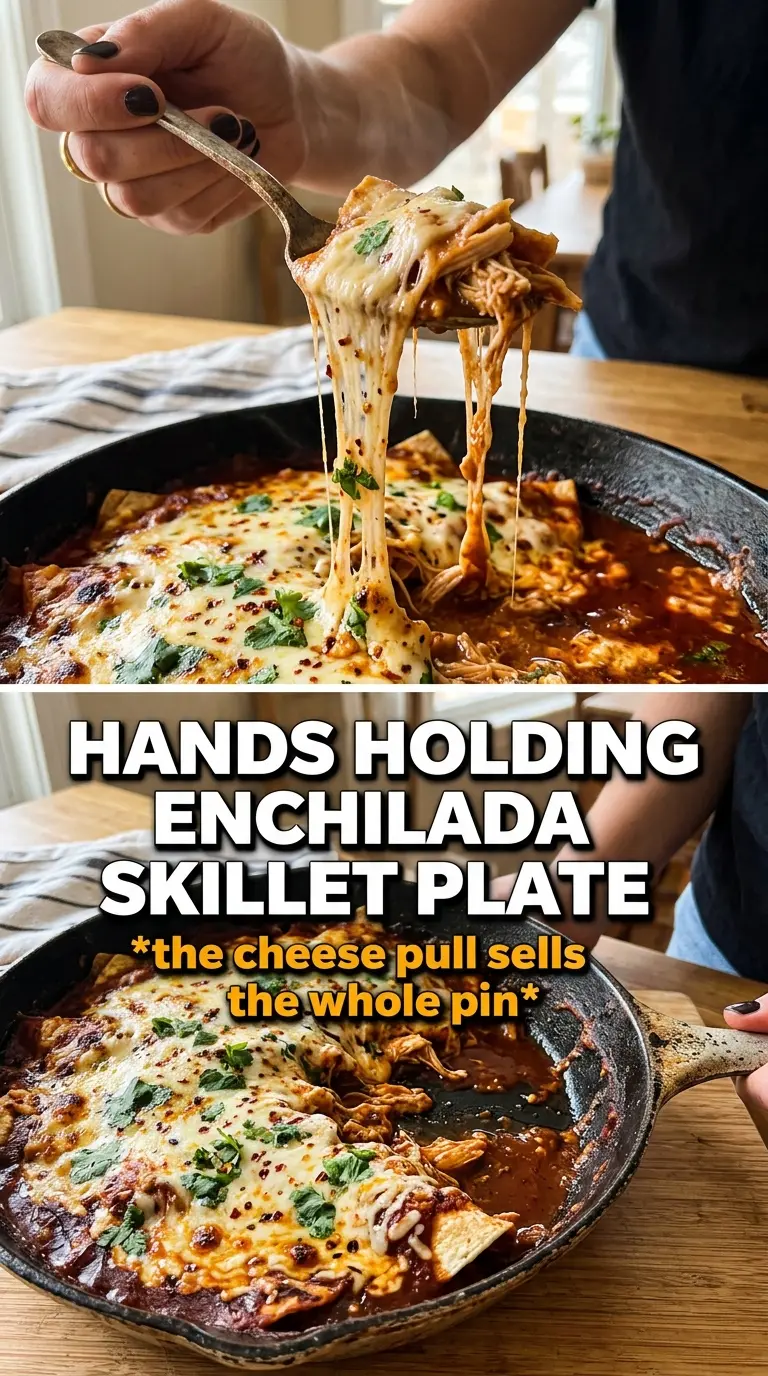
- Ground beef — This gives the skillet its savory base and enough fat to carry the spices. If you use very lean beef, the pan can taste a little dry unless you leave a spoonful or two of drippings in the skillet after browning.
- Red enchilada sauce — This is the backbone of the dish, so a decent canned sauce matters here. A mild sauce keeps the whole skillet balanced, while a hotter one will push the dish into a spicier finish without any extra work.
- Corn tortillas — Corn tortillas are the right choice because they soften into the sauce with a little bite left behind. Flour tortillas turn too soft and can make the skillet gummy.
- Black beans and corn — The beans make the dish heartier and give you some texture contrast, while the corn adds sweetness that keeps the sauce from tasting flat. Drain both well so they don’t water down the pan.
- Cheddar and mozzarella — Cheddar gives the top sharp flavor, and mozzarella gives you that melt and stretch. If you only use cheddar, the top gets a little drier and less gooey.
Building the Skillet So It Stays Saucy, Not Soupy
Brown the Beef Until the Pan Tells You It’s Ready
Cook the beef in a large oven-safe skillet until it loses its pink color and you see browned bits sticking to the bottom. That browning is flavor, so don’t rush it by cranking the heat high enough to steam the meat. Drain off the excess fat, but leave enough in the pan to carry the onion and spice work that comes next.
Wake Up the Onion and Spices
Add the diced onion and cook it until it softens and turns translucent at the edges, then stir in the garlic, cumin, and chili powder for just a minute. You’re looking for a fragrant, toasted smell, not darkened garlic. If the garlic burns here, the whole skillet picks up a bitter note that no amount of cheese can hide.
Let the Tortillas Drink the Sauce
Once the beans, corn, enchilada sauce, and tomatoes go in, stir until everything is evenly coated, then fold in the tortilla strips and press them down into the liquid. They need to be mostly submerged so they soften properly. Simmer for 8 to 10 minutes, and watch for the sauce to thicken slightly as the tortillas release starch and absorb flavor.
Broil Just Until the Cheese Bubbles
Scatter the cheese over the top and broil until it melts, bubbles around the edges, and picks up some golden spots. Don’t walk away from the oven at this point. Broilers go from perfect to scorched fast, and the goal is a melted top with a little color, not a burned cheese lid.
How to Adapt This When You Need to Change It Up
Make It Chicken Instead of Beef
Use shredded rotisserie chicken or cooked diced chicken in place of the beef. Since chicken doesn’t bring the same richness, keep a little extra of the enchilada sauce in the pan and don’t skip the cumin. The result is lighter but still hearty.
Dairy-Free Enchilada Skillet
Leave off the cheese or use a good melting dairy-free blend, and finish with avocado and cilantro instead of sour cream. You’ll lose a little of the creamy finish, but the skillet still tastes full and satisfying because the sauce and tortillas do the heavy lifting.
Make It Gluten-Free Without Changing the Method
This is already naturally gluten-free if your enchilada sauce is certified gluten-free. Corn tortillas hold up better than flour here anyway, so you don’t need to change the process at all. Just check the label on the sauce, since that’s the place gluten usually sneaks in.
Stretch It for a Bigger Crowd
Add another can of beans or a second half-pound of beef and use a larger skillet or a Dutch oven. The key is to keep the layer of tortilla strips thin enough that they can all touch the sauce. If the pan is overcrowded, the center stays bland and the edges overcook before the top is finished.
Storage and Reheating
- Refrigerator: Store leftovers in an airtight container for up to 4 days. The tortillas soften more as it sits, but the flavor gets even better.
- Freezer: It freezes well for up to 2 months, though the tortillas will be softer after thawing. Cool it completely, portion it into freezer-safe containers, and leave off the fresh toppings until serving.
- Reheating: Reheat covered in a 325°F oven or gently in a skillet with a splash of water or extra enchilada sauce. The common mistake is blasting it in the microwave until the edges dry out while the center is still cold.
Answers to the Questions Worth Asking
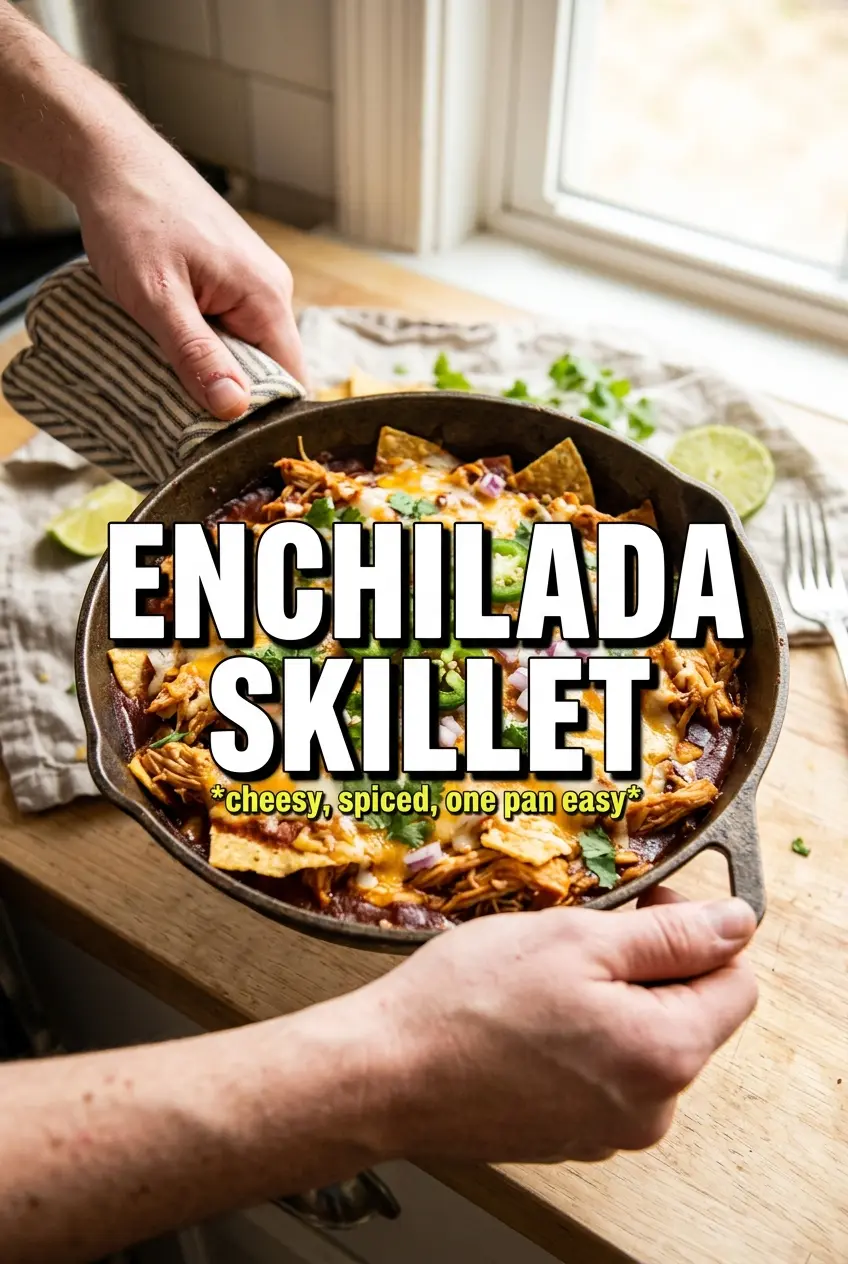
Enchilada Skillet
Ingredients
Equipment
Method
- Brown the ground beef in a large oven-safe skillet and drain the fat.
- Sauté the onion for 3 minutes, then add the garlic, cumin, and chili powder and cook for 1 minute.
- Add the black beans, corn, enchilada sauce, and diced tomatoes, then stir to combine.
- Fold in the tortilla strips and press them into the sauce, then simmer for 8-10 minutes until the tortillas soften.
- Scatter the shredded cheddar and mozzarella over the top, then broil for 3-4 minutes until bubbly and golden.
- Serve the skillet topped with sour cream, avocado, and cilantro.