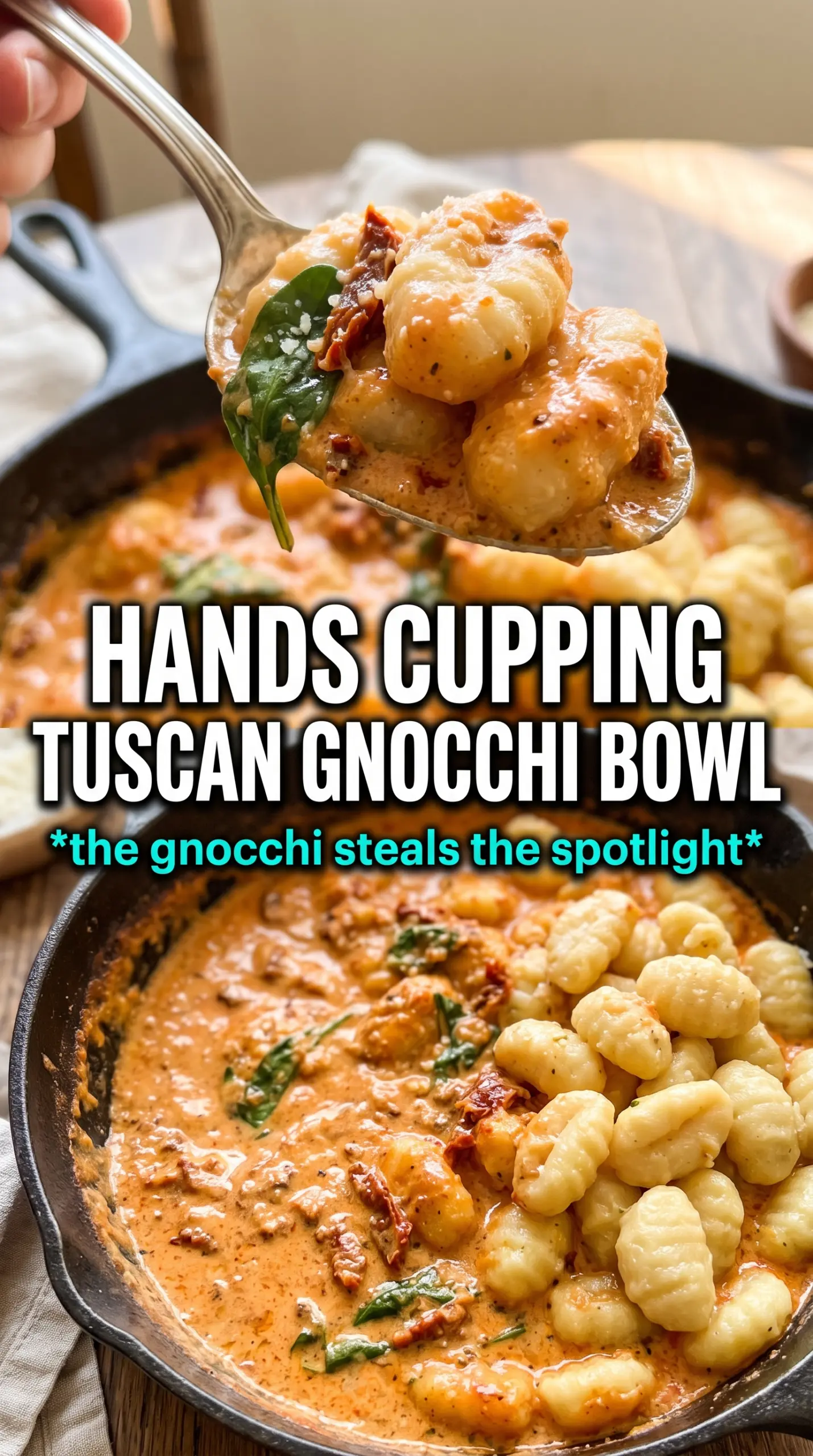
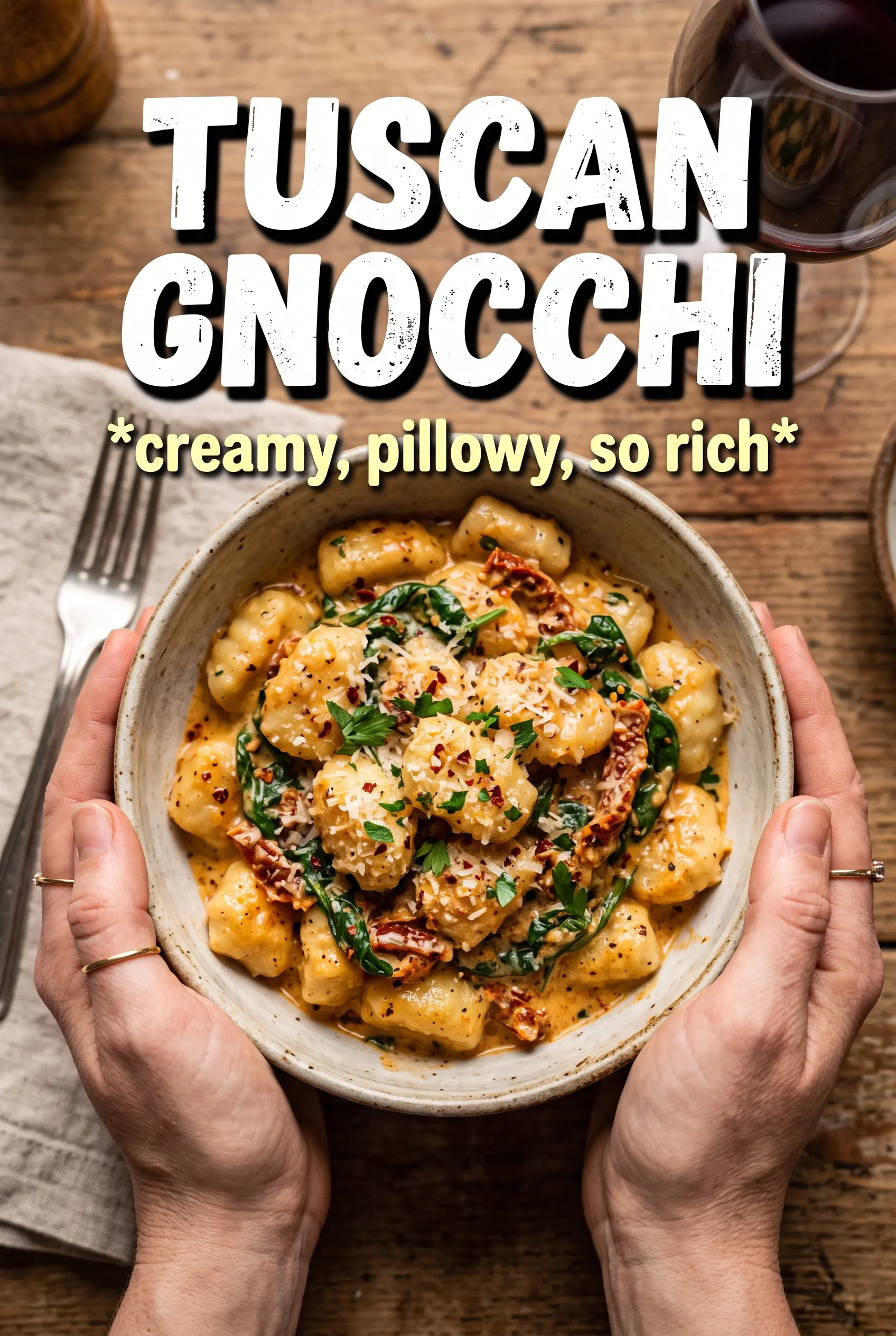
Golden-seared gnocchi tucked into a creamy skillet sauce is the kind of dinner that disappears fast because every bite hits something different: crisp edges, soft potato pillows, savory sausage, and a tomato-rich cream sauce that clings instead of sliding off. The spinach melts down just enough to soften the richness, and the parmesan pulls everything together without turning the pan heavy or gluey.
What makes this version work is the order. The sausage browns first, so the pan starts with flavor, and the garlic goes into the sun-dried tomato oil instead of plain butter or oil, which gives the sauce a deeper, more rounded base. The cream and broth simmer before the cheese goes in, so the sauce has time to thicken slightly before the gnocchi and spinach are added. That keeps the texture silky instead of broken or grainy.
Below, I’ve included the one pan detail that matters most, plus a few swaps that keep this Tuscan gnocchi flexible for different diets and whatever you’ve got in the fridge.
The sauce thickened up beautifully and the gnocchi stayed tender with those little browned edges. I used hot Italian sausage and the basil at the end made it taste like a restaurant skillet.
Keep this Tuscan gnocchi handy for nights when you want a creamy skillet dinner with crispy gnocchi, sausage, and basil in one pan.
The One Pan Move That Keeps the Gnocchi from Going Soft
Gnocchi can turn mushy fast if it sits too long in a thin sauce, especially after it’s been boiled separately and then left to steam. The trick here is to let the sauce come together first, then add the cooked gnocchi at the very end so it can finish in the skillet and absorb flavor without losing its shape. If you’ve ever ended up with a pot of swollen dumplings, that’s the difference.
Browned sausage matters more than people think. Those caramelized bits left in the pan give the cream sauce a savory backbone, and the sun-dried tomato oil carries the garlic so it blooms without scorching. Once the parmesan goes in, the heat should be low enough that the sauce smooths out instead of tightening into strings.
- Gnocchi — Shelf-stable potato gnocchi works best here because it cooks quickly and holds its shape in the skillet. Fresh gnocchi also works, but keep a close eye on it because it softens faster.
- Sun-dried tomatoes in oil — Use the oil from the jar for sautéing. It’s carrying a lot of the tomato flavor, and plain oil won’t give you the same depth.
- Parmesan — Grate it finely so it melts into the sauce instead of clumping. Pre-shredded parmesan can work in a pinch, but it won’t disappear as smoothly.
- Italian sausage — Hot or mild both fit. If you use turkey sausage, expect a lighter sauce and add a touch more oil if the pan looks dry after browning.
What Each Ingredient Is Actually Doing in This Recipe
- Primary ingredient (the star) — Quality matters most. Choose the best you can find.
- Cooking medium (oil, butter, or broth) — This carries flavors and prevents dryness.
- Seasonings (salt, pepper, spices, herbs) — Layer flavors so nothing overpowers. Build depth gradually.
- Aromatics (garlic, onion, herbs) — Cook with fat to bloom flavors. Become the foundation.
- Supporting ingredients — Complement the main ingredient without overpowering it.
- Sauce or liquid (if applicable) — Brings flavors together. Balance richness with acid.
- Acid (lemon, vinegar, wine, or other) — Brightens and prevents flat-tasting results.
- Final finish (garnish, glaze, or sauce) — Prevents one-dimensional taste and adds visual appeal.
Building the Sauce Before the Gnocchi Goes In
Brown the Sausage Until It Has Real Color
Cook the sausage in a large skillet over medium-high heat until it’s deeply browned and no longer pink. Don’t rush this part by stirring constantly; you want some pieces to sit against the pan long enough to take on color. If there’s a lot of grease left behind, drain most of it off, but leave a thin film for the garlic and tomatoes.
Bloom the Garlic in Tomato Oil
Add the minced garlic and chopped sun-dried tomatoes to the pan and cook for about 2 minutes. The garlic should smell sweet and fragrant, not sharp or burnt. If the garlic starts browning too fast, the heat is too high, and the sauce will pick up a bitter edge that never really goes away.
Simmer the Cream Until It Clings
Stir in the cream, broth, Italian seasoning, and red pepper flakes, then let the mixture bubble gently for about 4 minutes. You’re looking for a sauce that lightly coats the back of a spoon, not a heavy reduction. Keep the heat at a gentle simmer; a hard boil can make the cream separate before the parmesan has a chance to melt in smoothly.
Finish with Cheese, Gnocchi, and Spinach
Pull the pan back to low heat before stirring in the parmesan. Add the cooked gnocchi and the sausage, then fold in the spinach just until it wilts. Season at the end with salt and pepper because the sausage, parmesan, and sun-dried tomatoes already bring a lot of salt to the pan, and adding too much too early can push the dish over the edge.
How to Make This Tuscan Gnocchi Fit What’s in Your Kitchen
Make It Without the Sausage
Leave out the sausage and add an extra tablespoon of sun-dried tomato oil plus a handful of sautéed mushrooms or white beans. You’ll lose the meaty richness, but the pan still eats like a full dinner because the tomatoes, parmesan, and cream carry the weight.
Dairy-Free Version
Use a full-fat unsweetened coconut cream or a plain dairy-free cooking cream and swap the parmesan for a dairy-free hard-style cheese. The sauce will taste a little different, and it won’t have quite the same savory finish, but it still turns out creamy and spoonable.
Gluten-Free Check
Use gluten-free gnocchi and confirm your sausage and broth are gluten-free. The method doesn’t change, and this is one of the easiest ways to keep the dish safe without losing the texture that makes it work.
Stretch It for More People
Add another 1/2 cup broth and an extra handful of spinach if you want the skillet to feed more than four. The sauce stays balanced, but don’t double the cream unless you also increase the seasoning, or the dish can turn flat instead of rich.
Storage and Reheating
- Refrigerator: Store leftovers in an airtight container for up to 3 days. The gnocchi will absorb some sauce as it sits, so expect a thicker texture the next day.
- Freezer: This dish doesn’t freeze well. Cream sauces can separate and the gnocchi turns soft after thawing, so it’s better made fresh.
- Reheating: Warm it gently in a skillet over low heat with a splash of broth or cream. High heat is the main mistake here — it tightens the sauce and makes the gnocchi gummy before the center is hot.
Questions I Get Asked About This Tuscan Gnocchi
Tuscan Gnocchi
Ingredients
Equipment
Method
- Heat a large cast iron skillet over medium-high heat. Brown the Italian sausage, then drain and set aside.
- In the same skillet, sauté the garlic and sun-dried tomatoes for 2 minutes in the sun-dried tomato oil. Stir often until fragrant and lightly softened.
- Add the heavy cream, chicken broth, Italian seasoning, and red pepper flakes. Simmer for 4 minutes, then stir to blend.
- Stir in the parmesan until melted and the sauce looks smooth and thickened. Reduce heat to keep it gently warm.
- Cook the potato gnocchi according to package directions. Add the cooked gnocchi directly to the sauce.
- Return the sausage to the skillet, then add the baby spinach. Toss until wilted, then season with salt and pepper to taste.
- Top with fresh basil for serving. Serve immediately while the sauce is creamy.