Creamy butternut squash pasta gets its best texture when the sauce clings to every ridge of the pasta instead of pooling at the bottom of the bowl. In this version, savory sausage, wilted spinach, and a silky squash sauce turn into a full dinner that tastes like it took a lot more work than it did. The balance is what makes it worth repeating: sweet squash, salty parmesan, a little heat from red pepper flakes, and enough cream to keep everything smooth without feeling heavy.
The trick is building the sauce in the same skillet you used for the sausage. Those browned bits left behind give the squash puree a deeper, more savory base, and the reserved pasta water helps the sauce loosen and gloss the pasta instead of turning thick and pasty. I also like adding the spinach at the very end so it just wilts into the sauce rather than disappearing into mush. Keep reading for the little details that keep the sauce creamy, the pasta coated, and the sausage flavorful from the first bite to the last.
The sauce turned out silky and coated the rigatoni instead of getting watery, and the spinach stayed bright instead of overcooked. My husband asked if I could add this to our regular dinner list.
Save this creamy butternut squash pasta with sausage and spinach for a cozy, one-pan dinner with a silky sauce and a little heat.
The Step That Keeps the Sauce Creamy Instead of Gritty
The biggest mistake with squash pasta is rushing the sauce once the puree and cream go in. If the heat is too high, the dairy can separate and the parmesan can turn grainy before it melts into the squash. Keep the simmer gentle and steady. You want the sauce hot enough to blend, not boiling hard enough to break.
Another detail that matters here is the pasta water. That starchy liquid helps the sauce emulsify and cling to the rigatoni or penne, especially after the sausage goes back in. Add it a splash at a time, because too much will thin the sauce faster than the parmesan can tighten it back up. The finished dish should look glossy and loose enough to toss, not soupy.
What Each Ingredient Is Actually Doing In This Dish
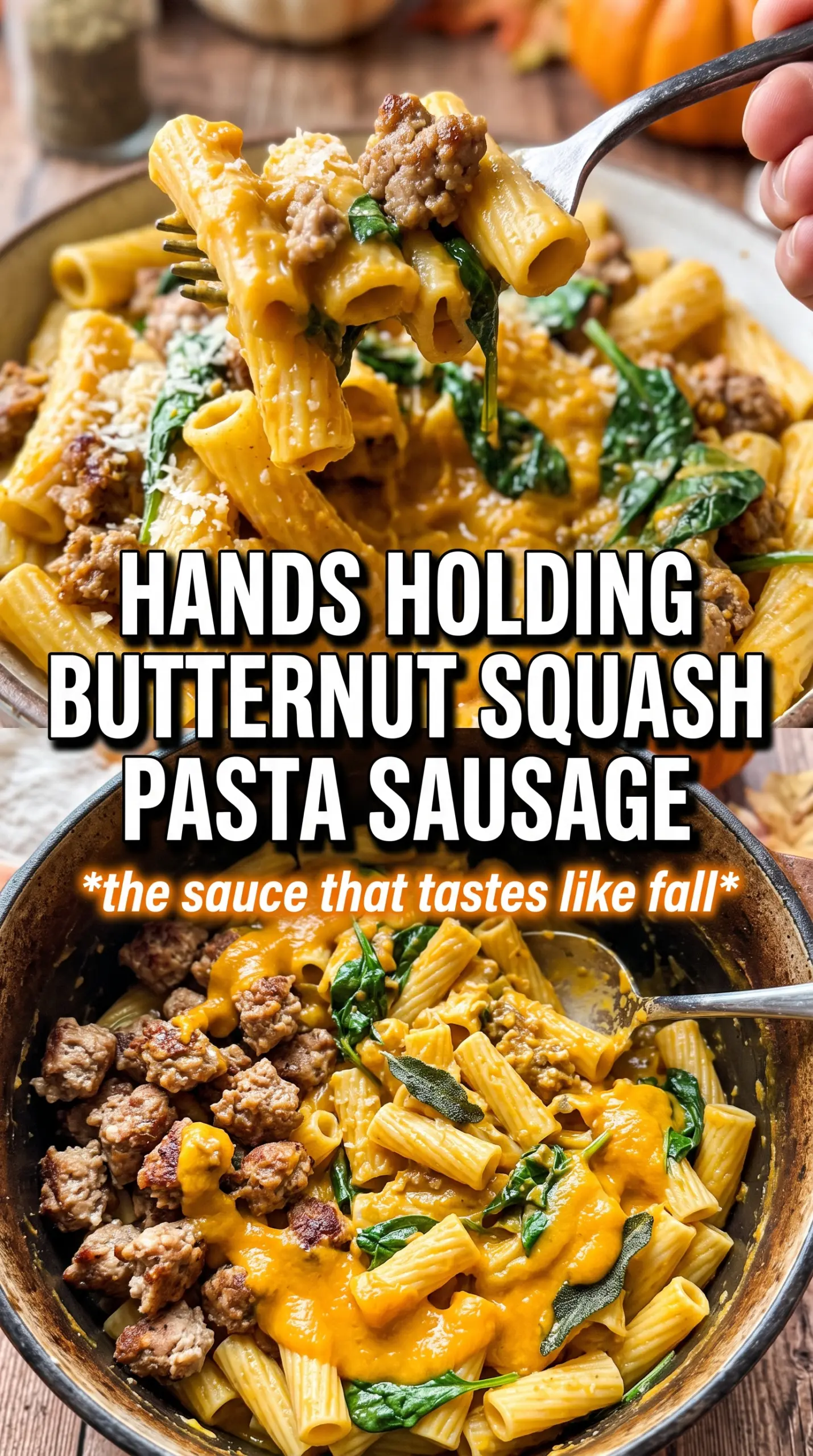
- Butternut squash puree — This is the base of the sauce, giving it body and sweetness without needing a roux. Homemade puree works, but a good canned puree is fine as long as it’s plain squash and not pie filling. If the puree seems thick, loosen it with a splash of pasta water before adding the cream.
- Heavy cream — Cream smooths out the squash and gives the sauce its rich finish. Half-and-half can work in a pinch, but the sauce will be lighter and a little less stable. If you use it, keep the heat low and don’t let the sauce boil.
- Italian sausage — This brings the salt, fat, and seasoning that keeps the sauce from tasting flat. Mild or hot both work; hot sausage gives the best contrast against the sweet squash. Drain off excess grease after browning so the sauce stays silky, not oily.
- Parmesan — Grated parmesan sharpens the sweetness of the squash and helps thicken the sauce. Freshly grated melts the cleanest and gives the best texture. Pre-grated parmesan can work, but it often melts less smoothly because of anti-caking agents.
- Rigatoni or penne — These shapes catch the sauce in the ridges and tubes. Long pasta won’t hold onto the sausage and squash as well. Cook it just to al dente, because it keeps softening once it hits the skillet.
- Baby spinach — Spinach adds freshness and a little color without changing the texture of the sauce. Add it at the very end so it wilts from the heat of the pan instead of collapsing into the sauce. If you want a sturdier green, chopped kale works too, but it needs a few extra minutes to soften.
Building the Sauce In the Same Pan as the Sausage
Brown the Sausage First
Start by cooking the sausage until it’s deeply browned and no longer pink. Those browned bits in the pan matter more than they look like they should. If the sausage steams instead of browns, the skillet is crowded or not hot enough, and you’ll lose the savory base that gives the sauce its depth. Once it’s cooked, set it aside and leave the drippings in the pan unless there’s an excessive amount of fat.
Soften the Onion Before the Garlic Goes In
Cook the onion in the same skillet until it turns translucent and picks up a little color at the edges. That takes a few minutes, and it’s worth it because raw onion tastes sharp in a cream sauce. Add the garlic and Italian seasoning only after the onion softens, since garlic burns fast and turns bitter if it sits in the pan too long. You’ll smell the seasoning bloom as soon as it hits the fat.
Let the Squash and Cream Simmer Gently
Stir in the squash puree, cream, nutmeg, and red pepper flakes, then bring everything to a low simmer. The sauce should bubble lazily, not boil hard. That slow simmer gives the squash time to smooth out and the parmesan time to melt later without clumping. If the sauce looks too thick before the pasta goes in, loosen it with a small splash of pasta water instead of more cream.
Finish with Pasta Water, Spinach, and Sausage
Once the parmesan melts into the sauce, add the drained pasta and a little reserved pasta water. Toss until every piece looks coated and glossy. Add the spinach last so it wilts in the heat already in the pan, then return the sausage and season with salt and pepper. If the sauce seems tight after sitting for a minute, another spoonful of pasta water will bring it back together.
Three Smart Ways to Adapt This Pasta
Make it dairy-free without losing the creamy texture
Use unsweetened full-fat coconut milk or an oat-based cooking cream in place of the heavy cream, then finish with a dairy-free parmesan style cheese if you have one. The sauce will still be smooth, but it will taste a little less sharp and a little more rounded. Keep the heat low, because plant-based creams can break if they boil hard.
Make it gluten-free with one simple pasta swap
Use your favorite gluten-free rigatoni or penne, but pull it from the water when it still has a little bite. Gluten-free pasta softens faster in the skillet, and overcooking it before it meets the sauce is how you end up with a gummy finish. Reserve a little extra pasta water, because gluten-free pasta water can be less starchy than the regular kind.
Swap the sausage for a vegetarian version
Use plant-based Italian sausage or browned mushrooms for a meatless version. Mushrooms add a deeper savory note, while plant-based sausage keeps the same familiar seasoning and texture. If you skip the meat entirely, add an extra pinch of salt and a little smoked paprika so the sauce doesn’t taste too sweet.
Storage and Reheating
- Refrigerator: Store leftovers in an airtight container for up to 4 days. The sauce will thicken as it chills.
- Freezer: It freezes, but the cream sauce can lose some of its smoothness after thawing. For the best texture, freeze portions flat and reheat gently, then stir in a splash of cream or milk.
- Reheating: Warm it on the stove over low heat with a splash of water, milk, or cream. Don’t blast it in the microwave for long intervals, or the sauce can separate before the pasta heats through.
Answers to the Questions Worth Asking
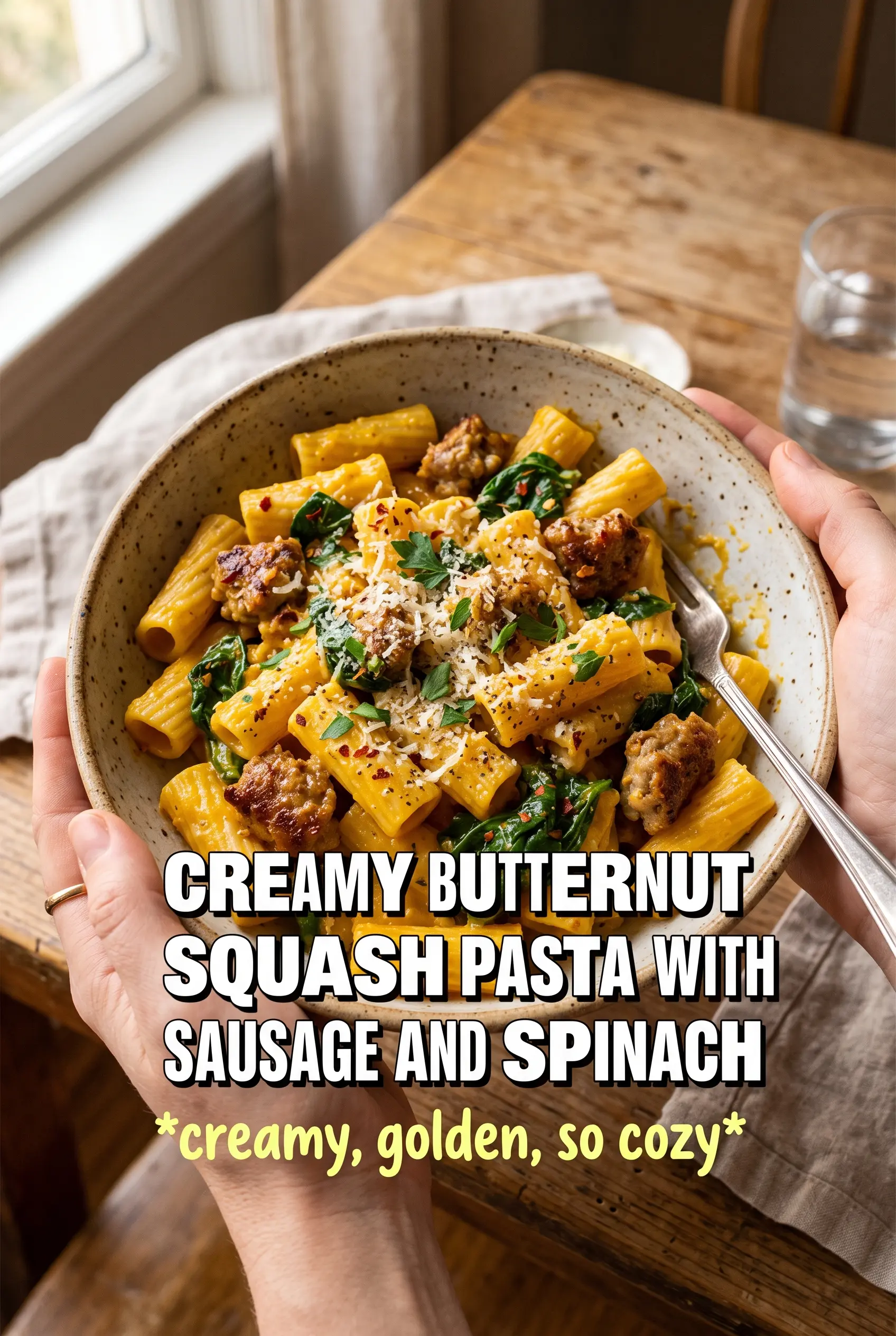
Creamy Butternut Squash Pasta With Sausage And Spinach
Ingredients
Equipment
Method
- Bring a large pot of salted water to a boil, then cook the rigatoni or penne until al dente, and reserve 1/2 cup pasta cooking water before draining (about 8–12 minutes depending on shape).
- Brown the Italian sausage in a large skillet over medium-high heat until cooked through, then drain the excess fat and set the sausage aside.
- In the same skillet, sauté the diced onion over medium heat for 4 minutes until softened.
- Add the minced garlic and Italian seasoning and cook for 2 minutes until fragrant.
- Stir in the butternut squash puree and heavy cream, then add the nutmeg and red pepper flakes and mix well.
- Simmer the sauce for 5 minutes, then add the grated parmesan and stir until smooth.
- Toss the drained pasta into the sauce along with the reserved 1/2 cup pasta cooking water.
- Add the baby spinach and toss for 1–2 minutes until wilted.
- Return the browned sausage to the pan and season with salt and pepper to taste, then toss once more to coat evenly.