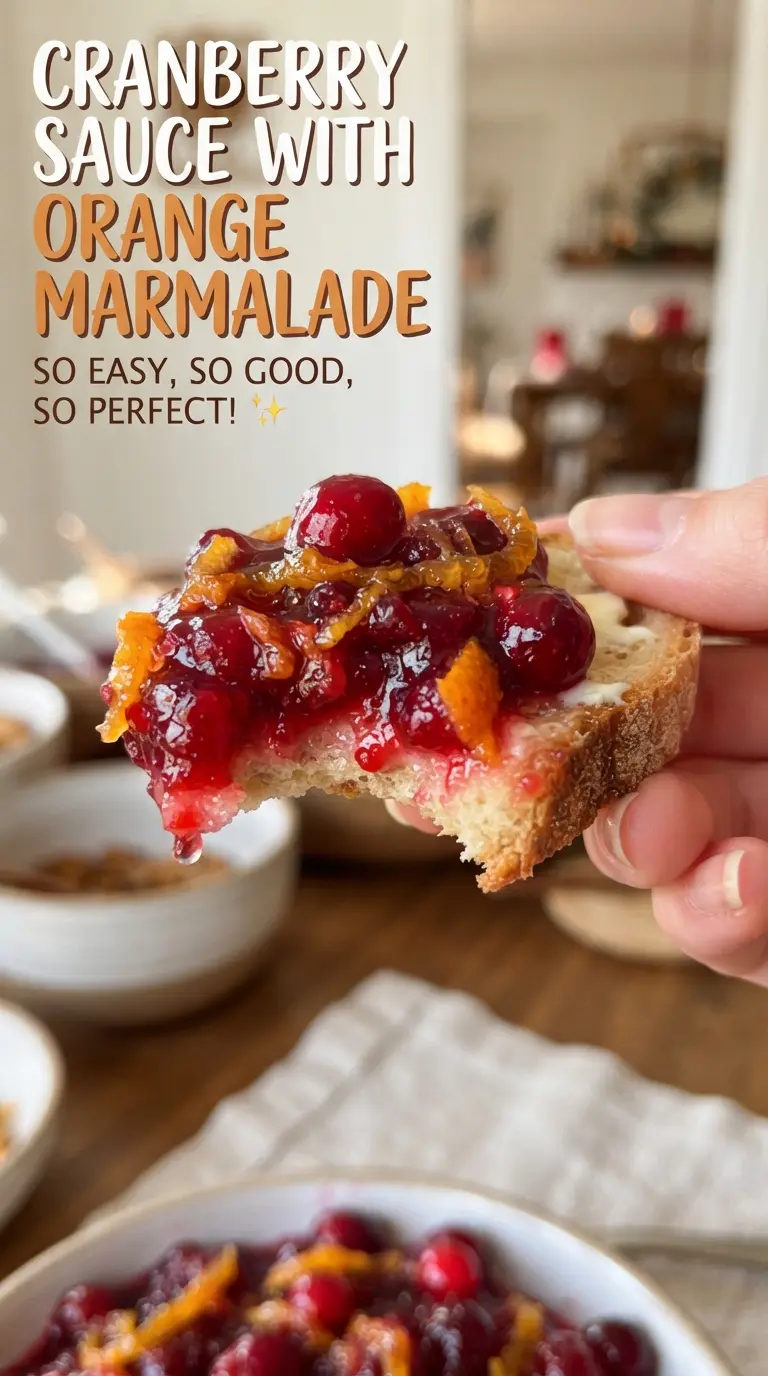
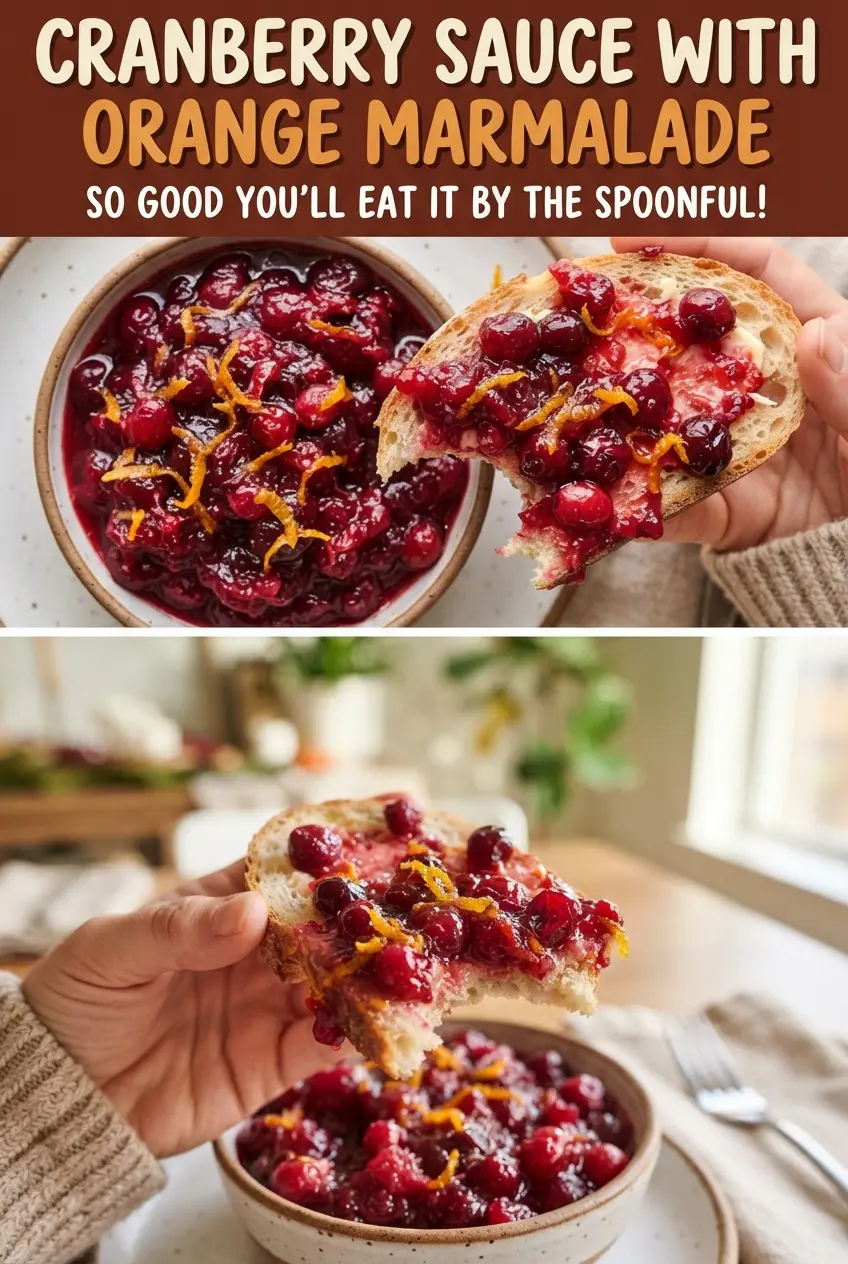
Cranberry sauce with orange marmalade lands in that sweet-tart middle ground that makes a holiday plate feel complete. The cranberries break down into a thick, jewel-toned sauce, while the marmalade brings in bright citrus peel and a little bitterness that keeps every bite from tasting flat. It’s the kind of side that wakes up turkey, pork, biscuits, and even leftover sandwiches the next day.
The trick here is starting with sugar and water first, then adding the cranberries once the syrup is boiling. That gives the berries an even chance to burst and release their natural pectin, which is what gives the sauce its body without needing cornstarch. The marmalade goes in near the end so the orange flavor stays vivid and the peel keeps its texture instead of disappearing into the pot.
Below, I’ll walk through the one part that matters most: how to know when the sauce is glossy enough to pull off the heat, plus a few smart swaps if you want it a little less sweet or a little more citrus-forward.
The marmalade gave it such a nice citrus finish, and the sauce set up beautifully after chilling. I used it on turkey sandwiches the next day and it was even better cold.
Save this cranberry sauce with orange marmalade for a bright, glossy side that turns an ordinary holiday plate into something worth repeating.
The Part Most Cranberry Sauces Get Wrong
The biggest mistake with cranberry sauce is pulling it off the heat before the berries have fully burst and the liquid has had a chance to thicken. Cranberries carry their own natural pectin, and that pectin only starts doing its job once the fruit splits and the mixture simmers long enough to turn from watery to glossy. If the sauce looks thin in the pan, don’t panic. It tightens a lot as it cools.
Orange marmalade changes the texture as much as it changes the flavor. It adds concentrated citrus and tiny strips of peel, but it also brings sugar, which means you don’t want to dump it in at the beginning or the sauce can taste overly sweet and lose its fresh cranberry edge. The late stir-in keeps the orange bright and the finish clean.
- Cranberries — Fresh cranberries hold their shape for the first few minutes, then burst into the sauce and create body. Frozen cranberries work too; use them straight from frozen and expect the simmer to take a minute or two longer.
- Orange marmalade — This is what gives the sauce its signature citrus lift and those little ribbons of peel. A good marmalade matters here because the peel is part of the texture, not just the flavor.
- Lemon juice — A small amount sharpens the sauce and keeps the sweetness in check. If your marmalade is already very tart, reduce the lemon slightly rather than skipping the citrus balance entirely.
- Sugar — Standard granulated sugar gives the cleanest sweetness and helps the sauce thicken smoothly. Honey works in a pinch, but it adds its own flavor and can make the sauce taste heavier.
What Each Ingredient Is Actually Doing in This Recipe
- Primary ingredient (the star) — Quality matters most. Choose the best you can find.
- Cooking medium (oil, butter, or broth) — This carries flavors and prevents dryness.
- Seasonings (salt, pepper, spices, herbs) — Layer flavors so nothing overpowers. Build depth gradually.
- Aromatics (garlic, onion, herbs) — Cook with fat to bloom flavors. Become the foundation.
- Supporting ingredients — Complement the main ingredient without overpowering it.
- Sauce or liquid (if applicable) — Brings flavors together. Balance richness with acid.
- Acid (lemon, vinegar, wine, or other) — Brightens and prevents flat-tasting results.
- Final finish (garnish, glaze, or sauce) — Prevents one-dimensional taste and adds visual appeal.
How to Get a Glossy Sauce Instead of a Watery One
Boil the Syrup First
Start by bringing the sugar and water to a full boil before the cranberries go in. That gives you an even base and helps the berries cook consistently instead of sitting in lukewarm liquid and softening unevenly. The syrup should look clear before the fruit hits the pan.
Let the Berries Burst on Their Own
Once the cranberries are in, keep the heat at a steady simmer and stir now and then. You’re waiting for most of the berries to split open and the liquid around them to turn deep red and slightly thicker. If you rush this stage, the sauce tastes flat and thin.
Stir in the Marmalade at the End
Add the marmalade, lemon juice, and salt after the berries have burst. The sauce should look loose but no longer watery, with a sheen on the surface and soft pieces of peel suspended throughout. Give it the final 2 to 3 minute simmer, then take it off the heat; overcooking after the marmalade goes in dulls the citrus and can make the sauce taste jammy instead of bright.
Chill for the Final Set
Pour the sauce into a bowl and let it cool completely before chilling. Cranberry sauce thickens a lot as it drops in temperature, so the texture in the refrigerator will be firmer than what you see in the pan. If it still looks a touch loose when warm, that’s exactly where it should be.
What to Change When You Want More Citrus or Less Sugar
Extra-Orange Version
Add 1 teaspoon orange zest with the marmalade if you want a brighter, more fragrant orange finish. The zest gives you fresh citrus oils on top of the cooked marmalade flavor, which makes the sauce taste less like jam and more like orange peel and berry.
Lower-Sugar Cranberry Sauce
Cut the sugar to 1/2 cup for a tarter sauce, but keep the marmalade amount the same so the texture still sets well. The result will be sharper and less candy-sweet, which works well if you’re serving it alongside rich meats or buttery sides.
Dairy-Free and Gluten-Free as Written
This recipe already fits both diets without any changes. Just check the marmalade label for ingredients if you’re serving someone with a strict allergy concern, since some brands include additives you may want to avoid.
Storage and Reheating
- Refrigerator: Store in a covered container for up to 1 week. It will thicken as it chills, so expect a spoonable, set texture rather than a pourable sauce.
- Freezer: Cranberry sauce freezes well for up to 2 months. Thaw it overnight in the fridge and stir before serving; the texture may loosen slightly, but the flavor holds up beautifully.
- Reheating: Serve it cold or let it come to room temperature. If you warm it, use low heat just until loosened; high heat can break down the citrus notes and make the sauce taste cooked-down.
Answers to the Questions Worth Asking
Cranberry Sauce with Orange Marmalade
Ingredients
Equipment
Method
- Bring sugar and water to a boil in a saucepan, stirring just until dissolved.
- Add fresh cranberries and simmer for 10 minutes, stirring occasionally until the berries burst.
- Stir in orange marmalade, lemon juice, and salt, making sure everything is fully combined.
- Simmer for 2-3 minutes until the sauce looks glossy and coats the back of a spoon, then remove from the heat.
- Cool the cranberry sauce to room temperature, then cover and chill until set before serving.