Cinnamon roll cookies hit the same warm, buttery note as a pan of bakery rolls, but they bake in a fraction of the time and land with a crisp edge, tender center, and a swirl that stays defined instead of melting into the dough. The best part is the contrast: each cookie tastes like the gooey middle and the lightly caramelized edge of a cinnamon roll at the same time.
This version works because the dough is handled like a slice-and-bake cookie, not a drop cookie. Chilling the logs keeps the spirals tight, and rolling the filling on softened butter instead of melted butter helps the brown sugar and cinnamon cling without leaking all over the parchment. The cream cheese glaze goes on while the cookies are still warm, so it settles into the nooks of the swirl instead of sitting as a heavy layer on top.
Below you’ll find the small details that matter most: how thin to roll the dough, how to keep the logs from flattening, and the simplest way to get a clean spiral every time.
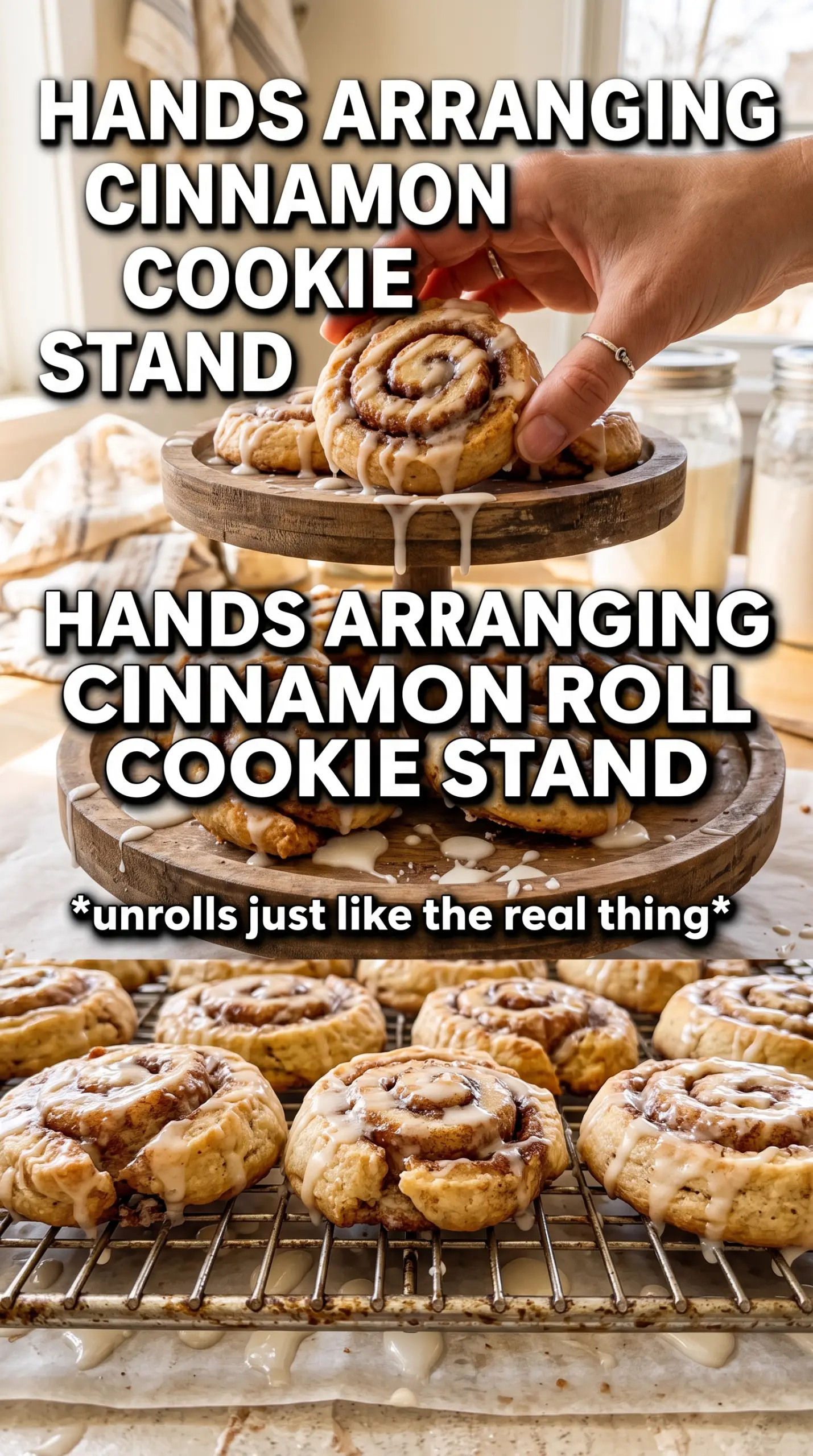
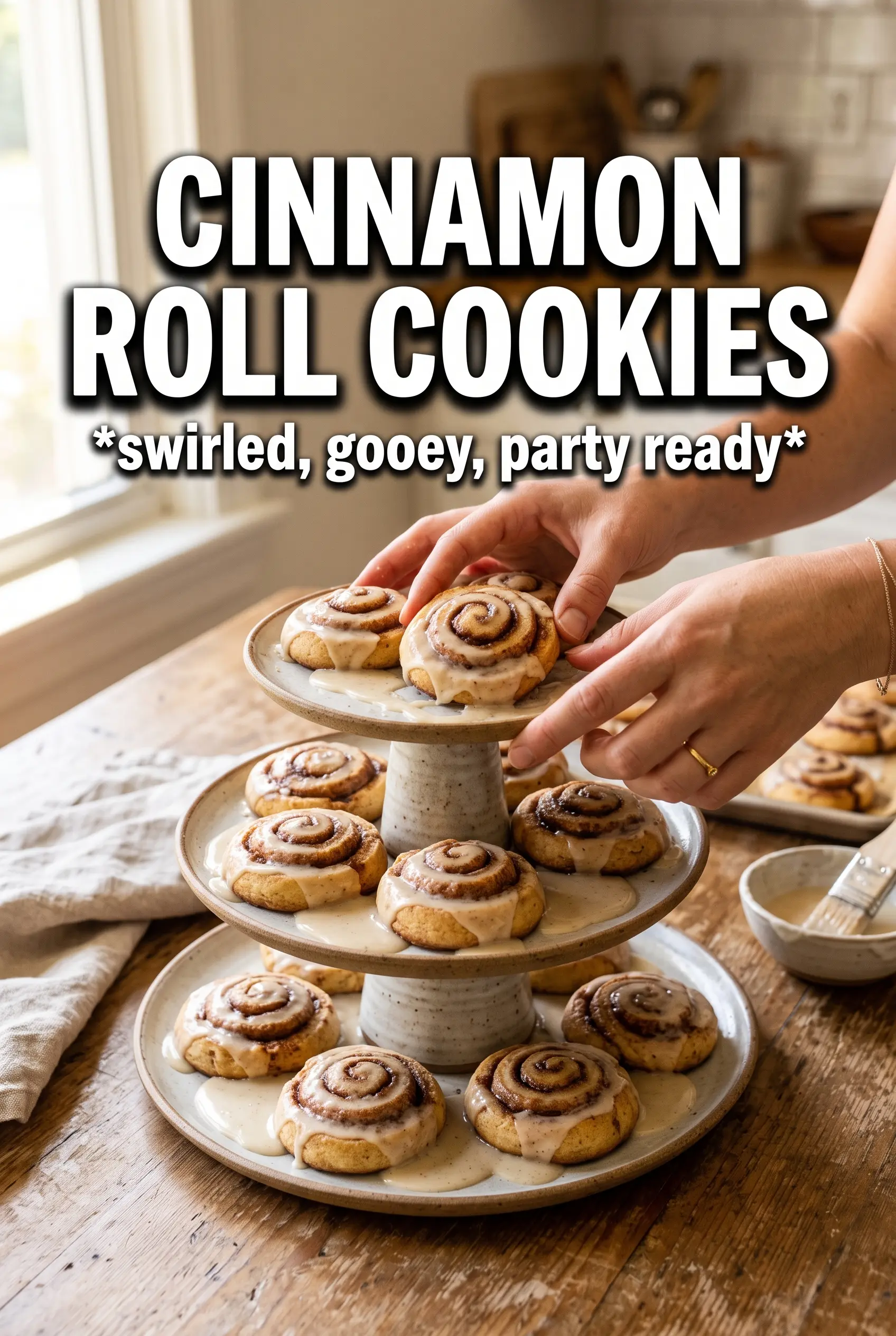
The swirl stayed neat after slicing, and the glaze melted just enough into the warm cookies without making them soggy. My kids picked the ones with the thickest cinnamon ribbon first.
Like these cinnamon roll cookies? Save them to Pinterest for the slice-and-bake treat with a true cinnamon swirl and cream cheese glaze.
The Spiral That Stays Put in the Oven
The biggest mistake with cinnamon roll cookies is treating the dough like a cinnamon roll filling and the filling like cookie batter. If the butter is too soft or the dough is too warm, the spiral smears before the cookies even hit the oven, and what should be a sharp ribbon turns into a muddy brown patch. Chilling the logs for a full hour gives the dough enough structure to slice cleanly and helps the cookies hold their shape as they bake.
The other thing that matters is how tightly you roll. A loose log leaves gaps, which means the filling shifts and leaks. Roll from the long side, keep the seam tucked underneath, and stop only when the log feels compact all the way through. That’s what gives you those neat cross-sections that look as good baked as they do raw.
What Each Ingredient Is Actually Doing in This Dough
- All-purpose flour — This gives the cookies enough structure to slice cleanly after chilling. Cake flour would make them too delicate, and bread flour would make them firmer than you want. Measure it lightly so the dough stays tender.
- Unsalted butter — You need softened butter for both the dough and the filling because it creams smoothly and spreads without breaking the spiral. Salted butter works in a pinch, but keep the dough salt as written so the cookies don’t taste flat.
- Brown sugar — This is what makes the cinnamon layer taste like the center of a real cinnamon roll. It also keeps the filling a little moist, which helps it melt into a ribbon instead of baking dry and sandy.
- Cream cheese — The glaze needs cream cheese, not just powdered sugar and milk, if you want that tangy bakery finish. Let it soften fully or you’ll end up with little lumps that never smooth out.
- Vanilla — Use it in both the dough and the glaze. That little overlap is what makes the whole cookie taste rounded instead of one-note sweet.
Building the Dough, Roll, and Glaze in the Right Order
Mixing the Cookie Dough
Beat the butter and sugar until the mixture turns pale and fluffy, then add the egg and vanilla before folding in the dry ingredients. That order matters because the creamed butter traps air, which keeps the cookies from baking up dense. Stop mixing as soon as the flour disappears; if you keep going, the dough gets tough and the spirals bake up heavy instead of tender.
Shaping the Cinnamon Spiral
Roll each half of the dough into a rectangle on parchment, aiming for an even thickness from edge to edge. Spread the softened butter all the way to the corners, then scatter the brown sugar and cinnamon in an even layer so every slice has the same filling. Roll from the long side and keep tension steady as you go; if the log loosens, the center gap opens and the spiral won’t hold.
Chilling for Clean Slices
Wrap the logs in parchment and chill them until they feel firm all the way through. If they’re still soft in the center, the knife will squish them and the rounds will flatten on one side. A sharp knife gives the cleanest cut, and wiping the blade between slices keeps the filling from dragging across the next cookie.
Baking and Finishing with Glaze
Bake just until the edges turn lightly golden and the centers look set but still pale. Overbaking steals the soft middle that makes these taste like cinnamon rolls instead of plain sugar cookies. Whisk the glaze until smooth, then drizzle it over the cookies while they’re warm enough to loosen it but not so hot that it runs straight off the sides.
How to Change the Batch Without Losing the Swirl
Dairy-Free Version
Use a plant-based butter that’s formulated for baking and a dairy-free cream cheese for the glaze. The cookies will still slice well, but the filling may be a little softer, so chill the logs until they’re firmly set before cutting.
Gluten-Free Swap
Use a 1:1 gluten-free baking blend with xanthan gum already included. The texture will be a little more delicate, so handle the dough gently and slice with a sharp knife after a full chill.
Extra-Strong Cinnamon Flavor
If you want a bolder filling, add another half tablespoon of cinnamon and keep the brown sugar the same. More cinnamon deepens the spice note, but too much can turn the filling dry and dusty, so don’t go overboard.
Storage and Reheating
- Refrigerator: Store baked cookies in an airtight container for 4 days. The glaze will soften the top cookie if they’re stacked while still warm, so let them cool completely first.
- Freezer: Freeze the unbaked logs tightly wrapped for up to 2 months. Slice them straight from the freezer and add 1 to 2 minutes to the bake time.
- Reheating: Warm baked cookies for 8 to 10 seconds in the microwave, just until the glaze loosens. Longer heating dries out the cookie and makes the filling greasy.
Answers to the Questions Worth Asking
Cinnamon Roll Cookies
Ingredients
Equipment
Method
- Beat the softened butter and granulated sugar until fluffy. Beat until the mixture looks lighter in color and holds a thick, creamy texture.
- Add the egg and vanilla extract, then beat until smooth. Mix just until no streaks remain.
- Fold in the all-purpose flour, baking powder, and salt. Mix until a cohesive dough forms with no dry pockets.
- Divide the dough into two equal halves. Keep one half covered while you roll the other.
- Roll one dough half into a 10x8 rectangle on parchment. Aim for an even thickness so the swirl bakes uniformly.
- Spread the rectangle with softened butter, then add the packed brown sugar and cinnamon. Cover the surface in an even layer for a clear spiral cross-section.
- Roll tightly from the long side into a log. Press gently along the seam to help it seal.
- Wrap the log in parchment and repeat with the second dough half. Refrigerate both logs for 1 hour.
- Preheat the oven to 350F. Line a sheet pan so the sliced cookies can bake without delay.
- Slice the chilled logs into 1/2-inch rounds. Place rounds on the sheet pan with space between for slight spreading.
- Bake for 10-12 minutes until the edges are just golden. Look for lightly set centers that still feel tender.
- Mix the cream cheese glaze ingredients until smooth. Drizzle the glaze over warm cookies right after baking.