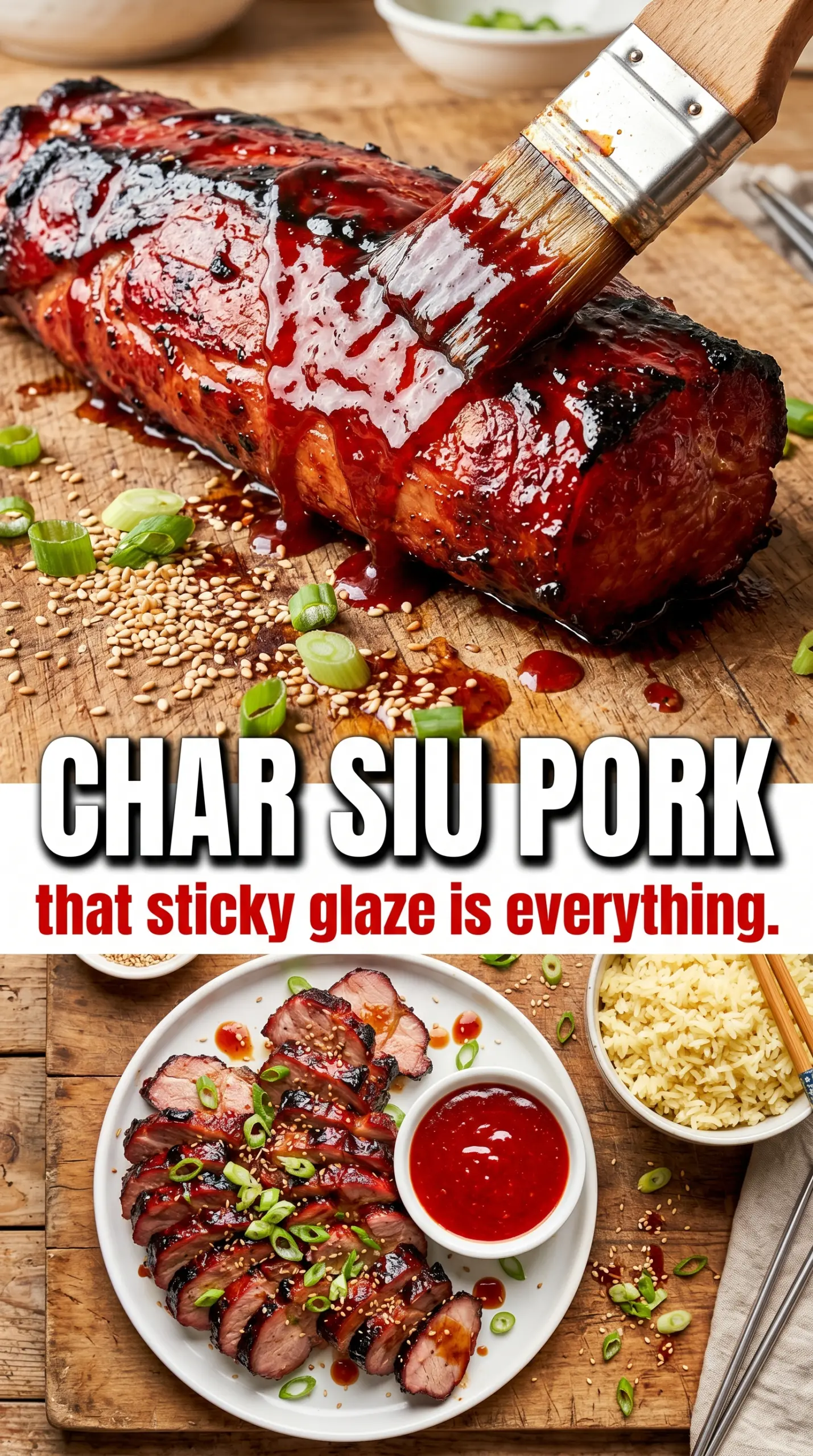
Char siu comes out best when the outside turns sticky and lacquered while the center stays tender and juicy. That sweet-salty glaze is what makes people reach for a second slice before the platter even hits the table. When it’s done right, the edges pick up a little char, the pork slices cleanly, and the whole kitchen smells like honey, garlic, and toasted spice.
The trick is in the balance of the marinade and the heat. Hoisin, soy sauce, honey, and brown sugar build the deep red-brown coating, while Chinese rice wine and five spice keep it from tasting flat or one-note. I like using a wire rack over a foil-lined tray so the pork roasts instead of steams, and brushing on a little reserved marinade near the end gives you that glossy finish without burning the sugars too early.
Below, I’m walking through the part that matters most: how to get that char siu shine without drying out the meat. I’ve also included smart swaps, storage notes, and the few questions that usually come up the first time people make it at home.
The glaze turned sticky and glossy exactly like the restaurant version, and the pork stayed juicy even after that last broil. I used shoulder and let it marinate overnight, and the flavor went all the way through.
Save this char siu recipe for the nights when you want glossy, sweet-savory Chinese BBQ pork with a caramelized edge.
The Broiler Finish Is What Gives Char Siu Its Real Look
Char siu isn’t just roasted pork with sauce on it. The last few minutes under the broiler are what create that glossy, lightly blistered surface people expect from the real thing. If you skip that high-heat finish, the glaze tastes fine but the pork looks flat and the edges stay soft instead of caramelized.
The other common mistake is roasting too low and too long. That can dry out lean cuts like tenderloin before the sugars have a chance to darken. A hot oven, a rack that lifts the pork away from the drippings, and a short broil at the end give you color without turning the meat leathery.
- Upper-third rack placement — This puts the pork close enough to the oven heat to caramelize fast. Any lower and the glaze takes longer to set, which means more time for the meat to dry out.
- Reserved marinade brushed with honey — That extra gloss helps the surface turn sticky and shiny. Brush lightly; too much sauce pools and burns before the pork is done.
- Wire rack over foil — The rack keeps the pork roasting on all sides instead of sitting in its juices. The foil-lined tray below catches drips and saves you from scrubbing burnt sugar off the pan.
What the Marinade Is Doing Besides Making It Sweet
- Hoisin sauce — This is the backbone of the glaze. It brings body, sweetness, and that deep fermented flavor you can’t quite fake with plain sugar.
- Soy sauce — Adds salt and color, but more importantly, it keeps the glaze from tasting syrupy. Use a standard all-purpose soy sauce here; low-sodium works if that’s what you keep on hand.
- Honey and brown sugar — These help the exterior caramelize and give char siu its shiny finish. Honey is the ingredient that really matters at the end, so don’t swap it for a dry sweetener if you want the same lacquered look.
- Chinese rice wine or dry sherry — This loosens the marinade and rounds out the sweetness. Dry sherry is the easiest substitute and works well; I’d rather use that than skip the wine component entirely.
- Five spice powder — A little goes a long way. It’s what gives char siu its recognizable warm, perfumed edge, so measure carefully or it can take over.
- Pork shoulder or tenderloin — Shoulder stays juicier and gives you a richer bite; tenderloin cooks faster and is leaner, so it needs closer attention in the oven.
Marinate, Roast, Glaze, and Broil Without Losing the Juiciness
Mix the marinade until it looks smooth
Stir the hoisin, soy sauce, honey, wine, oyster sauce, brown sugar, sesame oil, five spice, garlic, and optional food coloring until the sugar dissolves and the mixture looks glossy. If the honey clings in streaks, keep whisking for a few more seconds. A smooth marinade coats the pork evenly and helps the glaze set in a consistent layer.
Let the pork soak long enough to take on color
Coat the pork strips thoroughly, cover, and refrigerate for at least 4 hours, though overnight gives a deeper color and stronger flavor. Thin pieces can pick up plenty in a few hours, but the longer rest is what pushes the seasoning past the surface. If you rush this part, the pork will taste seasoned on the outside and plain in the middle.
Roast on a rack so the glaze can dry instead of puddling
Set the oven to 425°F and place the pork on a wire rack over a foil-lined baking sheet. That setup lets hot air move around the meat and keeps the bottom from steaming in its own juices. Roast for 15 minutes, then flip the strips so both sides pick up color at the same rate.
Brush on the finishing glaze at the right moment
Mix the reserved marinade with a spoonful of honey and brush it onto the pork after the first roast. This is where the shine happens. If you add it too early, the sugars can scorch before the pork is cooked through; too late, and it never turns into that sticky outer coat.
Broil just long enough for edges to blister
Finish under the broiler for 2 to 3 minutes, watching closely the whole time. You want darkened, caramelized spots, not a blackened surface. Pull it the second the edges start to char and the glaze bubbles; carryover heat will finish the job after it comes out of the oven.
How to Adjust Char Siu for the Cut You Have
Use pork shoulder for the juiciest result
Pork shoulder gives you a richer, more forgiving char siu because the extra fat keeps it tender during the roast. It’s the better choice if you want deeper flavor and don’t mind slicing around a little more connective tissue.
Use tenderloin when you want a leaner slice
Tenderloin cooks faster and slices neatly, but it can dry out if you leave it in the oven too long. Start checking a few minutes early and pull it as soon as the glaze is set and the center still feels just barely springy.
Skip the food coloring and lean on the caramelization
The optional red coloring only deepens the classic look; it doesn’t change the taste. If you leave it out, the pork will still have that mahogany glaze once the honey and soy hit the heat.
Make it gluten-free with one smart swap
Use a gluten-free soy sauce or tamari and check that your hoisin and oyster sauce are certified gluten-free. The flavor stays close to the original, and the glaze still thickens and browns the same way.
Storage and Reheating
- Refrigerator: Store leftovers in an airtight container for up to 4 days. The glaze will firm up a bit in the fridge, but the flavor deepens overnight.
- Freezer: Char siu freezes well. Slice it first, then freeze in a sealed bag or container for up to 2 months so you can pull out only what you need.
- Reheating: Warm it gently in a covered skillet with a splash of water, or in a low oven until just heated through. High heat dries out the edges and makes the sugar in the glaze taste burnt instead of glossy.
Questions I Get Asked About This Recipe
Chinese BBQ Pork (Char Siu)
Ingredients
Equipment
Method
- Mix hoisin sauce, soy sauce, honey, Chinese rice wine or dry sherry, oyster sauce, brown sugar, sesame oil, five spice powder, red food coloring (optional), and minced garlic until smooth.
- Coat the pork shoulder or tenderloin strips thoroughly in the marinade, cover, and refrigerate for 4–8 hours or overnight, until the meat is deep red and glossy.
- Preheat oven to 425°F, with a rack in the upper third and a foil-lined baking sheet on the rack below to catch drips.
- Place the marinated pork strips on a wire rack over the sheet and reserve the marinade.
- Roast for 15 minutes, until the surface looks set and the glaze starts to darken at the edges.
- Flip the pork, brush with the reserved marinade mixed with a spoonful of honey, and return to the oven.
- Roast 12–15 more minutes at 425°F, until the edges are caramelized and the glaze turns lacquered mahogany-red.
- Broil for 2–3 minutes for deeper char, watching until the glaze bubbles and develops darker spots.
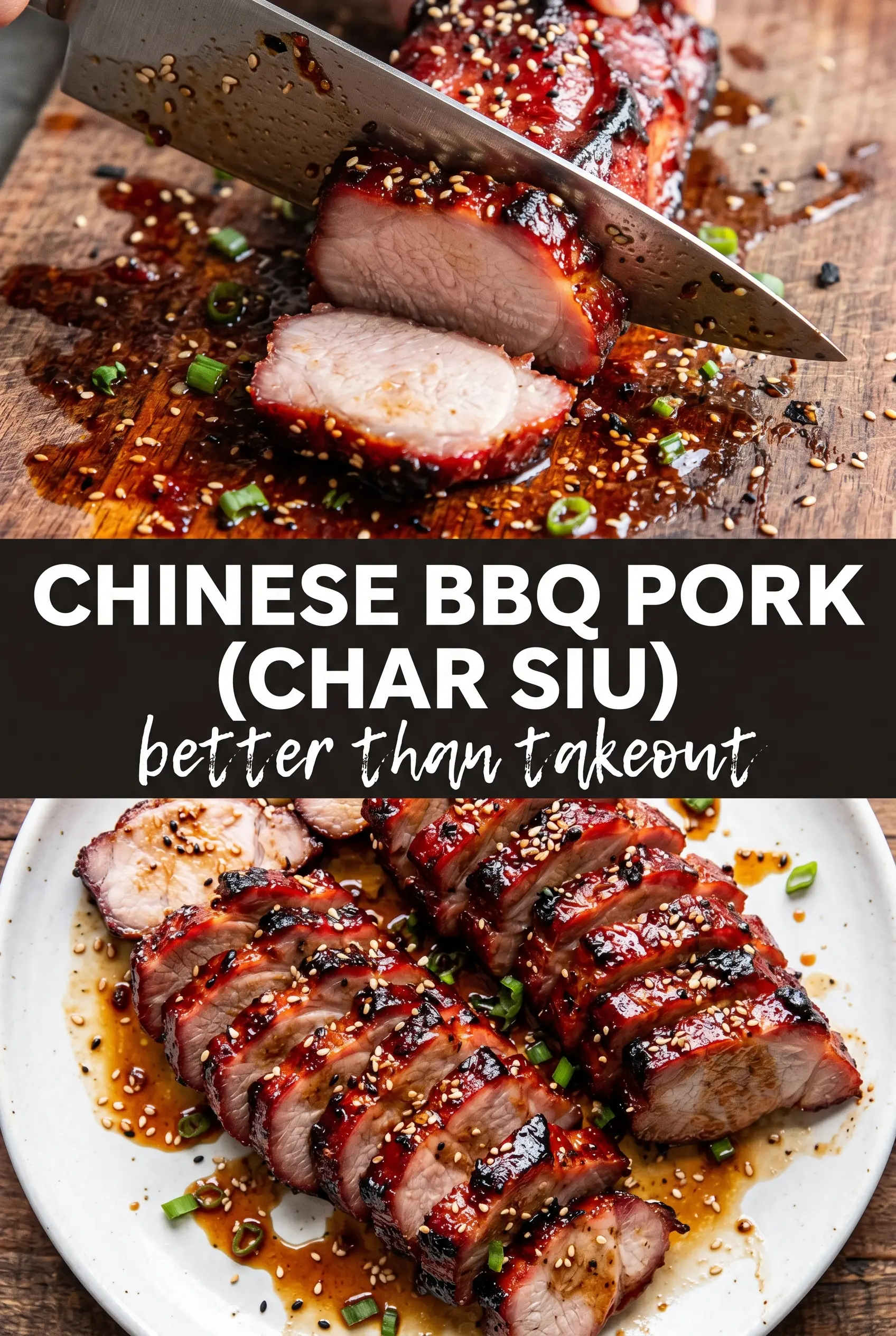
- Slice and serve immediately, showing a tender pink interior under the shiny red lacquer.