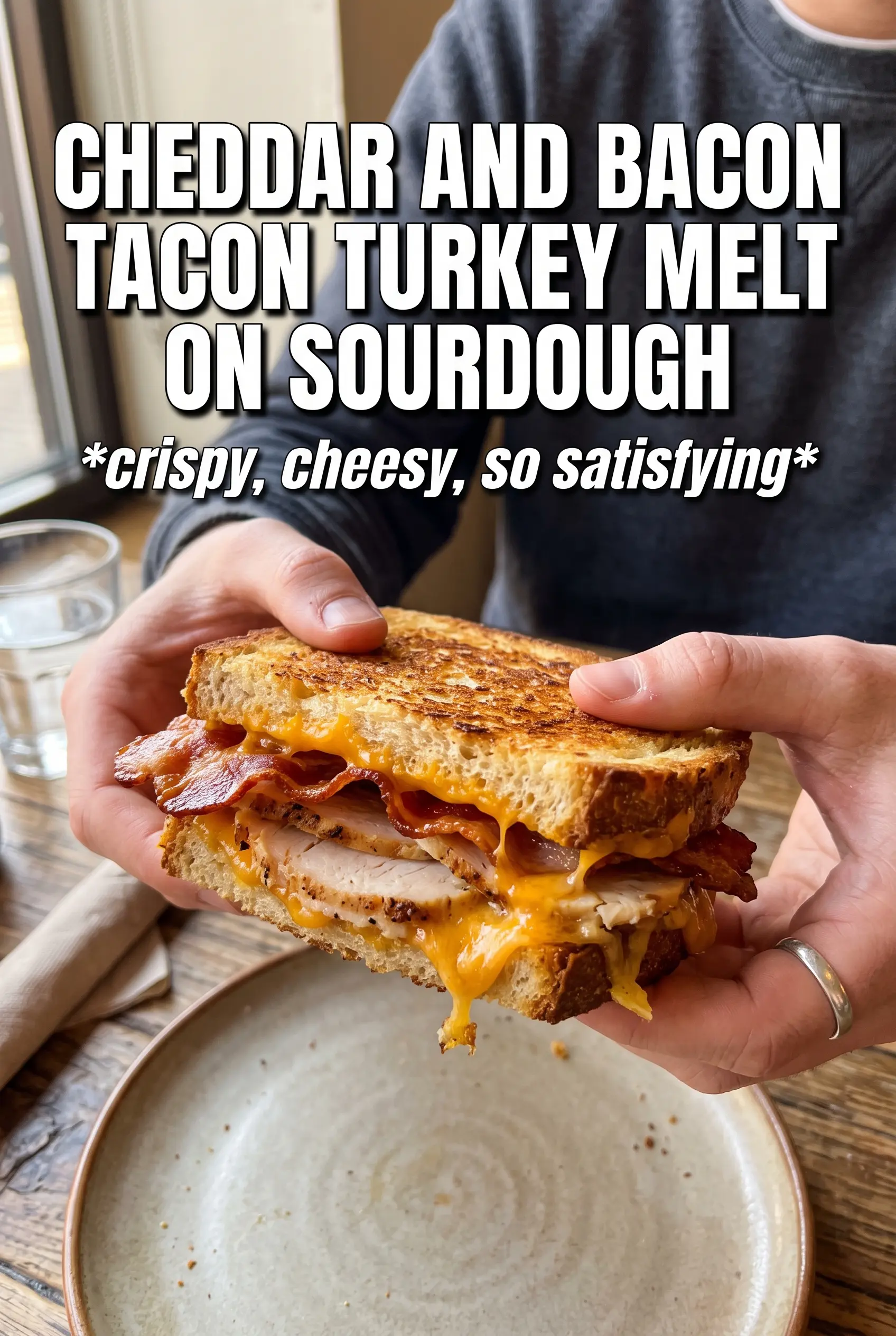
Golden sourdough, sharp cheddar, crisp bacon, and warm turkey make this sandwich hit all the right notes: crunchy on the outside, melty in the middle, and sturdy enough to hold together without turning soggy. The Dijon and mayonnaise split does more than add flavor. It gives each half of the sandwich a different kind of richness, so every bite lands with a little tang, a little creaminess, and plenty of salt from the bacon.
The real trick is building the melt in the right order. The cheddar needs to sit directly against the turkey so it can soften into the filling instead of sliding off the bread, and the buttered sourdough needs medium heat so it browns before the cheese scorches. Add the tomato and arugula after cooking, not before. That keeps the bread crisp and the greens fresh.
Below, I’ve included the small details that keep the sandwich from going greasy or dry, plus a few smart swaps if you want to change up the cheese, bread, or greens.
The sourdough stayed crisp and the cheddar melted all the way through the turkey without making the bread greasy. My husband kept saying the Dijon on one side and mayo on the other made it taste like a deli sandwich and a grilled cheese at the same time.
Like this cheddar and bacon turkey melt? Save it to Pinterest for the days when you want a crispy sourdough sandwich with a proper melty center.
The Sandwich Gets Soggy When the Heat Is Too Low
Grilled sandwiches fail in one of two ways: the bread burns before the cheese melts, or the bread stays pale and picks up too much oil before it ever browns. Medium heat is the sweet spot here. It gives the sourdough time to toast deeply while the cheddar softens, and it keeps the butter from scorching into bitter spots.
The other mistake is loading the sandwich with cold fillings straight from the fridge and expecting the cheese to catch up. Crispy bacon is fine, but if the turkey is ice-cold, the middle stays tight and the bread overcooks while you wait. Let the bacon cool just enough to handle, and keep the layers even so the sandwich presses flat instead of bulging and splitting.
What Each Layer Is Doing in This Melt
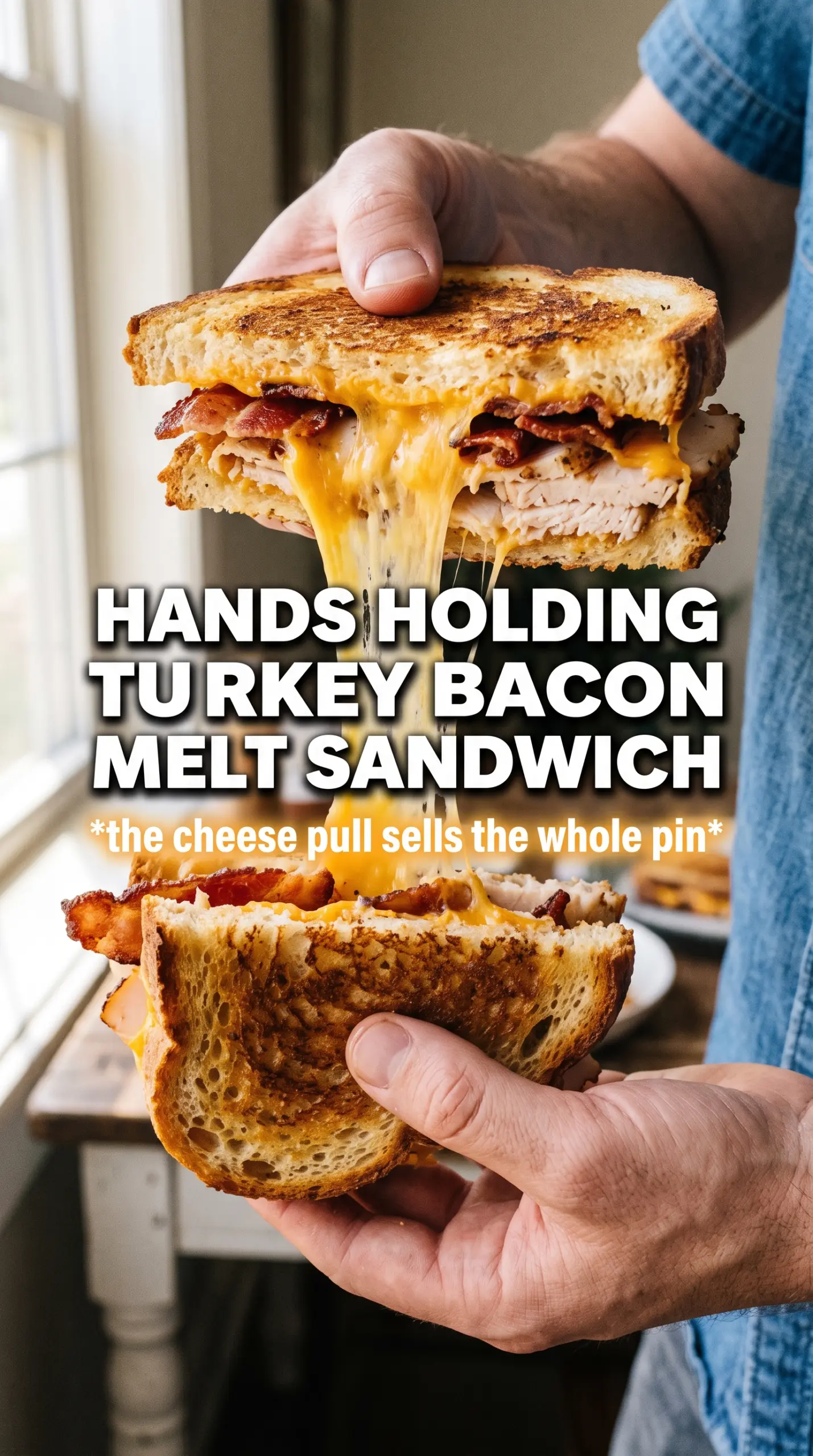
- Sourdough bread — The tang and sturdy crumb hold up to the cheese, bacon, and tomatoes without collapsing. A soft sandwich bread will go limp here. If you need a swap, use another dense bread like country loaf or Texas toast, but keep the slices substantial.
- Sharp cheddar — This is the cheese that gives the sandwich its edge and melts into a real layer instead of disappearing into the filling. Mild cheddar works, but it won’t have the same bite. Slice it evenly so it melts at the same rate across the whole sandwich.
- Turkey breast — Deli turkey is the backbone and should be layered in folds, not flat sheets, so the sandwich eats juicy instead of thin. Thicker slices hold up better than paper-thin ones. If yours is very lean, the cheddar and mayo keep the sandwich from tasting dry.
- Bacon — Crispy bacon gives the sandwich its salty crunch. Thick-cut bacon is worth using because it stays audible after grilling instead of turning leathery. Drain it well so the sandwich doesn’t pick up extra grease.
- Dijon mustard and mayonnaise — The Dijon brings sharpness and the mayo adds richness plus a better browning surface on its side of the bread. Swapping both for plain mayo makes the sandwich milder and less interesting. Spread them evenly so neither side overwhelms the filling.
- Arugula and tomato — These go in after grilling for freshness and contrast. If you add them before cooking, the tomato steams the bread and the greens wilt into nothing. Use ripe but firm tomato slices and pat them dry first.
Building the Melt So the Bread Stays Crisp
Butter and season the bread first
Spread softened butter on one side of every slice so the bread browns evenly the second it hits the skillet. Season lightly with salt and pepper only if your bacon and cheddar are on the mild side; otherwise the fillings already bring plenty of salt. If the butter tears the bread, it’s too cold, and the surface won’t brown as smoothly.
Stack the filling on the Dijon side
Spread Dijon on half the slices and mayonnaise on the other half, then build the turkey, bacon, and cheddar on the Dijon side. That puts the tangiest layer inside the sandwich and gives the cheese a chance to melt over the meat. Keep the filling centered so it doesn’t ooze out and burn in the pan.
Toast low and steady
Set the sandwiches butter-side down in a skillet over medium heat and cook until the bottoms are deep golden before flipping. Pressing lightly with a spatula helps the bread make full contact, but don’t smash it flat or the filling will squeeze out. If the bread is browning too quickly, lower the heat and give the cheese a few extra minutes to catch up.
Finish with the fresh layers
Once the cheddar is fully melted and the second side is golden, open each sandwich and add the arugula and tomato. Close it back up right away so the greens stay crisp from the residual heat instead of wilting into the cheese. Serve immediately while the crust is still crackly.
Three Ways to Work This Sandwich Around What You Have
Make it gluten-free with sturdy sandwich bread
Use your favorite gluten-free loaf, but choose one that toasts well and has some structure. Softer gluten-free breads can fall apart under the weight of the filling, so keep the slices thick and cook a little more gently to give the crust time to set.
Swap the cheddar for a creamier melt
Monterey Jack or provolone will melt a little smoother and taste milder than sharp cheddar. You’ll lose some of the bite, so keep the Dijon in place to balance the richness.
Use chicken or ham instead of turkey
Thin-sliced rotisserie chicken or ham both work well here. Ham makes the sandwich saltier and a little closer to a deli melt, while chicken gives you a milder base that lets the bacon and cheddar stand out more clearly.
Storage and Reheating
- Refrigerator: Store assembled sandwiches without the arugula and tomato for up to 2 days. The bread softens a bit, but it still reheats well.
- Freezer: I don’t recommend freezing the finished sandwich. The tomatoes and greens turn watery, and the bread loses its crisp texture after thawing.
- Reheating: Reheat in a skillet over low to medium-low heat, covered for the first minute to help the cheese warm through. The biggest mistake is blasting it in the microwave, which makes the bread chewy and the bacon soft.