Caribbean jerk smoked pork comes off the smoker with a deep spice crust, a clean smoke ring, and meat that pulls apart in long, juicy strands. The shoulder takes on heat, sweetness, and all the earthy backbone you want from jerk, while the smoke rounds out the edges instead of covering them up. When it’s done right, every bite tastes bold without being muddy, and the bark has enough texture to stand up to a fork.
The trick is giving the marinade time to work into the scored pork and then cooking low enough that the sugar, thyme, allspice, and peppers have time to settle into the meat without scorching. Scotch bonnets bring the heat, but the brown sugar and soy sauce keep the marinade balanced and help the bark darken. Fruit wood is a good match here because it supports the spice without turning the pork bitter.
Below, you’ll find the part that matters most for this style of pork: how to get the bark set, how to know when the shoulder is truly ready to pull, and a few smart swaps if you need to adjust the heat or cook it a different way.
The bark set up beautifully and the pork pulled at 200°F exactly like you said. I used fruit wood and the smoke came through without burying the jerk spices.
Pulled Caribbean jerk smoked pork with that dark spice crust is a keeper for sandwiches, bowls, and island-style plates.
The Part Most Jerk Pork Gets Wrong: Heat Without Balance
Jerk pork turns flat when the marinade leans too hard on heat and not hard enough on aromatics, salt, and smoke. Scotch bonnets bring the fire, but they need thyme, allspice, garlic, lime, and a little sugar to give the pork depth instead of just burn. That balance is what makes the crust taste layered after six hours in the smoker instead of sharp and one-note.
Scoring the shoulder matters more than people think. Those cuts let the marinade sink below the surface, which helps season the thicker parts of the roast that would otherwise taste underdone even when the center is finished. If the bark gets dark early, the smoker is running a little hot or the sugar in the marinade is exposed on the surface instead of being worked into the meat.
What Each Ingredient Is Doing in This Jerk Marinade
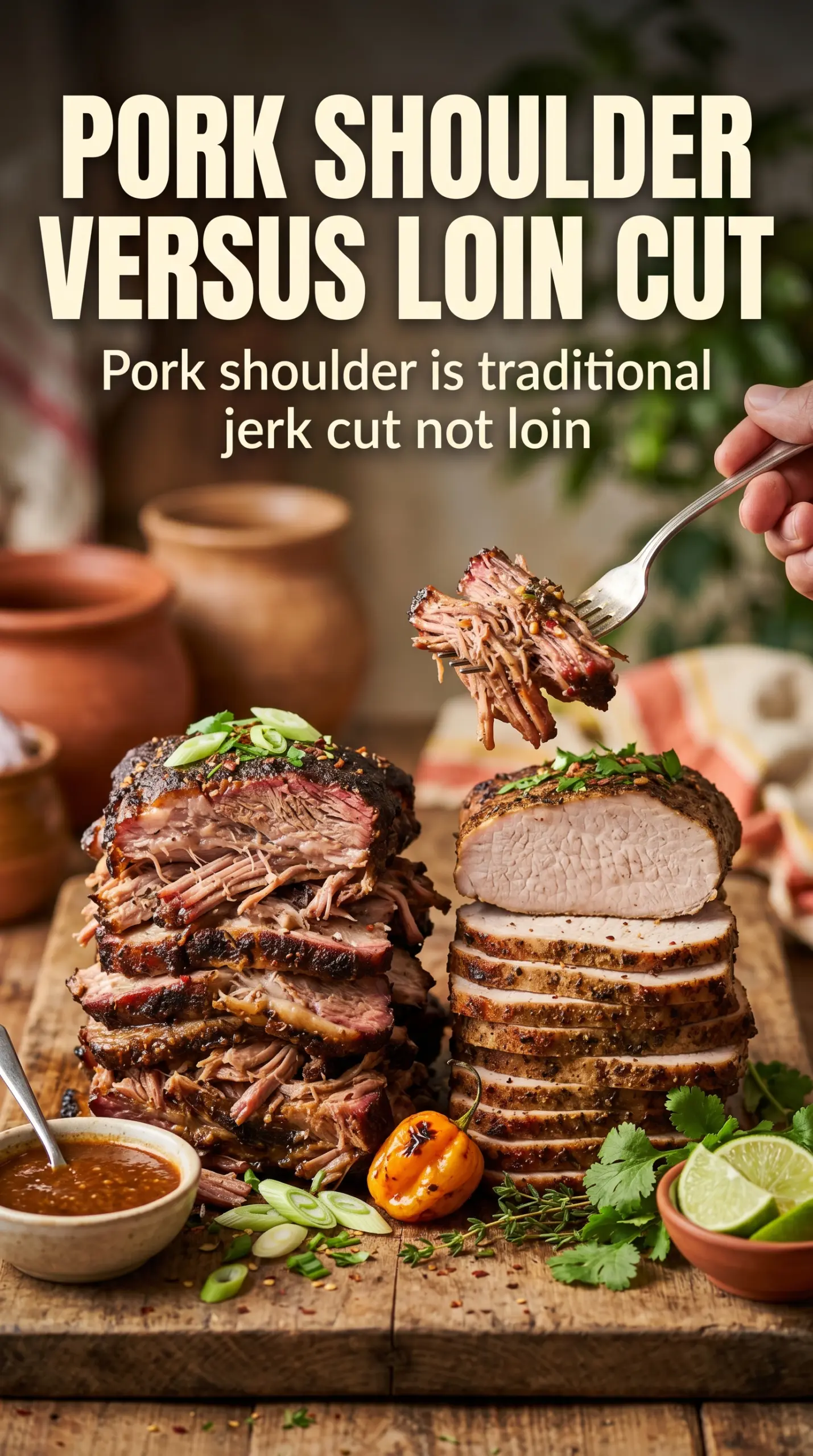
- Pork shoulder — This cut has enough fat and connective tissue to stay juicy through a long smoke. Leaner cuts dry out before the bark and texture have time to develop.
- Scotch bonnet peppers — These bring the classic jerk heat and a fruity sharpness that you can’t fully fake with milder chiles. If you need less fire, seed them well and use one or two less rather than swapping in a totally different pepper.
- Fresh thyme, allspice, cinnamon, and nutmeg — This is the backbone of the seasoning. Dried thyme can work in a pinch, but fresh thyme gives the marinade a brighter, more aromatic finish that survives the smoke.
- Brown sugar — It helps the marinade cling and builds the bark color. Granulated sugar won’t add the same molasses depth.
- Soy sauce and lime juice — Soy adds salt and umami, while lime cuts through the richness and keeps the pork from tasting heavy. If you need a gluten-free version, use tamari in the same amount.
- Vegetable oil — It helps the blended marinade coat the pork evenly and keeps the spice paste from feeling dry. You don’t need a lot, just enough for the mixture to spread into the scored surface.
Getting the Bark Set Before the Pork Turns Tender
Blending the Marinade Until It Grabs
Blend everything until the garlic, peppers, and herbs turn into a thick paste with only tiny flecks left. You want it pourable enough to spread, but not watery. If the marinade looks thin, the pork will drip instead of hold onto the seasoning, and the bark won’t get the same concentrated crust. Taste it before it hits the meat; it should be sharply seasoned because the pork will dilute it.
Scoring and Coating the Shoulder
Cut shallow crosshatches across the fat cap and thickest parts of the shoulder, then work the marinade into every line with your hands. Don’t just smear it over the outside. The scored surface gives you more grip, more seasoning, and more bark. Cover the pork and refrigerate it overnight so the salt, lime, and spices have time to penetrate instead of sitting on the surface.
Smoking Low and Letting the Bark Build
Set the smoker between 225 and 250°F and use fruit wood for a clean, slightly sweet smoke. Put the pork on and leave it alone for the first few hours so the surface can dry and darken. If you keep opening the lid, the temperature swings and the bark stays soft. The pork is ready for the finish when the outside is deep brown and the internal temperature is climbing steadily but the roast still feels firm in the middle.
Knowing When It’s Ready to Pull
Cook until the internal temperature reaches 195 to 203°F and a probe slides in with little resistance. Pork shoulder can sit at 190°F and still feel tight, which is why temperature alone isn’t the whole story. Rest it for at least 30 minutes before pulling. If you shred it too soon, the juices run out onto the board instead of staying in the meat.
How to Adjust This Jerk Pork for Heat, Diet, or a Different Cooker
Milder Jerk Pork
Seed the scotch bonnets carefully and use just one or two peppers if you want the flavor more than the burn. You’ll still get the thyme, allspice, and lime character that makes jerk taste like jerk, but the finish will be friendlier for people who don’t chase heat.
Gluten-Free Version
Swap the soy sauce for tamari in the same amount. Everything else stays the same, and the marinade still gets the salt and umami it needs without changing the texture of the bark.
Oven Finish After Smoking
If your smoker runs out of time or weather gets in the way, move the pork to a 275°F oven after the smoke has taken hold. You won’t get the same smoke flavor, but you’ll keep the cooking moving without drying out the exterior.
Storage and Reheating
- Refrigerator: Store pulled pork for up to 4 days. The bark softens a little, but the flavor holds well.
- Freezer: Freeze in portions for up to 3 months with a little of the juices to keep it from drying out. Thaw overnight in the fridge before reheating.
- Reheating: Warm covered in a low oven or on the stovetop with a splash of reserved juices. High heat dries out pulled pork fast and makes the edges leathery.
Answers to the Questions Worth Asking
Caribbean Jerk Smoked Pork
Ingredients
Equipment
Method
- Add green onions, scotch bonnet peppers, garlic, fresh thyme, brown sugar, allspice, black pepper, cinnamon, nutmeg, soy sauce, lime juice, and vegetable oil to a blender and blend until smooth.
- Taste the marinade carefully and adjust only if your heat tolerance allows, keeping in mind the pork will mellow the spice slightly.
- Score the pork shoulder deeply, cutting in a crosshatch pattern so the marinade can get into the cuts.
- Rub the jerk marinade all over the scored pork shoulder, pressing into the cuts and covering the surface evenly.
- Refrigerate the pork shoulder overnight (at least 8 hours) so the jerk spices penetrate fully.
- Prepare the smoker for low-and-slow cooking at 225-250°F using fruit wood for the smoky aroma.
- Smoke the pork for 6-8 hours until the internal temperature reaches 195-203°F, forming a dark, charred bark.
- Let the smoked pork rest for 30 minutes so the juices redistribute for easier pulling.
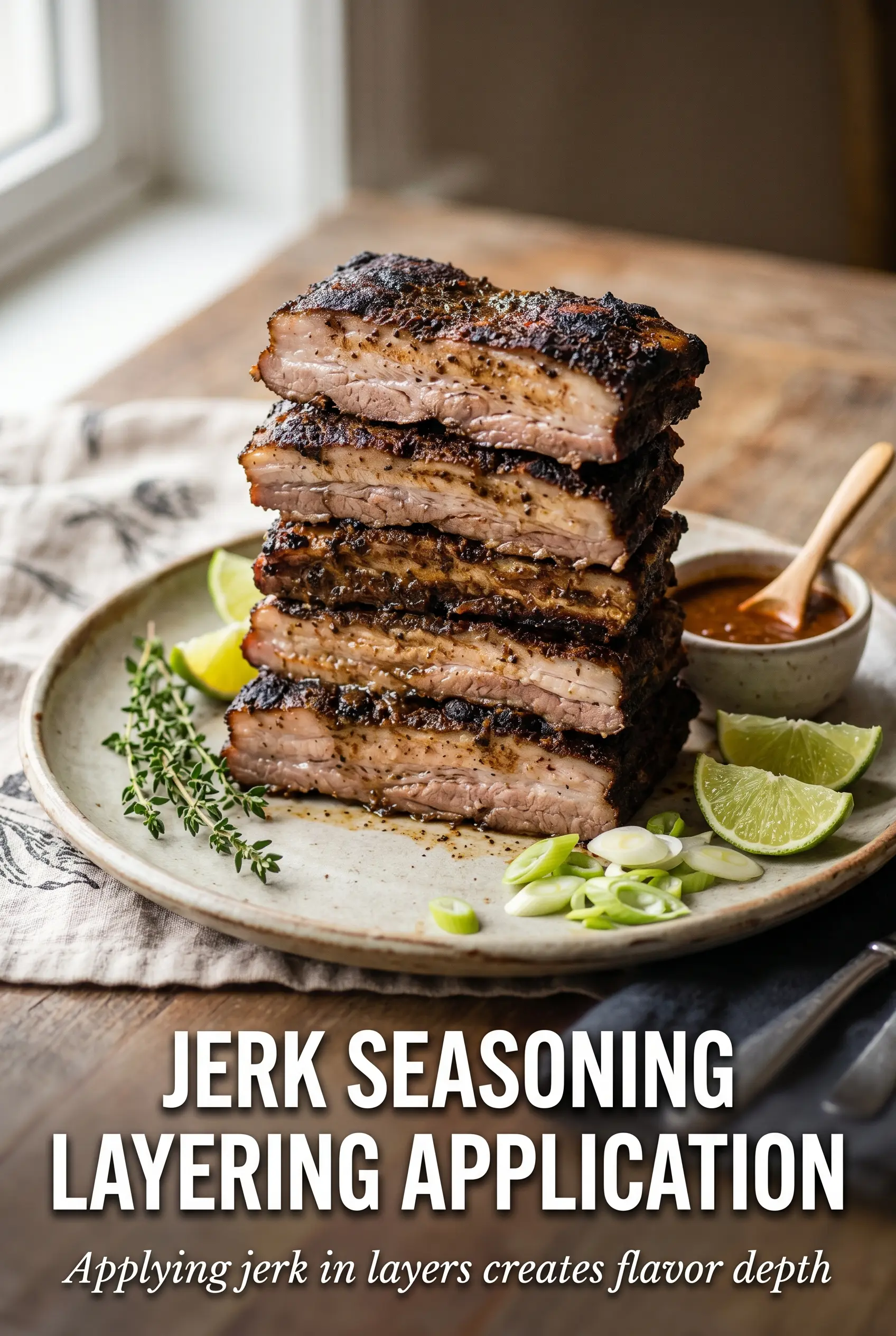
- Pull the pork and serve as pulled jerk pork, showing the visible spice crust and smoke ring.