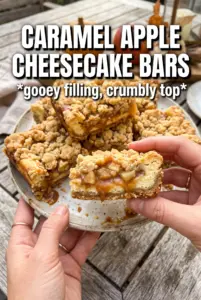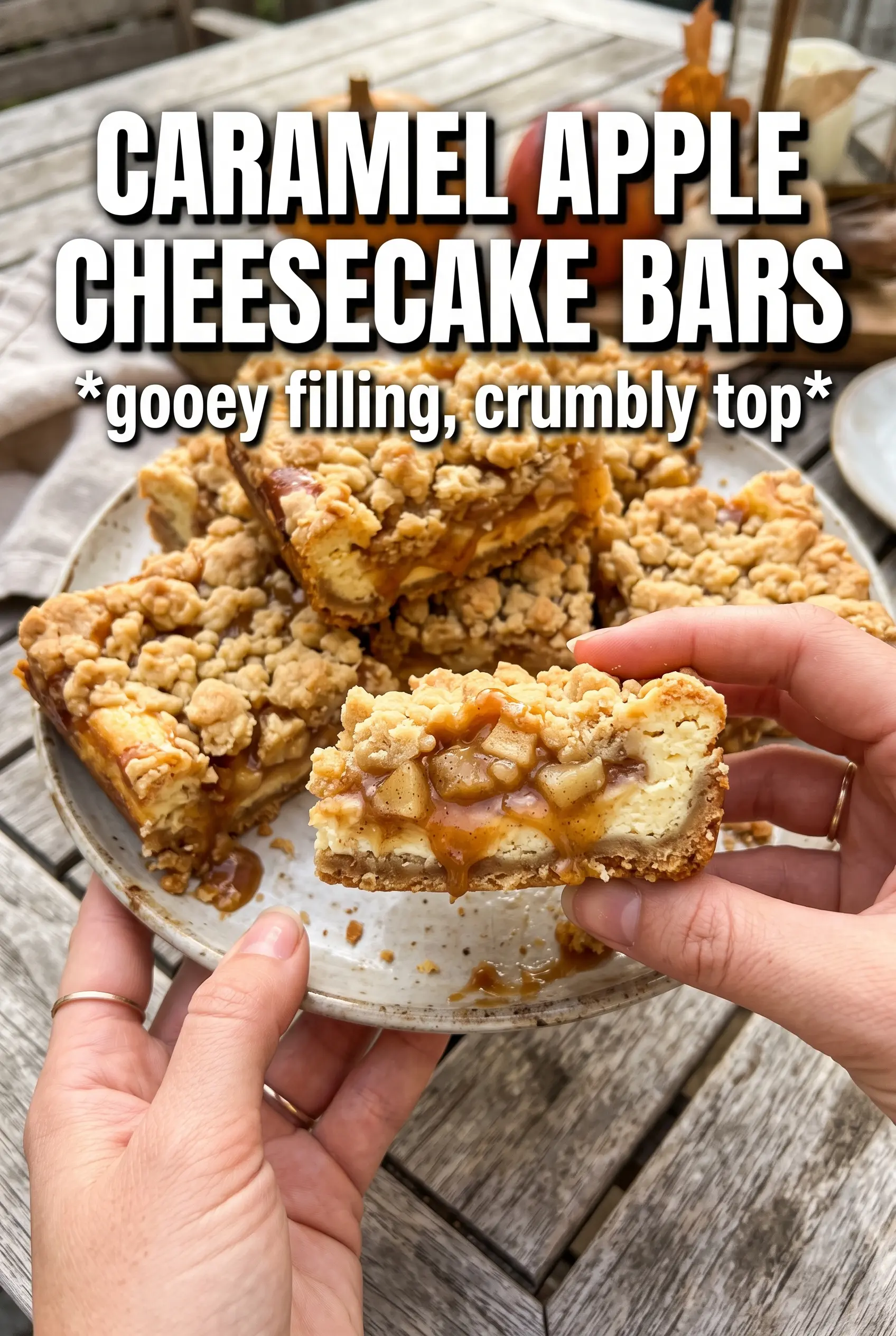
Caramel apple cheesecake bars land in that perfect middle ground between bakery-style dessert and the kind of pan you can cut into neat squares for a crowd. The crust stays crisp under a thick layer of tangy cheesecake, the apples soften just enough to hold their shape, and the streusel bakes into little buttery crumbles that keep each bite from feeling too rich. The caramel drizzled over the top pulls everything together without turning the bars soggy.
What makes this version work is the balance of textures and the order of the layers. The crust gets a short head start in the oven, which helps it stay sturdy once the filling goes on. The apples are cooked briefly before baking so they don’t dump excess juice into the cheesecake, and the streusel goes on before the bars hit the oven so it can brown instead of staying sandy. A little sour cream in the filling keeps the cheesecake smooth and gives it that clean, bakery-style tang.
Below, I’ll walk through the details that matter most: how to keep the cheesecake layer from cracking, why the apple filling shouldn’t be left raw, and the small cooling step that makes slicing much cleaner.
The cheesecake layer set up beautifully and the apples stayed tender instead of making the bars watery. I chilled them overnight and the squares sliced clean with the caramel still looking glossy.
Save these caramel apple cheesecake bars for the dessert table when you want crisp crust, creamy filling, and a cinnamon streusel finish in one pan.
The Trick to Keeping the Cheesecake Layer Neat Under the Apples
The most common failure in cheesecake bars is a filling that turns loose once the fruit goes on top. That happens when the crust isn’t set first, the filling is overbeaten, or the apples are too wet. This version avoids all three problems by baking the crust briefly, mixing the cheesecake only until smooth, and cooking the apples just long enough to soften and release a little moisture before they ever hit the pan.
The other detail that matters is temperature. A hot crust helps the cheesecake spread smoothly, but the bars still need gentle baking so the center sets without puffing up and cracking. When the middle still has a slight wobble and the edges look firm, they’re ready to come out. They’ll finish setting as they cool.
- Hot crust, not cool crust — The warm crust helps the filling settle evenly and prevents a gap from forming between layers.
- Briefly cooked apples — Raw apples can weep as they bake. A quick sauté with butter, brown sugar, and cinnamon controls that moisture.
- Low, steady bake — 325°F gives the cheesecake time to set without curdling or puffing aggressively.
What Each Layer Is Actually Doing Here
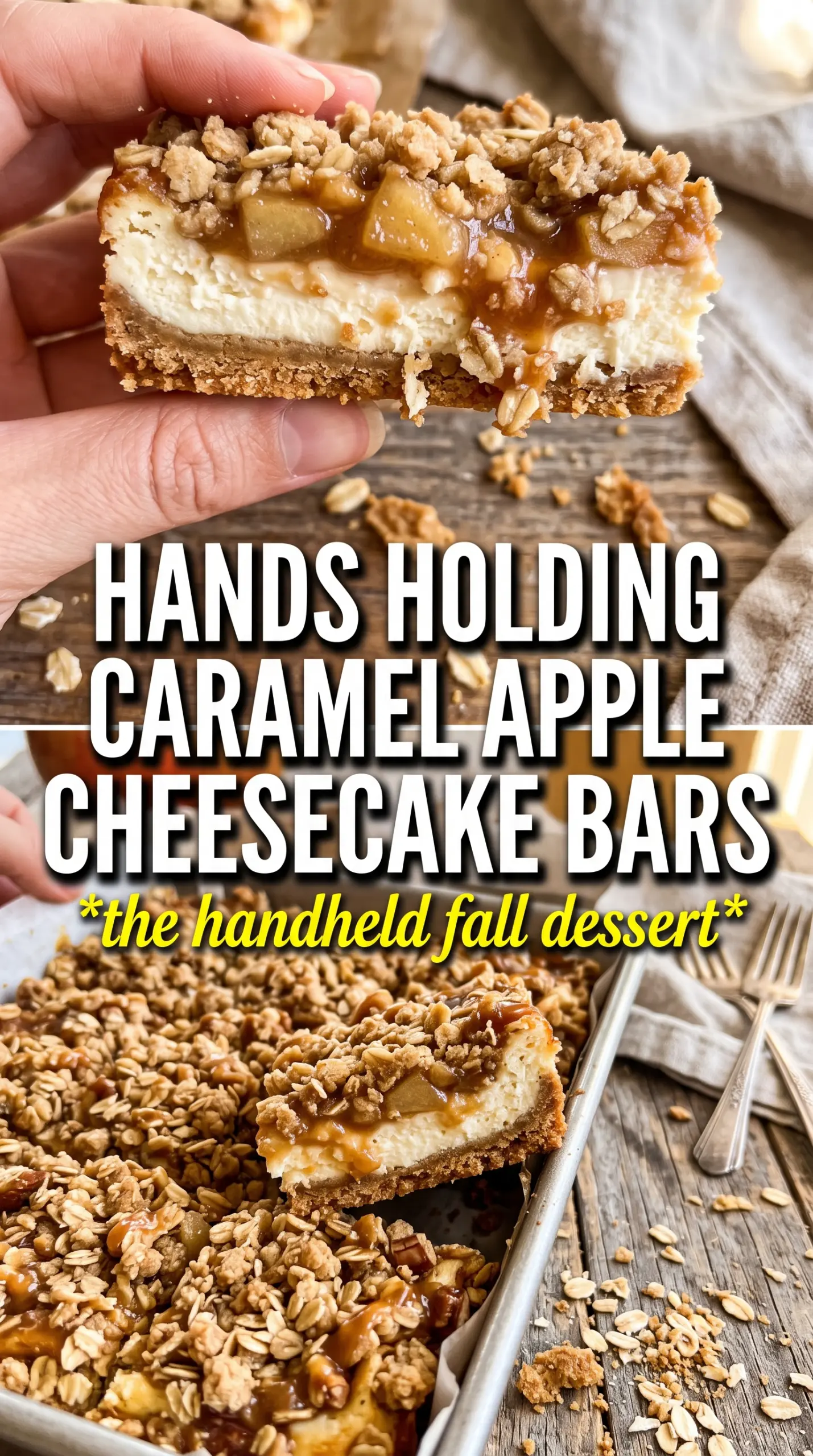
The alt attribute should describe the recipe and a few visual cues, so this image block stays useful without feeling stuffed with keywords. Each component in these bars has a job, and the recipe works because none of them is doing too much.
- Graham cracker crumbs — They give you a sweet, sturdy base with enough texture to stay crisp under the filling. Finely crushed crumbs pack tighter and slice cleaner.
- Cream cheese — This is the backbone of the bars, so use full-fat cream cheese for the best set and the cleanest tang. Reduced-fat versions can bake up softer and less creamy.
- Sour cream — It loosens the filling just enough to keep it silky without thinning it out. If you don’t have it, plain full-fat Greek yogurt works, but the tang will be a little sharper.
- Apples — Use a firm baking apple that holds shape, like Honeycrisp, Braeburn, or Granny Smith. Soft apples turn mushy and blend into the cheesecake.
- Caramel sauce — Drizzle this at the end, not before baking. Heat can make it sink into the streusel and disappear.
Building the Layers So They Bake Cleanly
Pressing and Prebaking the Crust
Line the pan with parchment and press the crumb mixture in firmly, especially into the corners. You want an even layer that looks compact, not sandy, because a loose crust will crumble when you lift out the bars. Bake it just until it smells toasted and the edges deepen a shade or two. That short bake is what keeps the bottom from turning soft once the cheesecake filling goes on.
Mixing the Cheesecake Without Adding Air
Beat the cream cheese and sugar until smooth, then add the eggs one at a time and stop as soon as the mixture looks uniform. Overmixing whips in air, and air is what causes cracks and a puffy top that sinks later. The filling should look glossy and thick, not fluffy. Pour it over the hot crust and spread it gently so you don’t disturb the base.
Cooking the Apples Before They Go In
Cook the diced apples with butter, brown sugar, and cinnamon just until they start to soften and the pan smells like caramelized fruit. You’re not trying to make applesauce; you’re taking the raw edge off so they don’t release a flood of liquid in the oven. If you skip this, the bars can turn watery around the fruit layer. Let the apples cool for a few minutes before scattering them over the cheesecake.
Finishing with Streusel and a Gentle Bake
Work the cold butter into the flour, brown sugar, and cinnamon until you have uneven crumbs, not a smooth dough. Those rough bits bake into the best crunchy topping. Scatter the streusel over the apples and bake until the edges are set and the center only barely jiggles when you nudge the pan. Let the bars cool completely, then chill them for at least 3 hours before slicing. That chill time is what gives you clean squares instead of a soft, messy pan.
How to Adjust These Bars Without Losing the Structure
Make them gluten-free
Swap the graham crackers for a certified gluten-free version and use a 1:1 gluten-free flour blend in the streusel. The texture stays close to the original, though the crumb topping may brown a little faster, so keep an eye on the last 10 minutes of baking.
Use pears instead of apples
Firm pears can stand in for the apples if that’s what you have, but they soften faster and taste sweeter. Cook them only briefly so they hold some shape, and add a little extra cinnamon or a pinch of nutmeg to keep the topping from tasting flat.
Make a lighter dairy swap
You can use Neufchâtel in place of some or all of the cream cheese, but the bars will be a touch softer and less rich. Keep the chill time long enough for the filling to firm up completely before slicing.
Make them ahead for a party
Bake the bars the day before, chill overnight, and drizzle with caramel right before serving so the top stays glossy. If you drizzle too early, the caramel softens the streusel and the finish loses its clean look.
Storage and Reheating
- Refrigerator: Store covered for up to 4 days. The crust will soften a little, but the bars stay neat and sliceable.
- Freezer: Freeze the bars without the caramel drizzle for up to 2 months. Wrap individual squares tightly and thaw in the refrigerator overnight.
- Reheating: These bars are best served chilled or at cool room temperature. If you want a softer bite, let a square sit out for 15 to 20 minutes instead of microwaving it, which can make the cheesecake layer grainy.