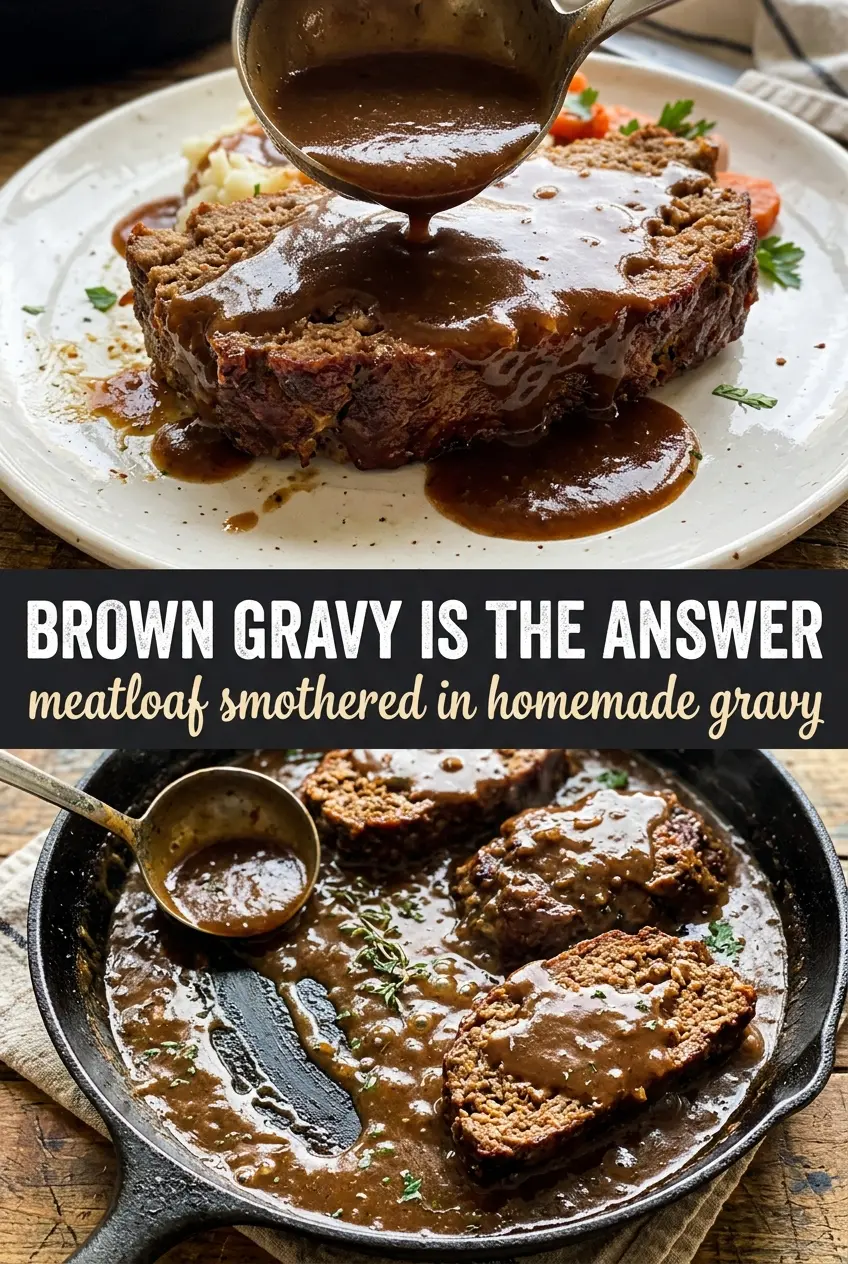
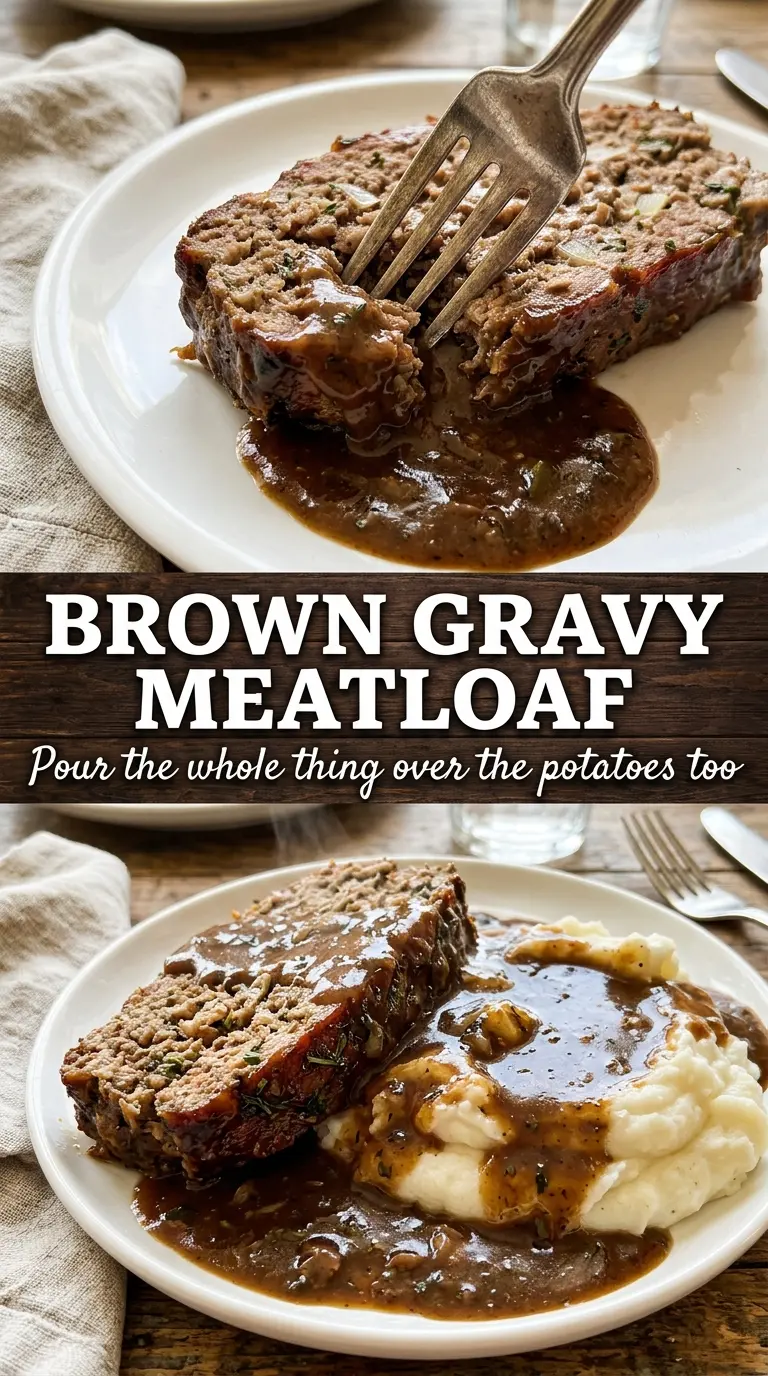
Brown gravy meatloaf earns its place in the dinner rotation because it stays tender inside, slices cleanly after a short rest, and comes with its own rich, savory sauce instead of relying on ketchup alone. The beefy gravy poured over the top gives every slice a deeper, more old-school comfort-food finish, and the loaf itself holds together without turning dense or dry.
The trick is keeping enough moisture in the meat mixture while still letting the loaf set properly in the oven. Grated onion disappears into the beef and helps keep the texture soft, breadcrumbs and milk work together to trap moisture, and the Worcestershire in both the loaf and the gravy ties everything together with a salty, savory edge. The gravy matters just as much as the meatloaf here, because it turns the pan drippings into something worth spooning over mashed potatoes.
Below you’ll find the exact bake time I use, the point where the gravy thickens without turning pasty, and a few smart swaps if you need to work with what’s already in the kitchen.
The gravy thickened up perfectly and the meatloaf stayed juicy all the way through. I used the pan drippings like you suggested and it tasted like the kind of Sunday dinner my mom used to make.
Save this brown gravy meatloaf for a cozy beef-and-gravy dinner that slices neatly and pours up rich every time.
The Reason This Loaf Stays Tender Instead of Falling Apart
Meatloaf gets dry when the mixture is too lean, overworked, or baked until every bit of moisture is gone. This version avoids all three problems. The breadcrumbs and milk act like a soft binder, the grated onion melts into the beef instead of leaving chunks that can split the loaf, and the eggs help the mixture set without making it bouncy.
The other thing that matters is the pan. Press the mixture in firmly enough that it holds its shape, but don’t pack it like sausage. A loaf that’s crushed into the pan turns dense, and a loaf that’s barely shaped can crumble when you slice it. Bake until the center reaches 160°F, then let it rest so the juices settle back into the meat instead of running onto the cutting board.
What Each Ingredient Is Actually Doing in the Gravy and Loaf
- Ground beef — Use an 80/20 blend if you can. Leaner beef can work, but it won’t have the same juicy texture or carry the gravy as well.
- Breadcrumbs and milk — This is the moisture insurance. The crumbs soak up the milk and keep the loaf from tightening up in the oven.
- Grated onion — Grating matters more than chopping here. It disappears into the mixture, seasons the meat evenly, and adds moisture without creating pockets that fall out when sliced.
- Worcestershire sauce — This gives both the loaf and the gravy that deep savory note that makes the whole dish taste more complete. There isn’t a perfect substitute, but soy sauce works in a pinch; use a little less because it’s saltier.
- Butter and flour — These form the gravy base. Cook the flour long enough to lose the raw taste, but not so long that it turns dark before the broth goes in.
- Beef broth — Use a broth you’d actually sip. Thin broth makes a thin gravy, and this sauce needs enough body to cling to the meatloaf instead of running off it.
Building the Loaf and Gravy So Nothing Turns Greasy or Thin
Mix the loaf just until it comes together
Add the beef, breadcrumbs, eggs, milk, grated onion, garlic, Worcestershire, salt, and pepper to a bowl and mix until everything is evenly combined. Stop as soon as the mixture looks uniform. If you keep stirring after that point, the beef tightens up and the final slices turn dense instead of tender.
Shape and bake without overpacking
Press the mixture into a greased loaf pan and level the top so it bakes evenly. The pan helps the loaf hold together and gives you drippings for the gravy, but the meat still needs a little space to steam and set. Bake at 350°F until the center reaches 160°F and the top looks browned around the edges.
Use the drippings in the gravy
Let the loaf rest for 10 minutes before slicing, then save any pan drippings. Melt the butter, whisk in the flour, and cook it for 1 to 2 minutes until it smells nutty and looks pale golden. Slowly whisk in the broth so the gravy stays smooth; if you dump it in all at once, you’ll chase lumps for the next five minutes. Add the Worcestershire, garlic powder, and drippings, then simmer until the gravy coats a spoon.
Serve it while the gravy is still glossy
Spoon the gravy over the sliced meatloaf instead of pouring it over the whole loaf before slicing. That keeps the crust from going soft too early and lets every plate get its own generous amount of sauce. If the gravy gets too thick while it sits, whisk in a splash of broth until it loosens back up.
How to Adapt This Meatloaf When You Need a Different Finish
Gluten-Free Version
Swap the breadcrumbs for a gluten-free breadcrumb blend or quick oats pulsed a few times in the food processor. The texture stays soft and sliceable, but oats give a slightly heartier bite and a less traditional finish.
Dairy-Free Meatloaf and Gravy
Use an unsweetened dairy-free milk in the loaf and swap the butter for a neutral oil or dairy-free butter in the gravy. The gravy will still thicken, but butter adds a little roundness, so taste it before serving and adjust the salt if needed.
Turkey Meatloaf
Ground turkey works, but it needs the extra moisture from the onion, milk, and gravy to stay tender. If you use turkey, pull it as soon as it hits temperature so it doesn’t dry out in the oven.
Make It Ahead for a Busy Night
Shape the loaf up to a day ahead, cover it, and refrigerate it unbaked. You can also make the gravy while the meatloaf rests, then rewarm it gently with a splash of broth so it stays smooth instead of turning pasty.
Storage and Reheating
- Refrigerator: Store sliced meatloaf and gravy separately for up to 4 days. The loaf firms up a little in the fridge, but it reheats well.
- Freezer: Meatloaf freezes well, either whole or sliced. Wrap it tightly and freeze the gravy in a separate container so it can be thawed and whisked back together more easily.
- Reheating: Warm slices covered in the oven at 325°F with a spoonful of gravy or a splash of broth. The common mistake is blasting it in the microwave until the edges go rubbery before the center is warm.