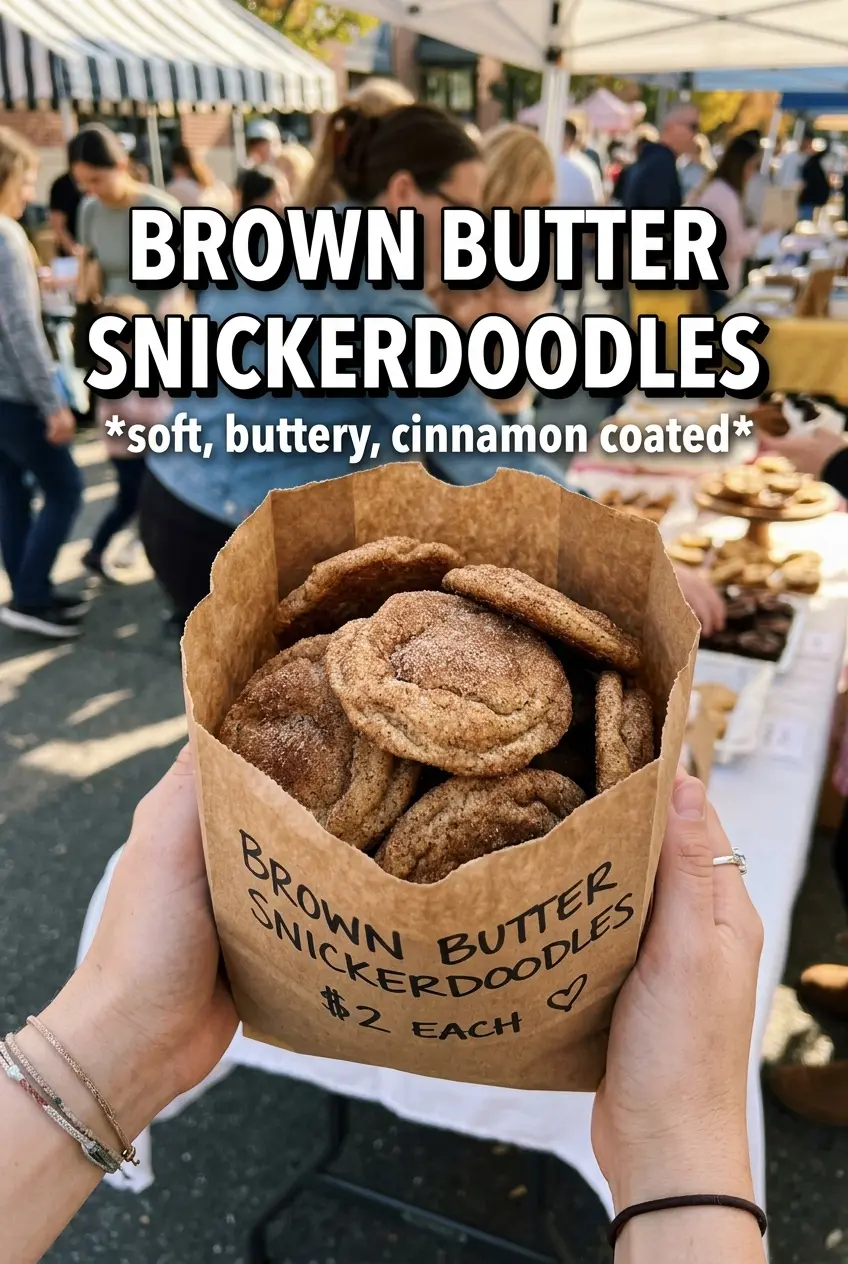
Brown butter snickerdoodles bake up with crisp, cinnamon-sugared edges and a soft center that stays tender instead of turning dry. The extra step of browning the butter gives the cookies a deeper caramel note that makes the whole batch taste richer than the classic version, without losing that familiar snickerdoodle tang.
The key is letting the browned butter cool all the way back down until it is solid again. If it goes into the mixer warm or even partly liquid, the dough spreads too much and the cookies lose that thick, crinkled shape. Cream of tartar keeps the texture distinct and gives the dough that old-fashioned snickerdoodle lift, while a little cinnamon in the dough and more in the coating builds flavor from the inside out.
Below, I walk through the browning and chilling step that matters most, plus the small changes that help these cookies bake up with the right chew, sparkle, and crackly top.
The browned butter made these taste almost caramel-like, and the centers stayed soft even the next day. I chilled the butter overnight and they held their shape perfectly.
Save these brown butter snickerdoodles for the batch that bakes up crinkly, cinnamon-sugar coated, and packed with nutty brown butter flavor.
The Part That Keeps Brown Butter Snickerdoodles Thick Instead of Flat
Brown butter changes the moisture balance of the dough, and that is where a lot of cookie trouble starts. Once the water cooks off during browning, the butter has to be cooled and solidified again before it gets mixed with the sugar. If you rush that step, the dough starts out too warm and the cookies spread before the centers have time to set.
The other thing worth paying attention to is the cream of tartar. It gives snickerdoodles their signature gentle tang and helps create that soft, almost pillowy bite. Without it, you still get a cinnamon cookie, but not the same texture or old-school snickerdoodle personality.
- Brown butter — This is the flavor engine. Let it cook just until the milk solids turn golden and smell nutty, not dark and bitter. Then chill it until solid before mixing.
- Cream of tartar — This is what separates snickerdoodles from plain cinnamon sugar cookies. It supports the tender crumb and the slight tang that makes the flavor read as classic.
- Cinnamon in the dough — A little in the base layers the flavor through the cookie, not just on the outside. That keeps every bite balanced.
What Each Ingredient Is Actually Doing in These Cookies
- All-purpose flour — This gives the cookies enough structure to hold their crinkles without turning cakey. Spoon and level it if you can; packed flour makes the dough dry and heavy.
- Unsalted butter — Browning it adds the deep, toasted note that makes this recipe stand out. Salted butter will work in a pinch, but you lose a little control over the final seasoning.
- Granulated sugar — It sweetens the dough and helps the edges crisp. The extra sugar for rolling is what builds that classic sparkly shell.
- Eggs — These bind the dough and keep the centers soft. Add them after the butter and sugar are creamed, once the butter is fully cooled, or the mixture can look greasy.
- Vanilla extract — It rounds out the brown butter and cinnamon so the cookies taste fuller, not one-note.
- Cinnamon sugar coating — Roll the dough balls generously. A thin coat bakes off too quickly; a heavy coat gives the best crinkly finish.
How to Get the Crinkles, Not the Spread
Brown the butter all the way, then wait
Cook the butter over medium heat until the foaming settles and the milk solids at the bottom turn golden with a nutty smell. Pull it off the heat before the solids go too dark, because brown butter can turn bitter fast once it passes that point. Refrigerate it until it is solid again; softened but not liquid is the goal. If it still feels warm in the center, the cookies will spread more than you want.
Build the dough after the butter is firm
Beat the solidified brown butter with the sugar until it looks creamy, then add the eggs and vanilla. The mixture should look smooth and a little fluffy, not separated or shiny. Fold in the dry ingredients just until the flour disappears. If you keep mixing after that, the cookies get tougher and lose some of that tender center.
Roll generously and bake until set at the edges
Scoop the dough into balls, then coat every side in the cinnamon sugar mixture. Set them on parchment-lined sheets with room to spread, and bake until the edges are set and the tops have those classic crackles. The centers should still look slightly soft when you pull them out. They finish setting on the hot pan, which is what keeps them chewy instead of dry.
Three Ways to Make These Cookies Fit What You Need
Make them dairy-free
Use a plant-based butter that browns well if you can find one, but expect a slightly milder toasted flavor than the dairy version. Some vegan butters stay soft instead of solidifying firmly, so chill the dough longer before baking if the mixture feels loose.
Skip the nutmeg if you want a sharper classic snickerdoodle
The pinch of nutmeg in the rolling sugar adds warmth, but it is optional. Leaving it out gives you a cleaner cinnamon finish and a more traditional snickerdoodle flavor.
Make them a little thicker
Chill the scooped dough balls for 20 to 30 minutes before baking. That extra chill helps the outside set before the butter has a chance to melt too fast, which gives you puffier cookies with a softer middle.
Storage and Reheating
- Refrigerator: Store baked cookies in an airtight container for up to 5 days. The cinnamon sugar softens a little, but the centers stay tender.
- Freezer: Freeze baked cookies for up to 2 months, or freeze the dough balls after rolling in sugar. Dough freezes especially well and bakes from frozen with just 1 to 2 extra minutes.
- Reheating: Warm baked cookies in a 300F oven for 3 to 4 minutes. Skip the microwave if you want to keep the edges from turning rubbery.