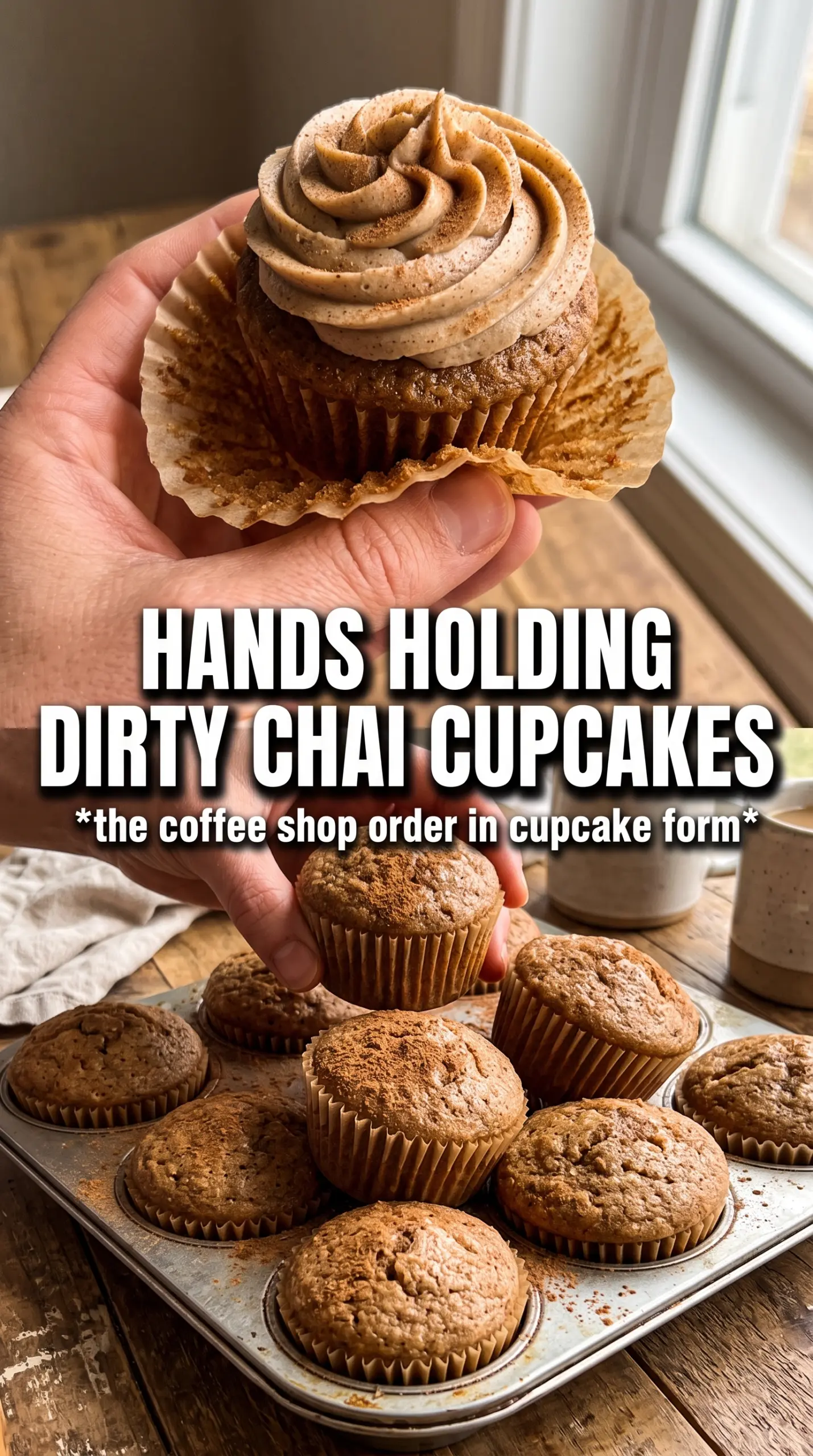
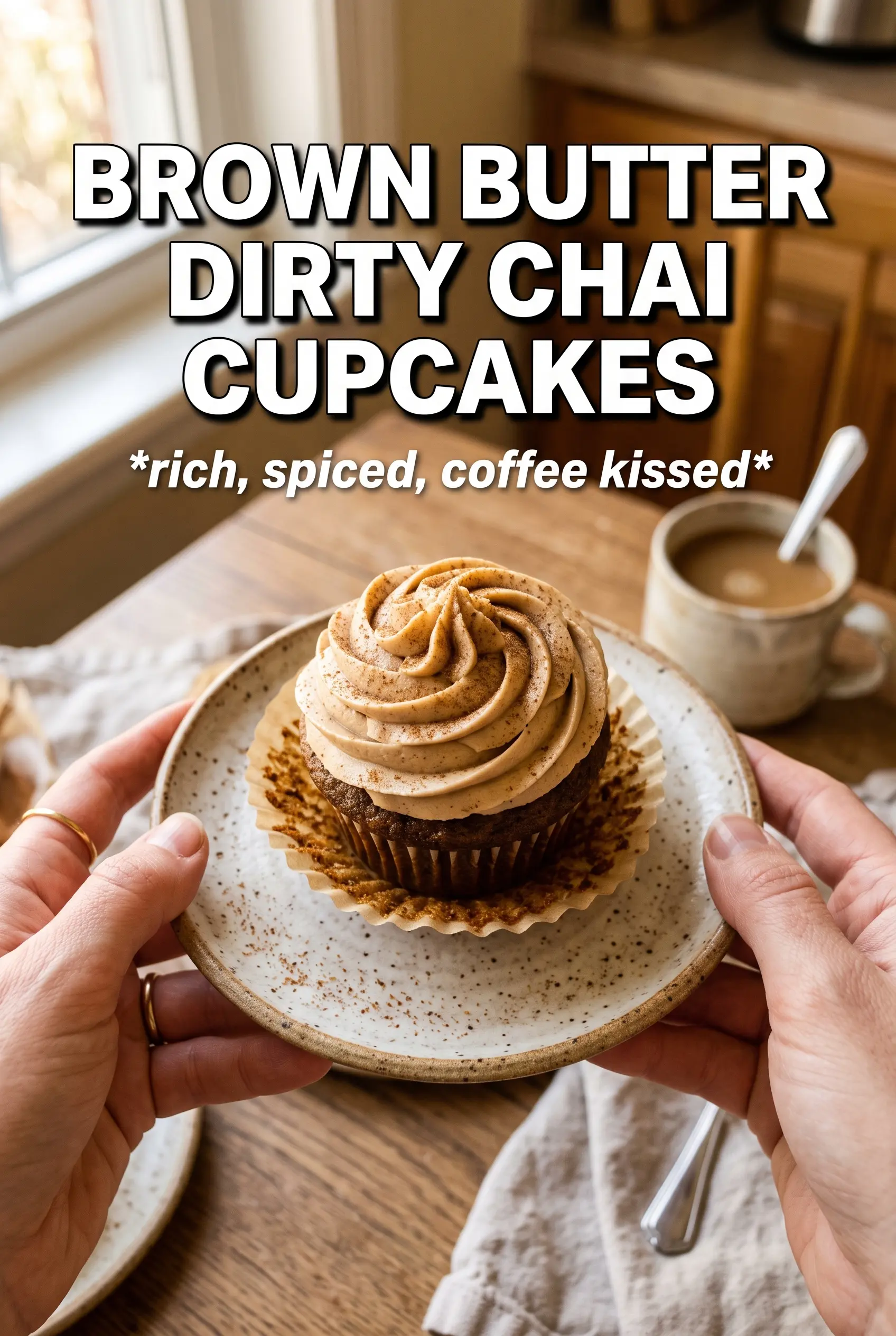
Brown butter dirty chai cupcakes hit the sweet spot between cozy spice and deep coffee flavor, with a tender crumb that stays soft under a thick swirl of frosting. The browned butter gives the cupcakes a nutty backbone, while the espresso keeps the chai from tasting flat or overly sweet. The result is layered, not loud, and that makes every bite feel more interesting than a standard spice cupcake.
What makes this version work is the way the flavors are separated and then brought back together. The butter is browned for both the cake and the frosting, but it has to cool before it goes into the batter or it will scramble the eggs and melt the sugar into a greasy mess. Strong espresso and buttermilk keep the crumb moist and balanced, and the spice blend gets a lift from the coffee instead of disappearing behind it.
Below you’ll find the little details that matter here: how dark to brown the butter, what to look for when the cupcakes are baked through, and how to keep the frosting fluffy instead of heavy.
The brown butter made the cupcakes taste almost toasted, and the espresso kept the chai spice from being too sweet. Mine baked right at 19 minutes and the frosting held its shape beautifully after piping.
Save these brown butter dirty chai cupcakes for the kind of dessert that tastes like a coffee shop treat with a homemade finish.
The Trick to Keeping Brown Butter Cupcakes Soft Instead of Dry
Brown butter brings a deeper, almost toasted note, but it also changes the texture game. Once butter is browned, some of its water content is gone, so the batter needs enough moisture from the espresso, buttermilk, and eggs to stay tender. If the butter is too hot when it goes into the sugar, it can soften the batter too much and leave you with cupcakes that bake up dense around the edges.
The other common failure here is overmixing after the flour goes in. Chai spice and espresso powder both distribute quickly, so once the dry ingredients disappear, stop. Overworking the batter develops gluten and steals the soft crumb that makes these cupcakes worth baking.
- Browned butter — This gives the cupcakes their nutty depth, but it has to be cooled until it’s just soft-set, not warm and liquid, or the batter won’t emulsify cleanly.
- Buttermilk — The acidity keeps the crumb plush and helps the baking soda do its job. Regular milk won’t give the same tenderness or lift.
- Espresso powder — It sharpens the chocolate-free dessert profile and makes the chai taste fuller. Instant coffee can work in a pinch, but use less because it’s usually less intense.
What Each Ingredient Is Doing in the Cupcake and Frosting
- All-purpose flour — Enough structure for a tall cupcake without turning bready. Spoon and level it so you don’t pack in extra flour and dry out the crumb.
- Chai spice blend — This is where the warm spice note comes from, so use a blend you actually like to taste on its own. If yours leans heavy on cinnamon, the espresso keeps it from reading one-note.
- Brown sugar — It works with the browned butter to add moisture and a caramel-like depth. Granulated sugar will make the cake taste flatter and bake a little drier.
- Powdered sugar in the frosting — This gives the frosting its body and pipeable texture. Add it gradually so the butter doesn’t turn grainy or blow into a cloud.
- Milk for the frosting — Just enough to loosen the buttercream without making it soupy. Add it a teaspoon at a time and stop when the frosting holds soft ridges.
Building the Batter and Frosting Without Losing the Flavor
Brown the butter with patience
Cook the butter in a light-colored pan so you can see the milk solids turn from pale cream to amber specks. It should smell nutty and toasty, not burnt. Pull it off the heat as soon as you see that color shift, then pour it into a bowl so the residual heat doesn’t take it too far. For the cupcakes, let it cool until opaque and soft; for the frosting, let it cool all the way but stay spreadable.
Mix the wet ingredients in the right order
Beat the cooled brown butter with the brown sugar until it looks fluffy and a little lighter in color. Add the eggs one at a time so the batter stays smooth, then pour in the espresso, buttermilk, and vanilla. If the mixture looks slightly curdled, that’s fine once the dry ingredients go in, but if the butter was still warm it will separate badly and the cupcakes can bake up greasy.
Bake until the centers spring back
Fill the cupcake liners about two-thirds full so they rise into rounded tops instead of spilling over. Bake at 350°F until the tops look set and a toothpick comes out with a few moist crumbs, usually 18 to 20 minutes. If they go past that point, the brown butter flavor gets muted and the crumb dries out fast, so start checking early.
Whip the frosting until it looks billowy
Beat the browned butter with powdered sugar, milk, espresso powder, and chai spice until the frosting turns pale and fluffy. If it feels stiff, add milk in tiny splashes; if it looks loose, keep beating for another minute or two. Pipe it on only after the cupcakes are completely cool, or the frosting will slump and lose its shape.
How to Adapt These Cupcakes for Different Kitchens and Crowds
Dairy-Free Swaps That Still Keep the Cupcakes Tender
Use a dairy-free butter that browns well for the batter and frosting, and swap the buttermilk for unsweetened dairy-free milk mixed with a little vinegar or lemon juice. You’ll lose a touch of the classic tang, but the espresso and chai still carry the dessert, and the crumb stays soft if you don’t overbake it.
Gluten-Free Version Without a Gritty Finish
Use a cup-for-cup gluten-free flour blend that includes xanthan gum. The structure will be a little more delicate, so let the cupcakes cool in the pan for a few minutes before moving them to a rack. If your blend is heavy on rice flour, expect a slightly more tender, less springy crumb.
Making the Coffee Note More Subtle
Cut the espresso powder in half in both the batter and frosting if you want the chai to lead. The cupcakes will still taste deeper and less sugary, but the coffee edge won’t read as strongly. Don’t remove it completely, because it’s doing more than adding coffee flavor — it also rounds out the spices.
Storage and Reheating
- Refrigerator: Store frosted cupcakes in an airtight container for up to 4 days. The frosting firms up in the fridge, but the cake stays moist.
- Freezer: Freeze unfrosted cupcakes for up to 2 months. Wrap them tightly once cooled, then thaw at room temperature before frosting.
- Reheating: These are best served at room temperature, not warmed. If they’ve been chilled, let them sit out for 30 to 45 minutes so the brown butter frosting softens and the spice flavor comes back.
Answers to the Questions Worth Asking
Brown Butter Dirty Chai Cupcakes
Ingredients
Equipment
Method
- Brown 3/4 cup unsalted butter and set aside to cool; then brown the remaining butter for the frosting and cool it as well.
- Preheat the oven to 350F and line cupcake tins with liners.
- Whisk all-purpose flour, baking powder, baking soda, chai spice blend, espresso powder, and salt in a bowl.
- Beat the cooled browned butter and packed brown sugar until smooth, then beat in eggs, strongly brewed espresso, buttermilk, and vanilla.
- Fold the flour mixture into the wet ingredients just until no dry streaks remain.
- Divide batter into liners, filling each about 2/3 full.
- Bake at 350F for 18-20 minutes, until the tops spring back and a toothpick comes out with a few moist crumbs.
- Cool cupcakes completely before frosting.
- Beat the browned butter chai frosting base until fluffy.
- Pipe frosting onto cooled cupcakes, then dust with espresso powder and chai spice.