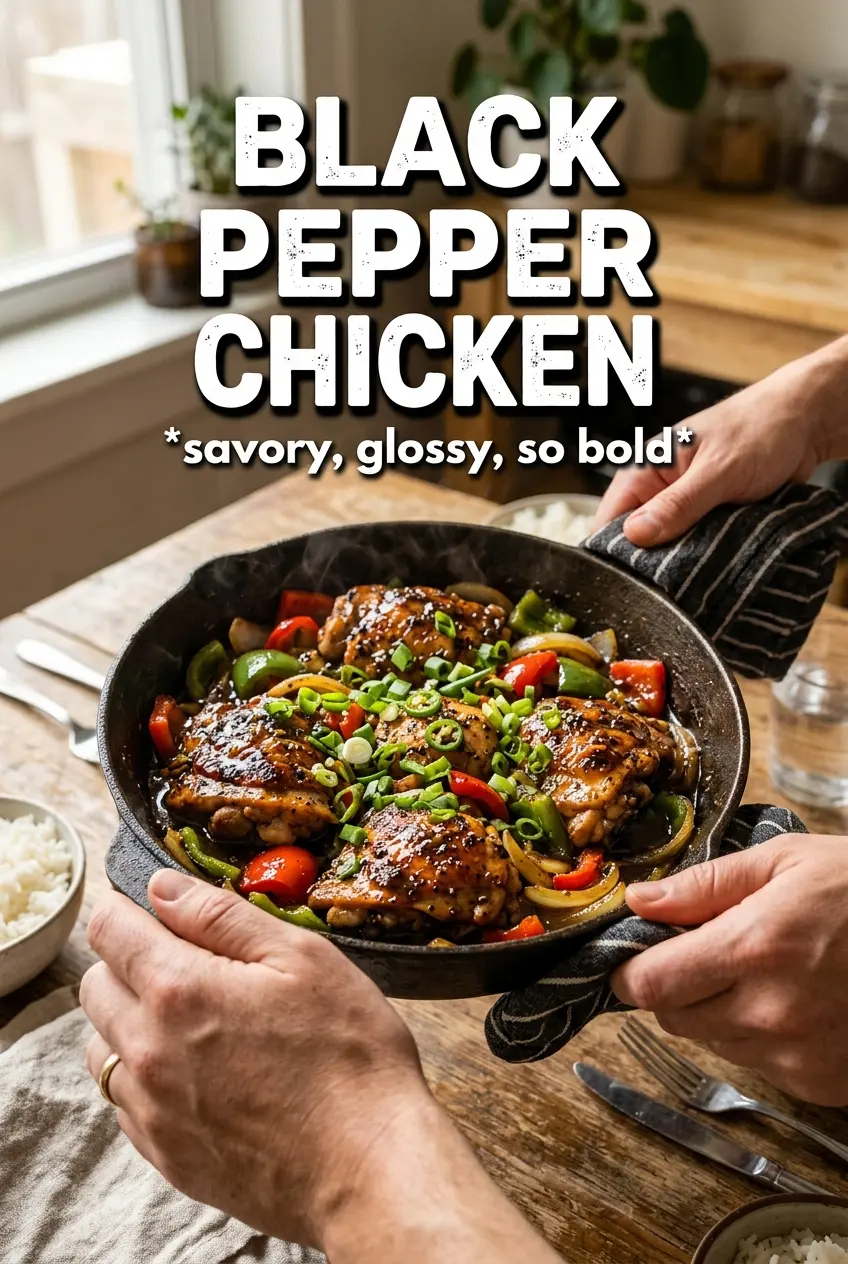
Black pepper chicken hits the table glossy, savory, and peppery enough to wake up the whole plate. The chicken stays tender, the peppers keep a little bite, and the sauce clings in that light, shiny way that makes it perfect over rice. What makes it worth making at home is that you get restaurant-style flavor without a heavy, gloppy sauce or overcooked chicken.
The key is cooking the chicken hard and fast in batches so it browns instead of steaming. After that, the sauce needs just enough cornstarch to coat the ingredients, not bury them. Freshly cracked black pepper matters here more than in most quick skillet dinners because it gives the sauce its heat and aroma instead of just a flat bite.
Below you’ll find the small choices that keep the sauce balanced, plus the one timing detail that keeps the vegetables crisp and the chicken juicy.
The sauce thickened right at the end and coated every piece without turning sticky. I used the extra black pepper like you suggested, and it tasted just like our favorite takeout version.
Save this black pepper chicken for the nights when you want glossy takeout-style sauce, tender chicken, and plenty of cracked pepper over rice.
The Reason the Chicken Stays Tender Instead of Going Watery
Black pepper chicken gets into trouble when the pan isn’t hot enough or the chicken goes in all at once. That drops the temperature fast, and instead of browning, the meat steams in its own moisture. The fix is simple: cook the chicken in batches over high heat so the surface sets quickly and picks up a little color before you bring it back to the sauce.
The other thing that matters is the sauce timing. If you pour it in too early, the cornstarch starts thickening before everything is hot, and you end up with a gluey skillet instead of a glossy one. Add it after the vegetables are cooked and the chicken is back in the pan, then toss just until the sauce clings and turns shiny.
- High heat gives you browning and keeps the chicken from going soft.
- Batch cooking leaves room in the pan so moisture can escape.
- Cornstarch thickens fast, so it needs the final minute or two, not a long simmer.
- Fresh cracked pepper gives the sauce its sharp finish and keeps the flavor from tasting flat.
What Each Ingredient Is Actually Doing in Black Pepper Chicken
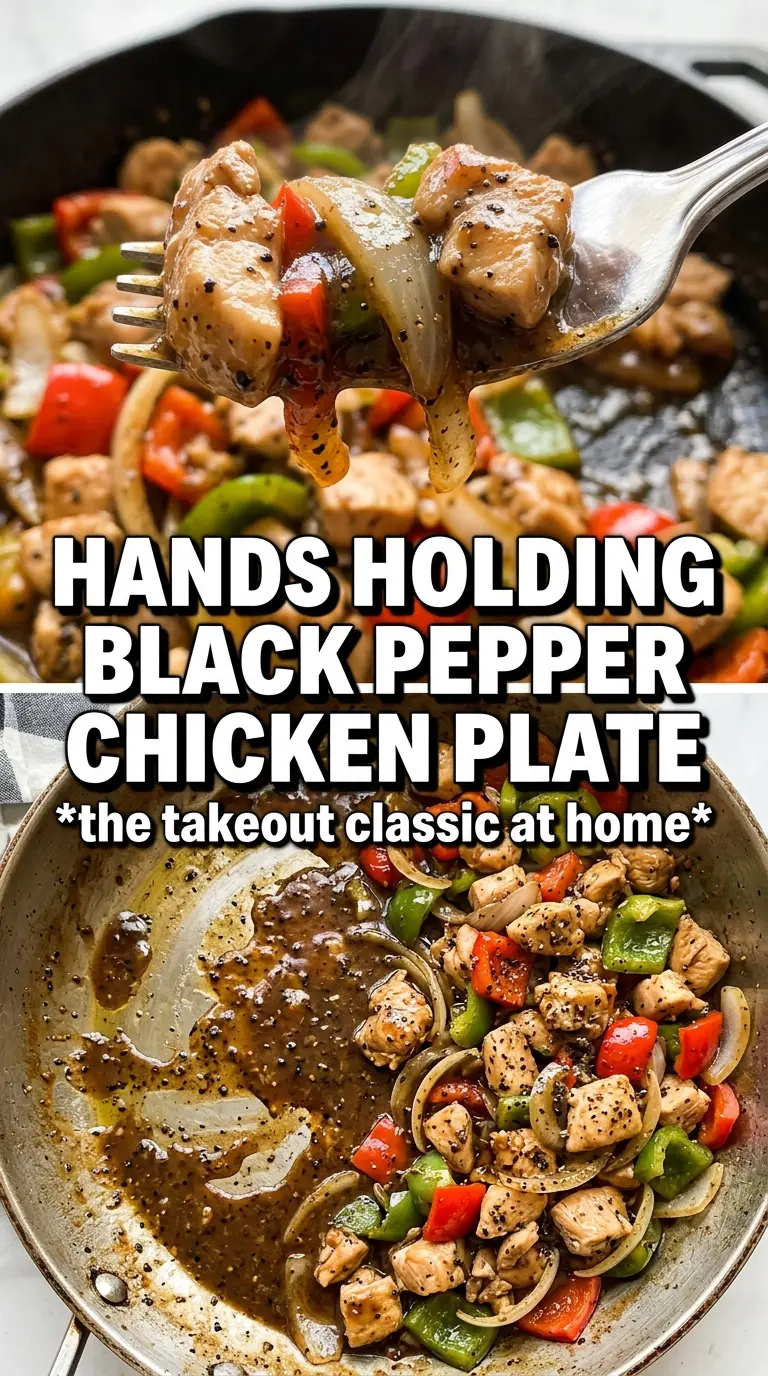
- Chicken breast cooks quickly and stays juicy if you slice it thin against the grain. Thighs work too, but they’ll make the dish a little richer and less lean.
- Dark soy sauce deepens the color and gives the sauce that takeout look. If you don’t have it, use a little more regular soy sauce, but the sauce will be lighter and less layered.
- Oyster sauce adds body and a savory depth that soy sauce alone can’t replace. There isn’t a perfect substitute, though vegetarian oyster sauce works well if needed.
- Freshly cracked black pepper is the defining flavor here. Pre-ground pepper tastes dull by comparison, so crack it right before mixing the sauce.
- Cornstarch slurry is what turns the liquid into a coating sauce. Stir it again right before adding because it settles fast.
- Bell pepper and onion add sweetness and crunch that keep the dish from feeling heavy. Slice them evenly so they stay crisp-tender together.
Getting the Sauce Glossy Without Overcooking the Vegetables
Whisk the sauce before the pan gets hot
Mix the soy sauce, oyster sauce, dark soy sauce, brown sugar, black pepper, and cornstarch slurry before you start stir-frying. Once the chicken is in the pan, the rest moves fast, and you don’t want to be measuring while the garlic is burning. Give the slurry one more stir right before pouring it in because cornstarch sinks to the bottom quickly.
Sear the chicken in quick batches
Heat the oil until it shimmers, then add the chicken in a single layer. Let it sit long enough to pick up color before tossing it, and don’t crowd the pan or the meat will turn pale and wet. Pull it out as soon as it’s cooked through on the outside; it finishes later when it goes back into the sauce.
Cook the vegetables just until they brighten
The onion and bell pepper need about three minutes, enough to soften slightly while keeping some crunch. Garlic and ginger go in only for the last minute because they burn fast and taste bitter if they sit in the pan too long. If the garlic starts to brown before the chicken returns, lower the heat right away.
Finish with the sauce and stop at glossy
Add the chicken back to the pan, pour in the sauce, and toss until everything is coated. Within two to three minutes, the sauce should go from loose to shiny and cling to the chicken and vegetables in a thin layer. If it looks stiff, add a splash of water; if it looks thin, give it another short toss over heat rather than walking away and letting it reduce too far.
Three Ways to Adjust Black Pepper Chicken Without Losing the Character of the Dish
Make it gluten-free
Use tamari or a certified gluten-free soy sauce, and check that your oyster sauce is gluten-free too. The texture stays the same, and the flavor remains close to the original because the sauce still has that salty, savory backbone.
Use chicken thighs for a richer pan sauce
Boneless thighs work well if you want a juicier bite and a little more richness. They take a touch longer to cook, but they stay forgiving if your heat runs high, and they hold up nicely in the sauce.
Turn up the pepper for a sharper finish
If you like a stronger bite, add another half teaspoon of cracked black pepper at the end instead of piling it all into the sauce. That keeps the aroma brighter and gives the finished dish a more direct peppery finish instead of just a heavier heat.
Add a second vegetable for more volume
Snow peas, broccoli florets, or sliced celery all fit the same quick-cook method. Add them with the onion if they need a little more time, or later if you want them crisp, but keep the pan moving so the sauce still coats instead of pooling underneath.
Storage and Reheating
- Refrigerator: Store for up to 4 days in an airtight container. The sauce thickens a little as it chills, but the flavor holds up well.
- Freezer: It freezes, but the peppers soften after thawing. If you plan to freeze it, slightly undercook the vegetables so they don’t go mushy later.
- Reheating: Warm it in a skillet over medium-low heat with a splash of water to loosen the sauce. The common mistake is blasting it in the microwave until the chicken turns dry and the sauce separates.