Silky cream sauce, browned beef, and garlic that turns sweet and mellow in the pan make this beef pasta feel a lot more luxurious than the effort it takes. The sauce clings to every ribbon or tube, the parmesan melts into it instead of sitting on top, and the whole dish lands in that sweet spot between comforting and just rich enough to feel special.
The trick is building the sauce in layers. Browning the beef first gives you those savory bits at the bottom of the pan, and the garlic only needs a minute or two before the wine goes in, so it stays fragrant instead of bitter. The cream comes next on a gentle simmer, which keeps the dairy smooth while the parmesan thickens everything into a glossy finish.
Below, I’ve included the small details that keep the sauce from turning grainy and the pasta from going heavy. There’s also a few useful swaps if you want to change the pasta shape, skip the wine, or stretch this into a slightly lighter weeknight dinner.
The sauce turned out silky and coated the pasta perfectly, and the garlic stayed mellow instead of sharp. I used rigatoni and the little ridges held onto every bit of the parmesan cream.
Save this beef pasta in creamy garlic sauce for the nights when you want a one-skillet dinner with a glossy parmesan finish.
The Reason Cream Sauce Stays Smooth Instead of Turning Grainy
Most creamy pasta goes wrong in one of two places: the heat is too high when the dairy goes in, or the cheese is added before the sauce has settled into a gentle simmer. Heavy cream can handle warmth, but it doesn’t like a hard boil. Parmesan is even less forgiving. If you dump it into a furious bubble, it can seize and turn sandy instead of melting cleanly.
This version avoids both problems by using the skillet as a buffer. The beef leaves flavor behind, the garlic blooms in butter, and the wine loosens the browned bits before the cream ever shows up. By the time the parmesan goes in, the liquid has already taken on body, so the cheese melts into the sauce instead of trying to thicken it on its own.
What Each Ingredient Is Actually Doing Here
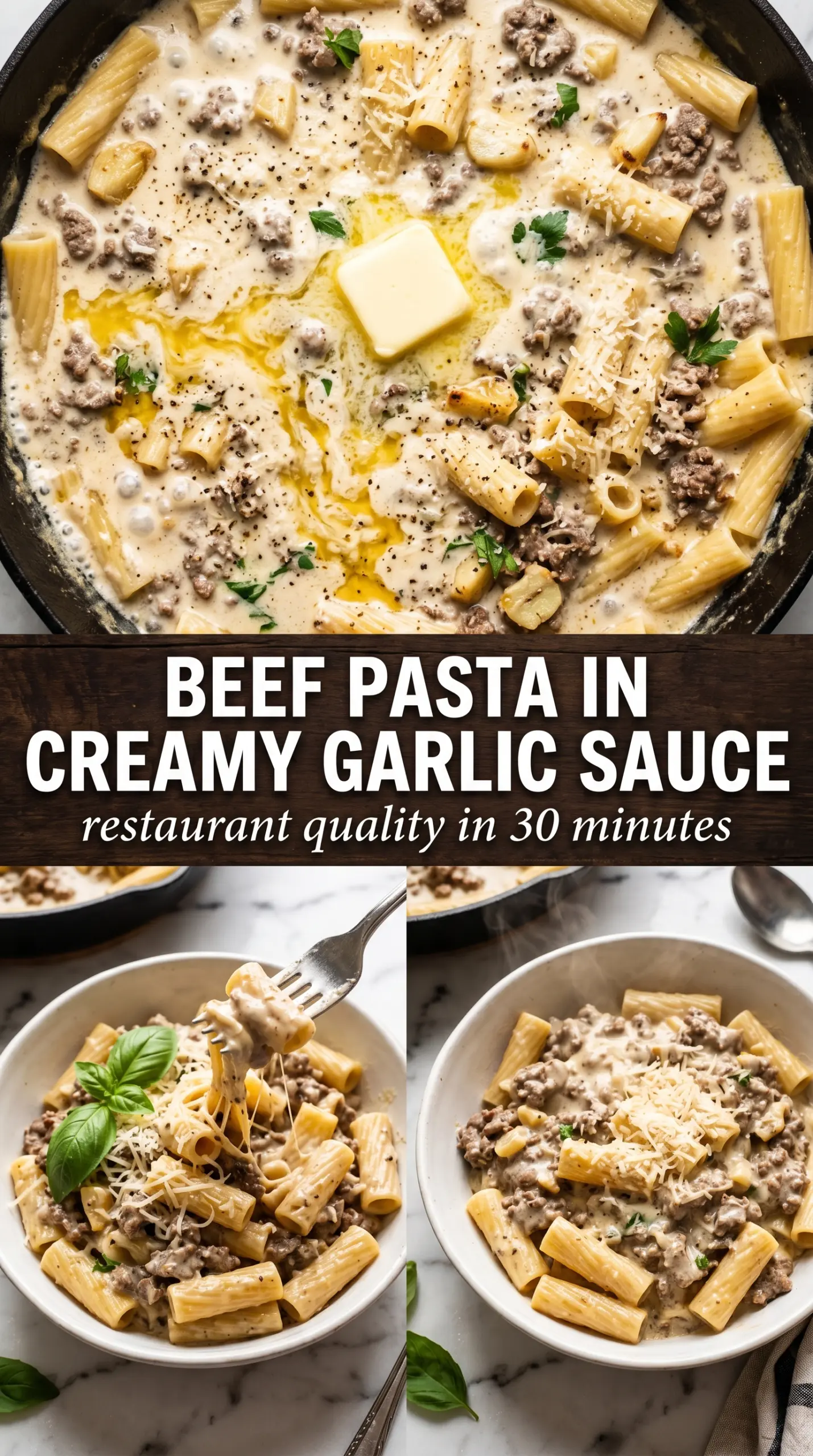
- Ground beef — Use an 80/20 blend if you can. You want enough fat for flavor, but not so much that the sauce turns greasy. If yours is fattier, drain it well and wipe out the skillet only if there’s a pool of fat left behind.
- Garlic — Fresh minced garlic matters here. Jarred garlic works in a pinch, but it doesn’t soften and perfume the sauce the same way. Cook it just until fragrant and lightly golden; once it starts browning fast, it will taste sharp.
- Dry white wine — This is there to deglaze the pan and give the cream a little lift. If you skip it, use a splash of chicken broth plus a tiny squeeze of lemon at the end. The sauce will still work, but it loses some of the depth that makes it taste finished.
- Heavy cream — This is the base of the sauce, and this is not the place for milk if you want the same body. Half-and-half can work in a pinch, but it will be looser and needs a little more parmesan to thicken.
- Parmesan — Grate it yourself if possible. Pre-shredded parmesan is often coated to prevent clumping, and that coating can keep the sauce from melting smoothly. Fine grating helps it disappear into the cream.
- Pasta shape — Penne, rigatoni, or pappardelle all work because they grab the sauce in different ways. Long noodles give you a silkier bite, while tube pasta catches more of the beef and parmesan in the ridges.
Building the Sauce in the Right Order
Brown the Beef First
Cook the beef in a large skillet over medium-high heat until the pink is gone and the edges have some browning. That browning is where the savory flavor comes from, so don’t stir constantly; let the meat sit long enough to get color before breaking it up. If the pan fills with grease, drain it off, but leave the browned bits behind. They’re the foundation of the sauce.
Wake Up the Garlic in Butter
Drop the heat to medium and melt the butter in the same skillet. Add the garlic and stir for 1 to 2 minutes, just until it smells sweet and the color turns pale gold. If it goes deep brown, it will taste burnt once the cream goes in, and there’s no fixing that later. This stage should smell rich and nutty, not harsh.
Use the Wine to Pull Up the Flavor
Pour in the wine and let it simmer for about 2 minutes. The liquid should bubble briskly and scrape up the browned bits from the bottom of the pan as you stir. You’re not cooking off every trace of wine; you’re reducing it enough that the sauce tastes rounded, not sharp. If you’re using broth instead, let it reduce the same way so the sauce doesn’t taste thin.
Finish With Cream and Parmesan
Add the cream, Italian seasoning, and red pepper flakes, then keep the heat at a gentle simmer. When you stir in the parmesan, do it gradually and keep the sauce moving until it turns glossy and slightly thickened. If it looks grainy, the heat was too high or the cheese went in too fast. Pull the pan off the burner for a minute and stir until it comes back together.
Toss the Pasta Right Before Serving
Return the beef to the skillet, then add the cooked pasta and toss until every piece is coated. The sauce will thicken a little more as it sits, so serve it right away while it’s still loose enough to flow around the pasta. If it gets too tight, splash in a spoonful of hot pasta water and toss again. That last bit loosens the sauce without watering it down.
How to Adapt This for a Lighter Bowl, a Different Pantry, or a Bigger Crowd
Gluten-Free Pasta That Still Holds Up
Use a sturdy gluten-free penne or rigatoni and cook it just to al dente. Gluten-free pasta softens fast once it hits hot sauce, so stop it a minute early if you’re planning to toss it in the skillet for a bit. Short shapes hold up better than delicate noodles here.
No-Wine Version
Replace the wine with low-sodium chicken broth or beef broth and add a small squeeze of lemon at the end. You’ll lose a little of the bright edge that wine brings, but the sauce will still taste layered and savory. Let the broth reduce fully so it doesn’t water down the cream.
Lighter Creamy Beef Pasta
Swap half the cream for whole milk only if you’re willing to accept a thinner sauce, then lean on a little extra parmesan for body. The result will still be creamy, just less lush. Don’t boil it hard or the milk can separate.
Make It Meatless
Swap the ground beef for finely chopped mushrooms or a plant-based crumble and cook until the pan is dry and browned. You’ll still get that savory base, but the dish will taste a little earthier and less rich. Add a pinch more salt at the end, since meatless swaps usually need a stronger finish.
Storage and Reheating
- Refrigerator: Store in an airtight container for up to 3 days. The sauce will thicken as it chills.
- Freezer: It can be frozen, but cream sauces sometimes separate when thawed. If you do freeze it, use a tightly sealed container and expect to stir in a splash of cream when reheating.
- Reheating: Warm it slowly on the stove over low heat with a spoonful or two of water, milk, or cream. High heat is the fastest way to make the sauce split, especially once the parmesan is already in it.
Answers to the Questions Worth Asking
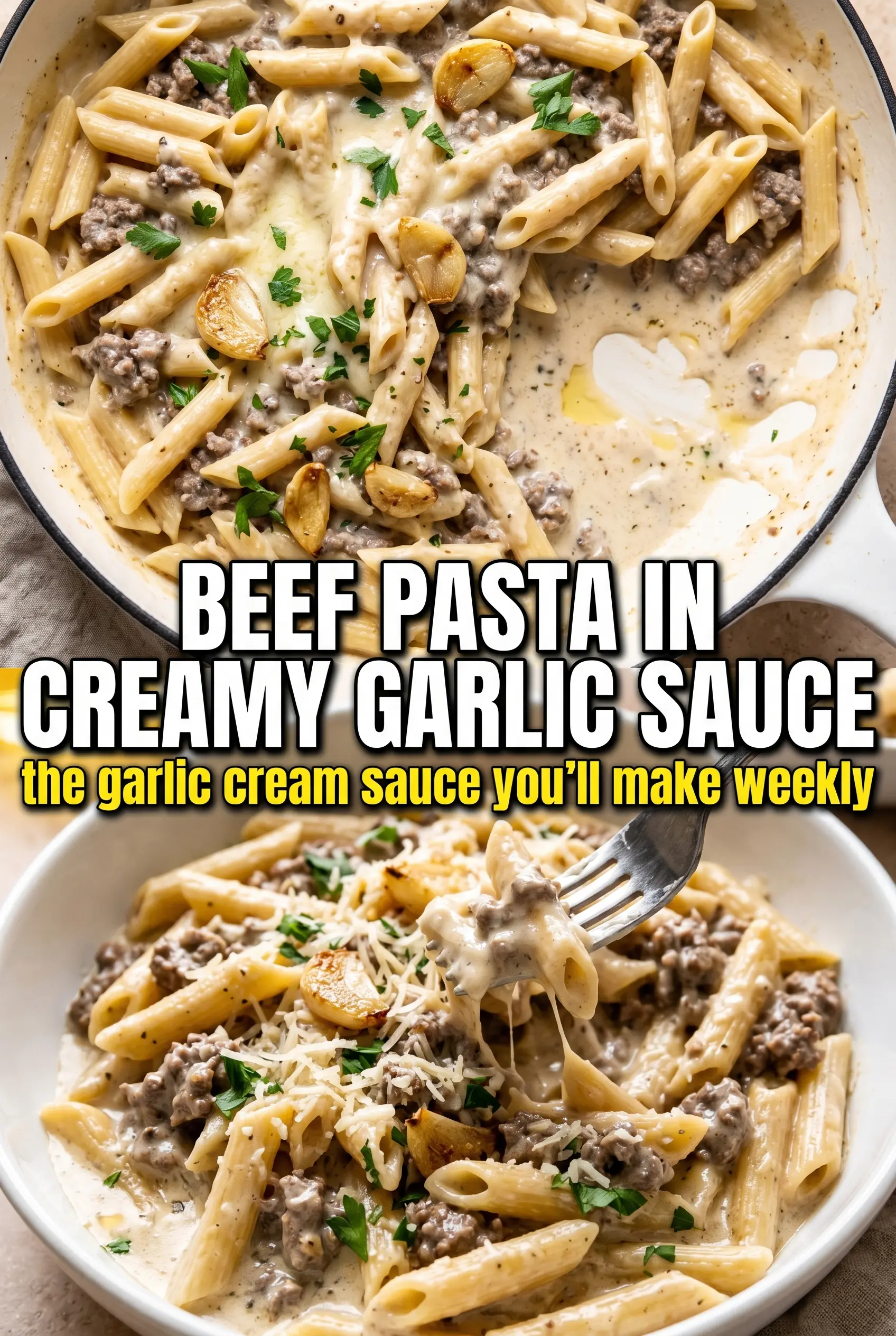
Beef Pasta in Creamy Garlic Sauce
Ingredients
Equipment
Method
- Brown ground beef in a large skillet over medium-high heat, breaking apart as it cooks. Drain the fat and set the beef aside.
- Melt butter in the same skillet over medium heat and sauté garlic for 1–2 minutes until fragrant and golden. Keep it moving so the garlic doesn’t brown too quickly.
- Pour in dry white wine and simmer for 2 minutes. Scrape up any browned bits from the pan for extra flavor.
- Add heavy cream, Italian seasoning, and red pepper flakes, then bring to a gentle simmer. Lower the heat so the sauce stays silky, not boiling.
- Stir in parmesan until the sauce is smooth and slightly thickened, about 3 minutes. If needed, simmer briefly longer to reach a glossy coating consistency.
- Return the beef to the pan and add the cooked pasta, tossing to coat. Adjust seasoning with salt and black pepper, then garnish with fresh parsley and serve immediately.