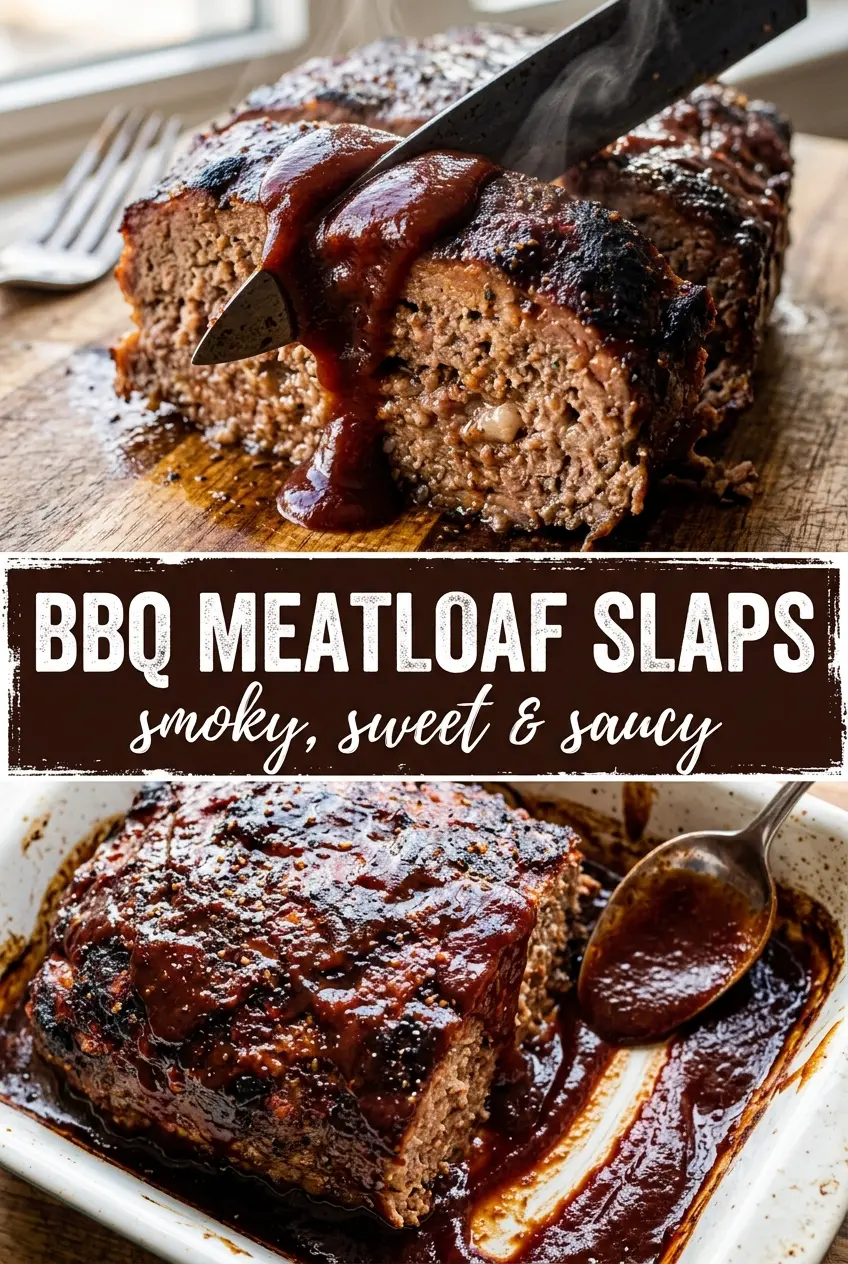
BBQ meatloaf brings the comfort of a classic loaf and gives it that sticky, smoky finish that makes people go back for a second slice before the pan even cools. The glaze bakes into a dark mahogany shell, the edges catch a little caramelization, and the center stays tender instead of turning dense. It’s the kind of dinner that tastes familiar at first bite, then lands with just enough barbecue tang to wake everything up.
What makes this version work is the balance between the beef, pork, and breadcrumbs. The pork adds richness, the grated onion keeps the loaf moist without leaving chunky bites, and the milk softens the crumbs so the texture stays light. Free-form shaping matters here too. A loaf in a pan steams more than it browns, but a sheet-pan loaf gives the glaze room to tighten and darken properly.
Below you’ll find the small choices that keep meatloaf from turning dry, why the glaze goes on in two stages, and how to adapt it if you want a little more smoke, sweetness, or a lighter version for weeknights.
The glaze caramelized beautifully and the loaf stayed juicy all the way through. I loved that it sliced cleanly after resting, and the smoky-sweet BBQ flavor was even better the next day.
Like this smoky BBQ meatloaf? Save it for the nights when you want a caramelized glaze and a tender slice without firing up the grill.
The Reason the Glaze Needs Two Passes
The biggest mistake with BBQ meatloaf is dumping all the glaze on at the start and expecting it to stay bold and sticky. BBQ sauce has sugar in it, and sugar burns before the loaf finishes cooking if it sits over the heat too long. The first layer sets the flavor into the surface, while the second layer goes on later and caramelizes into that dark, lacquered finish.
Another key detail is the free-form shape. A loaf pan traps fat and moisture, which sounds helpful until you realize it can leave you with a softer, less browned exterior. On a sheet pan, the heat reaches more of the loaf, the edges firm up, and the glaze gets the chance to turn glossy instead of muddy.
- Ground beef — This carries the meatloaf. Use 80/20 if you can; leaner beef can work, but the loaf is more likely to eat dry.
- Ground pork — Pork adds fat and a softer texture that keeps the loaf from tasting tight or crumbly. If you skip it, the meatloaf will still work, but it won’t be as plush.
- Grated onion — Grating instead of chopping lets the onion melt into the loaf and add moisture without big sharp pieces. That small change makes a big difference in texture.
- Breadcrumbs and milk — Together they form the binder that keeps the loaf tender. If you only add breadcrumbs, the meat can pack too densely.
- BBQ sauce — Choose one you’d actually eat on its own, since it defines the glaze. A sweeter sauce gives a stickier crust; a smokier one pushes the loaf toward cookout flavor.
What Each Ingredient Is Actually Doing in This Meatloaf or Meatballs
- Ground meat (the protein foundation) — Use 80/20 so it stays moist. Handle gently to keep texture tender instead of dense.
- Breadcrumbs or fillers (the binder) — These hold the meat together without making it dense. Soak in milk first so they add moisture.
- Egg (the structural binding agent) — This holds everything together during cooking. One egg per pound of meat is the right ratio.
- Onion and aromatics (the base flavor) — Mince finely so they distribute evenly. Raw onion softens as it cooks and becomes part of the texture.
- Seasonings (salt, pepper, Worcestershire, spices) — Build flavor boldly. The meat mixture carries the entire flavor profile.
- Milk or liquid (the moisture keeper) — This keeps the meatloaf tender instead of dense and dry. Don’t skip this step.
- Glaze or sauce (ketchup-based or other) — This adds sweetness, moisture, and flavor to the exterior. Apply strategically so it caramelizes.
- Resting time (the final step) — Let the meatloaf rest 10 minutes so it sets and slices cleanly. Cutting too soon makes it fall apart.
Building a Tender Loaf Without Losing the Crust
Mixing Just Until the Meat Comes Together
Combine the meat, crumbs, eggs, milk, onion, garlic, Worcestershire, and seasonings with a light hand. Stop as soon as everything looks evenly distributed and the mixture begins to hold together. If you overwork it, the proteins tighten up and the loaf turns dense instead of sliceable and tender. The mixture should feel cohesive, not paste-like.
Shaping for Browning, Not Steaming
Form the mixture into a free-form loaf on a foil-lined sheet pan. Keep the shape even so the center cooks at the same pace as the ends, and don’t pack it too tightly or the texture gets heavy. A slightly rounded top is better than a flat slab because it lets the glaze run and cling. If the loaf cracks a little, that’s fine; the glaze hides plenty and the cracks actually catch flavor.
Glazing in Stages
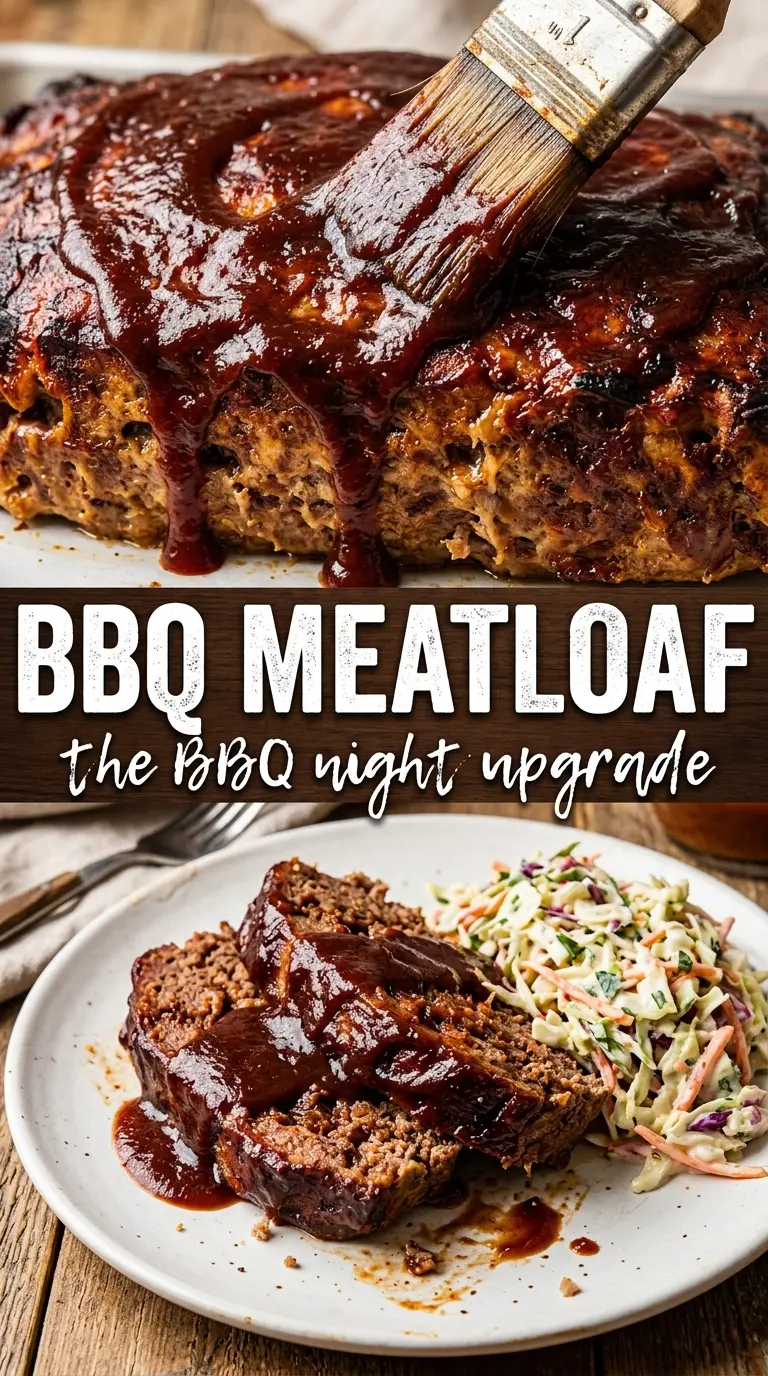
Mix the BBQ sauce, brown sugar, apple cider vinegar, and Worcestershire, then spread half over the loaf before baking. After the first bake, brush on the rest so it has time to caramelize instead of disappearing into the meat. If the top looks dark before the center reaches 160°F, tent it loosely with foil for the last stretch. The goal is a sticky finish, not a burnt one.
Resting Before the First Slice
Let the meatloaf rest for 10 minutes after it comes out of the oven. That pause lets the juices settle back into the loaf so the slices hold together instead of collapsing onto the cutting board. If you cut too soon, the glaze still tastes good, but the interior loses moisture fast. A short rest gives you cleaner slices and better texture.
How to Adapt This BBQ Meatloaf for Different Tables
Make It Dairy-Free
Swap the milk for an unsweetened non-dairy milk or even beef broth. You’ll still get the moisture you need for a tender crumb, though broth gives a slightly meatier finish and non-dairy milk keeps the flavor neutral.
Make It Gluten-Free
Use gluten-free breadcrumbs in the same amount. The loaf still binds and slices well, but the texture can be a touch more delicate, so let it rest the full 10 minutes before cutting.
Turn Up the Smoke
Add a small pinch of chipotle powder or a few drops of liquid smoke to the glaze. Go lightly; too much and the flavor takes over the sweet-savory balance that makes the meatloaf taste like barbecue instead of smoke extract.
Stretch It for a Bigger Crowd
Double the recipe and shape it into two loaves instead of one giant one. That keeps the cooking time predictable and prevents the outside from overbaking before the center is done.
Storage and Reheating
- Refrigerator: Store slices in an airtight container for up to 4 days. The glaze may thicken and the loaf will firm up, but it stays flavorful.
- Freezer: It freezes well. Wrap individual slices or the whole cooled loaf tightly, then freeze for up to 3 months.
- Reheating: Reheat slices covered in a 300°F oven with a splash of broth or a spoonful of extra BBQ sauce until warmed through. The common mistake is blasting it in the microwave, which dries the edges before the center heats evenly.