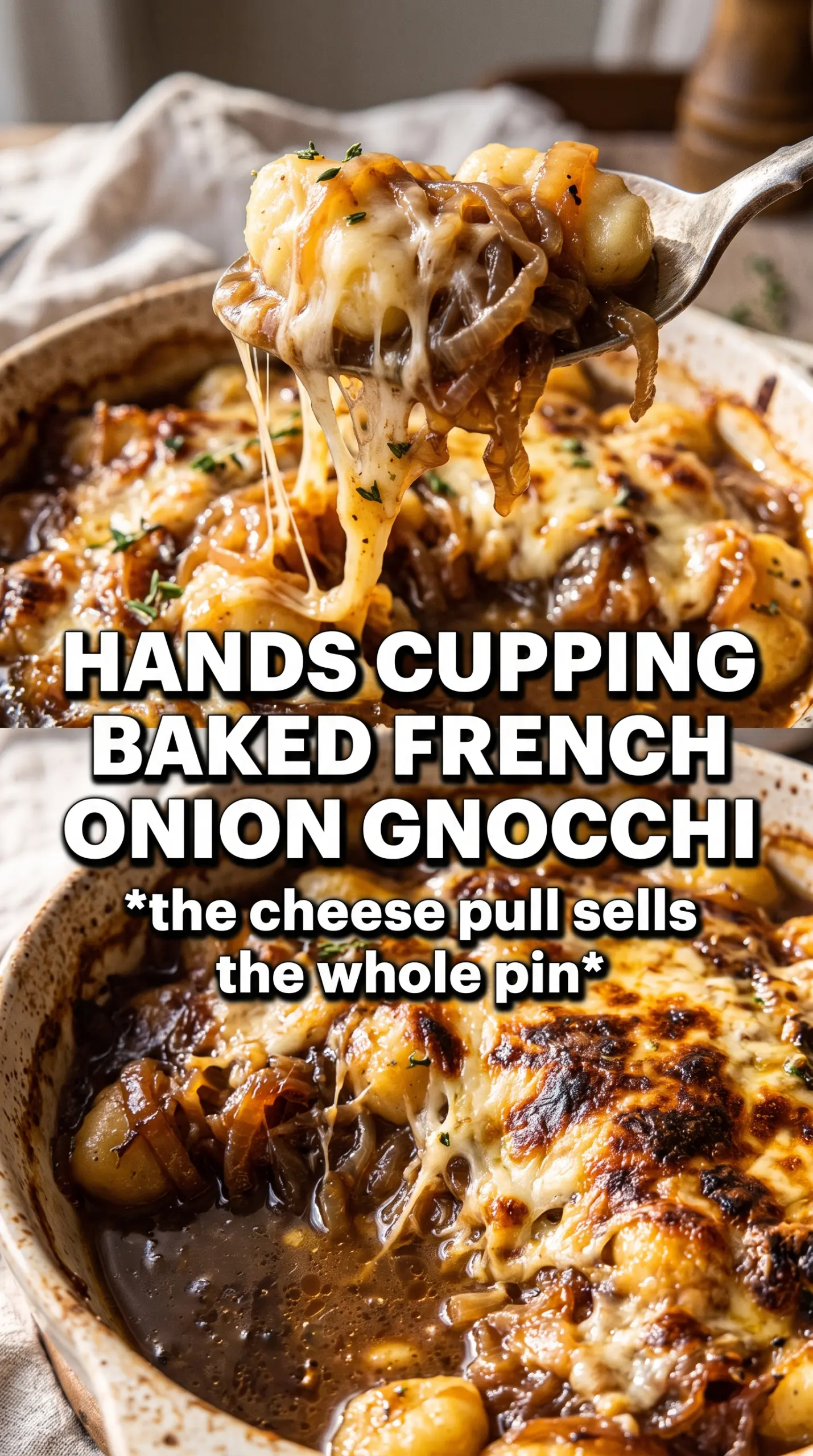
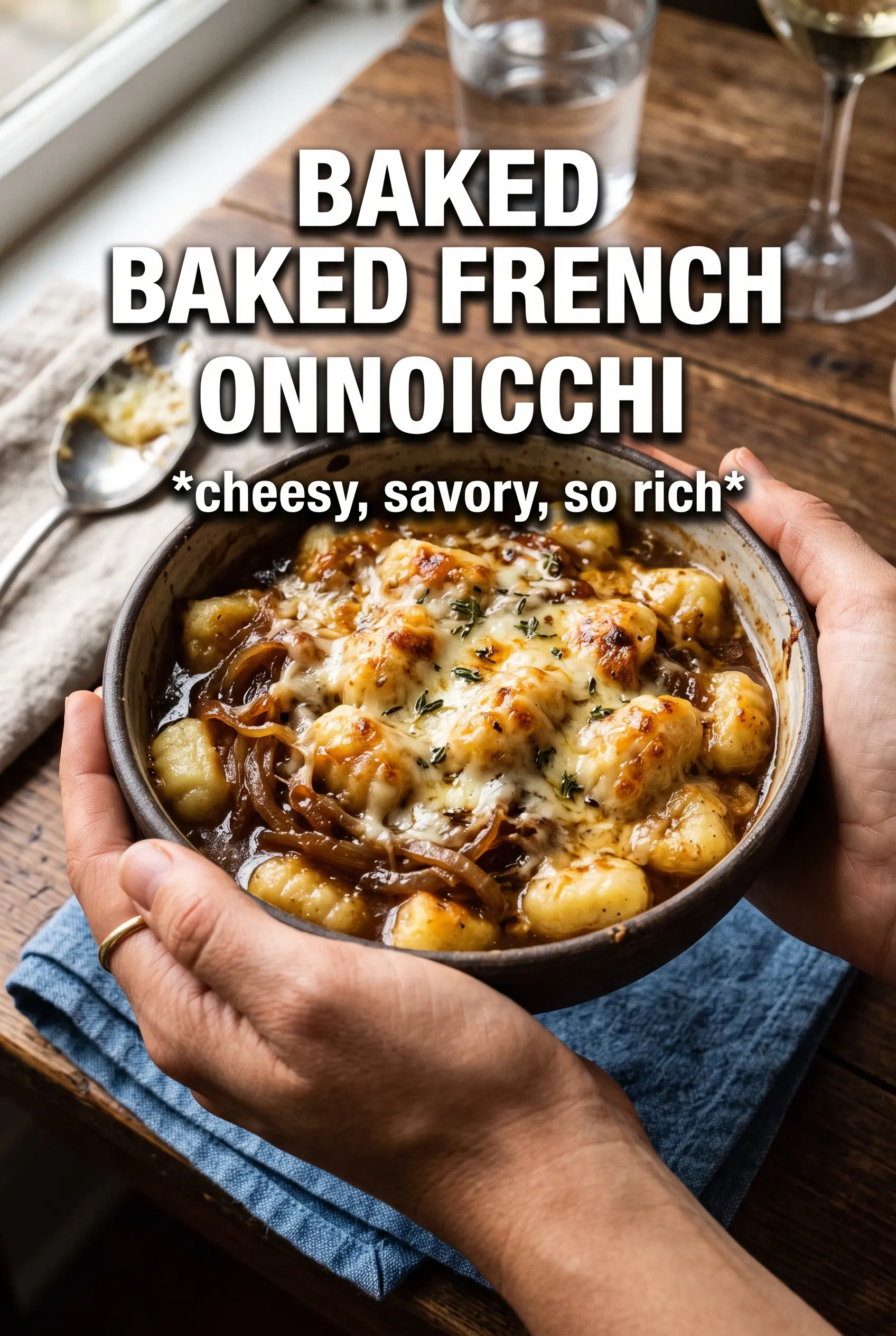
Baked French onion gnocchi lands in that sweet spot between cozy and worth repeating. The onions melt down into a deep, savory-sweet base, the gnocchi cook right in the sauce, and the Gruyere turns the top into a bubbling, bronzed crust that cracks under the spoon. It eats like a cross between French onion soup and a baked pasta, only heavier on comfort and easier to serve.
The trick is patience with the onions. They need enough time to lose their sharp bite and turn jammy, because that caramelized flavor is carrying the whole dish. Adding the uncooked gnocchi straight into the broth-and-cream mixture lets them absorb all that onion flavor while they finish in the oven, so you don’t end up with a watery sauce on one side and plain gnocchi on the other.
Below you’ll find the small timing details that matter, plus a few swaps if you want to adjust the richness, the cheese, or the alcohol in the pan.
The onions went beautifully jammy and the gnocchi soaked up the broth without getting mushy. I broiled it for the last minute and the Gruyere browned into the best crust.
Save this Baked French Onion Gnocchi for the night you want a bubbling Gruyere crust and a rich, oniony sauce with almost no extra cleanup.
The Real Reason the Gnocchi Stay Tender Instead of Turning Gummy
The biggest mistake with baked gnocchi is treating it like dry pasta. Gnocchi doesn’t need a long boil first, and if you overcook it before it goes into the oven, it can turn soft and a little pasty by the time the cheese browns. Here, the gnocchi finish in the sauce, so they take on flavor while keeping that pillowy texture people want.
The other place this dish goes sideways is the onions. If you rush them over heat that’s too high, they’ll brown on the outside before they’ve turned sweet and silky inside. Medium-low heat gives you the depth you want without burnt edges, and the long cook time is what makes the finished sauce taste like French onion soup instead of onion-flavored cream.
- Caramelized onions — These build the entire flavor base. Once they’ve gone deeply golden and jammy, the sauce doesn’t need much else to taste complete.
- Dry white wine or dry sherry — This cuts through the richness and loosens the browned bits stuck to the pan. If you don’t cook off the alcohol for a minute or two, the sauce can taste sharp.
- Gruyere — It melts smoothly and browns into a nutty crust. Swiss is the closest swap, but it won’t taste quite as deep or complex.
- Heavy cream — This rounds out the broth and helps the sauce cling to the gnocchi. Half-and-half can work, but the sauce will be thinner and less luxurious.
What Each Ingredient Is Actually Doing in This Recipe
- Primary ingredient (the star) — Quality matters most. Choose the best you can find.
- Cooking medium (oil, butter, or broth) — This carries flavors and prevents dryness.
- Seasonings (salt, pepper, spices, herbs) — Layer flavors so nothing overpowers. Build depth gradually.
- Aromatics (garlic, onion, herbs) — Cook with fat to bloom flavors. Become the foundation.
- Supporting ingredients — Complement the main ingredient without overpowering it.
- Sauce or liquid (if applicable) — Brings flavors together. Balance richness with acid.
- Acid (lemon, vinegar, wine, or other) — Brightens and prevents flat-tasting results.
- Final finish (garnish, glaze, or sauce) — Prevents one-dimensional taste and adds visual appeal.
What Each Pan Stage Is Supposed to Taste Like
Slowly Cooking the Onions
Melt the butter with the olive oil first, then add the sliced onions and let them cook over medium-low heat until they soften, collapse, and turn a rich amber color. Stir often enough that the edges don’t scorch, but not so much that they never pick up color. If the pan looks dry, lower the heat and give the onions a little more time instead of adding extra fat. You’re waiting for sweetness and depth here, not speed.
Building the Brothy Base
Once the onions are deeply caramelized, pour in the wine or sherry and scrape up the browned bits from the bottom of the skillet. Let it simmer for a couple of minutes so the sharp alcohol cooks off, then stir in the garlic, thyme, broth, Worcestershire, and cream. The mixture should look silky and savory, with enough body to coat a spoon. If it tastes flat at this point, it usually needs a pinch of salt or a little more Worcestershire, not more cheese.
Baking the Gnocchi Under the Cheese
Add the uncooked gnocchi straight into the sauce and stir until everything is coated. They should be nestled in, not piled dry on top, because the sauce needs to surround them so they cook through evenly. Scatter the Gruyere over the surface, then bake or broil until the cheese is melted, blistered, and the sauce is bubbling around the edges. If the top browns before the gnocchi are tender, cover it loosely with foil and keep baking for a few minutes longer.
Make It Vegetarian Without Losing the French Onion Feel
Swap the beef broth for a rich vegetable broth and add an extra splash of Worcestershire only if yours is vegetarian. You’ll lose a little of the classic French onion depth, but the caramelized onions and Gruyere still carry the dish well.
Dairy-Free Version That Still Feels Rich
Use a plant-based butter and swap the cream for an unsweetened oat or cashew cream. Skip the Gruyere and finish with a dairy-free meltable cheese or a seasoned breadcrumb topping for browning, knowing the flavor will be less nutty and more savory.
No Wine, Same Depth
Use extra broth plus a teaspoon of white wine vinegar or lemon juice to replace the brightness the wine would have added. The dish will still be rich, but this keeps the sauce from tasting heavy or one-note.
Storage and Reheating
- Refrigerator: Store covered for up to 3 days. The gnocchi will absorb more sauce as it sits, so the dish gets thicker by day two.
- Freezer: It doesn’t freeze well once baked because the cream sauce can separate and the gnocchi can turn grainy. If you need to get ahead, caramelize the onions and freeze that base instead.
- Reheating: Reheat covered in a 350F oven with a small splash of broth until hot through. Microwaving works in a pinch, but it softens the gnocchi and can make the cheese patchy.
Answers to the Questions Worth Asking
Baked French Onion Gnocchi
Ingredients
Equipment
Method
- Melt unsalted butter with olive oil in a large oven-safe skillet, then add the thinly sliced onions and cook over medium-low heat for 35-40 minutes until deeply caramelized and dark golden.
- Deglaze the skillet with dry white wine or dry sherry and cook for 2 minutes, scraping up browned bits from the pan.
- Add minced garlic and fresh thyme and cook for 1 minute until fragrant, then stir through the caramelized onions.
- Pour in beef broth and Worcestershire sauce, then add heavy cream and bring the mixture to a gentle simmer.
- Add the uncooked potato gnocchi and stir to coat in the sauce until evenly distributed.
- Scatter shredded Gruyere cheese over the top in an even layer.
- Broil or bake at 425F for 15-18 minutes until the gnocchi are cooked through, the sauce is bubbling at the edges, and the cheese is golden.