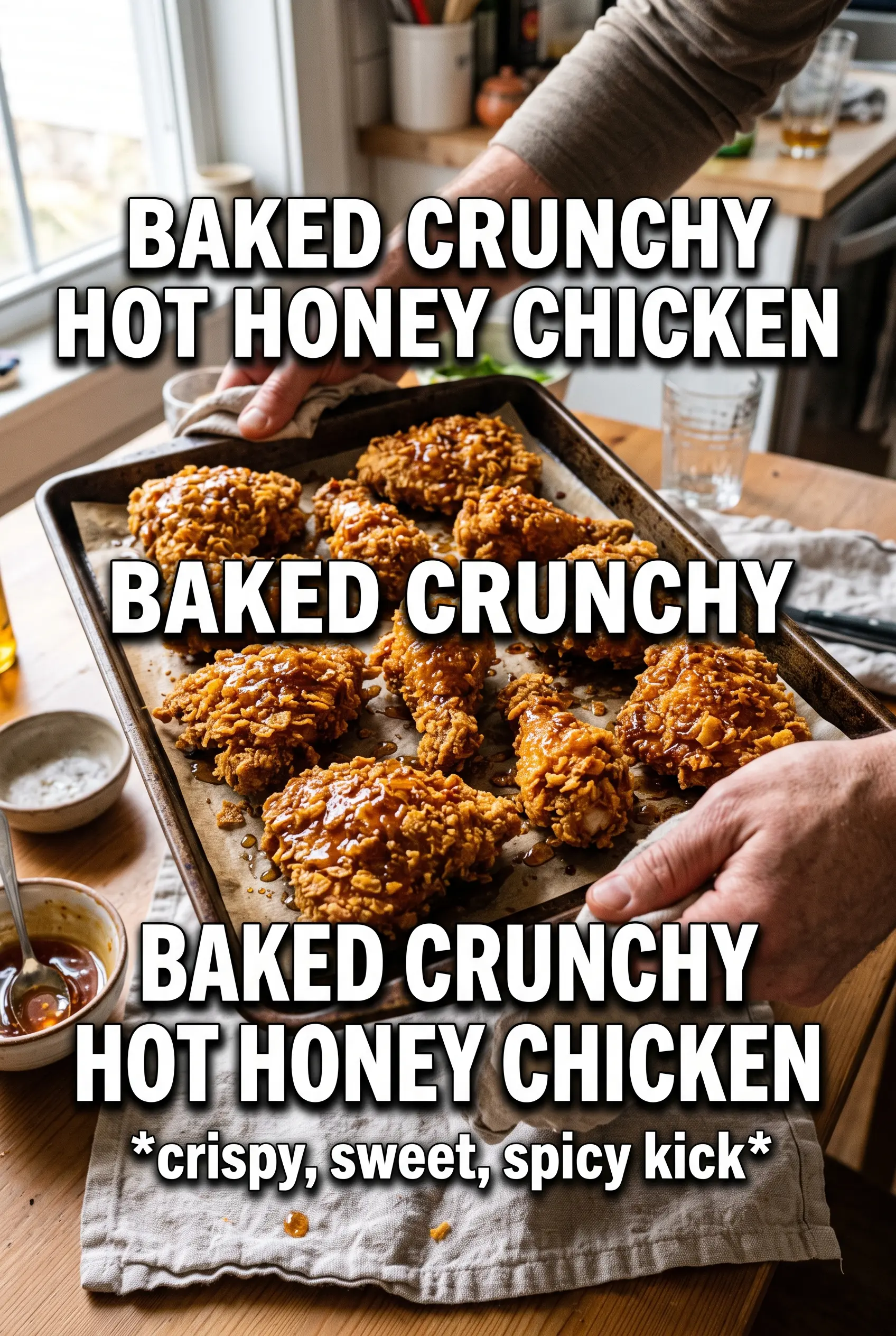
Crunchy baked chicken with hot honey drizzled over the top hits that sweet-heat, crisp-then-juicy balance that keeps this kind of dinner on repeat. The coating bakes up bronzed and shattery instead of soft, and the honey glaze lands at the end with just enough burn to wake everything up without drowning out the parmesan and paprika underneath.
The trick is in the layering. Buttermilk gives the chicken a little tenderness and helps the crumb cling, while panko carries the crunch and parmesan adds a salty edge that keeps the coating from tasting flat. Baking on a wire rack matters here, because the hot air can move all the way around the chicken instead of trapping steam under it.
Below you’ll find the small details that make this recipe work the way it should, plus a few smart swaps if you’re working with breasts, thighs, or a pantry that needs a little adapting.
The coating stayed crisp even after I drizzled the hot honey, and the chicken thighs came out juicy at exactly 30 minutes. The parmesan in the crust made it taste way more seasoned than most baked chicken I’ve tried.
Save this Baked Crunchy Hot Honey Chicken for the nights when you want a crisp chicken dinner with sticky-spicy honey on top.
The Crisp Coating Needs Airflow, Not Hope
Most baked breaded chicken goes soft because the pan traps steam. A wire rack fixes that by lifting the chicken out of the puddle so the panko can dry and brown instead of soaking in its own moisture. The other thing that matters is pressing the coating on firmly. Loose crumbs look fine going into the oven, then slide off the second you cut into the chicken.
- Panko breadcrumbs — These stay lighter and crisper than regular breadcrumbs. Standard breadcrumbs can work in a pinch, but they bake up denser and less jagged.
- Parmesan — Finely grated parmesan seasons the crust from the inside out and helps it brown. Pre-grated works, but the finer the grate, the more evenly it blends with the panko.
- Cooking spray — The top coat of spray is what helps the crumbs turn golden in the oven. Skip it and the coating tends to look pale and dry instead of crisp and toasted.
What the Marinade, Crumb, and Honey Each Bring to the Pan
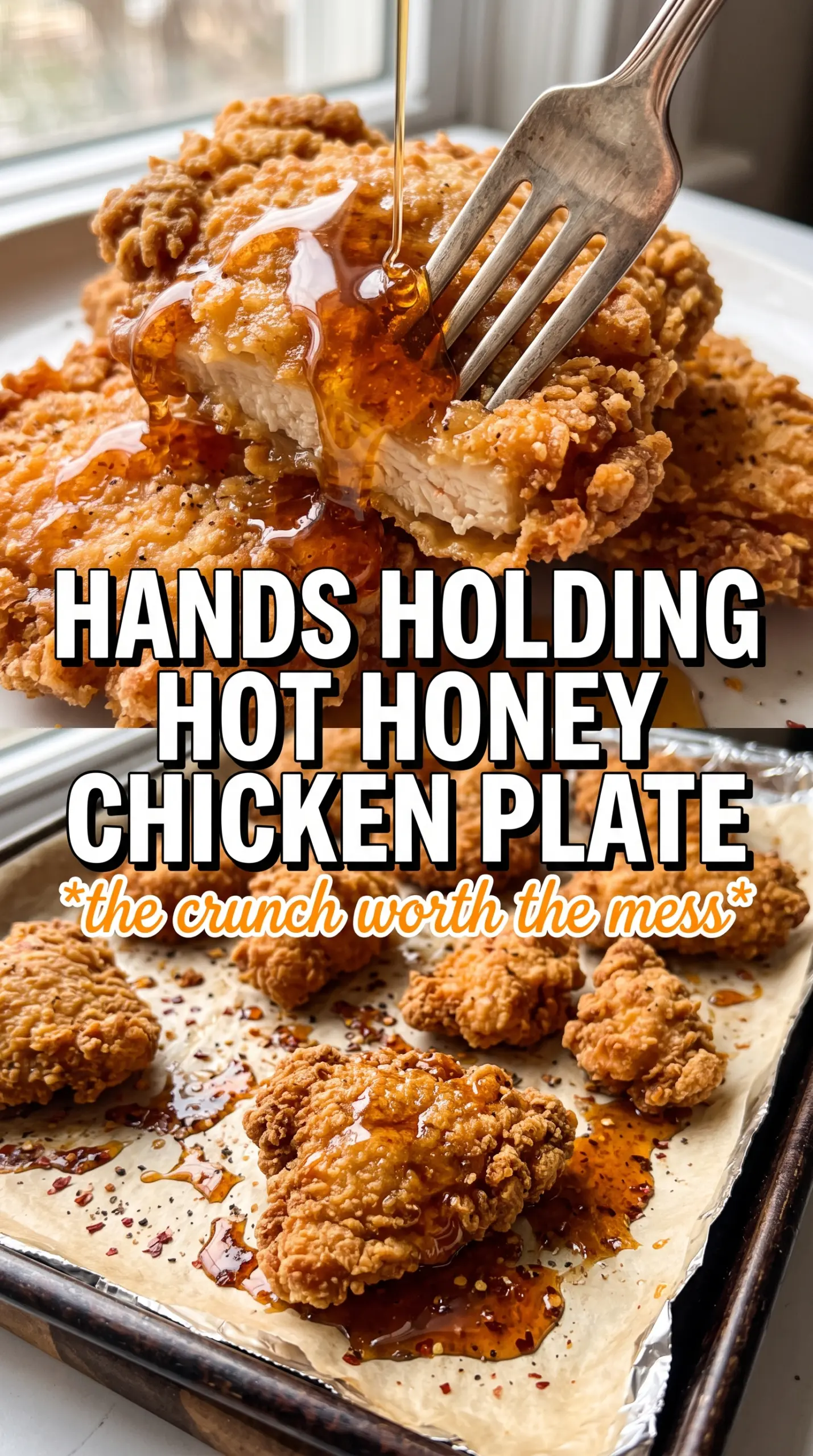
The buttermilk marinade is doing more than adding tang. It lightly tenderizes the chicken and gives the coating something slightly tacky to grab onto. The hot sauce in the marinade doesn’t make the chicken spicy by itself; it just builds a little background heat so the final drizzle tastes layered instead of one-note.
The hot honey is finished with butter because honey alone can cling a little too sharply. Butter rounds it out and helps it pour in a thin ribbon instead of a thick, sticky blob. If you want the heat stronger, add more red pepper flakes, not more honey. Too much honey softens the crust faster.
- Chicken thighs or breasts — Thighs stay juicier and are harder to overbake, which is why I reach for them first. Breasts work too, but keep them in an even layer and watch the clock closely so they don’t dry out.
- Buttermilk — There isn’t a true stand-in for what it does, but plain yogurt thinned with a splash of milk gets close. The mixture should coat the chicken, not turn into paste.
- Hot sauce — Use a vinegar-based hot sauce for the marinade and glaze. It gives brightness without overpowering the honey.
- Butter in the glaze — This isn’t just for richness. It smooths the heat and keeps the drizzle from tasting thin or sharp.
Marinating, Pressing, and Baking Without Losing the Crunch
Let the Buttermilk Do Its Work
Coat the chicken in the buttermilk mixture and give it at least an hour in the refrigerator. That time lets the surface season and tenderize without turning the texture mushy. Pull the chicken out and let excess marinade drip off before breading, because a dripping surface turns the crumb gummy instead of crisp.
Build a Crust That Actually Sticks
Mix the panko, parmesan, and seasonings in a wide bowl so the chicken can be pressed in evenly. Use your hands to pack the crumbs onto every side, especially around the thicker spots. If the coating looks patchy now, it will look patchy after baking, so this is the moment to be thorough.
Bake Until the Edges Turn Deep Gold
Set the chicken on the rack, spray the tops generously, and bake at 425°F until the coating is deep golden and the chicken reaches 165°F. The crust should look dry and crisp at the edges, not pale and dusty. If you’re using chicken breasts, check early, because they can go from done to dry fast once they pass temperature.
Drizzle the Honey at the Last Second
Warm the honey, hot sauce, red pepper flakes, and butter together just until the butter melts. Spoon it over the chicken right before serving so the crust keeps its bite. If you pour it on too early, the steam from the glaze softens the breading before anyone gets a plate.
How to Adapt the Crunch Without Losing the Point of the Dish
Make it gluten-free with a crisp crumb
Use gluten-free panko and keep everything else the same. The texture stays close to the original as long as you still spray the tops well and bake on a rack, which is what keeps any crumb from turning soft.
Skip the dairy and keep the heat
Replace the buttermilk with unsweetened plain yogurt thinned with a little water, or use a dairy-free yogurt if you need the whole dish dairy-free. Omit the parmesan and add an extra tablespoon of panko plus a pinch of salt so the crust still tastes seasoned instead of flat.
Turn the heat down without changing the structure
Use less hot sauce in the glaze and skip the red pepper flakes if you want a gentler finish. The honey still gives that sticky sheen and contrast against the salty crust, just without the sharper burn.
Storage and Reheating
- Refrigerator: Store leftovers in an airtight container for up to 3 days. The crust softens a little, but the flavor holds up well.
- Freezer: Freeze the baked chicken before adding the hot honey, wrapped tightly and stored for up to 2 months. The glaze is better made fresh after reheating, since frozen honey can get sticky and uneven.
- Reheating: Reheat on a rack in a 375°F oven until hot and re-crisped. The biggest mistake is microwaving, which steams the coating and makes the panko collapse.