Autumn chopped salad is the kind of bowl that eats like a full meal but still feels crisp and light on the table. The finely chopped kale and Brussels sprouts give it a sturdy, satisfying base, while apple, pear, cranberries, pecans, and feta bring that sweet-salty mix that keeps every bite interesting. Once the dressing hits the greens and the kale gets a quick massage, the whole salad turns tender instead of tough, which is the difference between a good chopped salad and one people actually go back for.
The trick here is balance. The maple-Dijon vinaigrette needs enough acidity to wake up the fruit and cut through the feta, but not so much that it overwhelms the salad’s natural sweetness. Chopping everything small matters too. When every forkful can pick up a little kale, a little cheese, a little crunch, and a little fruit, the salad feels polished instead of random.
Below, you’ll find the one step that keeps the greens from tasting harsh, plus the swaps I reach for when I want to lean this salad more savory, more filling, or a little lighter.
The kale softened up beautifully after that quick massage, and the maple vinaigrette tied the pears and cranberries together without making the salad soggy. Even after sitting for dinner, the nuts still had crunch.
Save this autumn chopped salad for a crisp make-ahead side with apples, pears, feta, and maple-Dijon dressing.
How to Keep the Greens Crisp Instead of Limp
Kale and Brussels sprouts can hold up to dressing better than most salad greens, but they still need a little handling. The kale benefits from a short massage with just a spoonful of dressing because that breaks down the fibers and takes away the raw, chewy edge. If you skip that step, the salad tastes harsh at the center even if the toppings are perfect.
Shredded Brussels sprouts help the texture stay lively, but they work best when they’re sliced fine. Big shreds can feel bulky and uneven in a chopped salad, while thin ribbons blend into the greens and soak up the vinaigrette without collapsing. Add the fruit and cheese after the greens have softened a bit so the salad keeps its shape and every bite tastes layered instead of muddy.
What Each Ingredient Is Actually Doing in the Bowl
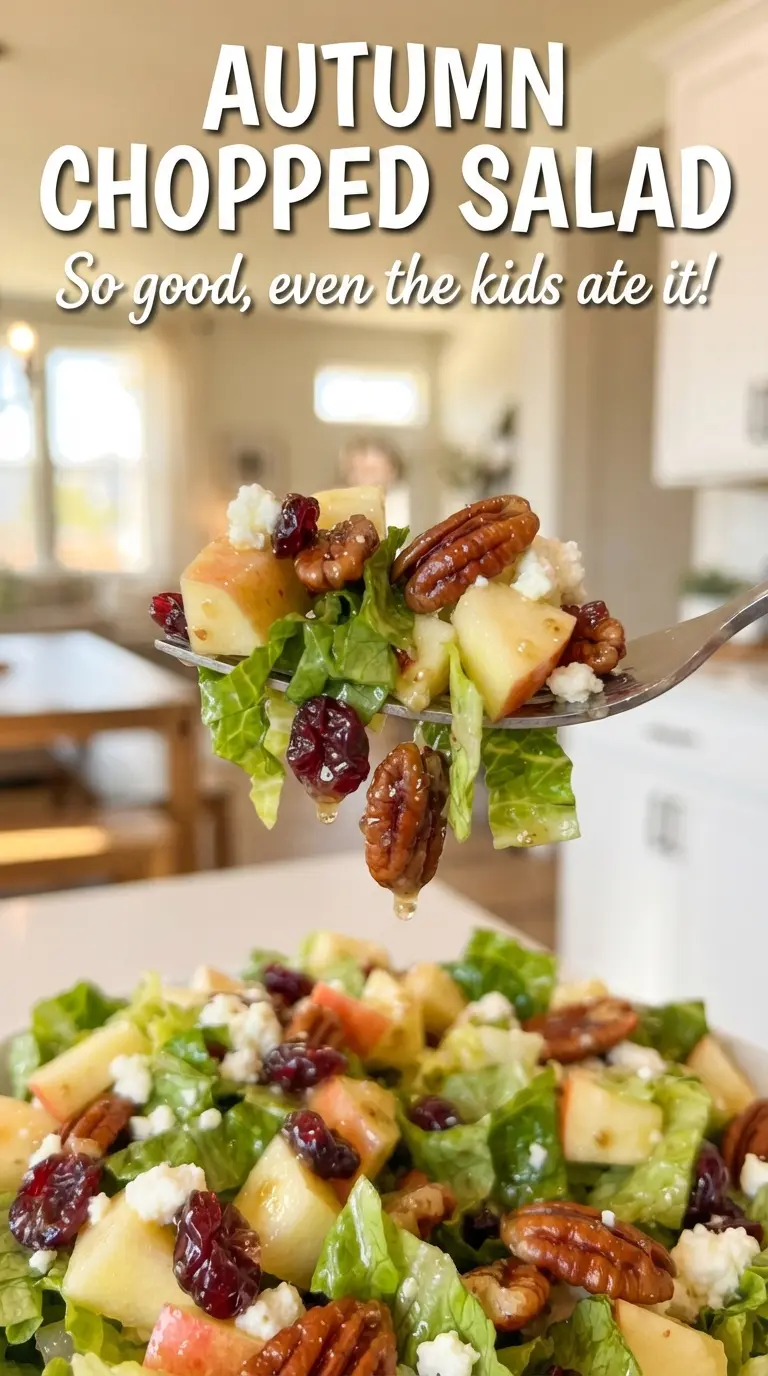
- Kale — This is the backbone of the salad. It needs the massage more than any other green here, and that one minute of rubbing with dressing turns it from tough to tender without making it soggy.
- Brussels sprouts — They add a nutty crunch and keep the salad from tasting too leafy. Buy pre-shredded if you want, but keep the pieces fine so they blend into the chopped texture.
- Apple and pear — These bring fresh sweetness and a little juice, which keeps the salad from feeling heavy. Use a crisp apple if you can; soft apples disappear fast and make the bowl watery.
- Dried cranberries — They give little pops of tart chew that wake up the dressing. If yours are very dry, let them sit in the dressing for a few minutes before tossing.
- Candied pecans and pepitas — The pecans bring sweetness and the pepitas bring a toasty, savory crunch. Together they give the salad its best texture contrast, so chop the pecans rather than leaving them whole.
- Feta — It adds salt and creaminess without making the salad rich. Goat cheese works in a pinch, but it softens faster and gives a tangier finish.
- Maple-Dijon dressing — Maple softens the vinegar, and Dijon keeps the dressing from tasting flat. Whisk it until glossy so the oil and vinegar stay emulsified long enough to coat the greens evenly.
Building the Dressing So It Clings to Every Bite
Whisk the Vinaigrette Until It Looks Unified
Start with the olive oil, apple cider vinegar, maple syrup, Dijon, salt, and pepper in a bowl and whisk until the dressing turns slightly thick and glossy. If it still looks streaky, keep whisking; a broken dressing will slide off the greens instead of coating them. The Dijon is doing more than adding flavor here — it helps hold the oil and vinegar together long enough to dress the salad properly.
Softening the Kale First
Take about 1 tablespoon of the dressing and work it into the chopped kale with your hands for about a minute. The leaves should darken a shade and look less rigid. If you skip this and dump all the dressing on at once, the kale can still taste tough even after tossing. This step also keeps the final salad from feeling overdressed because the greens absorb the first bit instead of pooling it.
Layering the Crunch and Sweetness
Add the Brussels sprouts, apple, pear, cranberries, pecans, feta, and pepitas after the kale has softened. Toss gently at first so the fruit doesn’t crush and the cheese doesn’t smear into the dressing. Once the greens are evenly coated, let the bowl sit for a few minutes if needed; the flavors settle in fast, and the salad tastes best when the dressing has had a moment to cling to the chopped edges.
How to Adapt This Salad for Different Tastes and Make-Ahead Plans
Make it dairy-free
Leave out the feta and add a little extra salt to the dressing. You can also add avocado right before serving if you want some of that creamy contrast back, though it changes the salad from bright and crisp to softer and richer.
Turn it into a fuller lunch
Add roasted chicken, chickpeas, or cooked farro. Chicken keeps the salad the lightest, chickpeas make it vegetarian and more filling, and farro gives it a chewier, grain-salad feel that holds up well for meal prep.
Swap the fruit based on what’s on hand
Pomegranate seeds, sliced grapes, or dried cherries all work. Fresh fruit keeps the salad brighter and juicier, while dried fruit gives you a more concentrated sweet-tart bite and helps the salad travel better.
Storage and Reheating
- Refrigerator: Store undressed ingredients for up to 2 days, or dressed salad for up to 24 hours. The greens soften over time, but the chopped texture helps it hold up better than most salads.
- Freezer: Don’t freeze this salad. The fruit, greens, and feta all break down badly once thawed.
- Reheating: Not needed. If the salad has chilled, let it sit at room temperature for 10 to 15 minutes before serving so the fruit tastes brighter and the dressing loosens up.
Questions I Get Asked About This Recipe
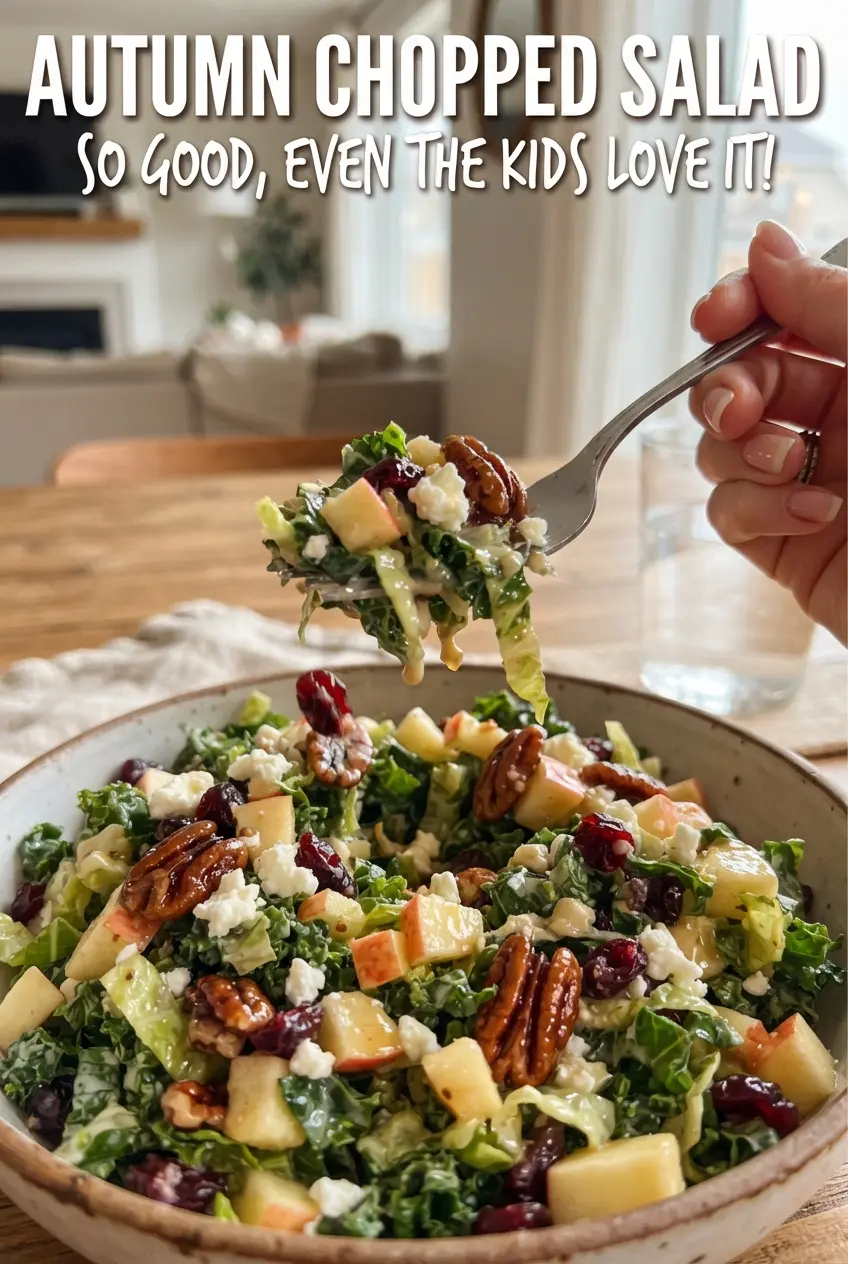
Autumn Chopped Salad
Ingredients
Method
- Whisk olive oil, apple cider vinegar, maple syrup, Dijon mustard, salt, and pepper until evenly combined and glossy.
- Massage the finely chopped kale with 1 tablespoon of the dressing for 1 minute, until the kale looks darker and feels tender.
- Add the shredded Brussels sprouts, diced apple, diced pear, dried cranberries, chopped candied pecans, crumbled feta, and roasted pepitas.
- Pour the remaining dressing over the salad and toss well until every piece is lightly coated.
- Serve right away for maximum crunch, or chill up to 2 hours for the flavors to meld; the salad should look evenly speckled after tossing again.