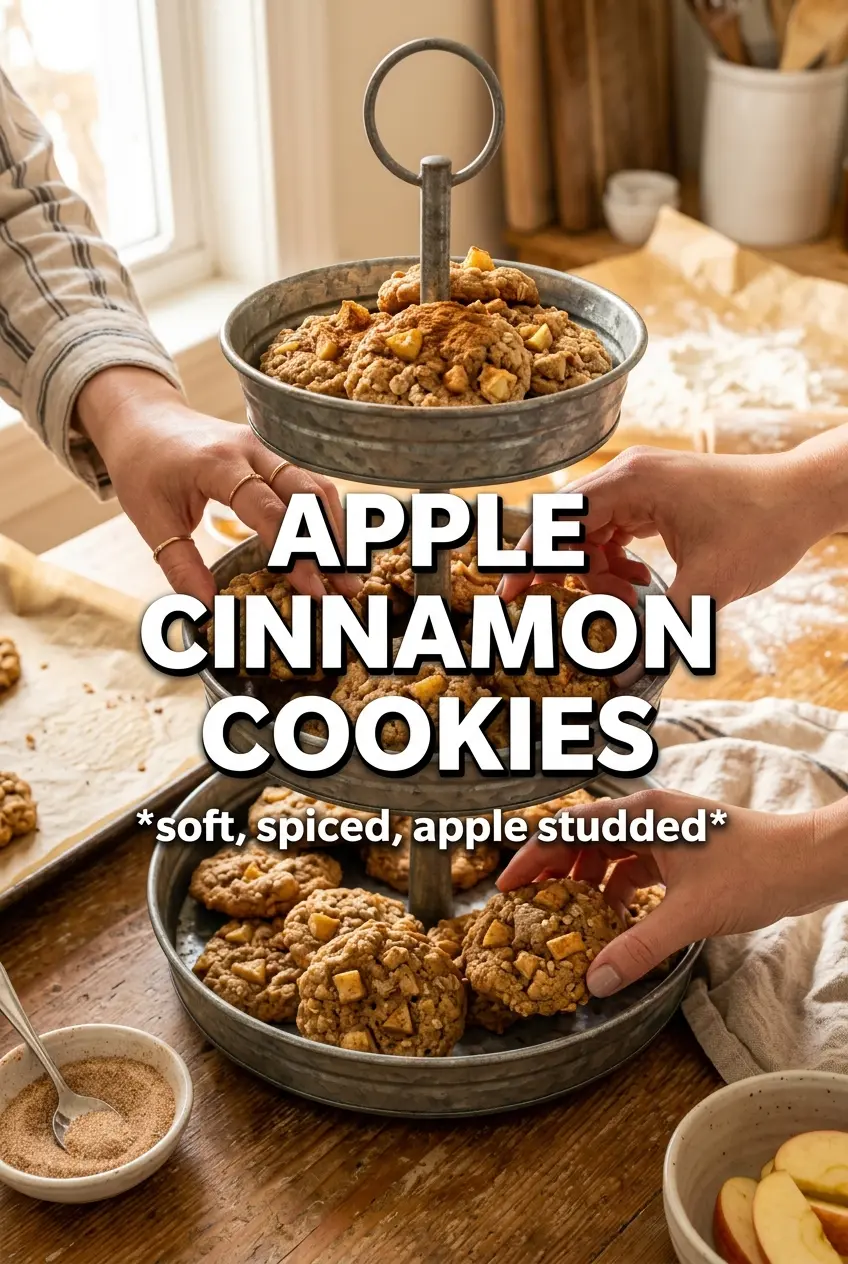
Soft centers, cinnamon-sugar edges, and little bursts of apple in every bite make these apple cinnamon cookies the kind of bake that disappears fast from the cooling rack. They stay tender instead of cakey, with just enough structure around the edges to give you that first crackle of sugar before you hit the moist crumb inside. The vanilla glaze on top pulls the whole cookie together without drowning out the apples or spice.
What makes this version work is the balance between applesauce and fresh diced apple. The applesauce keeps the dough moist and soft, while the diced apple gives you texture and a little more real apple flavor than applesauce alone can provide. Chilling the dough matters here, too. This dough starts out sticky, and that rest gives the flour time to hydrate so the cookies bake up thicker instead of spreading into flat puddles.
Below, I’ll show you why the apples should be diced fine, when the cookies are actually done even if the centers still look soft, and how to tweak the spice or glaze if you want them a little more old-fashioned or a little more bakery-style.
The dough was sticky like you said, but after the chill it scooped cleanly and baked up thick with those soft apple bits in the middle. The cinnamon sugar on the edges was the best part, and the glaze set just enough that they weren’t messy to pack up.
Like these apple cinnamon cookies? Save them for when you want soft centers, cinnamon-sugar edges, and a vanilla glaze in one easy bake.
The Sticky Dough Trick That Keeps These Cookies Thick
These cookies need a dough that starts out softer than you might expect. That isn’t a flaw. The applesauce adds moisture and tenderness, and the diced apple brings in even more liquid as the cookies bake. If you skip the chill, the dough spreads before the flour has a chance to set the structure, and you end up with thin cookies that lose the plush middle.
The other thing that matters is baking them until the edges just set. The centers should still look pale and slightly soft when they come out of the oven. They finish on the hot pan, and that carryover heat is what keeps them tender instead of turning them dry.
- Chilling the dough — This is the step that makes the whole recipe behave. One hour is enough to firm up the butter and let the flour absorb the applesauce.
- Fine dice on the apple — Small pieces bake through without punching wet pockets into the dough. Large chunks can leave raw seams or make the cookies fall apart.
- Cinnamon sugar on top — Rolling just the top gives you flavor without over-drying the dough. It also keeps the bottoms soft while the tops bake into a light crust.
What Each Ingredient Is Actually Doing in These Apple Cinnamon Cookies
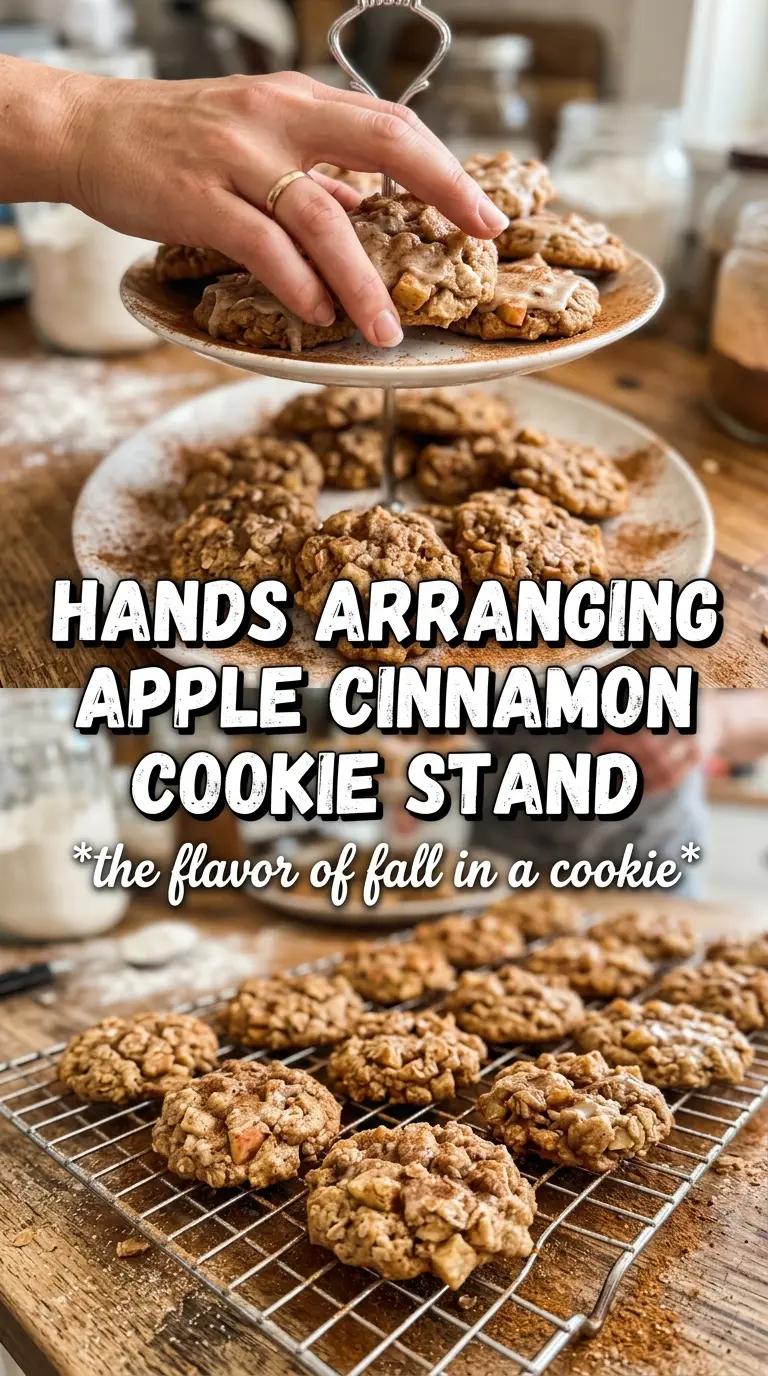
- Applesauce — This is the moisture source that gives the cookies their soft, almost muffin-like tenderness without making the dough feel greasy. Unsweetened works fine, but sweetened applesauce will nudge the cookies a little sweeter and softer.
- Fresh apples — Applesauce alone tastes flat. The diced apple gives the cookie little juicy bites and a fresher apple note. Use a firm baking apple if you can, and cut it finely so it blends into the dough instead of weighing it down.
- Butter and brown sugar — Butter gives richness, and brown sugar brings that deeper, caramel-like sweetness that matches cinnamon better than white sugar alone. The mix of the two sugars keeps the cookies soft but not wet.
- Cinnamon and nutmeg — Cinnamon leads, but the nutmeg keeps the flavor from tasting one-note. Don’t overdo the spice blend or it will bury the apple.
- Flour, baking soda, and baking powder — The flour sets the structure, baking soda helps the cookies spread just enough, and baking powder gives them a little lift. That combination is what keeps them thick without turning them cakey.
Building the Dough and Baking Until the Centers Are Just Set
Whisk the dry ingredients first
Combine the flour, baking soda, baking powder, cinnamon, nutmeg, and salt before you touch the butter. That keeps the leaveners and spice evenly distributed, so you don’t get pockets of soda or one cookie that tastes heavier than the rest. If the cinnamon clumps, break it up with your fingers before moving on.
Cream the butter and sugars until light
Beat the softened butter with both sugars until the mixture looks fluffy and a little paler, not just combined. This step traps air and gives the cookies a lighter texture. If the butter is too cold, the mixture will look crumbly; if it’s melted, the cookies will spread too much.
Fold in the apples without overworking the dough
Add the eggs, vanilla, and applesauce, then mix in the dry ingredients just until no flour streaks remain. Fold in the diced apples by hand at the end so they stay intact. Overmixing at this stage makes the cookies tougher and can crush the apple pieces into the dough.
Chill, scoop, and bake on the edge of done
Refrigerate the dough for a full hour. It should feel scoopable, not pourable, when it comes out. Portion the dough into 1 1/2-tablespoon mounds, roll the tops in cinnamon sugar, and bake until the edges are set and the centers still look slightly soft. Let them cool on the pan so they finish baking gently instead of collapsing when moved too soon.
How to Tweak the Texture, Spice, or Finish Without Losing the Cookie
Make them dairy-free
Use a plant-based butter stick that’s meant for baking, not a soft tub spread. The cookies will still hold their shape, but the flavor will be a touch less rich and the texture may be a little more delicate.
Skip the glaze for a more breakfast-style cookie
Leave off the vanilla glaze and add a little extra cinnamon sugar on top before baking. You’ll get a drier finish with more crunch on the surface and less sweetness overall.
Make them gluten-free
Use a 1:1 gluten-free baking flour with xanthan gum already included. The dough may need the full chill time, and the cookies will spread a little less, but the flavor and tenderness hold up well.
Use a sharper apple flavor
Swap half the diced apple for a tart variety like Granny Smith. That gives the cookies a brighter bite and keeps them from tasting too sweet under the glaze.
Storage and Reheating
- Refrigerator: Store in an airtight container for up to 5 days. The cookies soften a little more by day two as the apple moisture settles in.
- Freezer: Freeze the baked cookies without glaze for up to 2 months. Thaw at room temperature, then glaze after they’ve fully softened.
- Reheating: Warm unglazed cookies in a 300F oven for 4 to 5 minutes. Microwaving makes them rubbery and can turn the apple pieces soggy.